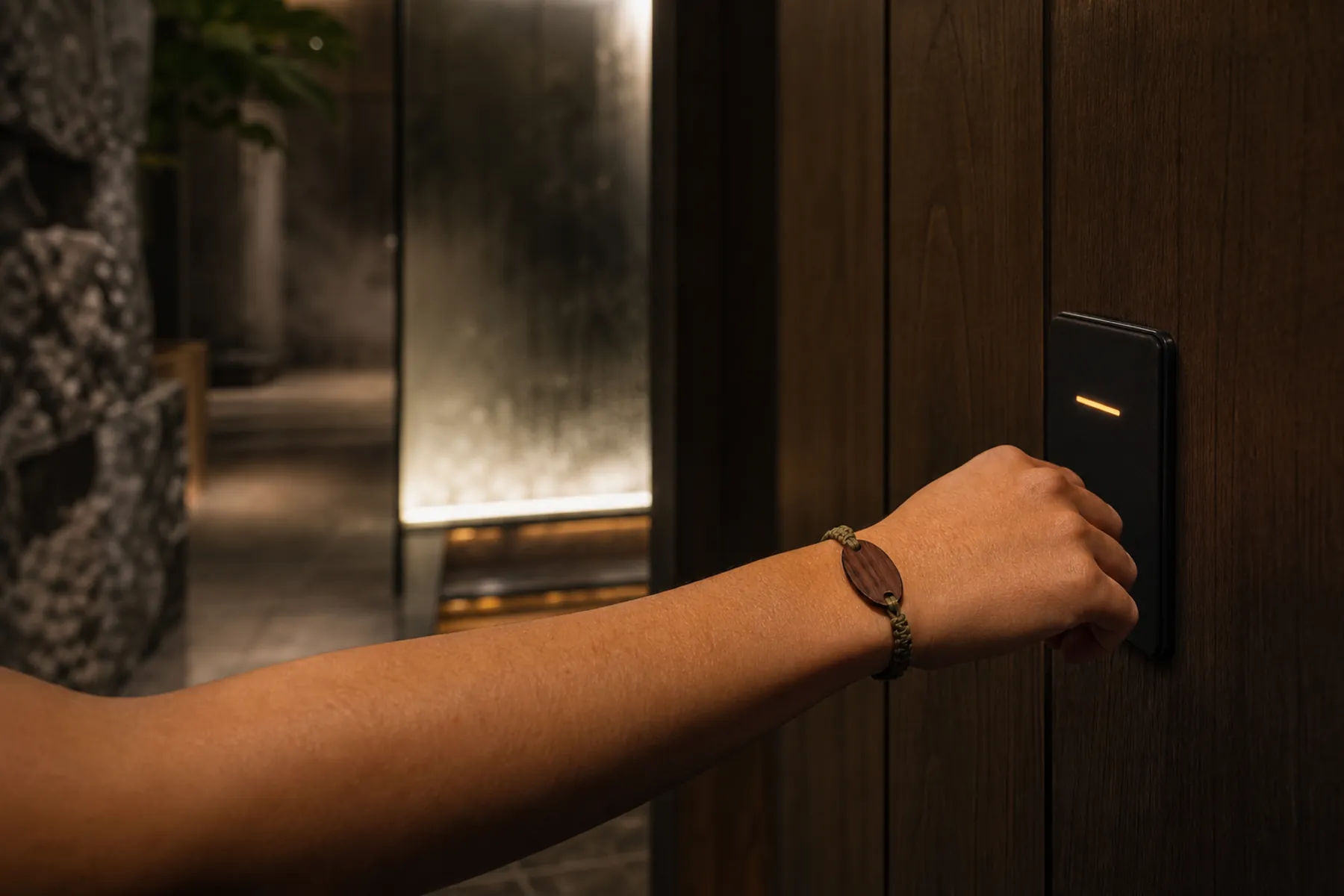
Before evaluating a compostable wristband, answer one question: where would it actually go? Almost every compostable credential programme fails at that question rather than at the material.
Start at the disposal route, not the product
A compostable carrier is only meaningful if there is a route that composts it. Most compostable materials of this kind require industrial composting — sustained heat and controlled conditions — rather than a garden heap, and that facility either exists within reach of the site or it does not.
If it does not, the band goes into general waste with everything else, where it behaves like any other discarded item and the property has paid a premium for a claim it cannot support. Establishing the route first turns the whole decision from a marketing question into a logistics one, which is where it belongs.
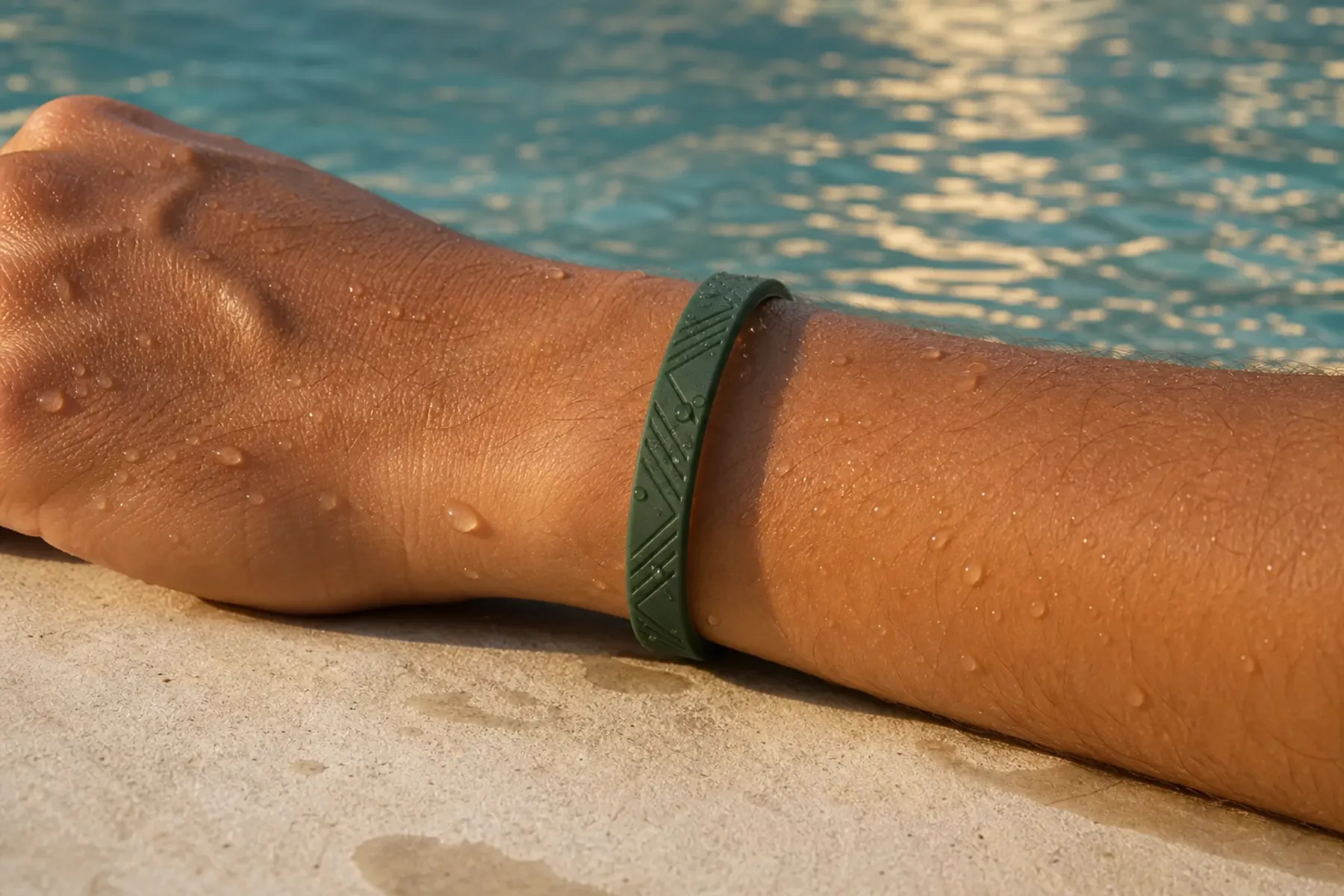
The electronic module does not compost
An RFID credential contains an antenna and a chip. Nothing about a compostable strap changes that, so the finished band is a mixed product and cannot honestly be described as compostable as a whole.
For the strap to reach a composting route, somebody has to separate the module — physically, at a defined moment, with somewhere for both streams to go. At a festival that moment is teardown, when the site is being cleared under time pressure by tired people, which is exactly when an unassigned task does not happen.
What a workable separation plan names:
- Who performs the separation, by role rather than by department
- When in the teardown sequence it happens, and where
- Where each stream goes, with a named facility rather than a category
- What the fallback is when the volume exceeds what the team can process
Warm, humid sites change the material before it is worn
Compostable carriers are designed to break down under moisture and warmth. Stored unissued for weeks in a humid coastal warehouse, some of them begin that process before an event, which shows up as reduced strength at exactly the wrong moment.
Storage conditions therefore become part of the specification: sealed storage, shorter lead time between delivery and use, and a check on stock that has been held between events rather than an assumption that it is as delivered.
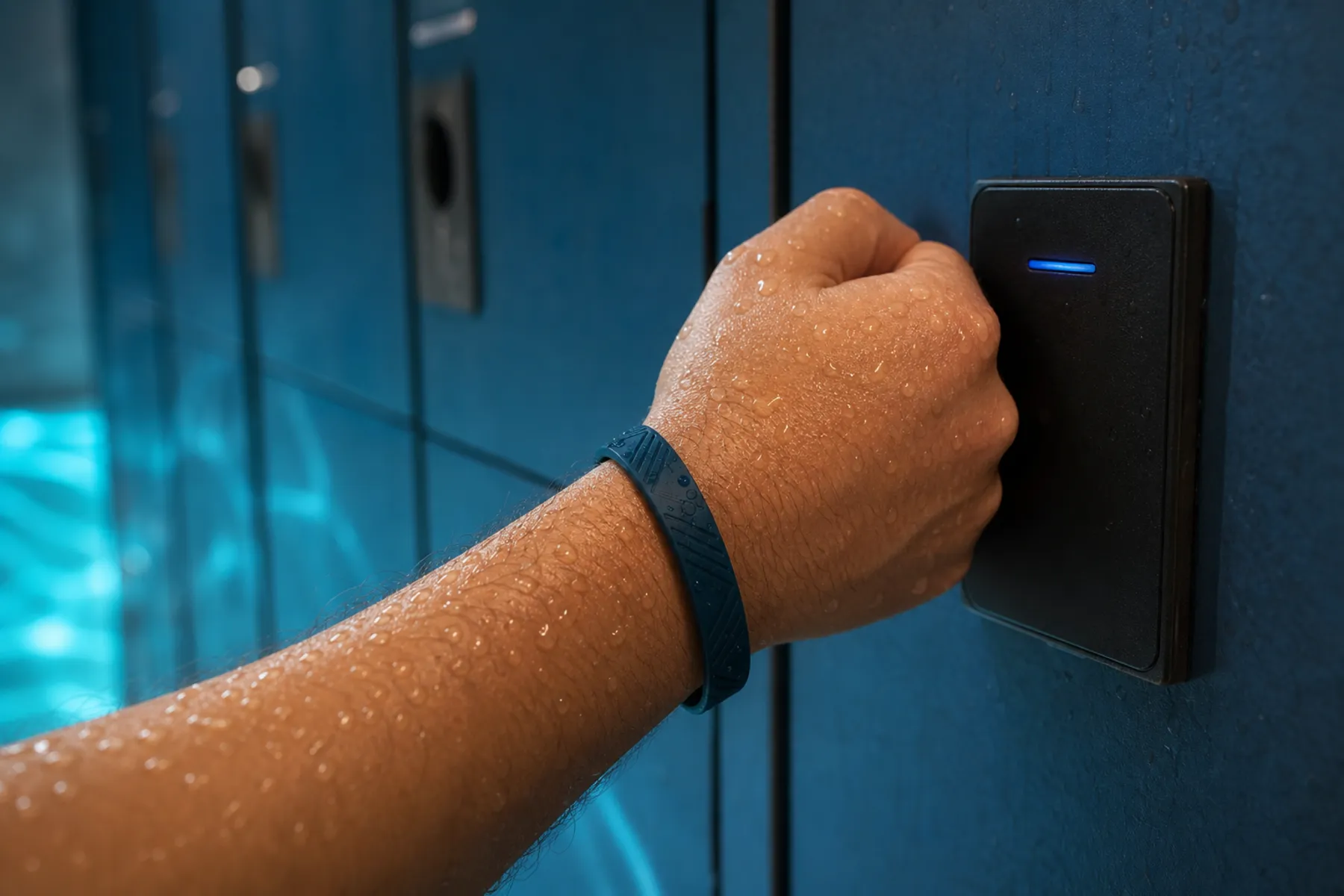
What survives a multi-day event
Event bands are worn through rain, sleep and showers for several days. A carrier engineered to break down under moisture and a wear profile of continuous moisture are in tension, and the resolution is usually shorter events or a different material.
For a single-day event the tension mostly disappears, which is why compostable carriers work better for day admissions than for a four-day festival. That distinction is worth making explicitly rather than treating all events as one case.
How to describe it without overreaching
Describe the carrier, name the module as a separate non-compostable component, and describe the disposal route only if it exists with a person attached to it. That is a longer sentence than a marketing claim and it is the version that survives being asked about by an attendee who works in waste.
Where the route does not exist, the honest and defensible position is that the property chose a lower-impact carrier and disposes of the band as mixed waste. Stating that costs less credibility than implying a route nobody runs.
If you cannot name the facility and the person who separates the module, describe the carrier material and stop there. An implied route that nobody operates is the claim most likely to be challenged.
Regional considerations for warm, humid event sites
Disposal and storage behave differently at a humid coastal site than in a temperate warehouse. Work through these questions before committing to a compostable carrier.
- Does an industrial composting or organic-waste route actually exist for the site, or would the bands enter general waste?
- How is unissued stock stored between events, and does sustained humidity affect the carrier before it is worn?
- Is the electronic component removed before disposal, and who performs that step during a busy teardown?
- What happens to the compostable claim after several days of heat, sunscreen and salt water?
Compatibility is confirmed against the property’s lock system, credential technology and encoding requirements before production. We do not claim universal compatibility.
What to send with an enquiry
Include the installed system model, an existing credential sample where possible, quantity, expected wear period, guest types, controlled zones and artwork direction. For material-led options, state the evidence or production documentation your procurement team expects.
FSC-certified material options available with supporting production documentation.
No named hotel or customer project is used as proof. The reasoning behind that stance is set out on the about page.