A different job from a room credential
An event credential is issued in a burst, worn continuously through weather and sleep, checked thousands of times by people who have to decide in a second, and discarded at the end. Long wear, comfort and reuse — the things that matter most for a resident band — matter least here.
What matters instead is issue speed, transfer control, visual legibility at distance, and a schedule that works backwards from an immovable date.
Choosing the substrate
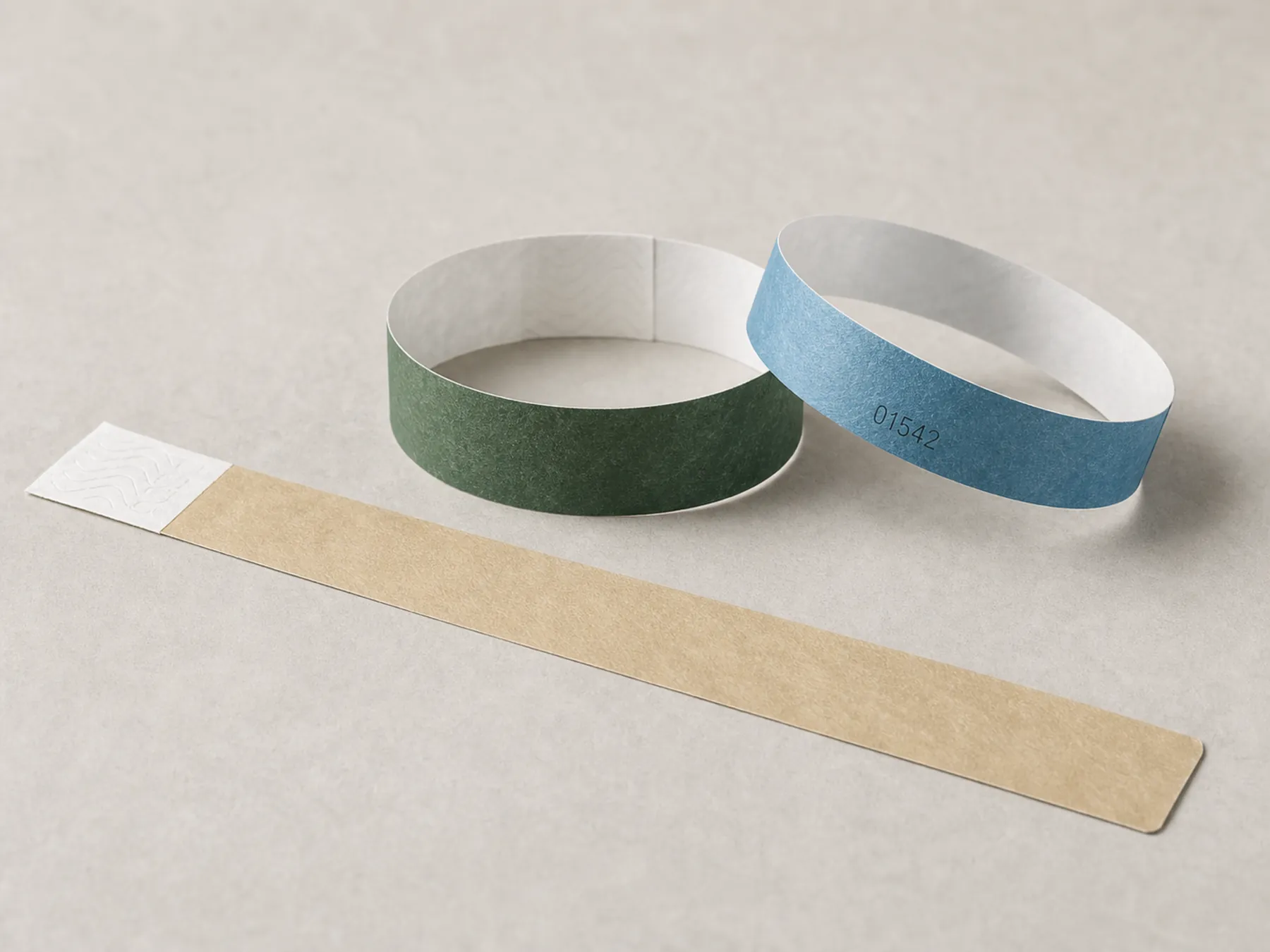
Coated paper is the cheapest machine-readable option and is defeated by water — it is a dry-environment product and the limit is absolute. Tear-resistant synthetic keeps full strength when saturated and is the correct choice anywhere wet. Woven polyester carries artwork in the weave and survives multi-day wear including sleeping and showering. Moulded bands are the answer where guests are in a pool daily.
Most events land on woven for multi-day and synthetic for day admissions, with paper reserved for indoor conferences.
- Coated paper
- Lowest cost, dry environments only, single session
- Tear-resistant synthetic
- Full strength wet; the correct day-pass choice at any water venue
- Woven polyester
- Multi-day wear, artwork in the weave, one-way closure as standard
- Moulded
- Where the guest is in water daily and the band is still worn all week
Transfer control is the whole security model
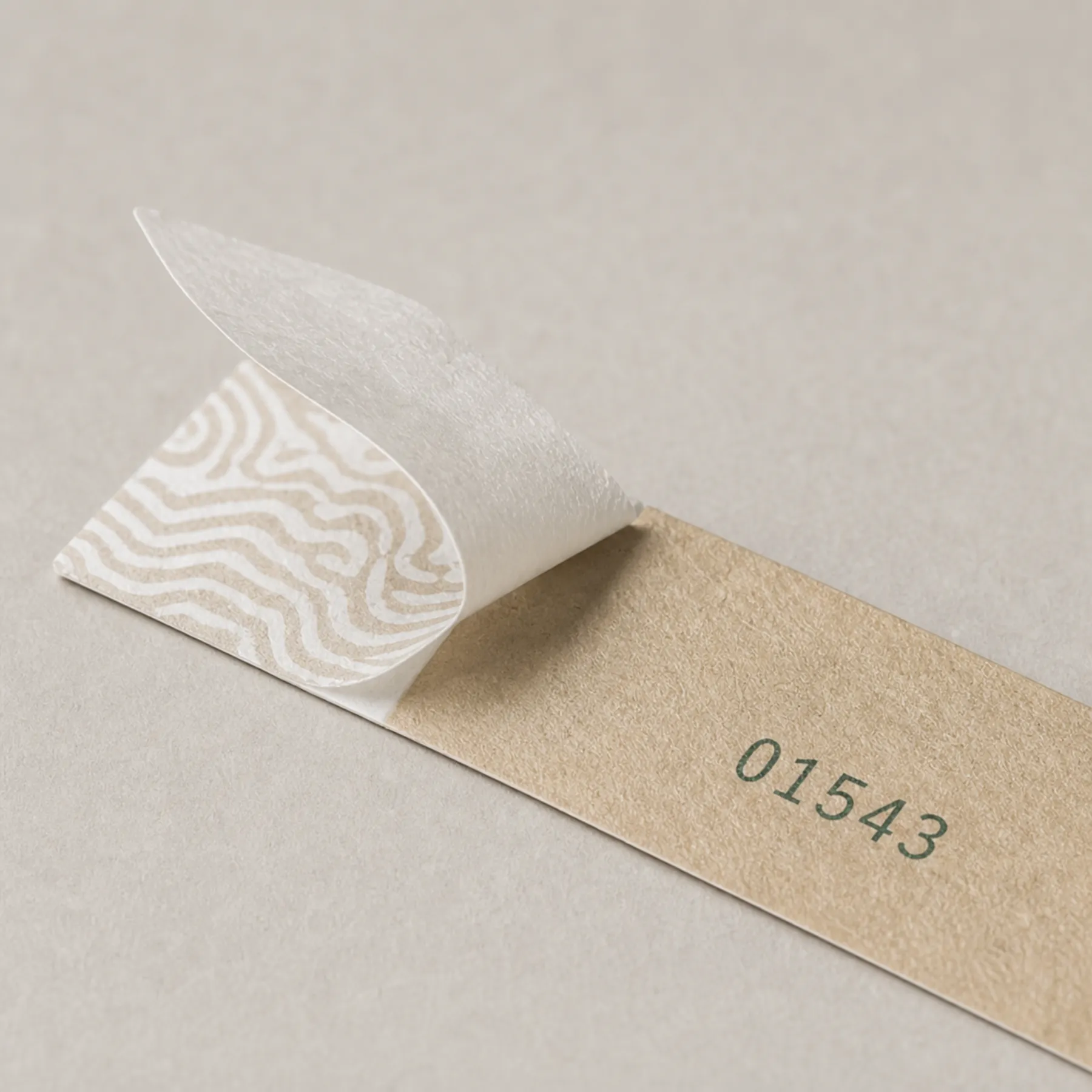
Almost every event credential exists to stop one admission being worn by two people. That makes a one-way closure standard rather than optional, makes fit final at issue, and makes a misfit allowance part of the order rather than an afterthought.
Tamper evidence only works if a member of staff can recognise it in two seconds. Keep a deliberately tampered sample at the gate — a control sample teaches recognition faster than a briefing does.
Tiers that survive the conditions
Security and bar staff read tiers across a crowd in low light with stage lighting distorting colour. Subtle palettes fail there even when they work perfectly on a desk.
Strong hue separation, a small number of tiers and a distinct treatment for the highest-privilege tier is the pattern that survives. Where lighting is genuinely coloured, add a printed tier word so staff have a second signal.
Working backwards from the date
Production is 14–21 days after artwork approval, and approval is the step that slips — a sponsor changes, a line-up changes, and each change restarts it rather than adjusting it.
Freeze the run artwork early and keep everything volatile on desk-printed credentials, where a change costs nothing. An event that keeps its sponsor logos in the woven band is an event that will re-approve twice.
Most of a day’s attendees arrive within about forty minutes. Issue points, stock at each point and the misfit allowance should be sized against that window rather than against total attendance.