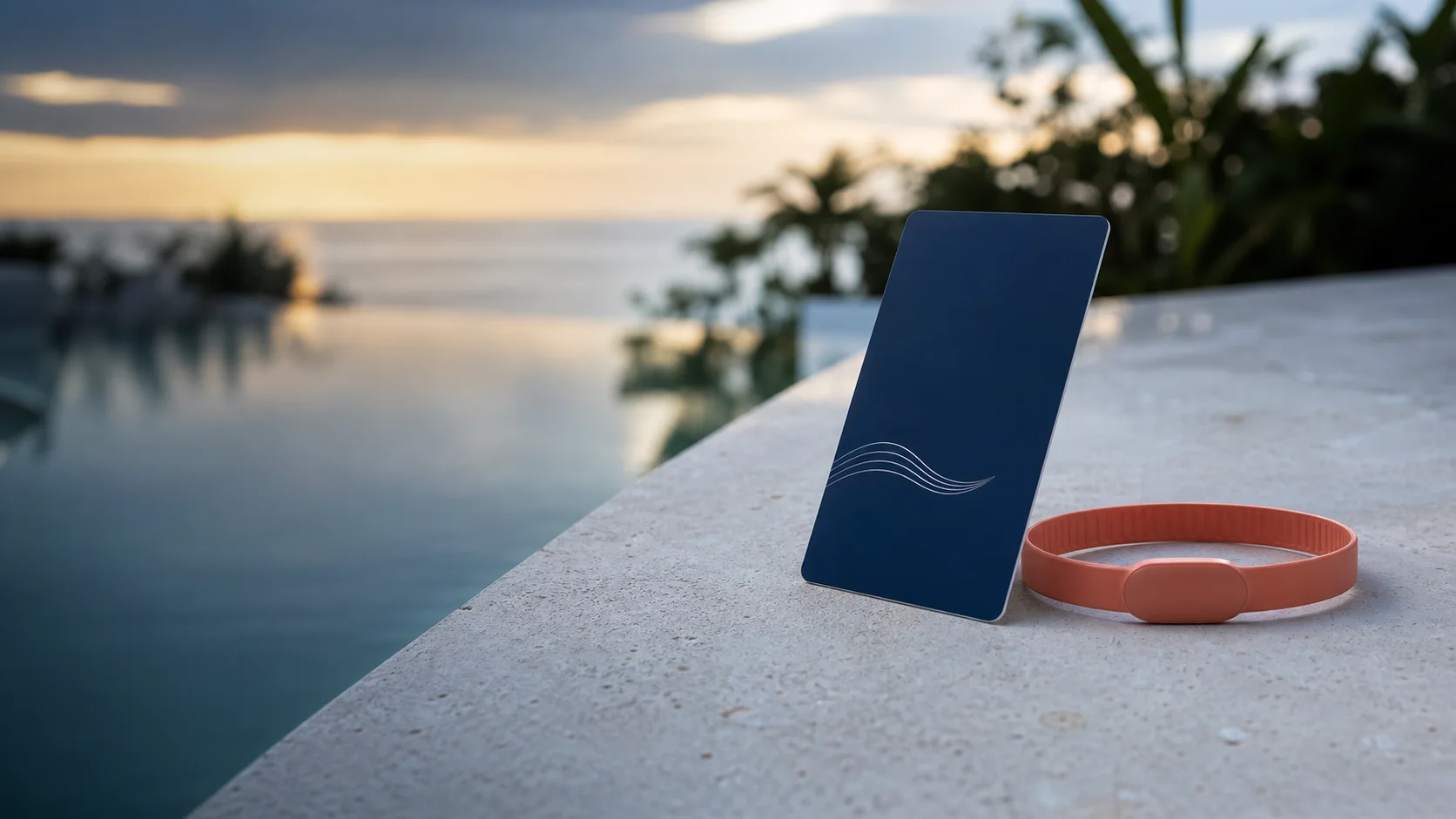
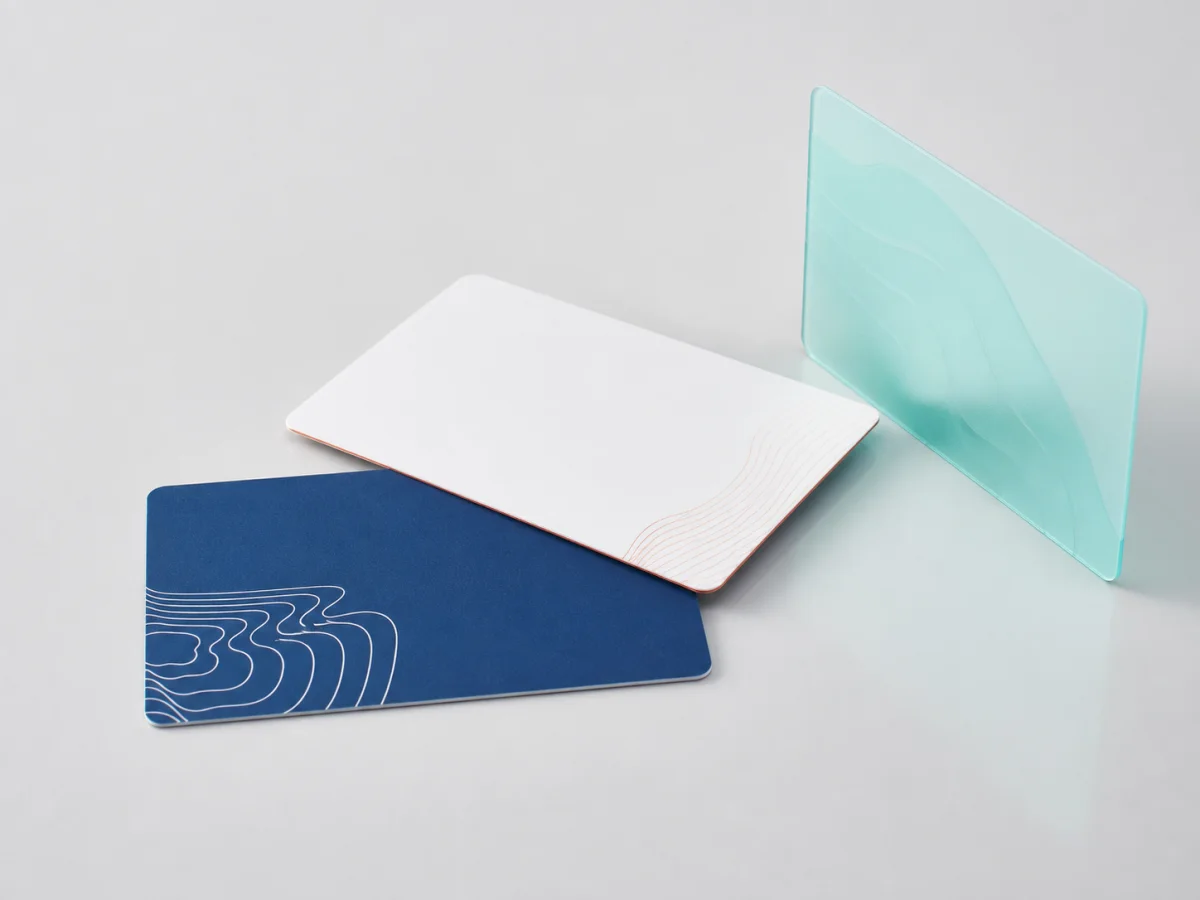
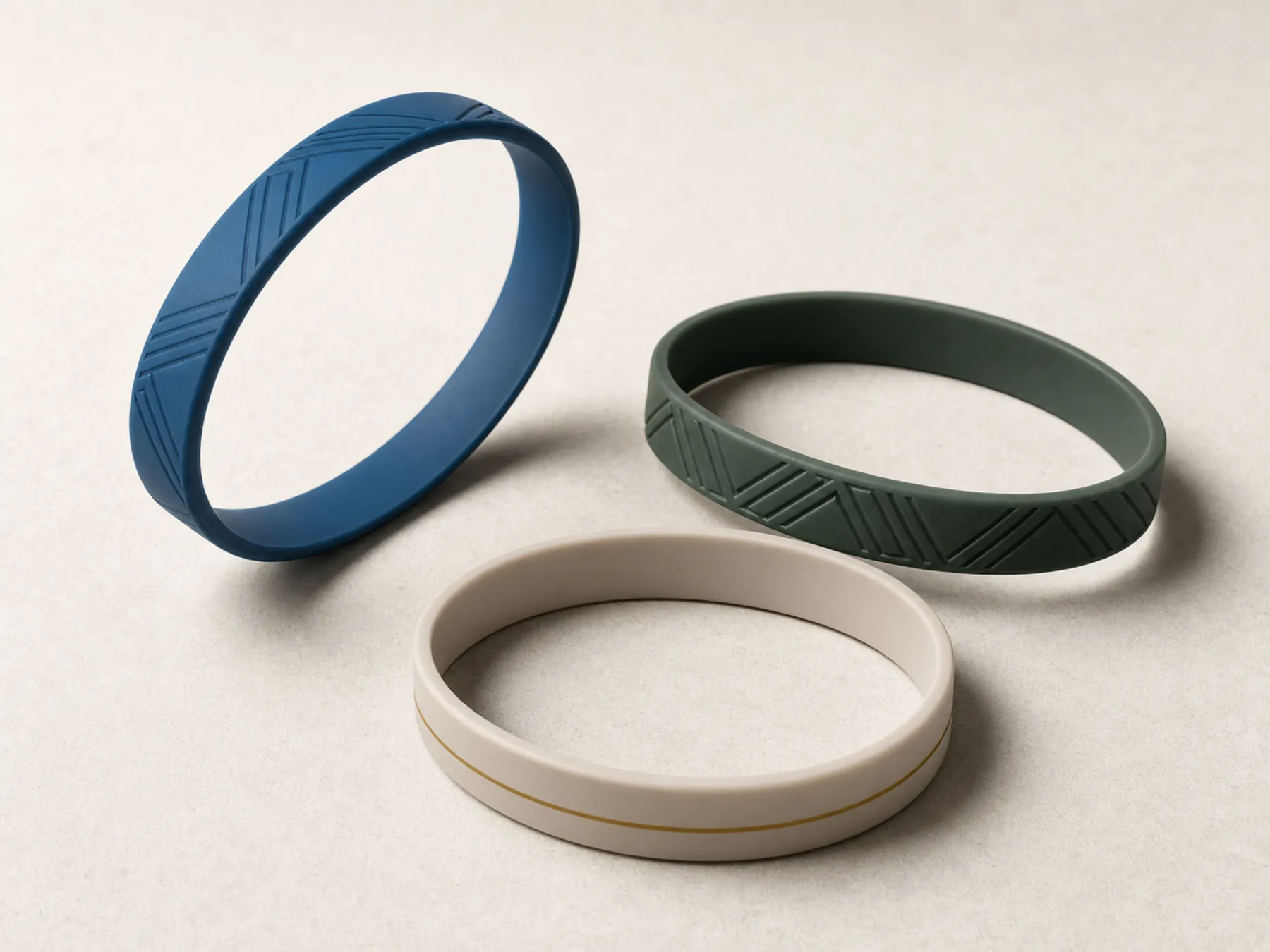
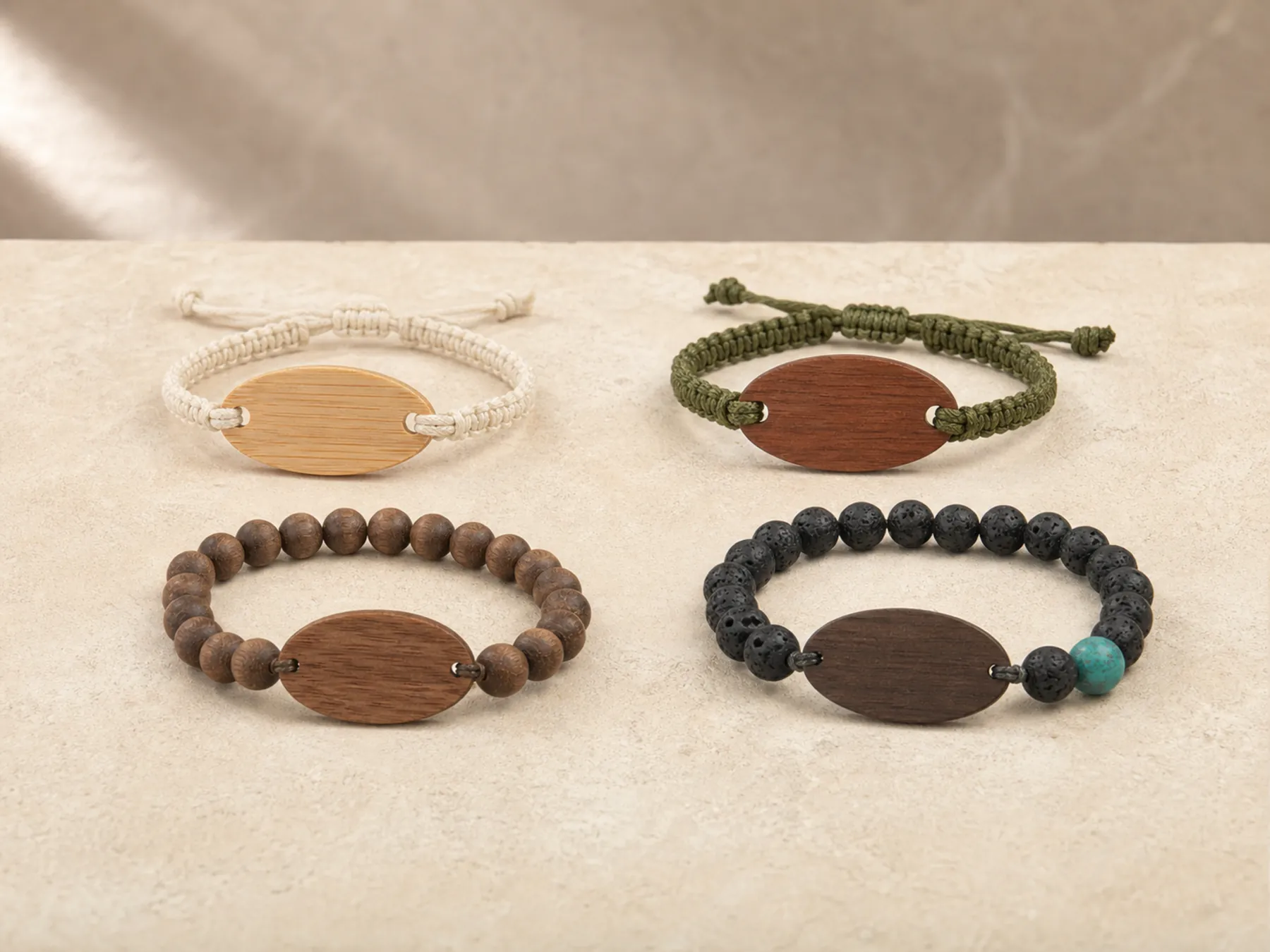
What a resort credential actually has to do
It has to open a room at 2am, survive a pool at 2pm, be readable by a member of staff across a terrace, be reissued in three minutes when a guest loses it at a beach bar, and still look like part of the property on the last night of a two-week stay.
No single construction does all of that equally well, which is why most properties end up issuing two or three formats rather than one. The work is deciding which format carries which job, and making them read as one system rather than as three purchases.
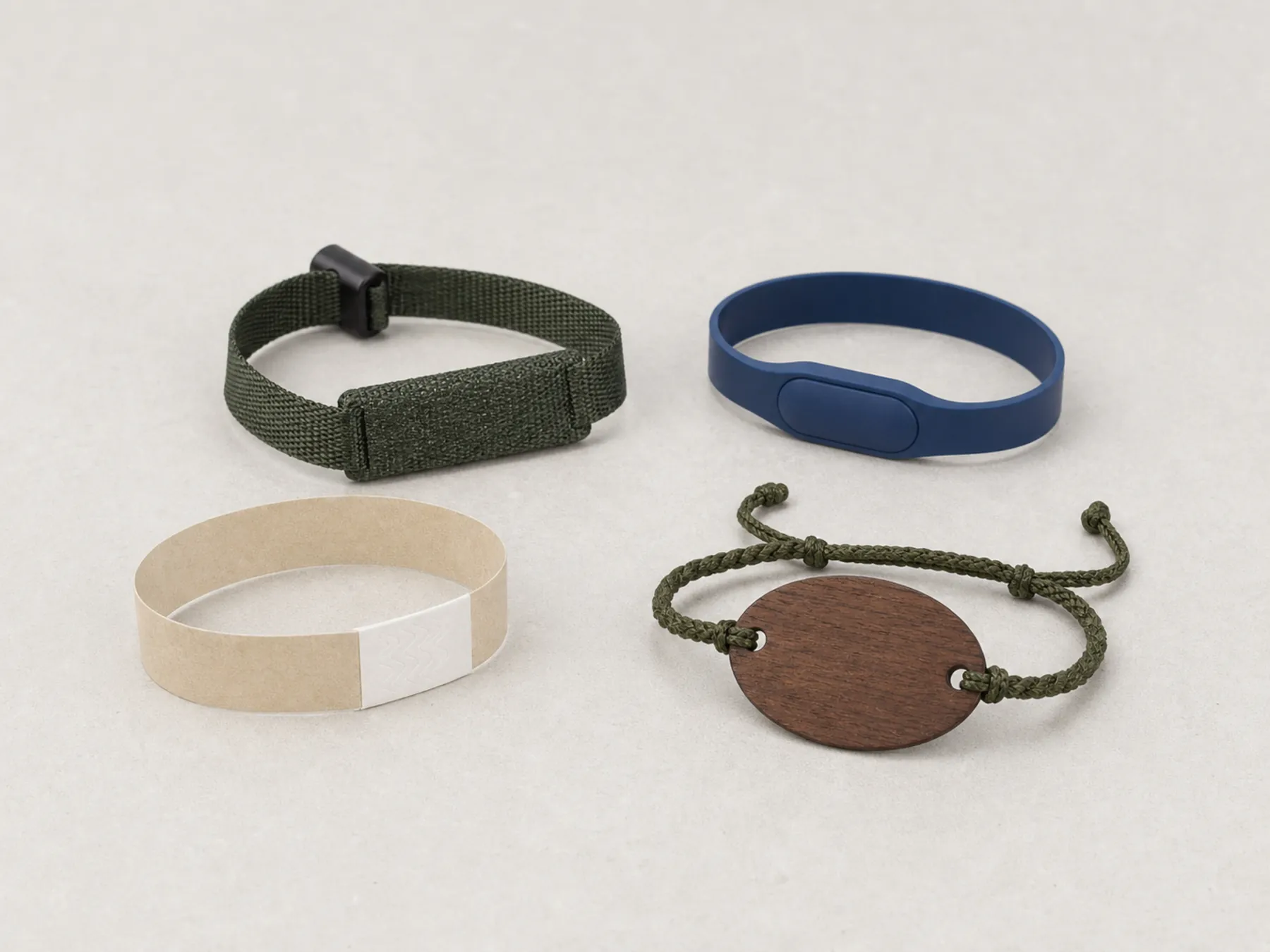
The five inputs that decide everything else
Before material, colour or artwork: how long the credential is worn, what the daily moisture pattern is, which populations receive it, whether it comes back, and whether transfer has to be controlled. Those five answers narrow eight product families and thirty-one models to two or three worth sampling.
They also settle arguments that look like preferences. A property recovering credentials cannot use a one-way closure. A property issuing to children needs a closed loop whatever the adults wear. A property whose guests swim daily cannot use a fabric strap, however well it suits the interior. The buyer guides take each of these decisions in turn.
Answer these and the shortlist writes itself:
- Wear period — a day, a stay, a season, a year
- Moisture — continuous immersion, splash, or repeated wet-and-dry cycling
- Populations — residents, children, day visitors, members, staff
- Lifecycle — recovered and reissued, or issued once
- Transfer risk — whether one credential being passed on is the loss to prevent
Where credential projects actually go wrong
Rarely in the material. They go wrong when a credential is produced for a system that will not accept it, when a construction is chosen for a photograph rather than for the wear environment, when artwork approved flat turns out to be illegible on a curved moving surface, and when a reorder a year later does not match.
Those four failures are why the process here runs system first, construction second, artwork third, and keeps a supply record that outlives whoever placed the order. The technical reference covers how each part behaves, and the worked scenarios show the reasoning end to end.
Installations differ by site, by configuration and by age. A credential that works at one property with the same lock brand can fail at another, so technology and encoding are confirmed against the actual installation before production.
What we will tell you not to buy
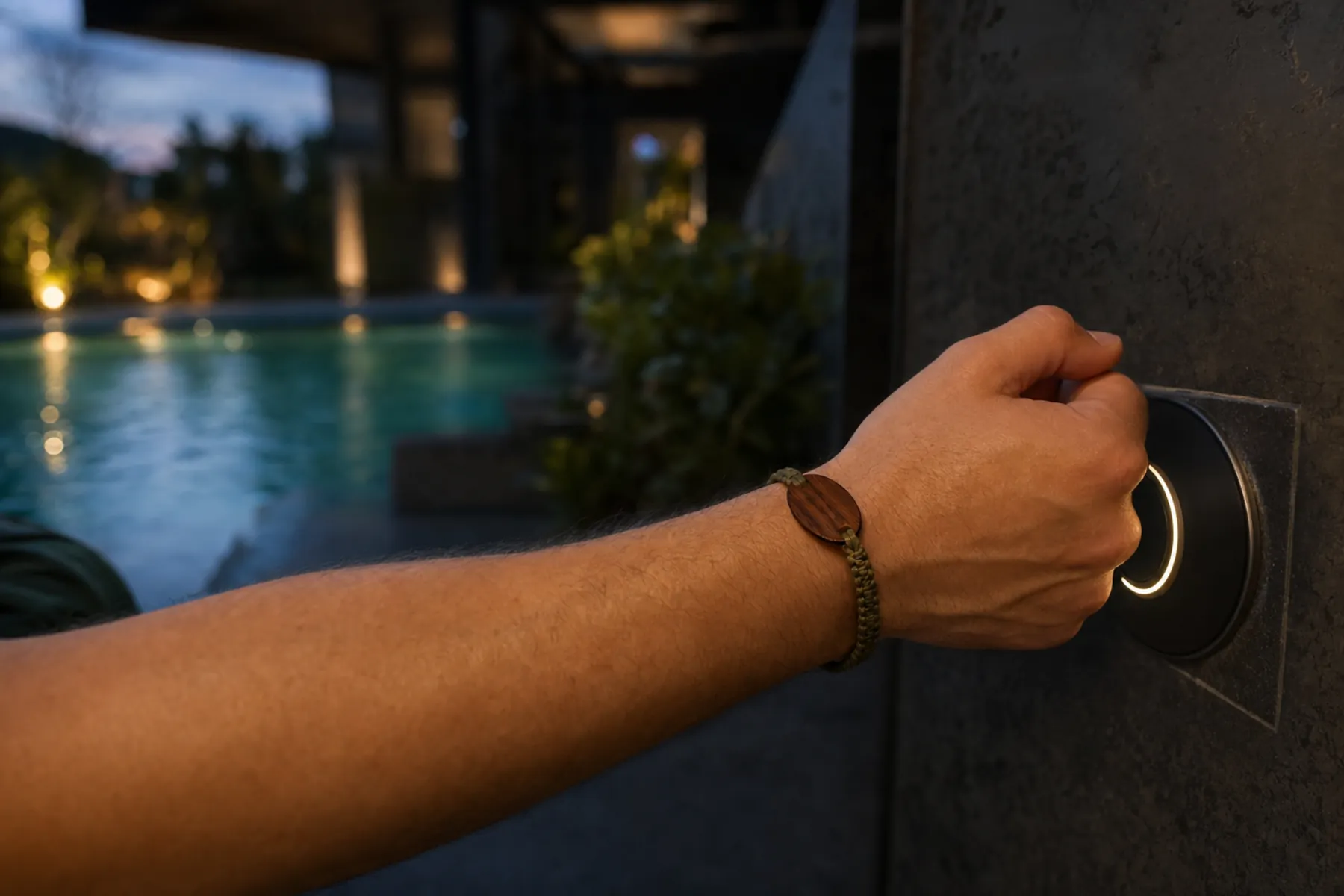
A wood face for a water park. A fabric band for daily immersion. A one-way closure for a property that intends to recover and reuse credentials. Amethyst beads for a beach programme, because sustained sun pales them. Coated paper day bands anywhere with water in it.
Each of those is a specification that fails in service, and each is regularly requested. Ruling one out costs a conversation; proving it costs a production run.
How an order is actually sized
Not by room count. By artworks multiplied by colourways multiplied by moulded sizes, plus the reissue rate, plus whether credentials come back. A property with two artworks, four tier colours and three sizes is running twelve separate counts.
Minimum order is 500 pieces per artwork, with 14–21 days production after artwork approval. Artwork restraint is therefore the single most effective way to control what an order costs — and it usually produces a better-looking result than a design per population does. Where the property is changes the planning rather than the range; the regional notes cover what differs.