What is actually being specified
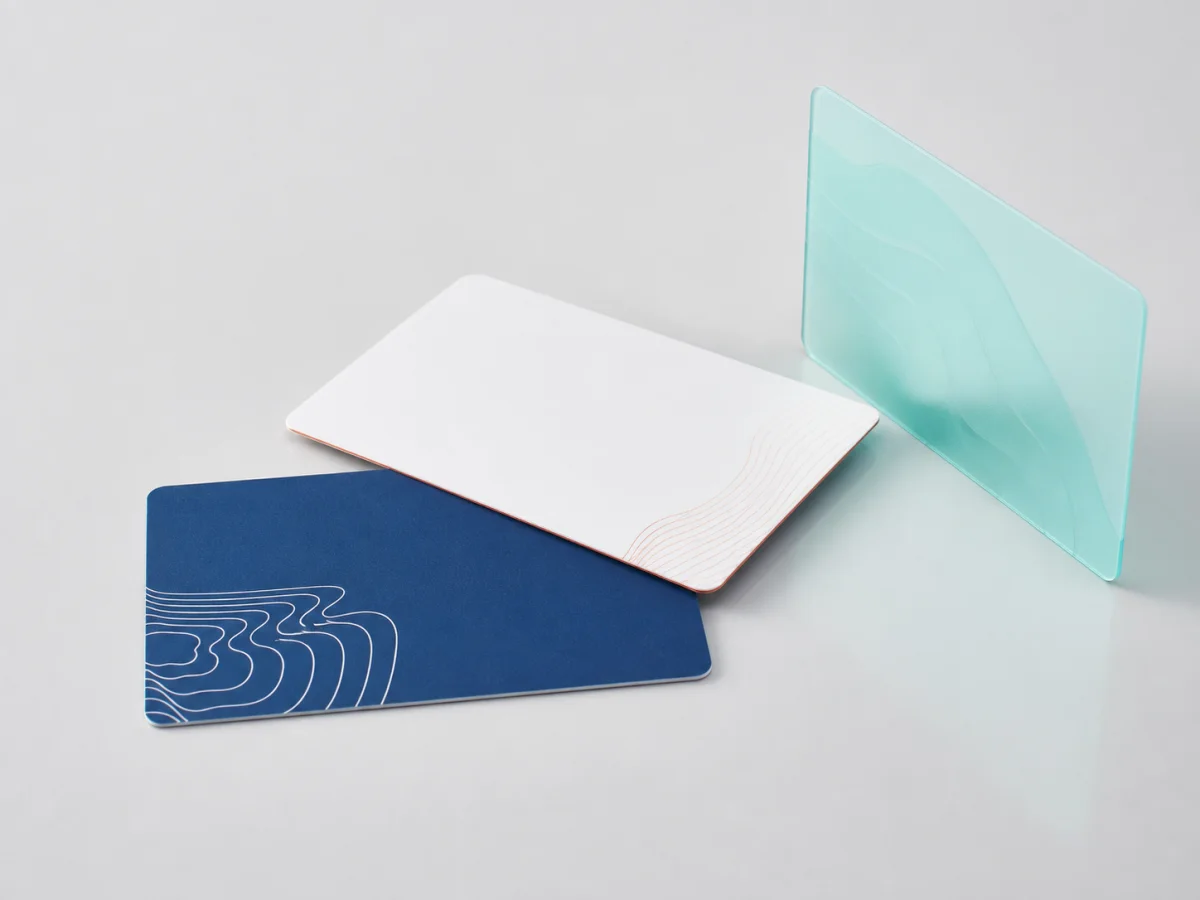
A key card looks like the simplest thing a property buys and contains more decisions than any wearable. The card body material, the thickness, the credential technology, the antenna position, the print process, the finish, the numbering, the encoding and the packing are all separate choices, and several of them constrain each other.
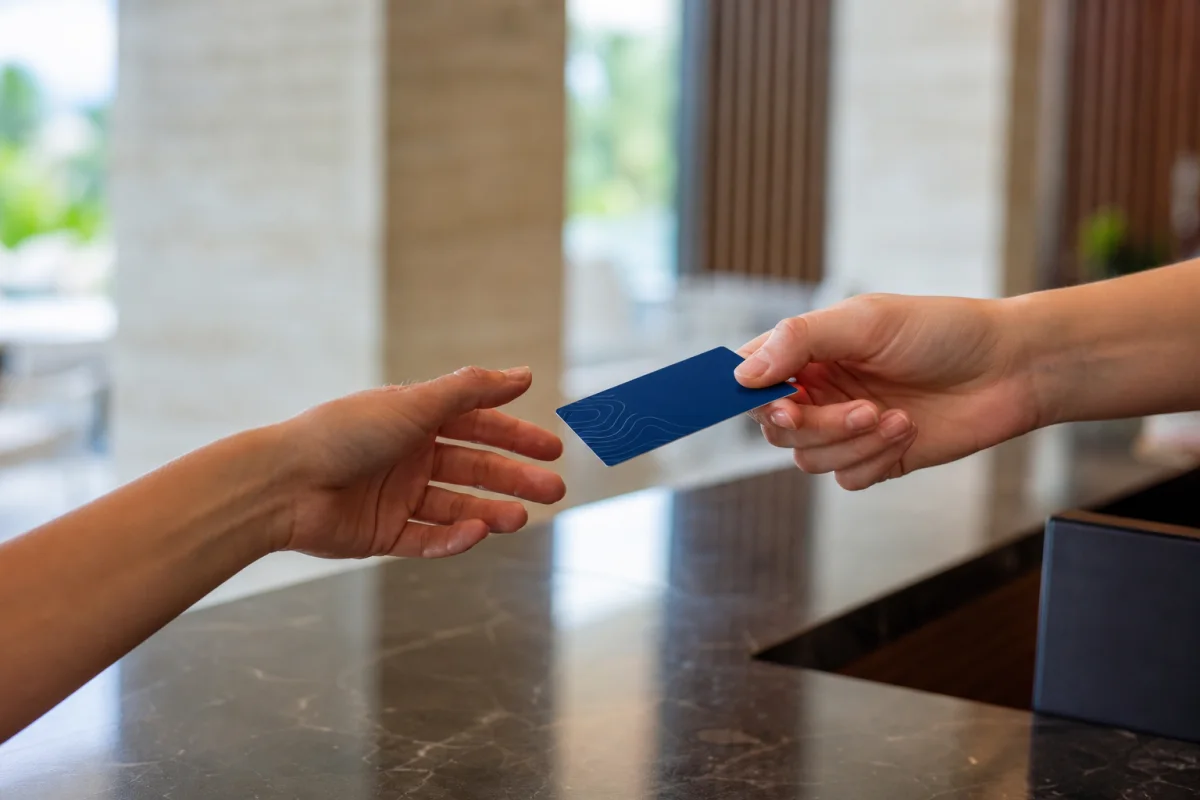
The card format itself is fixed: CR80 at 85.6 × 54 mm, ISO/IEC 7810 ID-1, typically 0.76 mm thick. That is the one part of the specification nobody has to decide, and it is why cards remain interchangeable between properties in a way wearables never are.
- Format
- CR80, 85.6 × 54 mm — ISO/IEC 7810 ID-1
- Thickness
- Typically 0.76 mm; thinner and thicker builds by specification
- Body material
- PVC, recycled-content and documented paper-based options
- Credential
- LF 125 kHz or HF 13.56 MHz, confirmed against the installed system
- Personalisation
- Full-colour two-sided print, numbering, variable data
- Supply
- Counted, range-labelled blocks
Choosing a card body
Standard PVC is the reference: it prints beautifully, laminates predictably, holds its shape and costs least. Recycled-content bodies behave close to it with slightly different print and colour behaviour that is worth approving on a physical sample rather than a screen. Paper-based bodies read very differently in the hand and have a different service life, which suits properties that want the material to be visible as a choice.
The trade is consistency versus statement. A property replacing 4,000 cards a year should weigh how much variation it can tolerate between runs, because natural-content bodies vary more than PVC does.
Where the antenna sits, and why artwork has to know
A card contains an antenna, and its position is not arbitrary. Artwork that ignores it — a heavy foil block, a large metallic area, an embossed panel across the antenna path — can affect performance or produce a visible witness mark in the card surface.
That is why the artwork is approved against the card construction rather than as a flat design. It is a five-minute check that removes a category of expensive surprise.
The magnetic stripe question
Some properties still need a stripe, because the installed lock estate reads one. Where that is genuinely the case we specify it; where it is a habit rather than a requirement, it is worth confirming, because a stripe constrains the artwork, adds a process and gives a guest a surface to scratch.
The answer comes from the installed system rather than from preference. As with every credential here, technology and encoding are confirmed against that system before production rather than inferred from what the property had last time.
Numbering, sequences and what they are for
Numbering is how a property audits a credential estate: which range went to which property, which block was issued in which season, which cards are unaccounted for. Without it, a box of cards is anonymous and a security question has no answer.
We supply in counted, range-labelled blocks so goods-in can record ranges without opening everything. That is a decision made at order time — it costs nothing and cannot be retrofitted once cards are made.
Cards and wearables in one plan
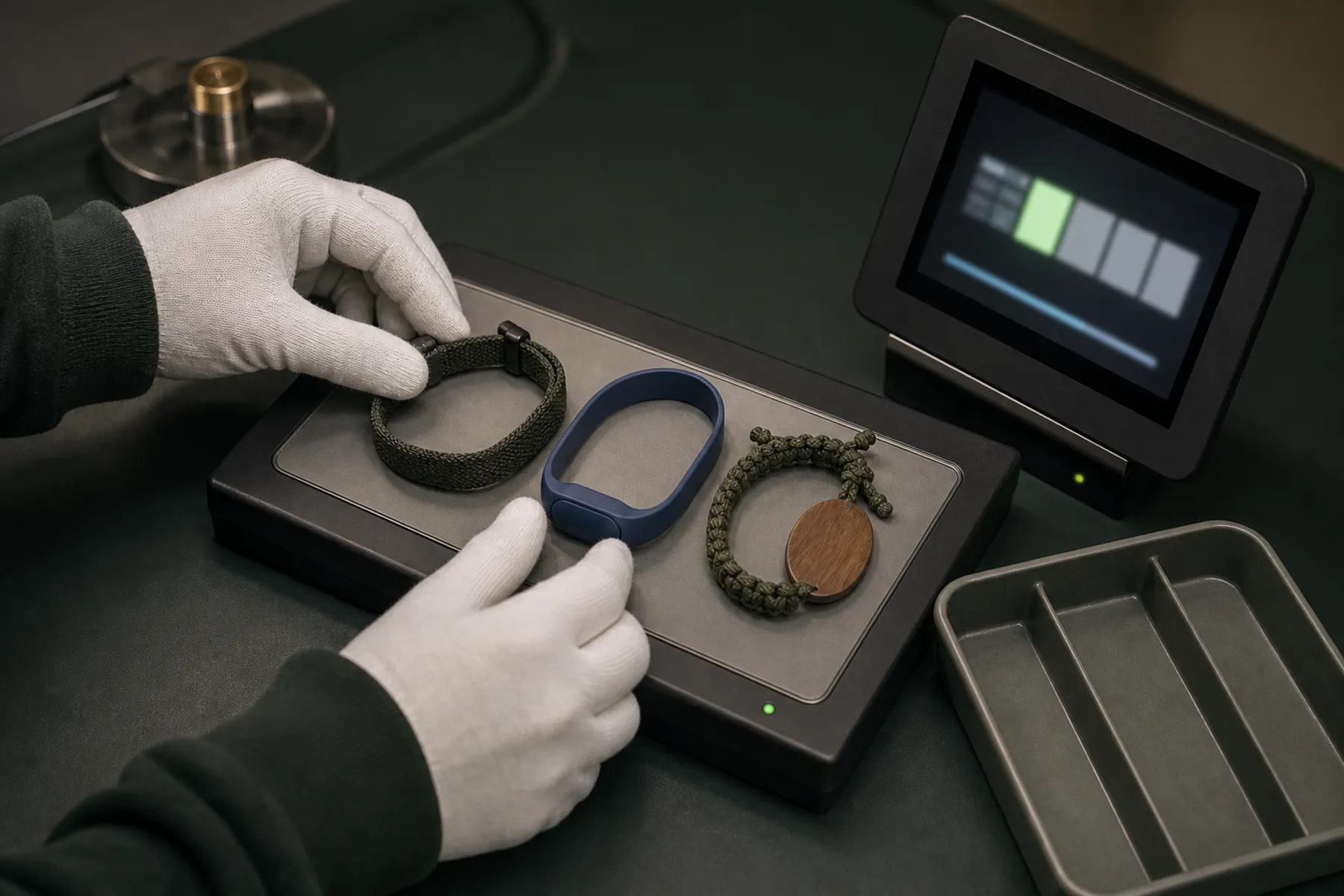
Most resort properties end up issuing both. The pattern that works is a card carrying room access at the desk and a wristband carrying resort access in wet zones, specified together so they share a visual identity, a numbering logic and a reorder discipline.
The related range and the wristband catalogue set out the wearable side; what matters here is that the two are one specification rather than two purchases.
Minimum order is 500 pieces per artwork, with 14–21 days production after artwork approval. A second card design — a suite version, a staff version — is a second count, so artwork restraint controls the order size more than the room count does.