Onboard credentials are a solved problem for most operators. What is rarely designed properly is the boundary — the moments where the ship’s system hands the guest to a terminal, a tender operator or an excursion, and takes them back.
Map the boundaries before the credential
A cruise credential crosses several systems in a week: embarkation at a terminal, cabin and onboard services, a gangway check at each port, sometimes a tender, sometimes an excursion operated by a third party, and a final disembarkation.
Some of those are the operator’s systems and some are not. The credential can be the same object throughout, but the property has to decide at each boundary whether it is being read by a system, checked by a person, or simply carried as proof — because those three demand different things from the physical product.
The gangway is the hardest read on the ship
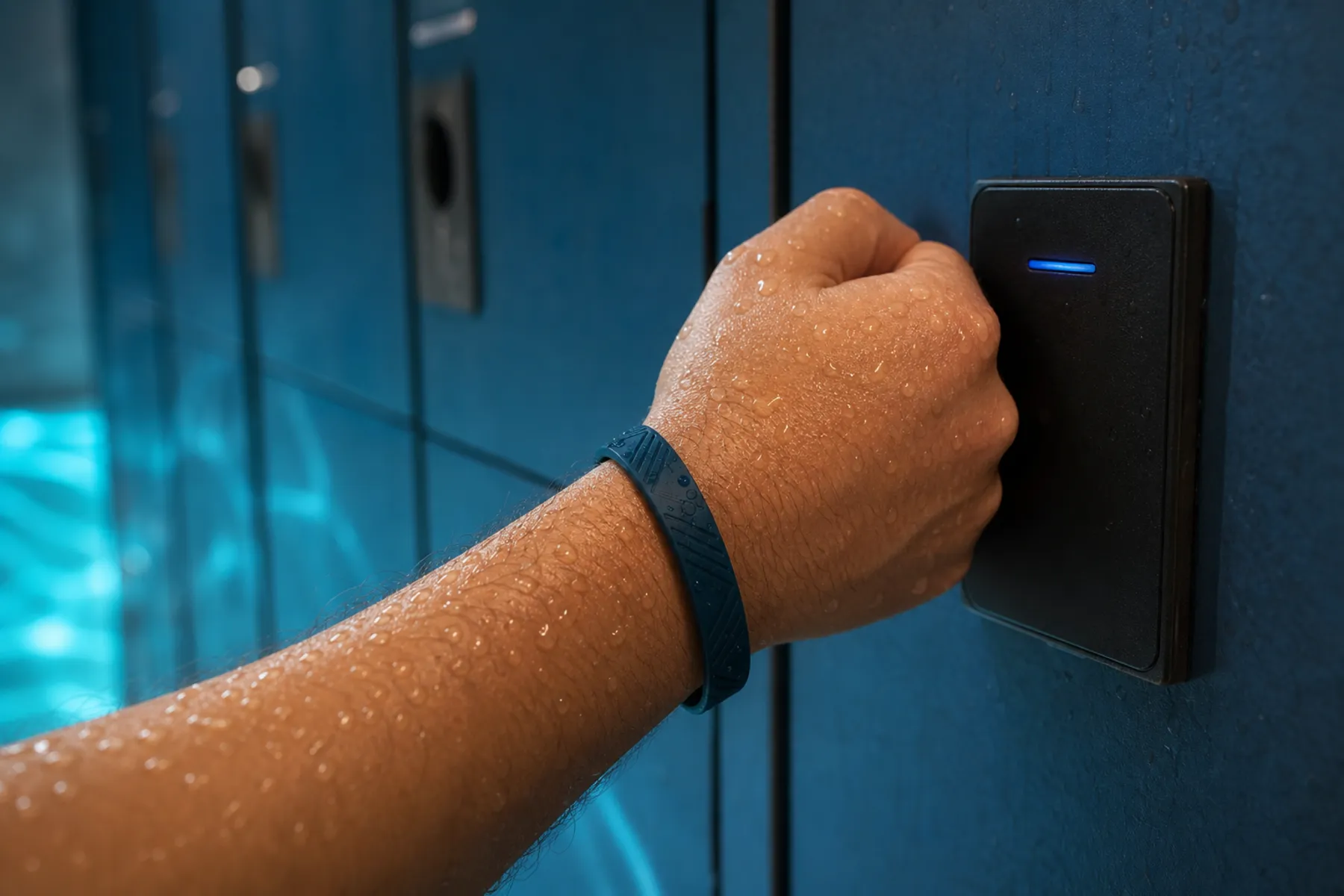
It is outdoors, often in bright sun where a guest cannot see an indicator, frequently on or near metal, and used by people carrying bags and children after a long day ashore. It also has a queue behind it at every return.
That combination makes it the reader to specify against. A credential that satisfies the gangway will satisfy a cabin door; the reverse is not true, and testing at a desk unit proves neither.
On a ship that is the gangway: outdoors, metal-adjacent, high-volume, used by tired guests with full hands. Everything else is easier.
Ashore, the credential becomes a document
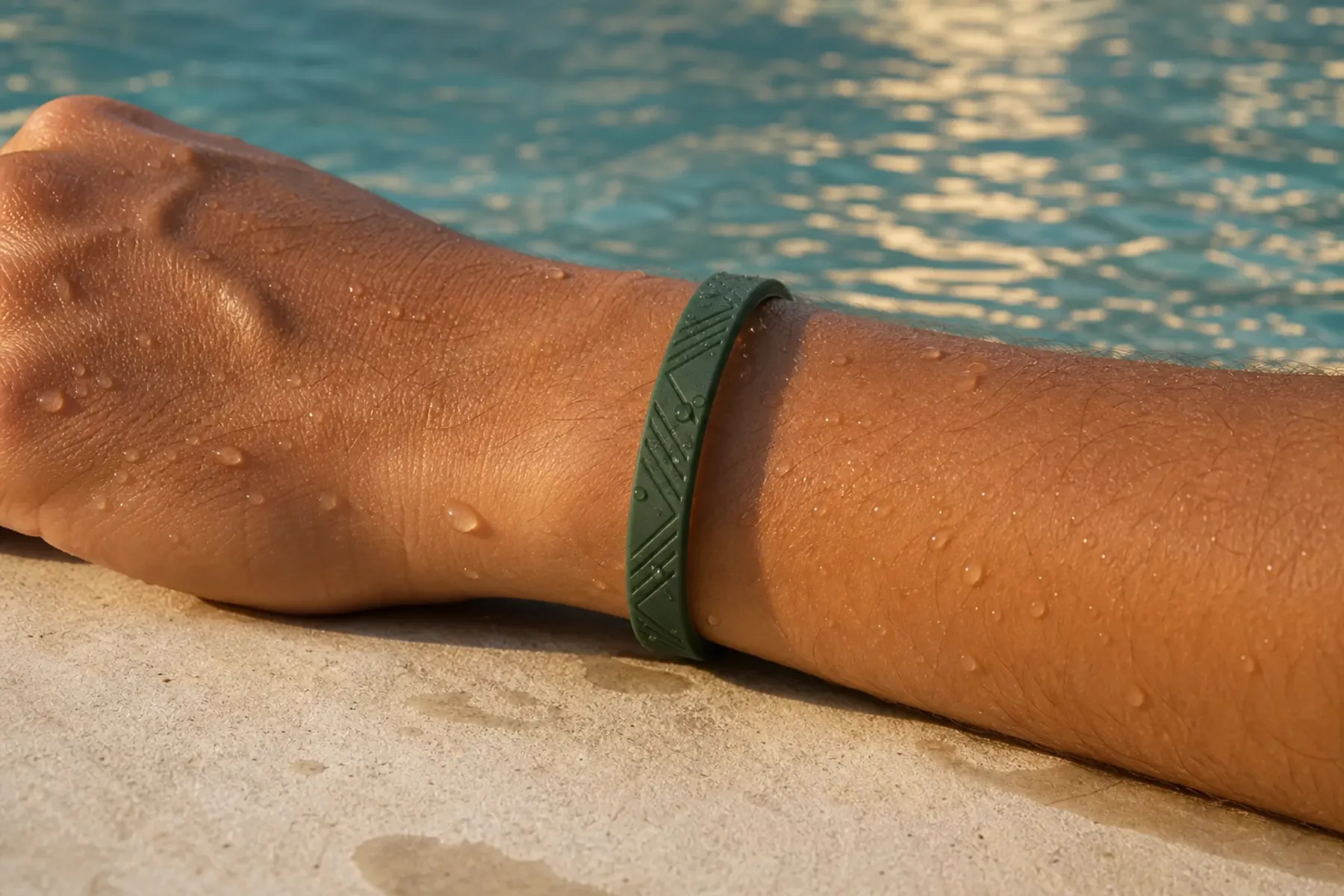
Once a guest steps off, the credential usually stops being an access device and becomes the thing that gets them back aboard. It goes into markets, onto beaches and into the sea, whether or not that was the intention.
So it should be specified for that life rather than for the onboard one. Assume immersion, assume sand, assume it will be worn continuously — and choose a construction that tolerates all three, because a credential that fails ashore creates precisely the problem the system exists to prevent.
Reissue with no supplier and no resupply
Nothing arrives mid-voyage. That single constraint changes how spares are calculated: on the worst reissue week recorded rather than an average one, with duplicates of everything needed to issue a credential — printer stock, encoding equipment, cutting tools if one-way bands are used.
It also argues for constructions that can be reissued by one person at a service desk at any hour, without a specialist. Anything requiring a particular member of staff is a single point of failure on a ship at sea.
Salt air is the environment, not salt water
Salt water affects credentials that go swimming. Salt air affects everything on board continuously, including spare stock in a drawer: metal fittings corrode, printed surfaces dull, cords stiffen faster than they would ashore.
The responses are cheap. Eliminate metal from the credential, prefer moulded and welded constructions over fabric-and-fitting ones, and store spares sealed. None of that costs anything meaningful and all of it extends the life of a season’s stock.
Regional considerations for coastal and port operations
Marine and port-side use adds exposure a land-based specification may not anticipate. Settle these questions before a construction is approved.
- How much salt-spray and sustained humidity exposure should the closure and module seal be tested against?
- Are credentials issued at one port and re-presented at another, and does that change the reissue workflow?
- Where is replacement stock held, and how long can a vessel or terminal operate before it is replenished?
- Which import formalities apply at each destination, and who prepares that paperwork?
Compatibility is confirmed against the property’s lock system, credential technology and encoding requirements before production. We do not claim universal compatibility.
What to send with an enquiry
Include the installed system model, an existing credential sample where possible, quantity, expected wear period, guest types, controlled zones and artwork direction. For material-led options, state the evidence or production documentation your procurement team expects.
FSC-certified material options available with supporting production documentation.
No named hotel or customer project is used as proof. The reasoning behind that stance is set out on the about page.