This is a worked planning scenario rather than a customer project — no property is described and none is implied. It exists because the reasoning is more useful than a case study, and because the reasoning transfers.
The scenario
A dispersed lodge of roughly thirty units in a warm, humid climate, some distance from a supply hub. Guests are outdoors most of the day. There is a small spa, a restaurant open to non-residents, and a programme of guided activities that outside visitors can book. Connectivity across the site is intermittent. Reception is staffed but not always occupied.
Everything that follows is derived from those conditions. A property that differs in any of them should expect the conclusions to change, which is the point of writing it as a scenario rather than as a recommendation.
Populations first
Four appear immediately: resident guests staying several nights; day visitors who come for the restaurant or a guided activity; children; and staff, who wear a credential for a season rather than a stay.
Resident and day populations need to be told apart by a member of staff at a distance, because a restaurant open to non-residents means someone at the bar cannot assume. Children need a construction they cannot remove and swap. Staff need a credential that turns over with seasonal hiring while the band does not.
What the four populations imply:
- Residents — durable band recovered at checkout, comfortable for continuous outdoor wear
- Day visitors — visually distinct, time-bounded, one-way closure
- Children — closed loop, no spend, sized at issue
- Staff — pouch construction so the credential can be replaced without replacing the band
Climate narrows the construction
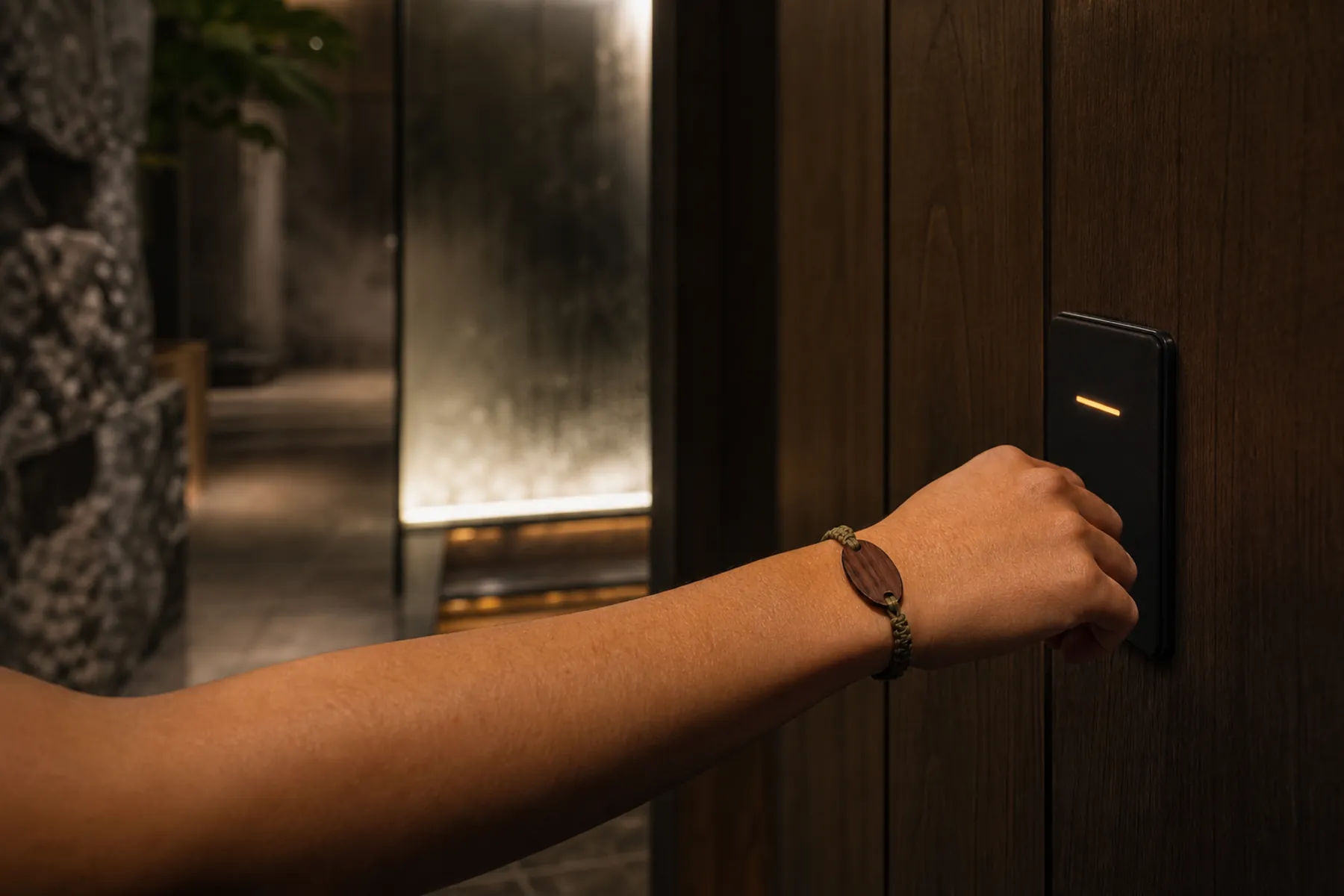
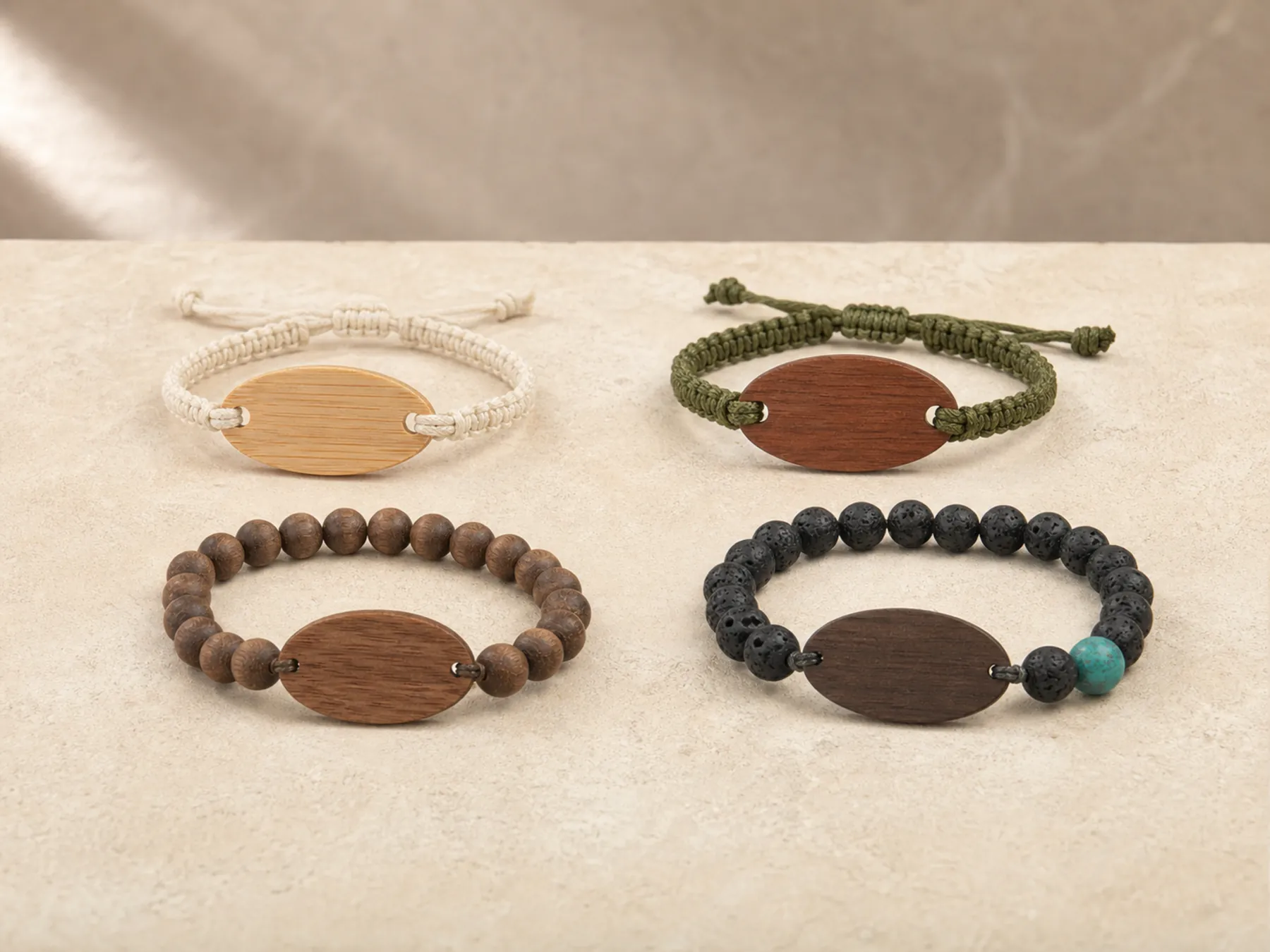
Warm and humid with daily dew is harder on natural fibres than an occasional soaking. Cotton cords and cork faces suit the setting aesthetically and dislike it environmentally; sealed faces on rope or moulded straps hold up.
That is the specific trade this kind of property has to make consciously. The material that photographs best for the website is frequently not the one that still looks right in week six.
Distance changes reissue from a service to a safety question
A guest twenty minutes from reception in the dark who cannot open their unit is a different problem from a hotel guest at a desk. Spare credentials should be held at more than one point, and staff already out on site should be able to resolve an access failure without walking back.
Intermittent connectivity compounds it, so the property needs a stated fallback — a physical override, a held master credential, a defined call route — that staff can execute rather than an assumption that the network will be up.
What the order looks like
One artwork for residents, plain and dateless, at the 500-piece minimum, with recovery at checkout designed in so that stock is a multi-year horizon rather than a season. A cheap day credential for visitors. A staff pouch band ordered against headcount plus turnover, with credentials managed separately.
Minimum order is 500 pieces per artwork with 14–21 days production after artwork approval, and a remote property should add its own inbound time to that rather than treating the production window as the whole lead time.
We do not publish customer projects as proof. A worked scenario shows the reasoning without borrowing anyone’s name, and the reasoning is the part that transfers to your property.
Regional considerations for humid, remote properties
This scenario assumes a property some distance from a supply hub, in a climate that stays warm and humid for most of the year. Those two conditions shape the construction more than the visual direction does.
- Does sustained humidity affect the natural-material options under consideration, and has that been tested rather than assumed?
- How much spare stock should be held on site if replenishment is slow to reach the property?
- Do day visitors arrive from outside the property, and does that change how quickly credentials must be issued and recovered?
- What import documentation does the destination require, and how early must it be prepared?
Compatibility is confirmed against the property’s lock system, credential technology and encoding requirements before production. We do not claim universal compatibility.
What to send with an enquiry
Include the installed system model, an existing credential sample where possible, quantity, expected wear period, guest types, controlled zones and artwork direction. For material-led options, state the evidence or production documentation your procurement team expects.
FSC-certified material options available with supporting production documentation.
No named hotel or customer project is used as proof. The reasoning behind that stance is set out on the about page.