A wristband does not pay for anything. It carries an identity, and a platform somewhere decides whether that identity may charge to a folio — which is why the useful conversation about cashless resorts is about exceptions, not about the band.
What the band actually contributes
The credential contributes one thing: a reliable identifier presented at the right place, in the right condition, quickly. Everything else — balances, limits, folios, settlement — happens in the property management system and whatever point-of-sale platform is connected to it.
That is worth stating clearly because properties sometimes buy a wristband expecting it to deliver a capability that only an integration can deliver. The band is necessary and it is not sufficient.
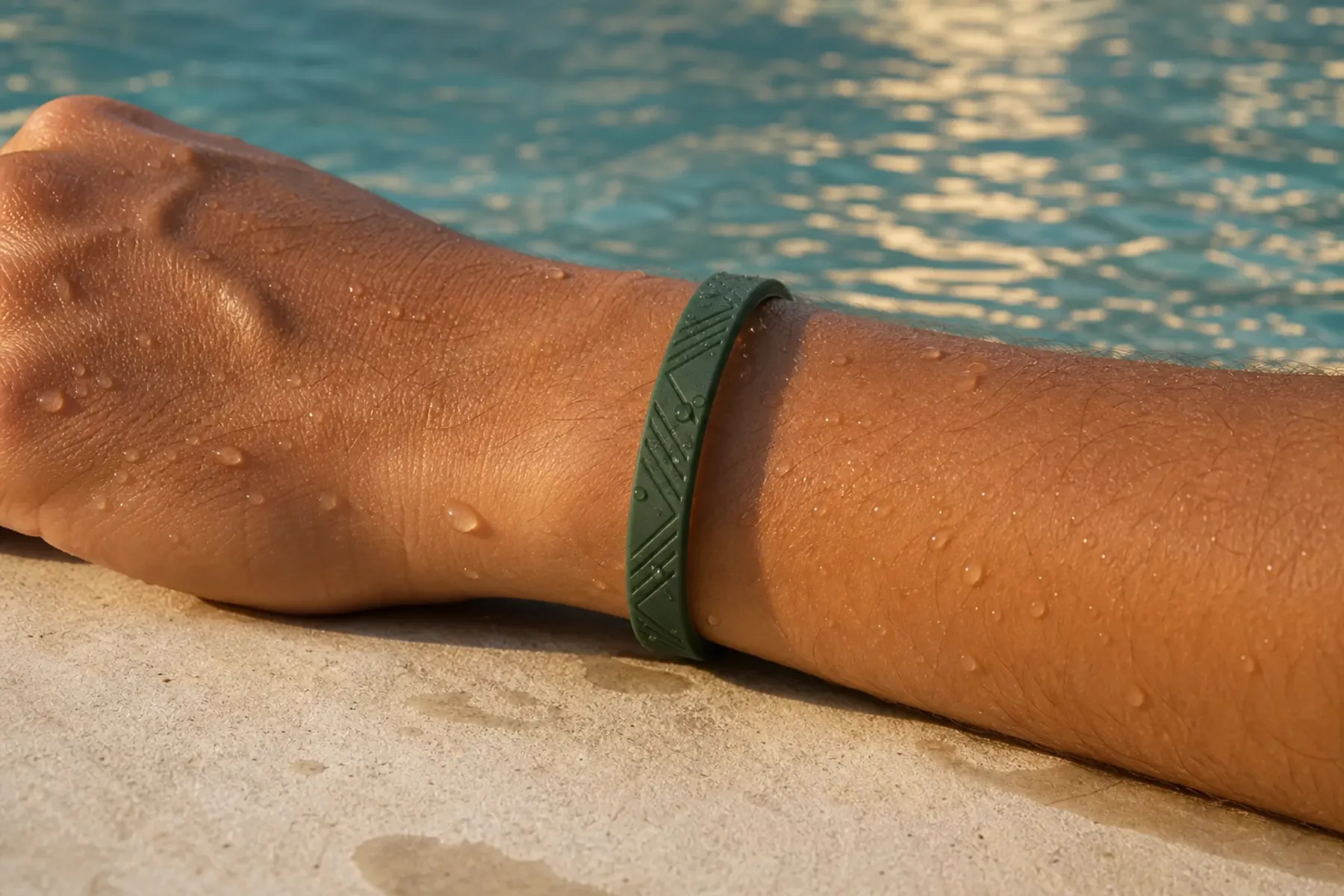
The happy path is not where the design work is
A guest presents a band at a bar, the charge lands on the room. That path is easy and it is not where a cashless programme goes wrong. It goes wrong at the exceptions: an offline beach bar, a guest who has lost their band, a child who should not be able to charge, a departing guest whose folio has closed, a spend limit reached at 4pm on the last day.
Each of those needs an answer that a member of staff can execute without calling a manager, and several of them have physical consequences — which is where the credential specification re-enters the conversation.
The exceptions to answer before ordering anything:
- What happens when the point of sale cannot reach the platform
- Who may authorise a charge for a guest without a band, and against what identification
- How a child’s credential is prevented from charging, and how staff can see that
- What a spend limit looks like to the person serving, not just to the system
- How quickly a lost credential is disabled, and by whom, at 11pm
Where the credential is presented decides its construction
A payment credential is presented far more often than a room credential, in worse conditions: wet, at a bar, one-handed, in a queue. That frequency argues for a construction that keeps the credential in a predictable position on the wrist and reads on first presentation.
It argues against free-rotating bead and cord constructions for this use, however well they suit the property’s design, and it makes the wet read test at the actual point-of-sale readers a condition of approval rather than a nice-to-have.
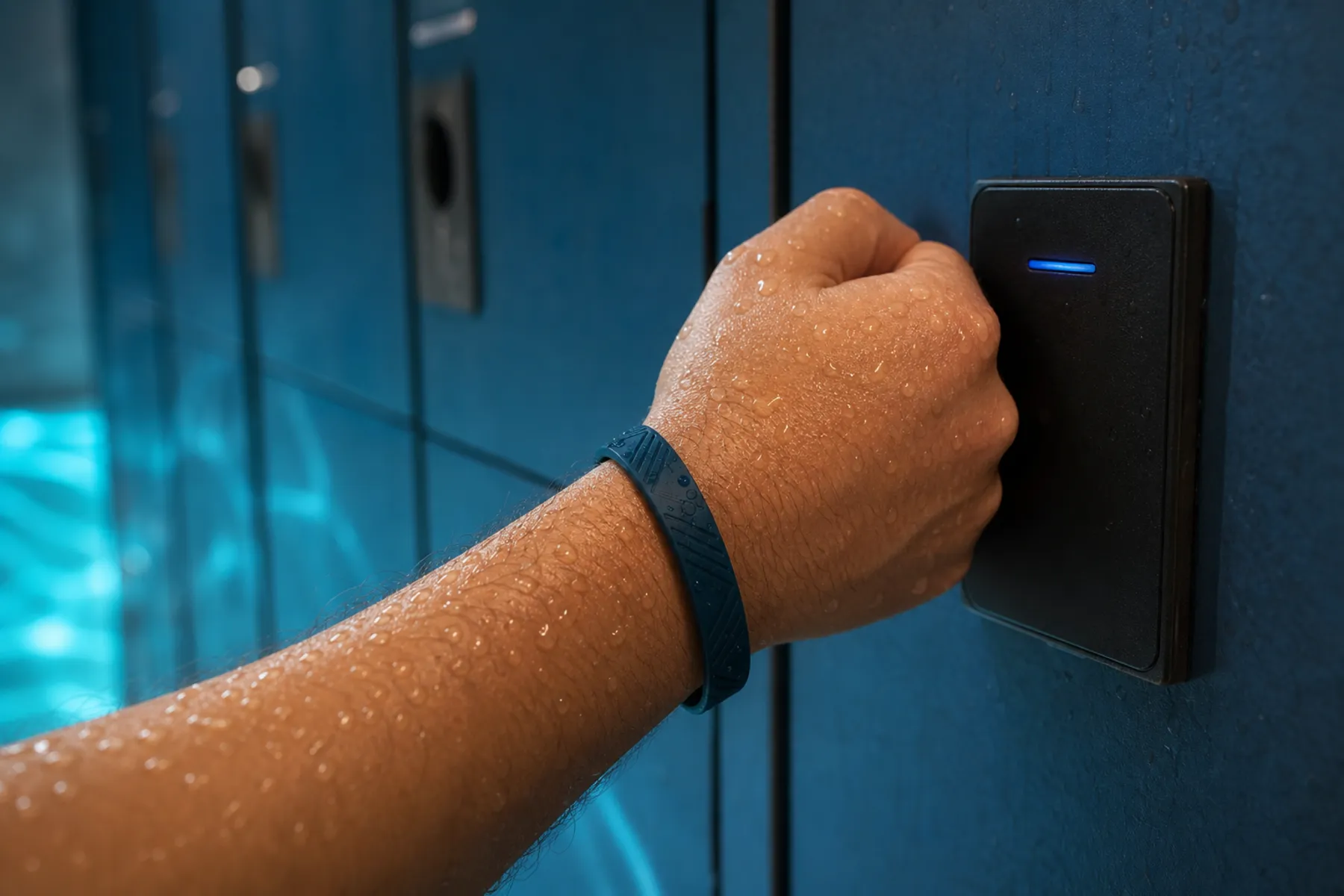
Making entitlement visible to staff
A server should be able to see whether a guest is entitled to charge before presenting the band, not after a decline. That is a visual design job: tier colour, a distinct child credential, a visibly different day-visitor band.
Properties that get this right reduce declines at the point of sale, which is where a cashless programme is judged by guests. A decline in front of other guests is remembered far longer than a smooth transaction.
The lost band is the whole programme in one moment
A guest who loses a band at a beach bar has lost their room key and their ability to buy a drink at the same time. How quickly and gracefully that is resolved is the guest’s actual experience of the credential system.
The specification consequences are small and concrete: hold reissue stock in the same colourway so the guest is not marked out, keep the disable-and-reissue procedure short enough for one member of staff, and rehearse it before the season rather than during it.
Every cashless programme works when everything works. What separates the good ones is what a server does when the platform is offline, the guest has no band, or the limit has been reached.
Compatibility is confirmed against the property’s lock system, credential technology and encoding requirements before production. We do not claim universal compatibility.
What to send with an enquiry
Include the installed system model, an existing credential sample where possible, quantity, expected wear period, guest types, controlled zones and artwork direction. For material-led options, state the evidence or production documentation your procurement team expects.
FSC-certified material options available with supporting production documentation.
No named hotel or customer project is used as proof. The reasoning behind that stance is set out on the about page.