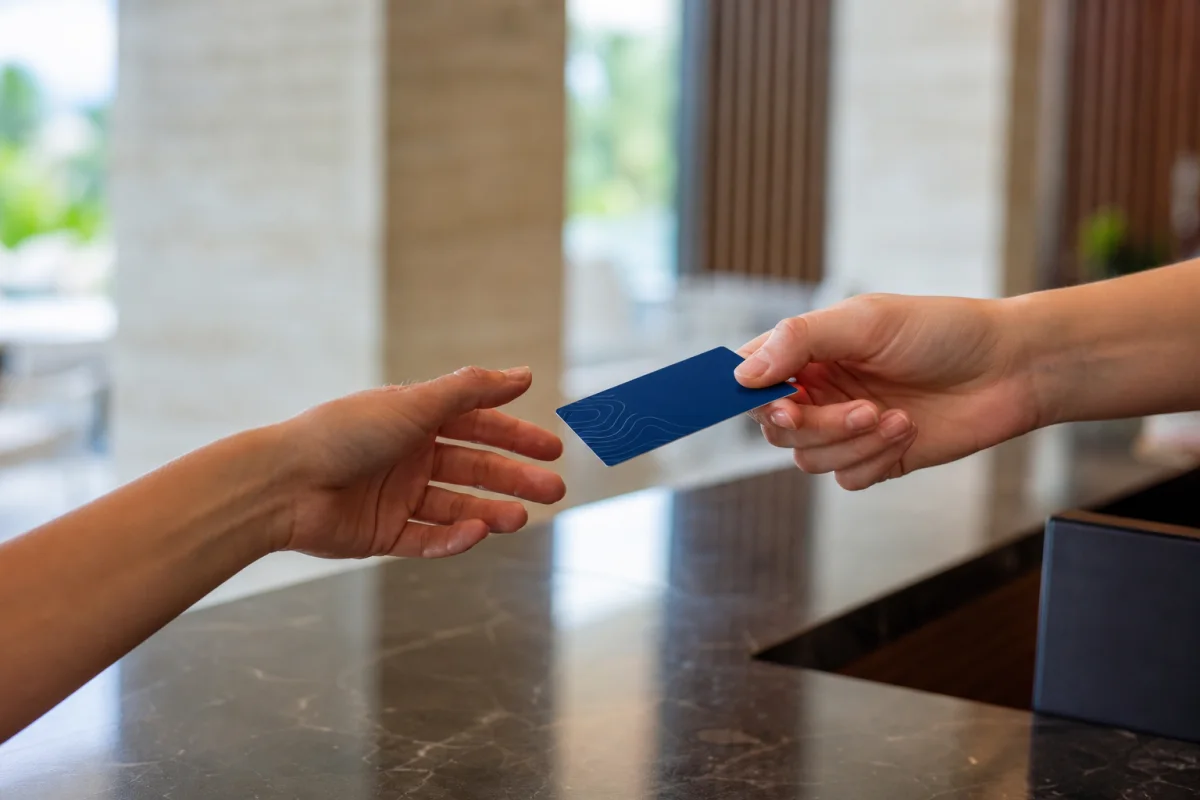
Properties that move to wristbands rarely stop issuing cards, and the ones that try usually go back. The useful question is not which format wins — it is which format carries which job, and what that does to the front desk.
What each format is genuinely good at
A card is the better object at a front desk: it is fast to issue, it carries large artwork, it holds a folio number legibly, and a guest who does not want to wear anything can put it in a pocket. It is a poor object at a pool, because it is left on a lounger, dropped in water and forgotten in a towel.
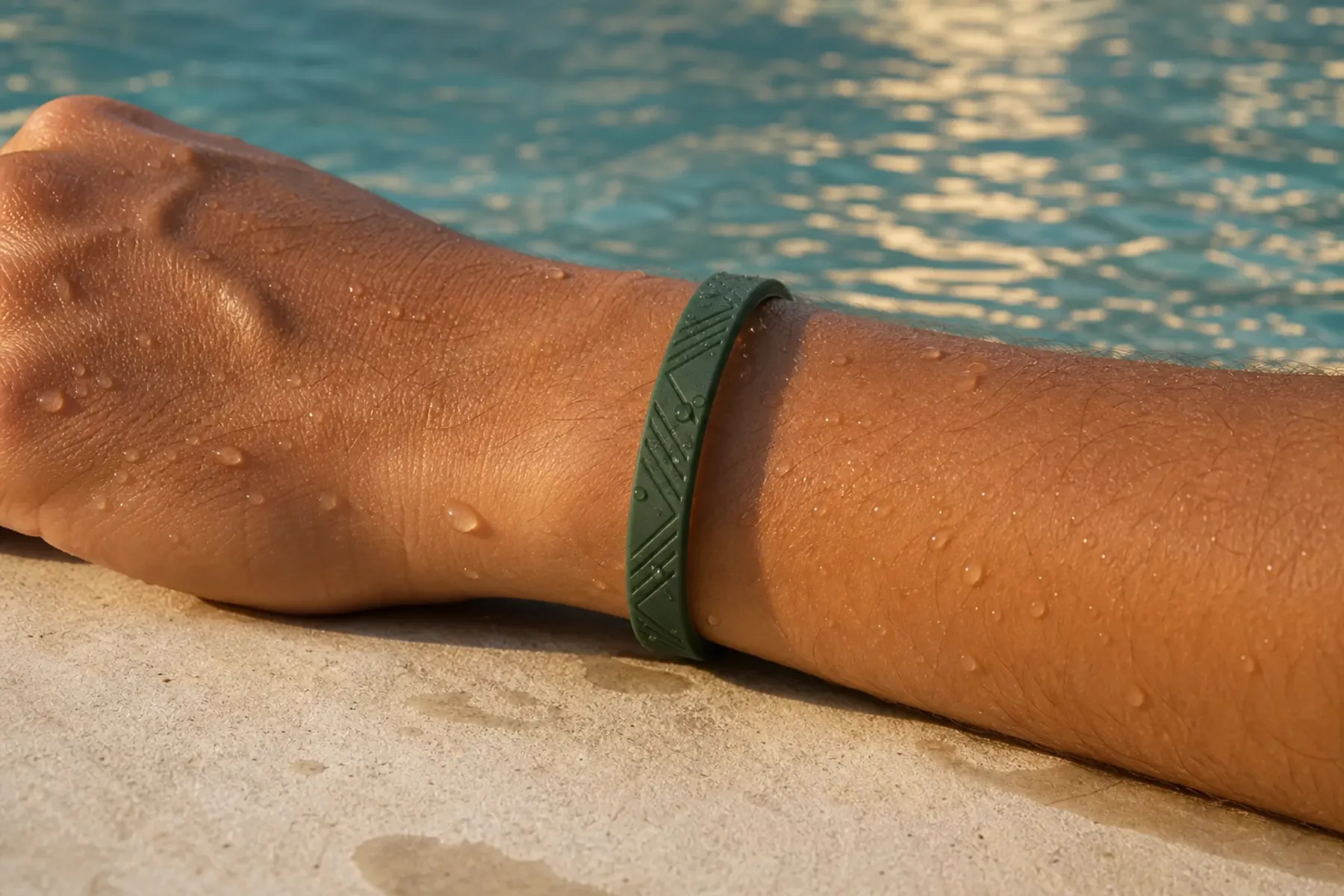
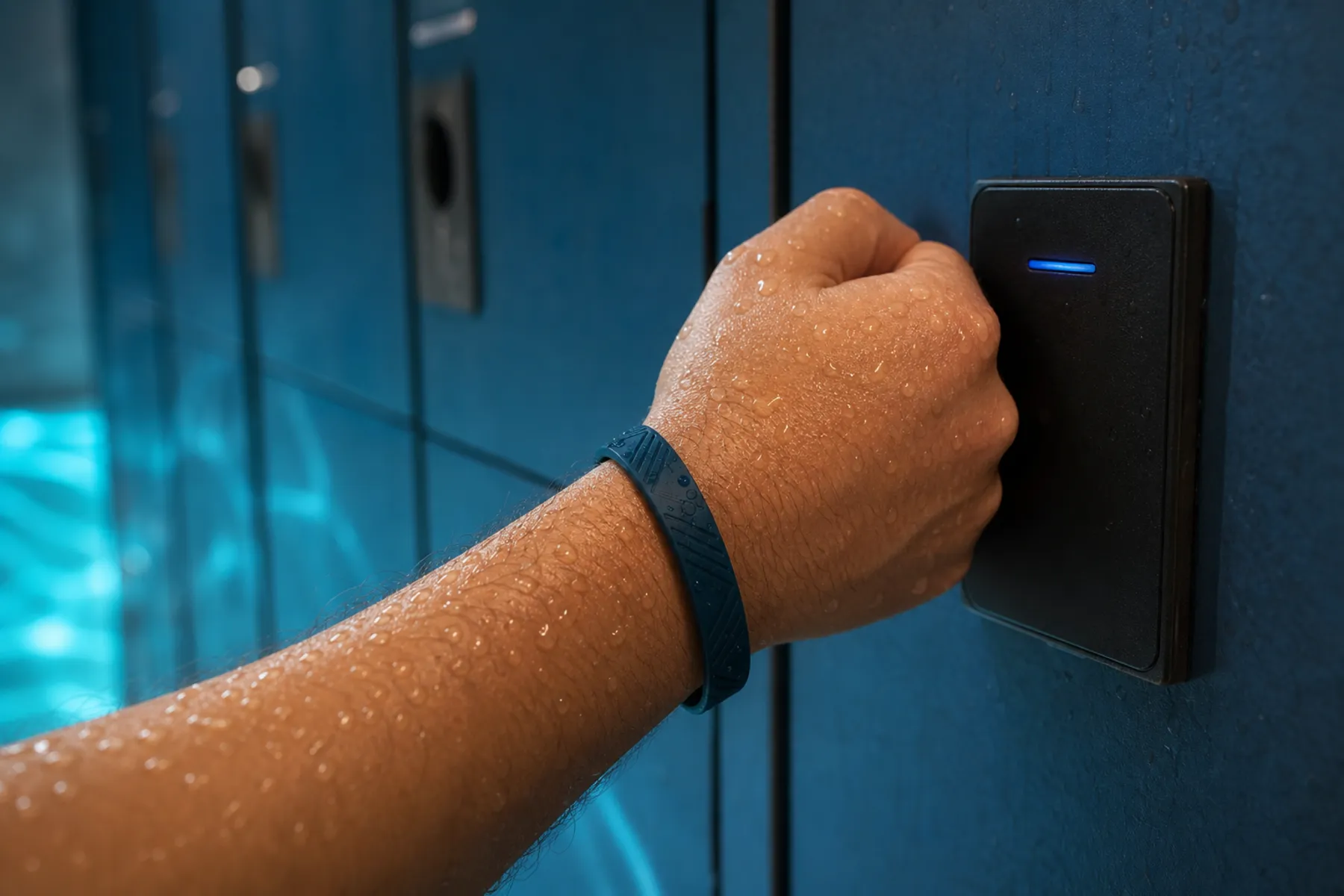
A wristband is the better object once the guest is in the property: it stays with them, it survives water, and it cannot be left in a room by accident. It is a worse object at check-in, because it has to be fitted, sized and explained.
Why properties issue both
Because the guest journey has both kinds of moment. The pattern that works most often is a card issued at check-in carrying room access, and a wristband carrying resort access — pools, beach, activities and, where the platform supports it, spend.
That split also matches the risk. A lost wristband at a beach bar is an inconvenience; a lost room card is a security event with a defined procedure. Keeping them separate keeps the consequences separate.
The reissue arithmetic that drives the decision
Properties usually discover the wristband argument through reissue rates: cards reissued repeatedly because guests take them to the pool. Counting that for a week is more persuasive than any product comparison — it is a real number, it has a cost, and it points directly at which moments need a wearable.
It also identifies the population. Frequently it is not everybody; it is families and long-stay guests, which means the property may need wristbands for a segment rather than for everyone.
What to count before deciding:
- Card reissues per week, and where the guest says they lost it
- How many of those are pool, beach or activity related
- Which guest segments generate them
- What each reissue costs in desk time, not just in stock
Two formats mean one plan, not two
The mistake is treating them as separate purchases. They share a visual identity, a numbering logic, a reorder discipline and often a technology decision, and they should be specified together so the property ends up with a system rather than two products that happen to coexist.
That includes deciding which format is authoritative when they disagree, and what a member of staff does when a guest presents the wrong one at the wrong reader.
What the front desk has to absorb
Two formats mean two stock lines, two reissue procedures and a longer check-in. That is a real cost and it should be acknowledged rather than assumed away — the desk is the part of the property that will feel this decision daily.
Properties that manage it well fit the wristband at check-in as part of the welcome rather than as an extra step, and hold reissue stock for both formats where guests actually lose them, which is usually not at reception.
One week of counted card reissues, with the location the guest reports, tells you whether you need wristbands, for whom, and for which zones. It is the cheapest piece of research available and almost nobody does it.
Regional considerations for warm-climate resorts
Properties in hot, humid, water-led settings usually reach this decision for operational reasons rather than aesthetic ones. These questions separate the two.
- How much of the guest day is spent in or near water, and how often are cards reissued because of it?
- Do sunscreen, salt water and chlorine exposure change which construction is realistic for a multi-day stay?
- Is the front desk still the right issue point, or does a pool or beach location need its own controlled stock?
- If both formats are kept, which one carries room access and which one carries resort access?
Compatibility is confirmed against the property’s lock system, credential technology and encoding requirements before production. We do not claim universal compatibility.
What to send with an enquiry
Include the installed system model, an existing credential sample where possible, quantity, expected wear period, guest types, controlled zones and artwork direction. For material-led options, state the evidence or production documentation your procurement team expects.
FSC-certified material options available with supporting production documentation.
No named hotel or customer project is used as proof. The reasoning behind that stance is set out on the about page.