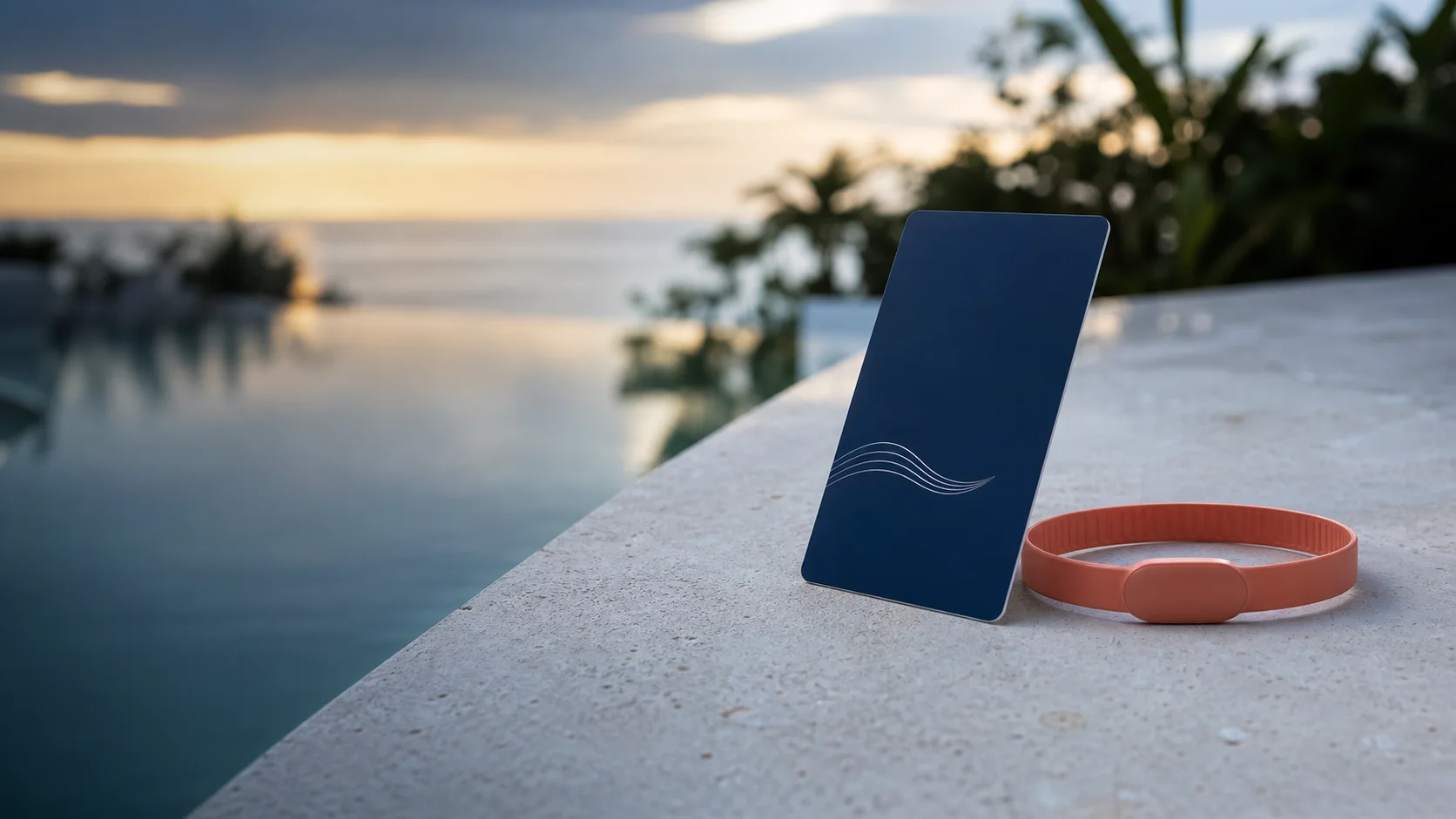
Properties rarely choose one format after considering both. They inherit a card estate, get frustrated by reissues, and add wristbands. Doing it deliberately produces a better answer and a smaller order.
- Count reissues for one week
- What each format is genuinely good at
- The usual split, and why it works
- What two formats cost the front desk
- When one format is genuinely enough
Count reissues for one week
The cheapest piece of research available, and almost nobody does it. Record every card reissued for a week and where the guest says they lost it. The answer tells you whether you need wearables, for which population, and for which zones.
Most properties discover the losses are concentrated: families, long-stay guests, and anything involving a pool. That is a segment, not a whole property, and it usually means wristbands for some guests rather than a wholesale format change.
What each format is genuinely good at
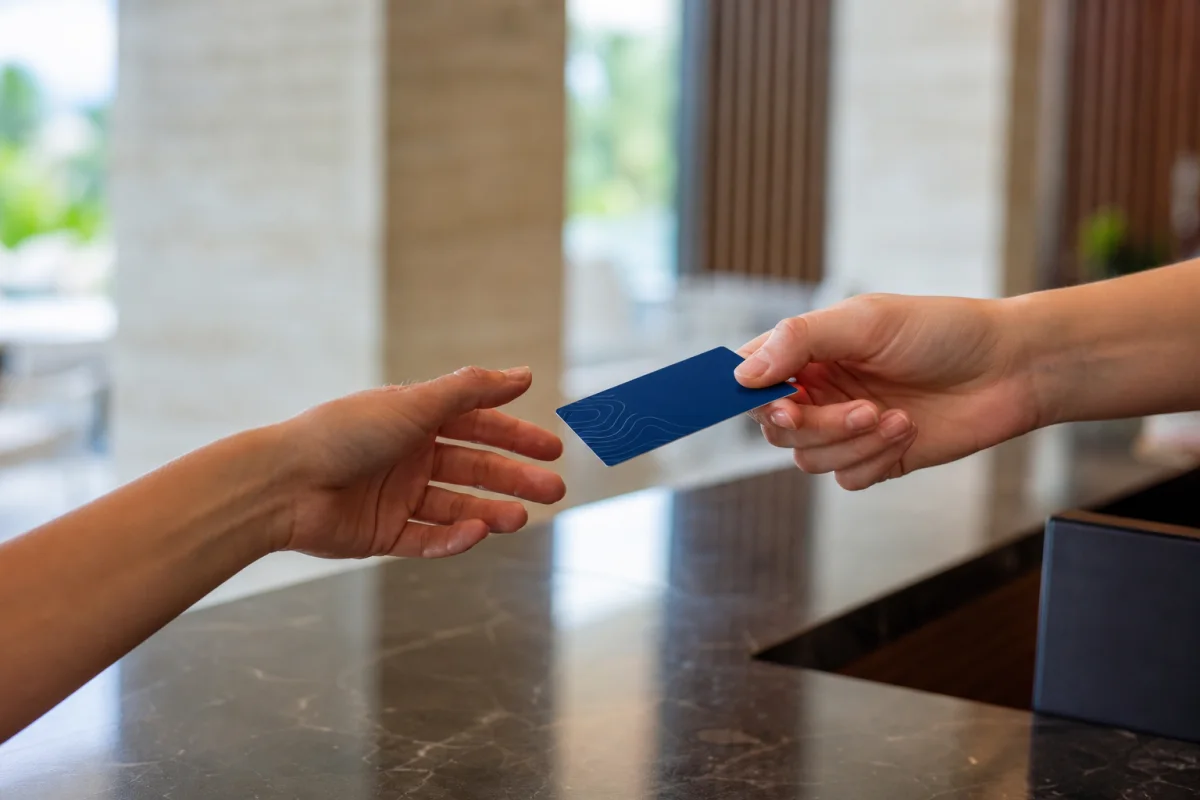
A card is better at a desk: fast to issue, large artwork, pocketable, and acceptable to guests who do not want to wear anything. It is poor at a pool, because it is left on a lounger and forgotten in a towel.
A wristband is better once the guest is inside the property: it stays with them, survives water, and cannot be left in a room by accident. It is worse at check-in, because it has to be fitted, sized and explained.
- Card
- Fast issue, large artwork, pocketable. Lost at pools and beaches.
- Wristband
- Stays with the guest, survives water. Slower to issue, must be sized.
- Both
- Card carries the room, band carries resort access. Two stock lines, one identity system.
The usual split, and why it works
A card issued at check-in carrying room access, and a wristband carrying resort access — pools, beach, activities, and spend where the platform supports it. That matches the risk as well as the convenience: a lost band at a beach bar is an inconvenience, a lost room card is a security event with a procedure.
It also lets a property disable one without the other, which is the practical benefit that argues for two linked identities rather than one shared one.
What two formats cost the front desk
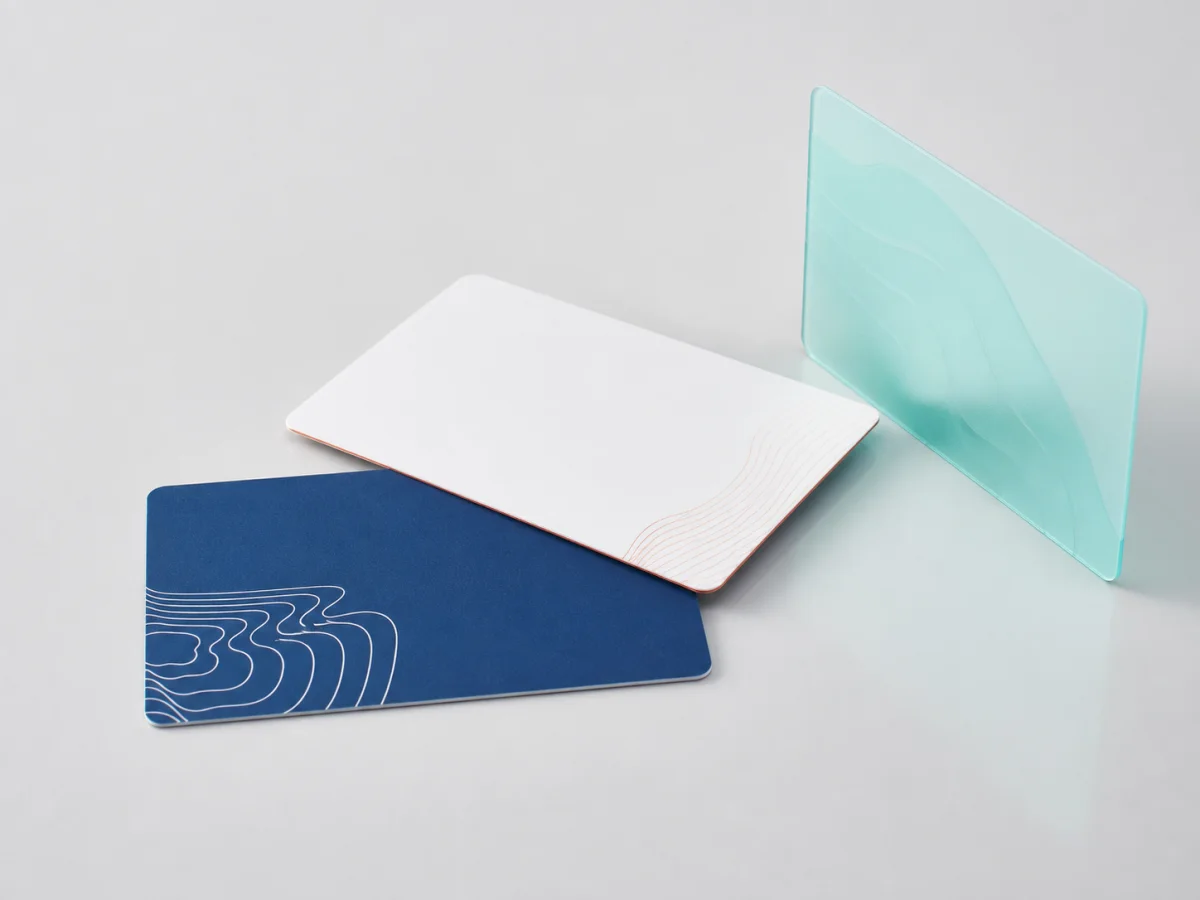
Two stock lines, two reissue procedures and a longer check-in. That is real and should be acknowledged rather than assumed away, because the desk is where this decision is felt daily.
Properties that handle it well fit the wristband as part of the welcome rather than as an extra step, and hold reissue stock where guests actually lose credentials — which is usually not at reception.
When one format is genuinely enough
A city hotel with no pool has no wristband argument. An adult-only property whose guests dress for dinner may find any visible band wrong, however well made, and a card is the honest answer. A water park has no card argument at all.
The test is whether the guest day has a wet, hands-free portion long enough to matter. If it does not, a wristband is a solution to a problem the property does not have.
Which format carries the room, which carries resort access, and which is authoritative if they disagree. Settling that first turns two purchases into one specification.
Compatibility is confirmed against the property’s lock system, credential technology and encoding requirements before production. We do not claim universal compatibility.
Questions this raises
01How do we know if we need wristbands?+
Count card reissues for a week and record where each guest says they lost it. If the losses cluster around pools, beaches and families, you have a wearable case for that segment. If they do not, you have a card estate that is working.
02Can guests use one credential for everything?+
Where the systems accept the same credential, yes — but many properties deliberately keep them separate so a lost wristband can be disabled while the guest keeps their room card. That argues for two linked identities rather than one shared one.
03Does issuing both double the cost?+
It adds a second stock line and a second reissue procedure, which is a real operating cost. Against that, it usually reduces card reissues sharply, which is why counting reissues first is the way to know whether the trade is worth it.