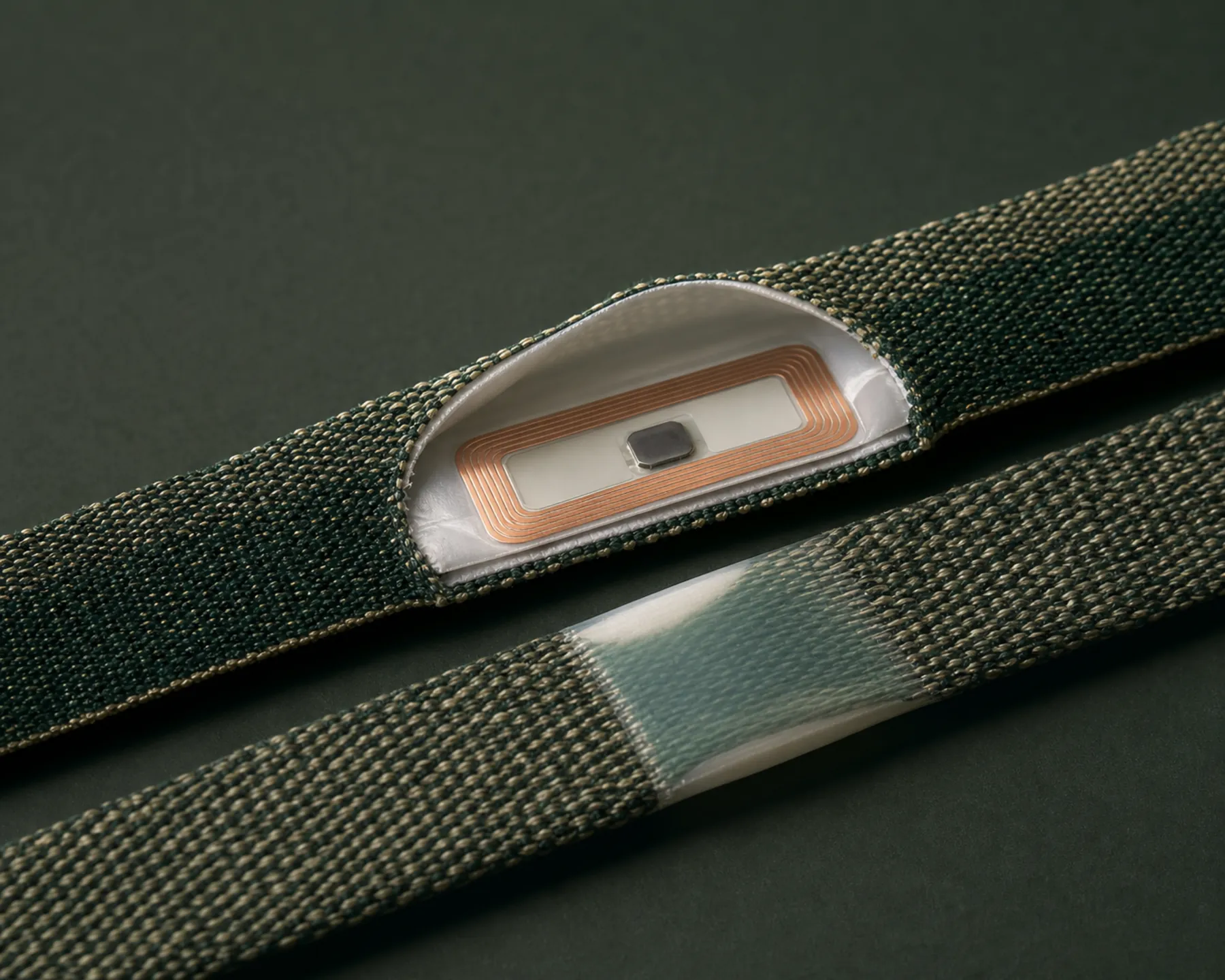
Most sample reviews are somebody in an office holding a wristband and saying it feels nice. That produces no evidence and no acceptance criteria, which is why the same problems reappear after the run.
- Write the acceptance criteria first
- Wear it for a week, on a real wrist
- Test at the awkward readers, not the desk
- Approve artwork on the object
- What to keep afterwards
Write the acceptance criteria first
Before the sample arrives, write down what passing looks like. No closure elongation after seven days of wear. Mark legible at arm’s length, wet. Successful first-presentation read at every reader in scope. No lifting where the face meets the strap. Comfortable enough that the wearer does not remove it.
Those criteria become the specification. They are what a later run is measured against, and they turn a subjective review into a test with a result.
Wear it for a week, on a real wrist
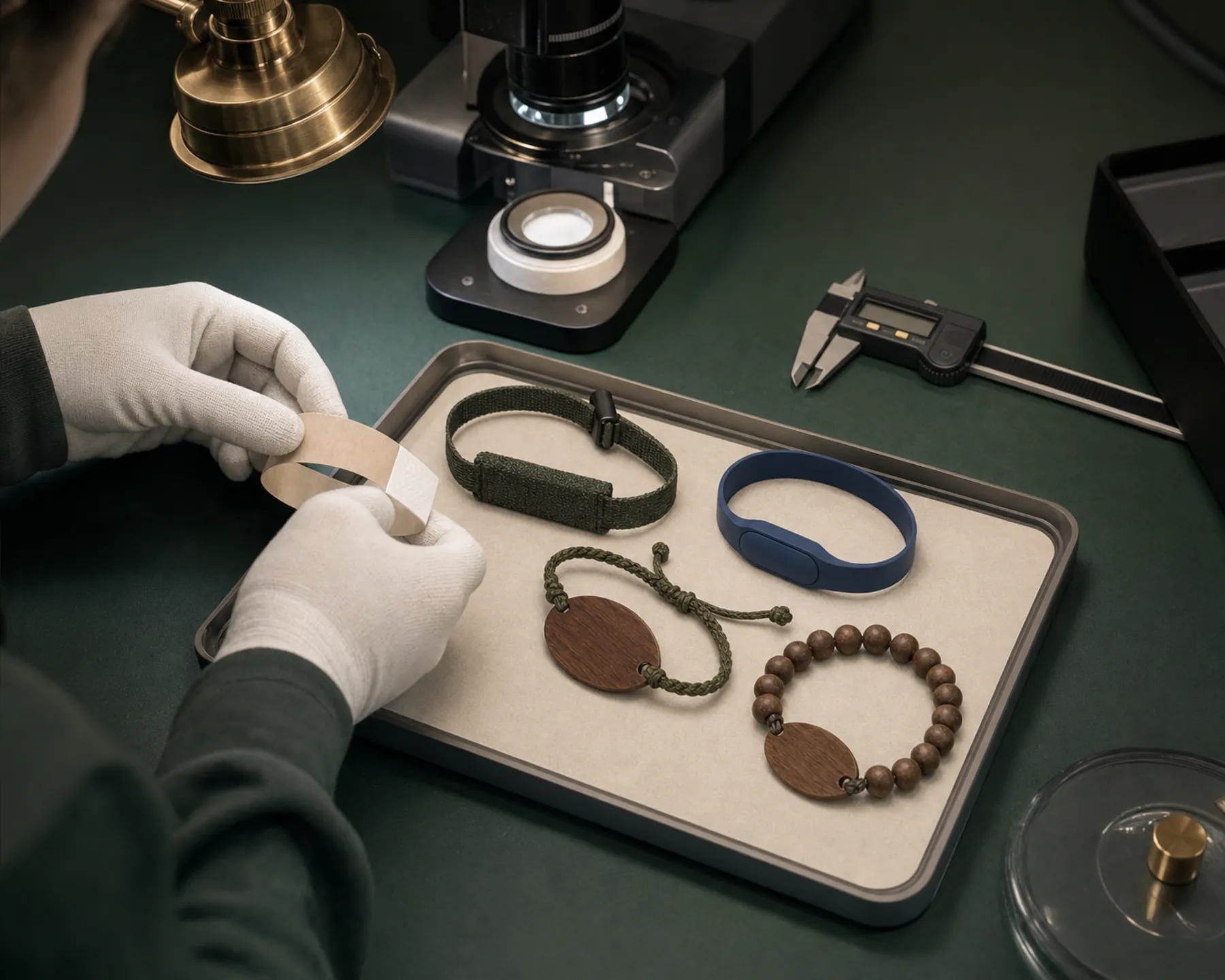
Give the sample to a member of staff who actually uses the facilities, and have them wear it continuously for the length of a normal stay. Inspect daily against a written list rather than by impression.
That single step surfaces almost everything: comfort at night, closure behaviour with wet hands, how the mark looks after sunscreen, whether the band rotates, and whether the wearer wants to take it off.
Inspect daily:
- Closure — elongation at the hole, deformation at the post or clip
- Face shoulder — any lifting or separation
- Mark — legibility after sunscreen and abrasion, wet and dry
- Read — first-presentation success at each reader type in scope
- Comfort — when, if ever, the wearer wants it off
Test at the awkward readers, not the desk
Recessed door units, readers on or near metal, outdoor readers in bright sun, locker banks presented one-handed by a wet guest. A credential that satisfies those satisfies the desk; the reverse proves nothing.
Record the result per reader type rather than as an overall impression. A marginal result at one reader type is useful information — it may be solved by placement, by a different construction, or by accepting a second presentation in one location.
Approve artwork on the object
A flat proof cannot show a mark sitting proud of a face radius, a colour reading differently on a curve, or a zone letter falling into a closure shadow. Those appear only on the production shape.
For natural materials, approve a range rather than a single sample — a light and a dark example as the acceptable band — because the material varies and a run that varies is correct rather than defective.
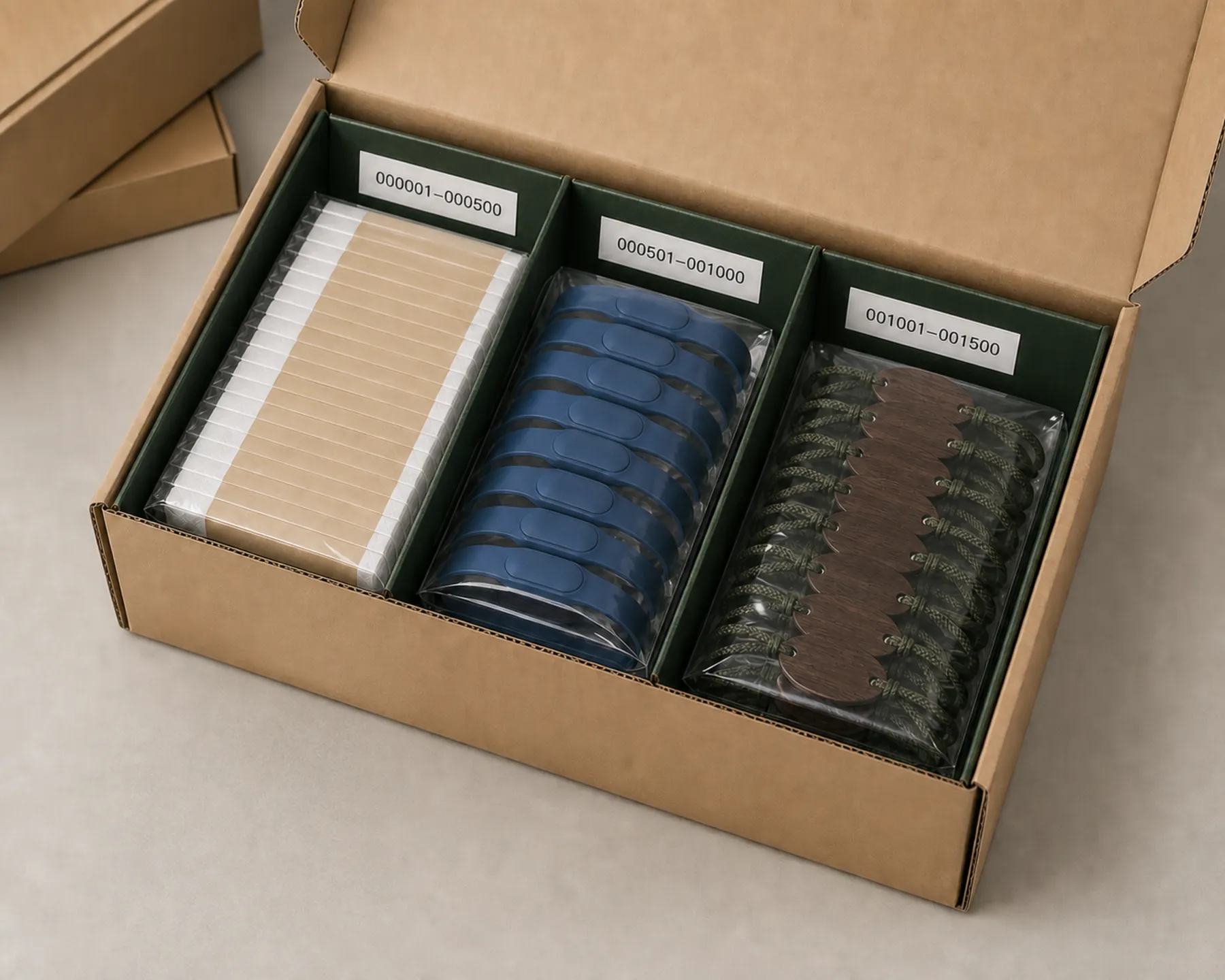
The extremes of the acceptable range, held as the reorder reference. It converts a future disagreement about whether a delivery looks right into a check with an answer.
What to keep afterwards
The approved sample itself, the artwork revision, the colour reference, the confirmed credential input and the packing instruction — held together as one reorder record.
A repeat order is then checked against something physical rather than against a memory of the last delivery, and any changed field triggers a fresh check rather than a repeat.
Compatibility is confirmed against the property’s lock system, credential technology and encoding requirements before production. We do not claim universal compatibility.
Questions this raises
01How long should a sample review take?+
About a week of real wear. A credential worn for an hour in an office tells you nothing about comfort at night, closure operation with wet hands, or how the mark looks after several days of sunscreen.
02Who should wear the sample?+
Someone who actually uses the facilities — a member of staff who swims, uses the lockers and works a shift in the relevant area. A manager wearing it at a desk reproduces none of the conditions that matter.
03What if the sample is marginal at one reader?+
That is useful rather than fatal. Record it per reader type: it may be resolved by reader placement, by a different construction, or by accepting a second presentation at one location — but only if it is known before the run rather than after.