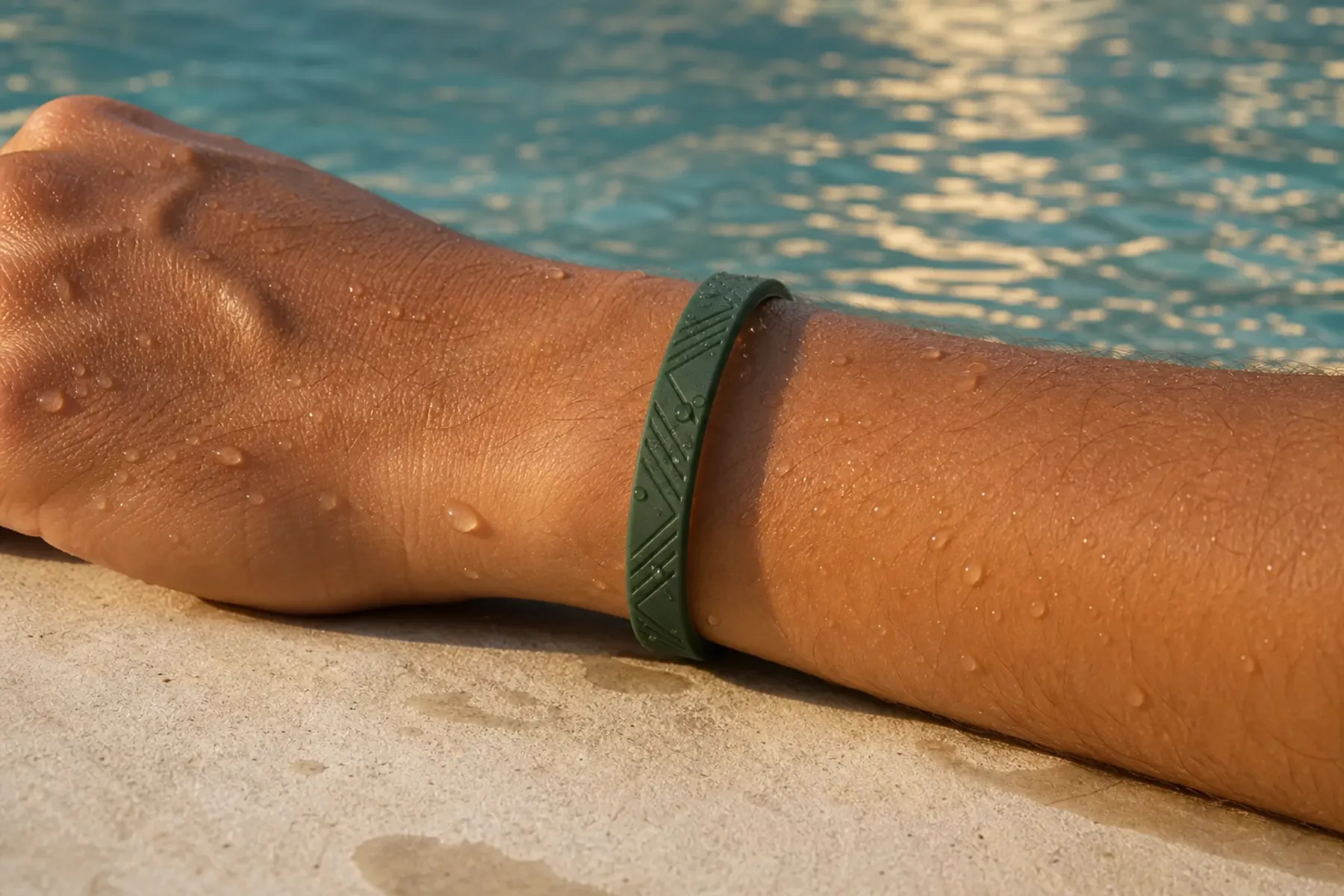
Properties usually specify an adult band and then ask for it in a smaller size. That is the wrong order — a child credential has different requirements, and one of them is that a child cannot take it off.
- Closed loop, not adjustable
- Sizing is done at issue, so the desk has to be equipped
- What a child credential should not be able to do
- Height and eligibility categories
- Loss, and the conversation that follows
Closed loop, not adjustable
A closed loop is a continuous ring put on over the hand and removed by cutting. It cannot be opened, dropped in a pool, swapped with a sibling, or removed by a child who has decided they do not want it.
That is the whole argument. An adjustable band that a five-year-old can undo is not a credential for a five-year-old, however comfortable it is.
Sizing is done at issue, so the desk has to be equipped
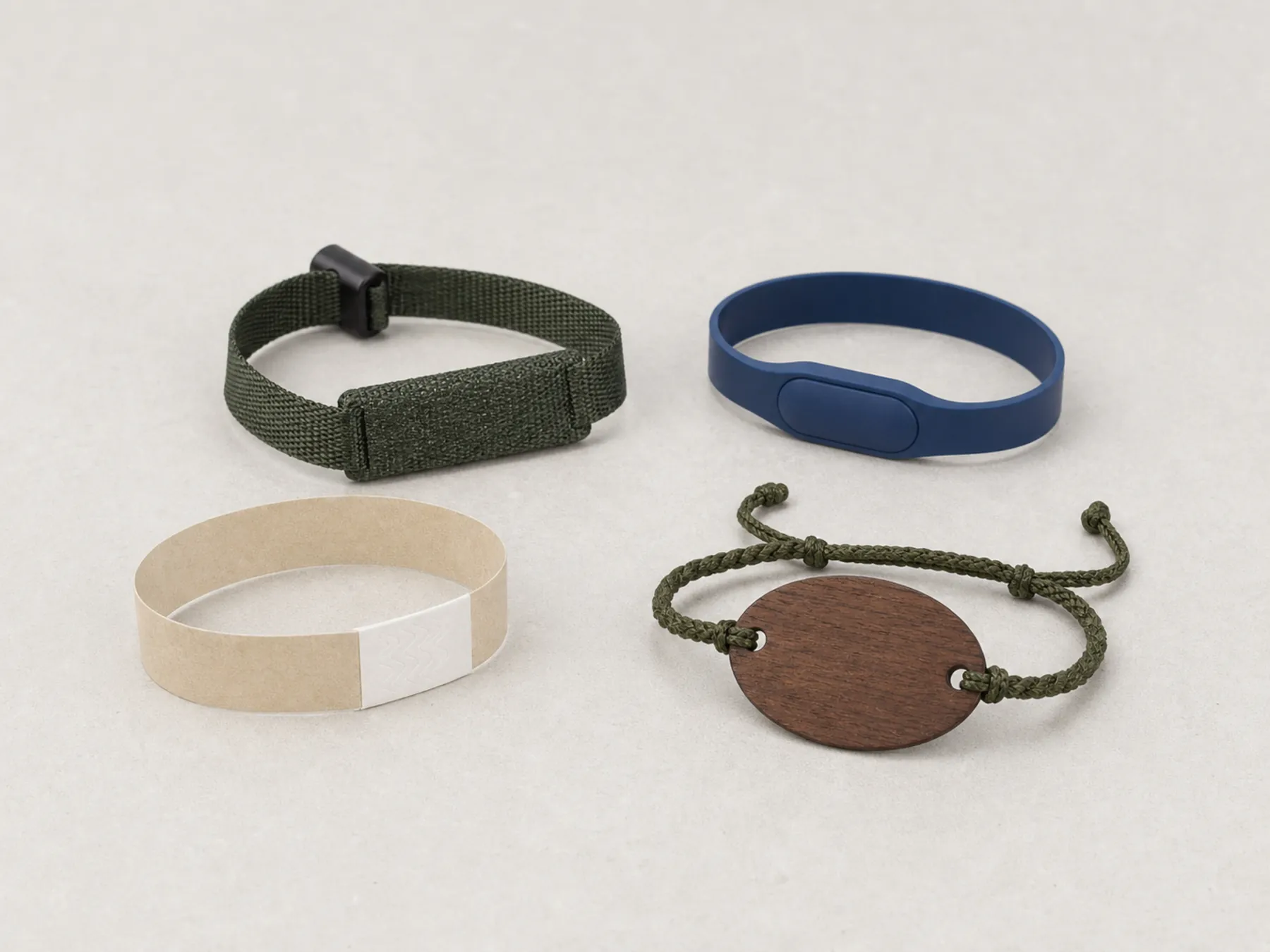
With no adjustment, fit is decided when the band is issued. The desk holds three or four circumferences and staff choose one, ideally with a simple gauge rather than by eye.
The stock split should be weighted towards the middle sizes rather than divided evenly, and the order should carry an allowance for wrong choices, because a wrong choice costs a band.
What a family programme needs at the desk:
- A sizing gauge, so a fit takes seconds rather than a judgement
- A middle-weighted stock split across youth sizes
- A cutting tool for removal, at more than one location
- Reissue stock in the same colourway, so a replaced band is not conspicuous
What a child credential should not be able to do
Charge to a folio, in most properties. That is a system configuration rather than a product feature, and it has a product consequence: staff serving at a bar should be able to see that a credential is a child’s before presenting it, which means it has to look different.
Colour is the usual answer, and it needs to be a colour that stays distinguishable when wet and at the end of a season — which is a durability decision rather than a design one.
Height and eligibility categories
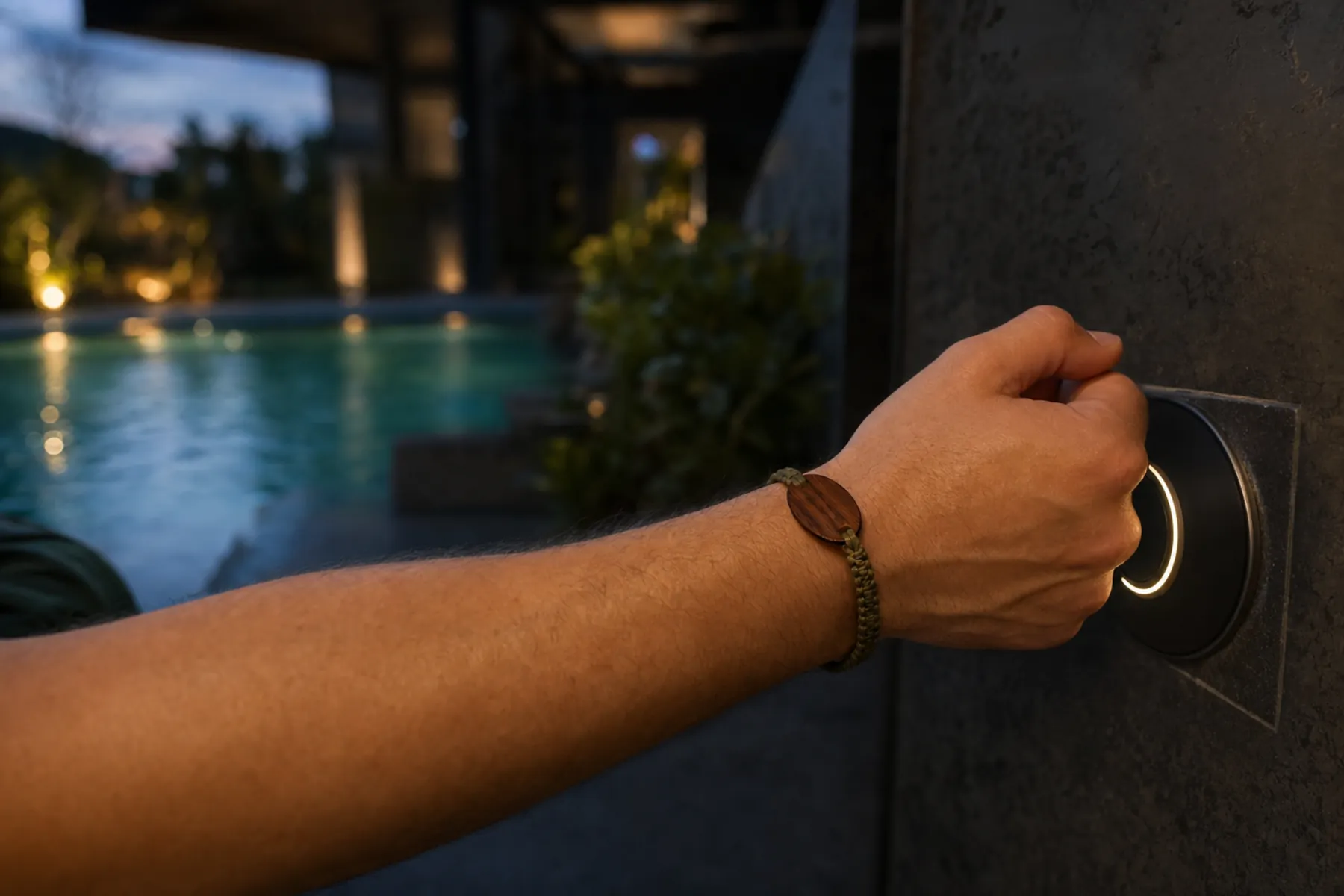
At water parks and activity properties, the band often carries ride eligibility so an attendant can check without measuring. That makes it a safety artefact, and it raises the bar on colour reliability, on tamper resistance and on reissuing correctly.
It is also the strongest argument in the whole range for a closure a child cannot open: a swapped band in that context has a safety consequence rather than a commercial one.
Choose eligibility colours on strong hue contrast rather than tone, and check them wet. Pale and fluorescent tones shift first under sustained sun, which is exactly how a category system quietly stops working by August.
Loss, and the conversation that follows
A lost child credential is a different conversation from a lost adult one, and it happens at the least convenient moment. The reissue path should be executable by one member of staff, immediately, with stock at more than one location.
Whether the property links a child’s credential to a parent’s record is a system decision worth taking deliberately rather than inheriting, because it determines who can authorise a replacement.
Compatibility is confirmed against the property’s lock system, credential technology and encoding requirements before production. We do not claim universal compatibility.
Questions this raises
01Is a closed loop safe for a small child?+
It is the construction most properties choose precisely because it cannot be opened, dropped or swapped. Sizing does the safety work: the loop should clear the hand without leaving slack that can catch. Properties issuing to very young children usually pair it with a stated supervision policy of their own.
02Can children’s and adults’ bands come from one artwork?+
Yes, and they should — one approved artwork produced across youth and adult sizes keeps the range visually consistent. Each size is a separate moulded part, so the split is fixed when the run is scheduled.
03How do we stop children charging to the room?+
In the system, not on the band. The product consequence is that the credential must look different, so a member of staff serving at a bar can see it before presenting it — which makes colour durability a functional requirement.