
Anyone can send a catalogue. These twelve questions are the ones where the answer tells you whether a supplier will be useful when something is difficult.
- On compatibility
- On the physical product
- On evidence and claims
- On supply and repeatability
On compatibility
Ask how they will confirm the credential works with your installation, and what they need from you to do it. A good answer asks for a working credential or for what your system reports; a poor one offers reassurance based on a brand name.
Then ask what happens if it turns out the credential type is wrong after production. The answer tells you where they think the risk sits.
Compatibility questions:
- How will you confirm this works with our installation, and what do you need from us?
- What happens if the credential type turns out to be wrong after production?
- Will you supply unencoded stock, pre-encoded credentials, or either?
On the physical product
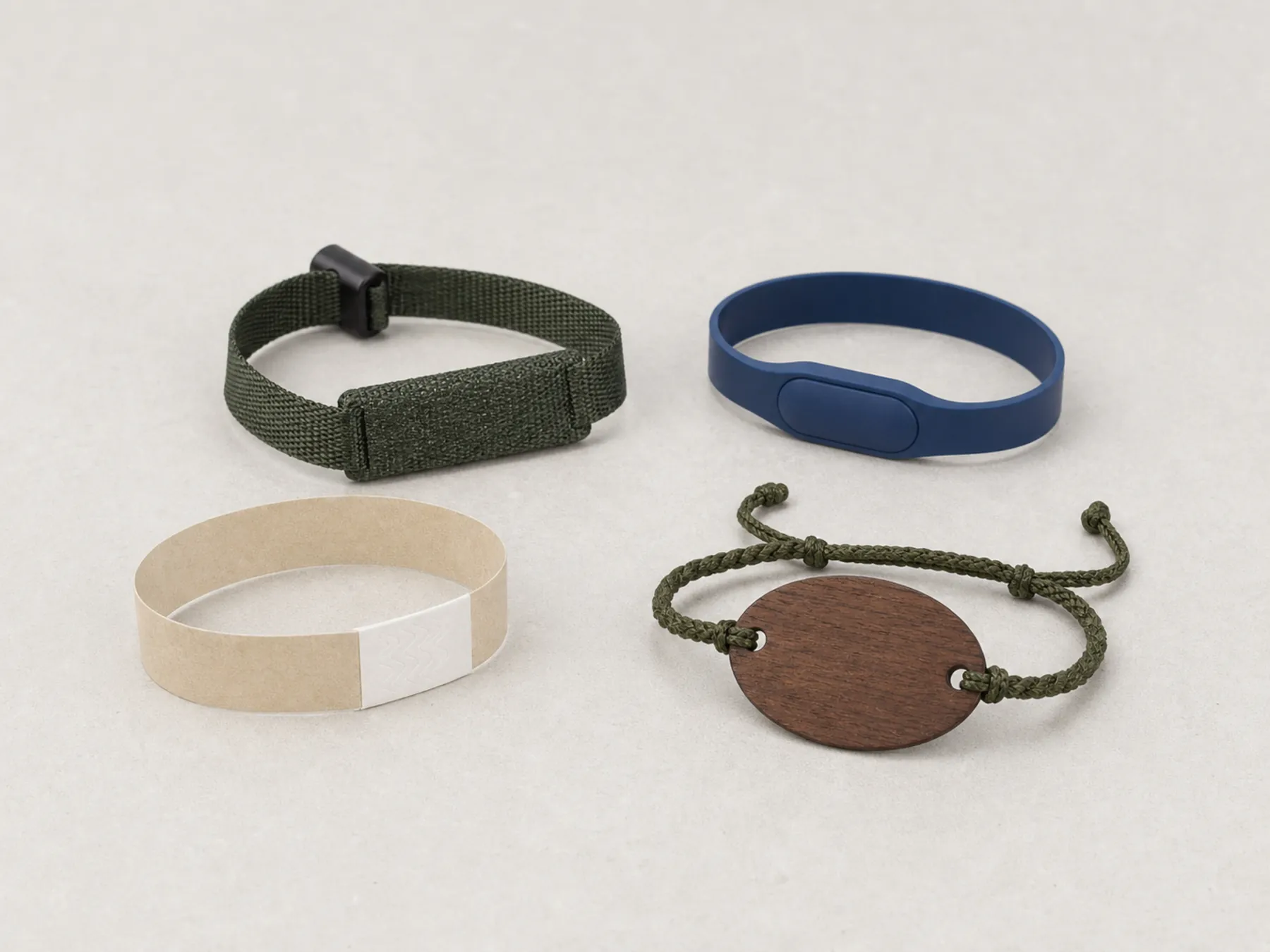
Ask what will fail first and after how long. A supplier who says nothing will fail has not seen their product come back; one who says the closure at the post hole, or the cord, has.
Ask what they would advise against for your environment. A supplier with no answer is either unfamiliar with their range or unwilling to lose a sale, and both are expensive later.
Product questions:
- What fails first on this construction, and roughly when?
- What would you advise against for our environment, and why?
- Can we have a sample to wear for a week before deciding?
On evidence and claims
Ask whether material documentation is issued against the production run or the product line, and ask to see an example. The difference between the two is the difference between evidence about your goods and an assertion about a category.
Ask what they will not let you publish. A supplier with a clear answer has thought about where claims fail; one who agrees to any wording is not protecting you.
Evidence questions:
- Is documentation issued against our run, or against the product line?
- Which component does it cover, and which does it not?
- What wording would you decline to support?

On supply and repeatability
Ask what is held so a reorder matches — and listen for a physical sample, a versioned artwork revision, a colour standard and a credential input, rather than "we keep your file".
Ask whether goods arrive counted and range-labelled. It costs nothing, cannot be retrofitted, and a supplier who does it as standard is one who has been asked an audit question before.
Supply questions:
- What exactly is held so that a reorder matches this one?
- Do goods arrive counted, in range-labelled blocks?
- What triggers a fresh sample rather than a repeat run?
"What would you advise us not to buy?" A supplier who cannot answer it either does not know their range or will not risk a sale — and you will find out which at the worst moment.
Compatibility is confirmed against the property’s lock system, credential technology and encoding requirements before production. We do not claim universal compatibility.
Questions this raises
01What is the single most useful question?+
What would you advise us not to buy, and why. A supplier who can answer it specifically knows their range and is willing to lose a sale to avoid a failure. One who cannot will agree to whatever you ask for.
02How do we test whether documentation is meaningful?+
Ask whether it is issued against your production run or against the product line, and ask to see an example. Run-level documentation is evidence about your goods; a product-line statement is an assertion about a category.
03What should a good sample offer look like?+
A production-realistic sample you can wear for a week and present at your own readers, with agreed acceptance criteria. A sample that is only for looking at settles nothing that matters.