The failure mode in a group is not a bad decision. It is no decision — each property orders separately, artwork drifts, colours diverge, and a year later nothing matches anything.
- One brand or several?
- Who approves, and who holds the record
- Different systems in different properties
- Replenishment is where consistency is lost
- Import and destination questions
One brand or several?
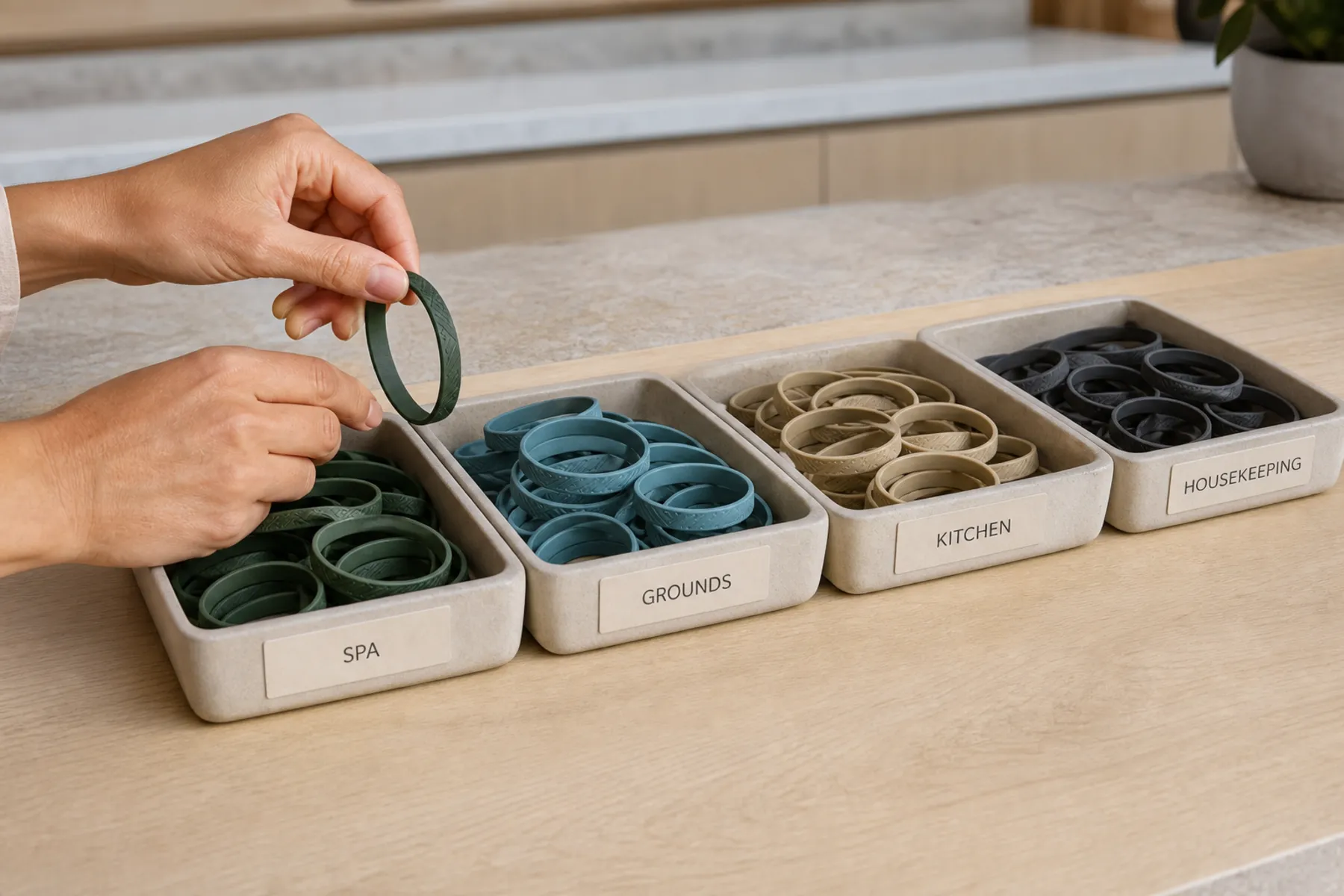
This is the question that determines everything else. Where properties are presented to guests as one brand, a shared artwork with a colour per property is cheaper, more coherent and simpler to reorder. Where they are genuinely distinct brands, accept the multiplication rather than forcing a compromise that satisfies nobody.
Minimum order is 500 pieces per artwork, so six properties with six designs is six counts. The same six sharing one artwork may be far fewer, and the difference is usually larger than any negotiation on price.
Who approves, and who holds the record
A group needs one party who approves artwork and holds the reorder record — the approved sample, artwork revision, colour reference, credential input and packing instruction. Without that, the record lives in whichever property ordered last.
It should belong to a role rather than a person. Credential ordering passes between operations, procurement and whoever is available, and a record owned by an individual does not survive their move.
Settle before the first group order:
- Whether the properties share an artwork or each holds its own
- Who approves changes on behalf of the group
- Where stock is held — centrally, or per property
- Whether any property needs a different construction, not just a different colour
- How replenishment is consolidated rather than done property by property
Different systems in different properties
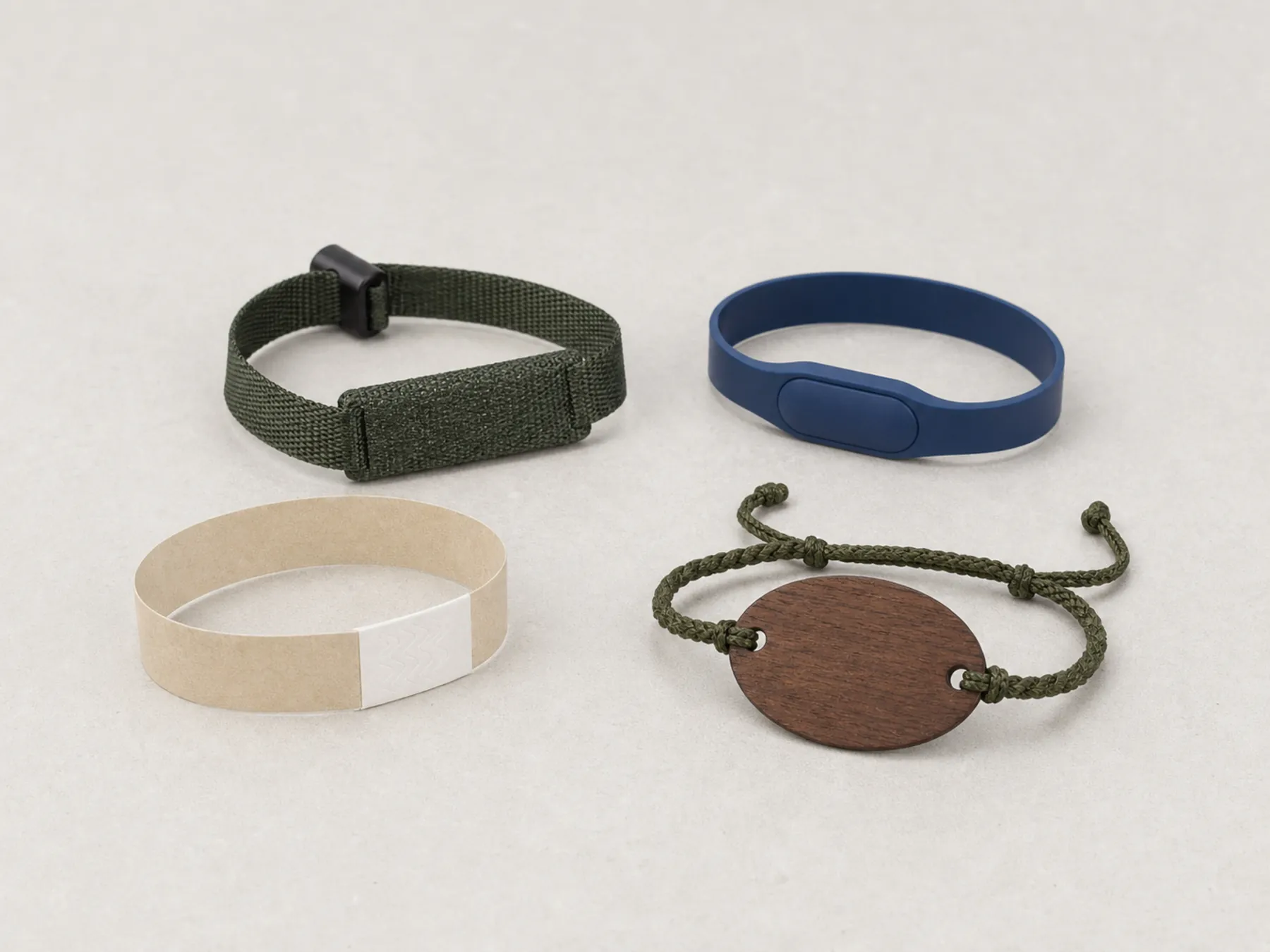
Groups frequently run more than one lock system, sometimes more than one frequency, often because properties were acquired rather than built. A shared artwork can still work across that; a shared credential specification cannot.
So the artwork decision and the technical decision are separated: one visual family, and per-property credential confirmation. Assuming a group is technically homogeneous is the most expensive assumption available.
Replenishment is where consistency is lost
One property runs low, orders alone, and the group ends up with two subtly different runs of the same credential. Colour drifts, a component changes, and two properties that should look identical no longer do.
Consolidated replenishment against a shared record prevents it. Where consolidation is impractical, the record at least ensures the second run is measured against the first rather than against a description.
An artwork revision, a physical colour reference and a confirmed credential input, held centrally, is what lets six properties order at different times and receive the same credential.
Import and destination questions
Each destination has a party responsible for importing, and in a group that is not always the same party or even the property itself. Establishing who it is per destination before an order is placed removes the most common cause of goods sitting somewhere while responsibility is worked out.
Documentation requirements — language, format — should be collected once at the specification stage rather than discovered at delivery. We supply what accompanies goods; we do not act as importer.
Compatibility is confirmed against the property’s lock system, credential technology and encoding requirements before production. We do not claim universal compatibility.
Questions this raises
01Should all our properties use the same design?+
If guests see them as one brand, yes — a shared artwork with a colour per property is cheaper, more coherent and easier to reorder. If they are genuinely separate brands, accept the separate counts rather than forcing a compromise design.
02Our properties have different lock systems. Does that break a shared design?+
No. The artwork decision and the technical decision are separate: one visual family across the group, with credential confirmation per property. Assuming a group is technically homogeneous is what breaks things.
03How do we stop properties ordering separately?+
Hold the reorder record centrally and consolidate replenishment. A property that orders alone against a description rather than against the record is how two subtly different runs of the same credential appear.