
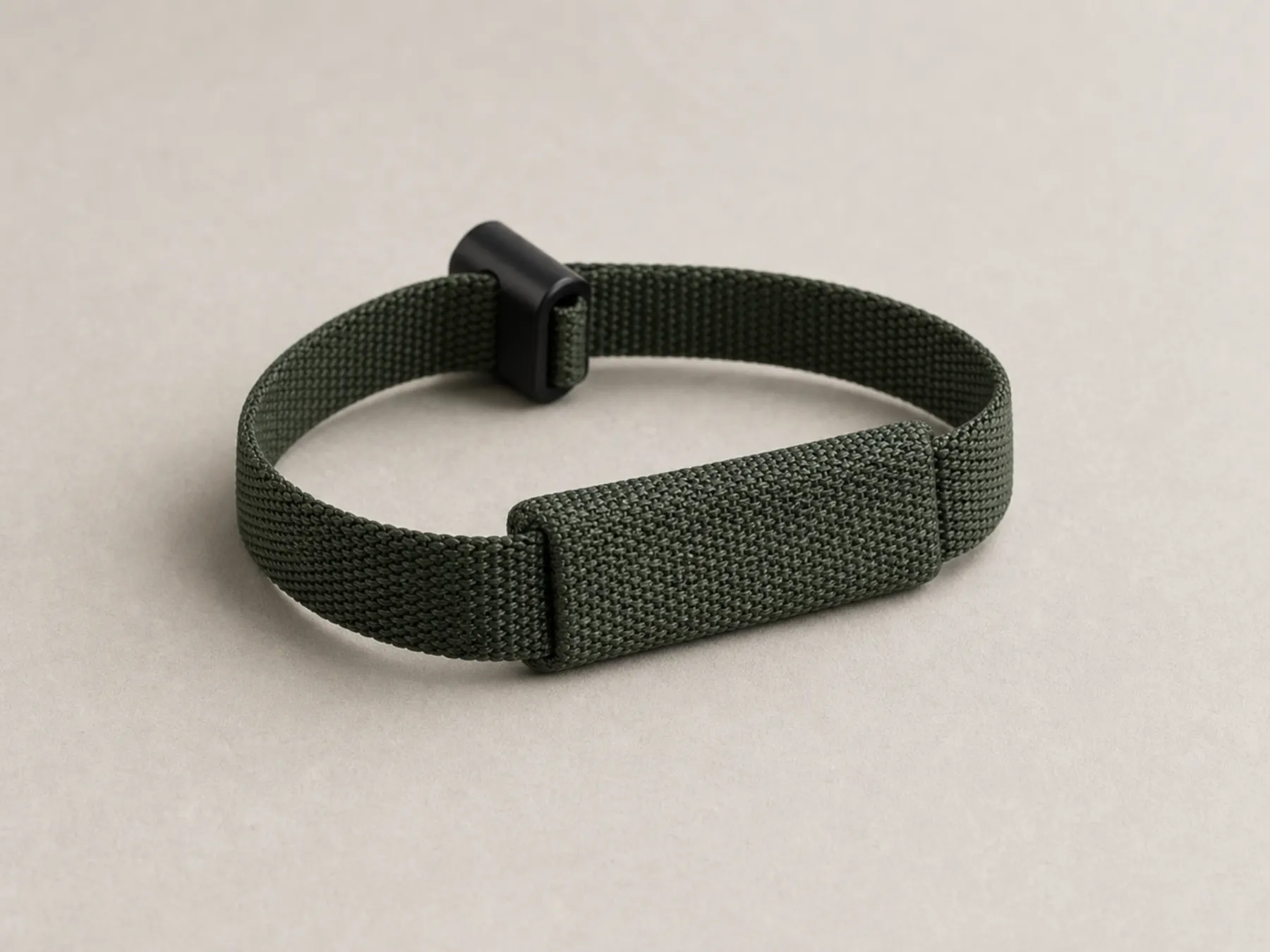

A credential is a multi-material product, always
Every RFID credential contains a sealed electronic module. That single fact means no wristband is compostable, biodegradable or recyclable as a whole, whatever the strap is made of, and any statement that implies otherwise will fail the first informed question.
The workable position is to describe the parts. The strap is this yarn or this face material; the module is an electronic component and is not covered by the material statement; the closure is this. Three precise sentences hold up where one broad one does not.
Any sentence that calls the whole wristband sustainable, compostable or recyclable. Every credential here contains a sealed electronic module. Describe the strap, describe the face, state what the module is, and let the precision do the persuading.
Evidence at run level, not category level
A supplier statement about a product line is not evidence about the pieces a property received. We issue material declarations against the production run, so an operator publishing a claim is quoting a document tied to the goods in its store room.
That distinction matters most when somebody asks a follow-up question. An operator that can name the run, the date and the declared content is in a completely different position from one repeating a marketing line.
The disposal route has to have a person in it
Separating an inlay from a strap is a manual step. If nobody is assigned to do it, at a defined moment, with a defined destination, then the route does not exist and the credentials go to general waste — which is a legitimate outcome to state and an illegitimate one to imply otherwise.
We ask three questions before any disposal language is written: who performs the separation, when in the operating cycle, and where the two streams actually go. If any answer is missing, the language changes rather than the answer being invented.
Reuse usually beats material choice
The largest environmental variable in a credential programme is not the strap material — it is how many credentials the property issues per guest per year. A durable band recovered and reissued twenty times displaces twenty single-use ones, and no substrate choice matches that.
That reframes the specification: the question becomes which construction survives recovery and cleaning, what the reissue rate actually is, and what makes guests hand a band back. Those are operating questions, and they are where the real reduction sits.
The numbers worth measuring before changing material:
- Credentials issued per guest per stay, including reissues for loss
- Recovery rate at checkout, measured rather than assumed
- How many cycles a recovered band survives before it is retired
- What proportion of issued credentials are single-use day passes
Certification language, kept narrow
Where certified material options are used, we use the approved sentence exactly as written and do not expand it, attach numbers to it or let it migrate onto pages describing other materials. Certification covers a material under conditions; it does not certify a wristband, a property or a programme.
Operators working towards a certification of their own are usually the best-informed clients we have on this point, and they generally want the narrow statement rather than the flattering one.
What to specify for a small-group operation
Most eco-tourism operators are small, which puts them in the same position as boutique properties: minimum order is 500 pieces per artwork, so artwork restraint matters more than anything else. One artwork, one or two colours, several formats if needed.
A durable recovered band for guests and a small allocation of day credentials for visitors covers almost every operation of this size, and keeps the property to a single count rather than four.
Where we will push back
We will decline to write, print or imply a claim we cannot evidence at run level — including comparative claims about other materials, disposal claims without a route, and any wording that turns one component into a property of the whole.
That is not caution for its own sake. For this kind of operator, a claim that collapses under scrutiny does more damage than not making it, and the operators who ask us the hardest questions tend to agree.