
Every credential has four moments: issue, use, loss, and the end of its life. Properties specify the first two carefully and improvise the last two, which is where the problems are.
- Issue: fit once, explain once
- Loss at 11pm is the real test
- Recovered credentials need a route
- Retirement criteria staff can apply
- The end of a credential’s life
Issue: fit once, explain once
The two things that reduce failures at issue are demonstrating the closure and fitting the band on the guest rather than handing it over. Both take seconds and both remove the most common causes of early replacement and of misfitted one-way bands.
At volume, the construction has to suit the pace: a stretch or closed-loop band is handed over, a buckle takes longer, and a one-way band has to be fitted correctly first time because there is no second attempt.
Loss at 11pm is the real test
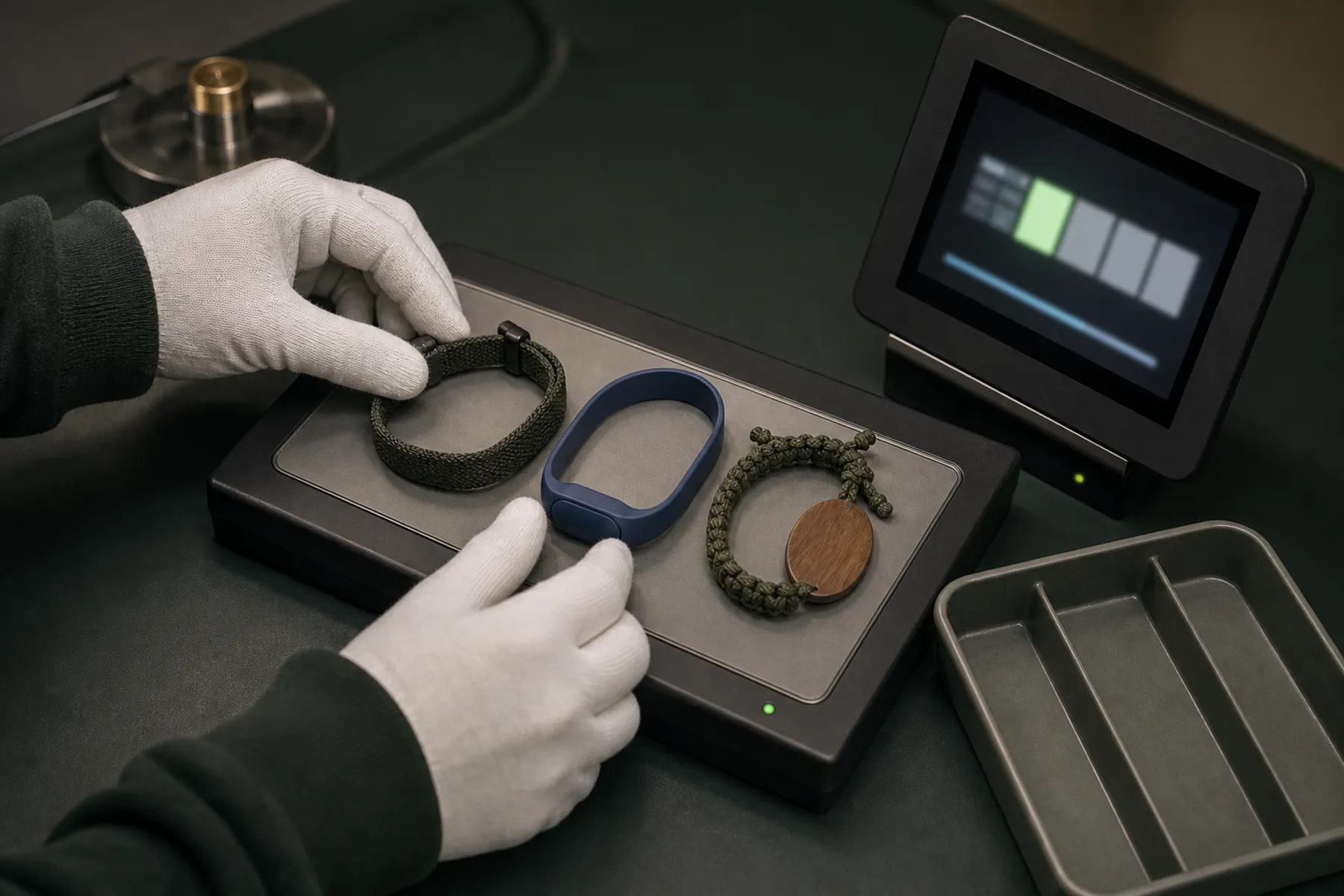
A guest returns from a bar without their credential. The desk has to identify them, disable the old credential, issue a new one, restore their permissions and get them into their room — quickly, with one member of staff, without waking a manager.
Properties that have not rehearsed this discover their gaps at the worst moment. Rehearsing it before the season, with real staff and real stock, surfaces missing authority and missing steps far more reliably than a document review.
A guest who has lost a credential should not spend the rest of the week wearing something visibly different. Reissue stock that matches the main run costs nothing extra and removes a small, daily indignity.
Recovered credentials need a route
Housekeeping will find credentials every week — in rooms, by pools, in laundry. Without a defined route they accumulate in a drawer, still enabled, which is the quiet security failure in most resort programmes: a box of live keys nobody is tracking.
The fix is procedural and small: a collection point, a named person who reconciles them against the system, and a cleaning or disposal step. It costs almost nothing and it converts a liability into stock.
Retirement criteria staff can apply
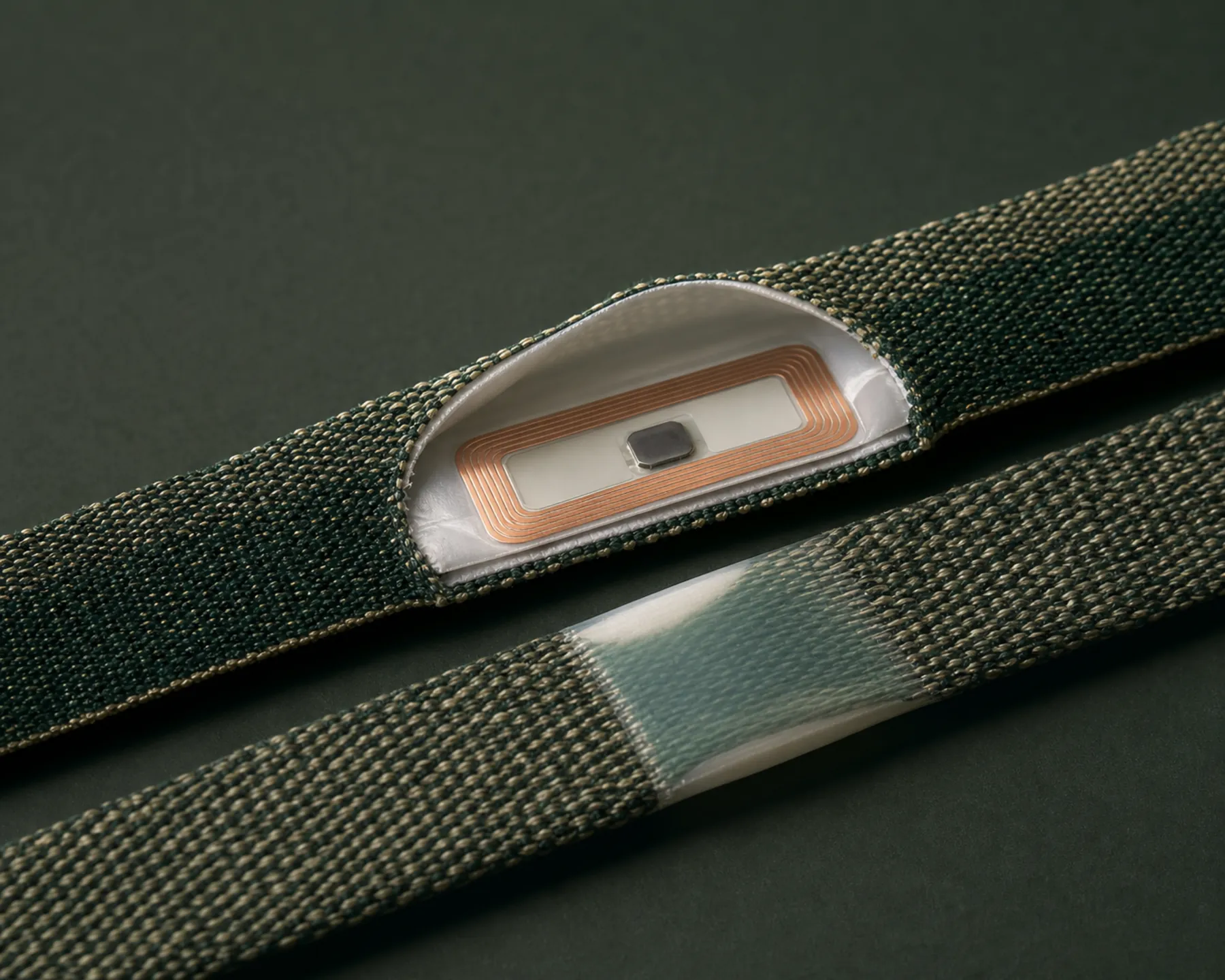
For reused credentials, two visible signs cover most of it: a post hole that has begun to elongate, and a lifted edge where a face meets a strap. A credential showing either leaves circulation.
Giving staff both signs and the authority to act on them removes the mid-season failure rate that otherwise shows up as guest complaints. The resulting attrition is a quantity decision to take before a season rather than during it.
The end of a credential’s life
A credential leaving circulation should also leave the system — disabled, not just discarded. Where a property lets guests keep a credential as a souvenir, that step is the whole security control, and it needs to be somebody’s job rather than an assumption.
Disposal is a mixed-material question: the strap and the sealed module have different routes and separating them is a manual step. Describe a route only where one exists with a person assigned to it.
Compatibility is confirmed against the property’s lock system, credential technology and encoding requirements before production. We do not claim universal compatibility.
Questions this raises
01What should we rehearse before a season?+
The 11pm reissue: identify the guest, disable the old credential, issue and enable a new one, and get them into their room with one member of staff. Walking it through with real staff and real stock surfaces missing authority and missing steps that no document review finds.
02What do we do with credentials housekeeping finds?+
Give them a route on day one — a collection point, a named person who reconciles them against the system, and a cleaning or disposal step. Found credentials sitting enabled in a drawer are a box of live keys nobody is tracking.
03When should a reused band be retired?+
When the post hole has begun to elongate, or when the edge where the face meets the strap has lifted. Give staff those two signs and the authority to act, and build the resulting attrition into the season quantity rather than discovering it mid-season.