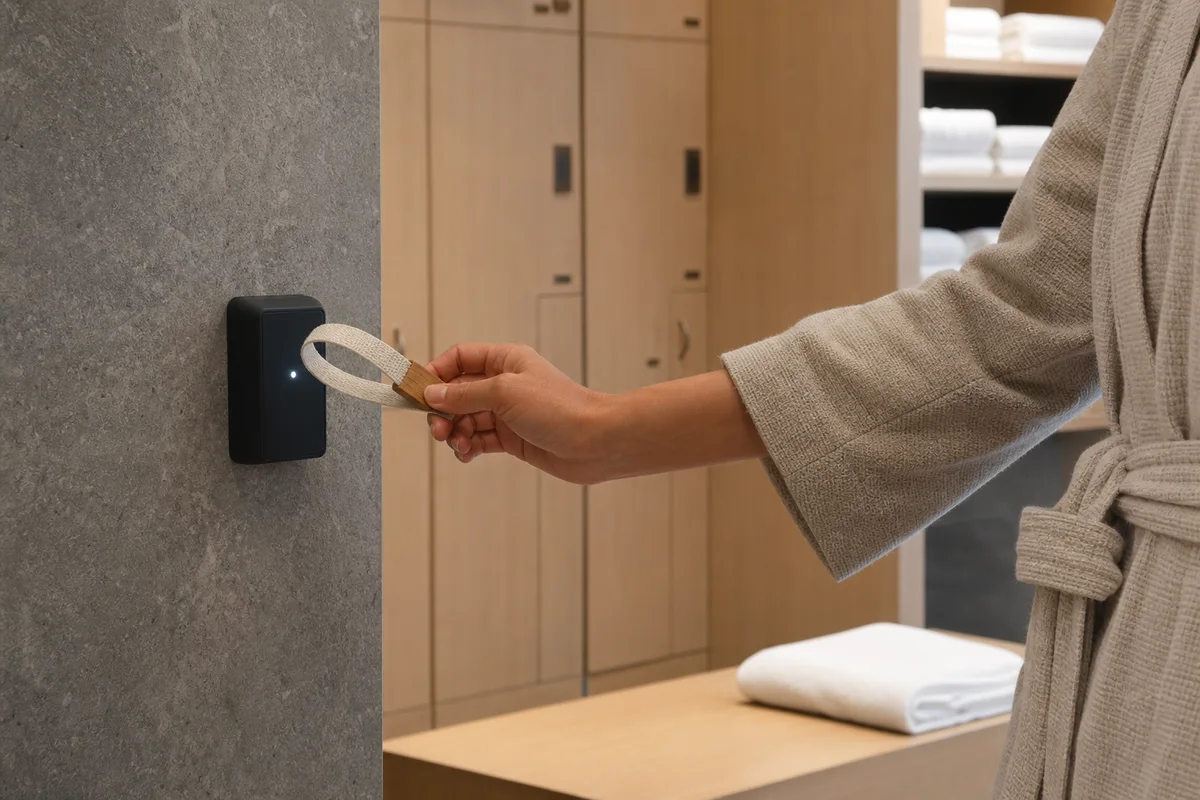
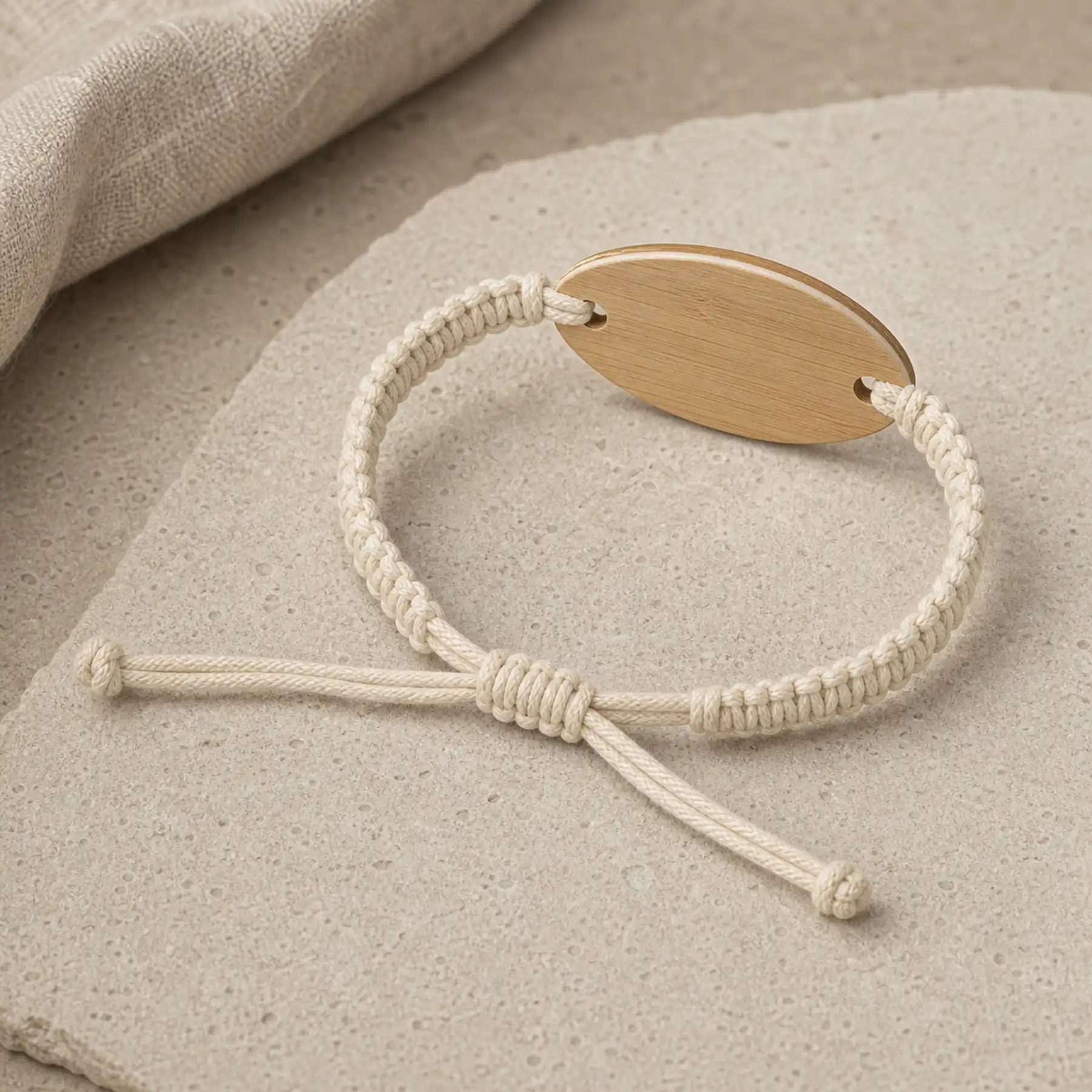
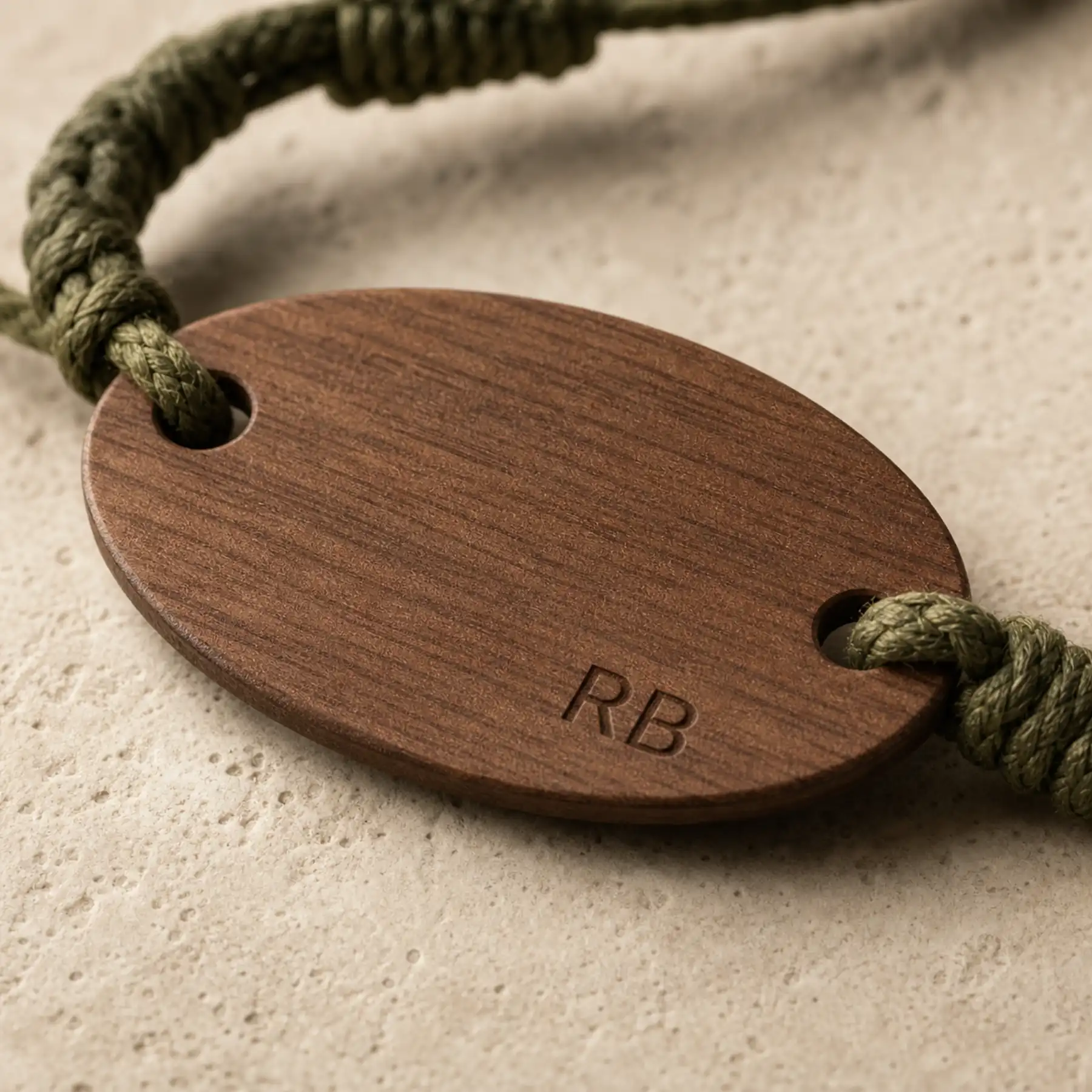
The locker is the real access point
Room doors are opened twice a day. A spa locker is opened five or six times in a visit, by someone wet, often holding a towel, sometimes without glasses. That makes the locker read the highest-frequency and least forgiving interaction in the facility, and it is where the credential should be tested first.
It also argues for constructions that keep the credential in a predictable position on the wrist. A free-rotating bead or cord band that reads perfectly in a lab is tiring at a locker bank used six times an hour.
Oils and balms, not chlorine, set the material choice
Every material here tolerates pool water. Fewer tolerate massage oil, and the difference is porosity: closed-surface materials wipe clean, porous ones absorb and keep what they absorb. That single property separates the stone and face materials into two groups for spa use.
It also affects the closure. Oily hands make a fine low-profile snap harder to operate, which is a small but repeated annoyance in a wet-room environment and a reason to sample the closure with oiled hands rather than clean ones.
Test the closure and the surface with treatment oil on the hands, not in a clean office. It is the condition the credential lives in and it changes which constructions are acceptable.
Heat experiences are harder than pools
Saunas, steam rooms and hot tubs cycle a credential through heat daily. Moulded constructions handle that comfortably; natural faces and cords are less predictable, and adhesives are unsuitable.
Where heat is in scope it belongs in the sample test explicitly. A property that runs a thermal circuit is putting the credential through more thermal cycling in a week than a hotel band sees in a season.
Discretion during treatment
A guest lying face-down for an hour will feel any raised module against the massage table. A therapist will work around a bulky band or ask for it to be removed — and a removed credential is a credential that gets lost, or that leaves a locker unopenable.
A slim moulded band or a thin-strap construction with a low face is the specification that survives an actual treatment. It is worth testing exactly that way before ordering, because nothing else reveals it.
Members and hotel guests are different products in one facility
A hotel guest wears a credential for days; a member wears one for a year and expects a replacement to match. Those are different lifecycles, different reorder disciplines and different expectations of appearance.
The pattern that works is one construction in two colours: the operating difference is visible to staff, and the property holds a single stock item. For the member population, the reorder record — approved sample, artwork revision, colour reference, credential input — matters far more, because a replacement issued a year later has to be indistinguishable.
Hygiene and reissue between guests
Spa credentials are recovered and reissued more than almost any other kind, which makes cleanability a specification criterion rather than a preference. Closed-surface moulded and quartz-family materials clean properly; porous stone, cork and cotton do not.
The property should define the cleaning method, the inspection criteria and the retirement point, and should hold enough stock to keep a cleaning cycle running rather than reissuing damp bands during a busy afternoon.
Day guests and treatment-only visitors
Facilities that sell treatments to non-residents have a third population with a short window and a transfer risk, which is the same problem a beach club has. A visually distinct day credential with a one-way closure resolves it without complicating the resident or member bands.
Keeping that population on a separate credential also keeps the member and guest stock clean, which matters when the member band is the one that has to look consistent for a year.