A bamboo wristband is two products that happen to be sold as one: a face and a strap. Spa properties get a bad result when they approve the face they like and inherit whichever strap came with it.
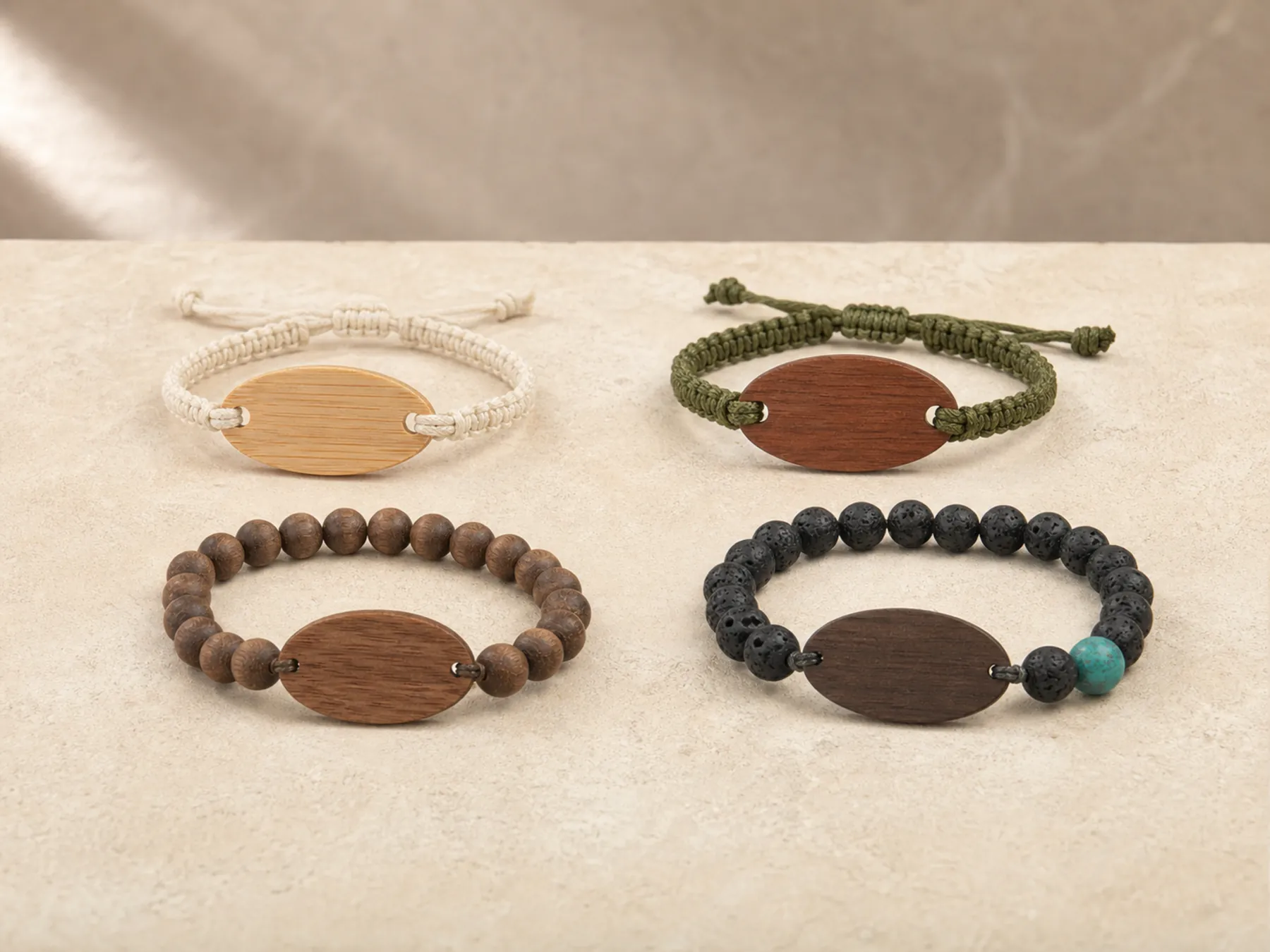
Specify the face and the strap separately
The face decides how the credential looks and how the mark is carried. The strap decides how it feels in a treatment room, how it behaves against oil, and how long it lasts. They fail independently, they age at different rates, and approving them as one item means only one of them was ever considered.
In practice we ask a spa property to approve two things: the face tone and finish against a light and a dark sample, and the strap material against the treatments actually offered. Those are separate conversations with separate people — usually design for one and operations for the other.
What to look for in a bamboo face
Three things, in order. Whether every edge is sealed, including the aperture around the module — unsealed edges take up moisture and raise the grain. Whether the engraved recesses are sealed after engraving, which is what keeps the mark crisp rather than fuzzy after cleaning. And how deeply the module sits behind the face, because a face made flush by recessing the module further is a face that has quietly cost read distance.
The species question matters far less than any of those. A well-sealed face in a modest material outlasts a beautifully chosen one with an open edge.
Questions to put to any supplier of a wood-faced band:
- Are all edges and the module aperture sealed, and with what?
- Are engraved recesses sealed after engraving?
- How far is the module recessed, and has read distance been measured at that depth?
- What is the acceptable tone range, and can I see both ends of it?
The spa environment is oils and heat, not chlorine
Every material here handles pool water. Fewer handle massage oil, and the difference is porosity: closed surfaces wipe clean, open ones absorb and keep. A sealed bamboo face is closed; a cotton cord is not, which is why a pale cord in a treatment environment discolours long before anything else fails.
Heat is the other exposure properties underestimate. A thermal circuit cycles a credential through sauna and steam daily, which is harder on an assembly of face, adhesive and cord than a swimming pool is. If heat experiences are in scope, they belong in the sample test explicitly.
Comfort during a treatment is a specification requirement
A guest lying face-down for an hour will feel a raised face against the table. A therapist will either work around it or ask for it to be removed, and a removed credential is one that gets lost or leaves a locker unopenable.
The test is exactly that: have someone wear the sample through a full treatment. It takes an hour and it settles the profile question definitively, which no amount of specification review will.
Wear the sample through an actual treatment before ordering. A face that is comfortable walking around can be intolerable lying still, and nothing else reveals it.
Where the credential is really used
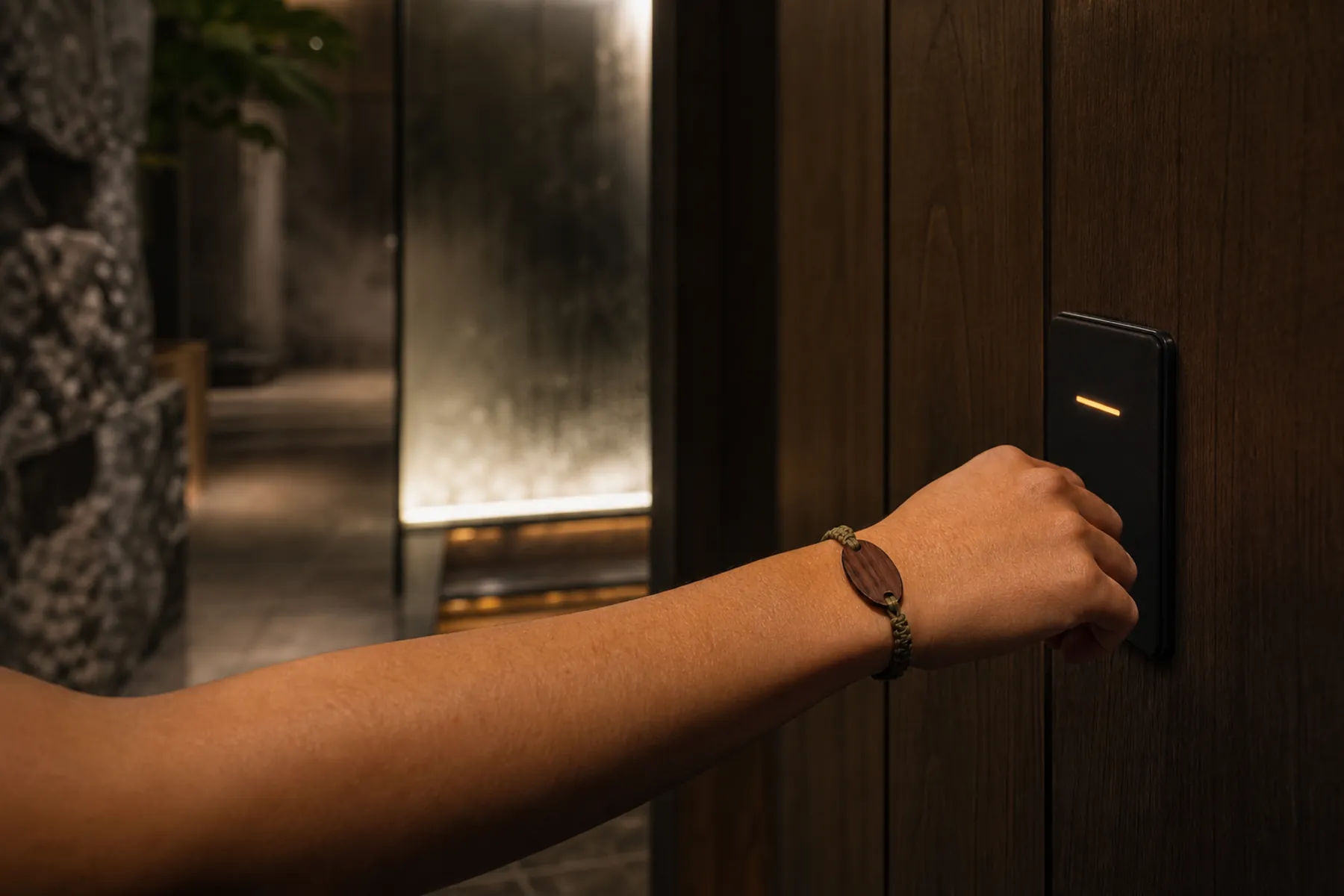
Not the treatment-room door — the locker. A spa guest opens a locker five or six times a visit, wet, often holding a towel. That is the highest-frequency and least forgiving read in the building and the one to test first.
It also argues against constructions that rotate freely on the wrist. A cord-hung face that ends up underneath the wrist is a small irritation once and a real one on the sixth locker visit of the morning.
Compatibility is confirmed against the property’s lock system, credential technology and encoding requirements before production. We do not claim universal compatibility.
What to send with an enquiry
Include the installed system model, an existing credential sample where possible, quantity, expected wear period, guest types, controlled zones and artwork direction. For material-led options, state the evidence or production documentation your procurement team expects.
FSC-certified material options available with supporting production documentation.
No named hotel or customer project is used as proof. The reasoning behind that stance is set out on the about page.