Every other resort market assumes a bare wrist. In an alpine property the credential is under a glove, a cuff and a jacket sleeve — which makes a wristband the wrong place for it more often than not.
- Gloves change the format decision
- Cold changes materials
- Two credential worlds in one property
- Wet, then dry, then wet again
- A short, intense season with new staff
- Storage between seasons
Gloves change the format decision
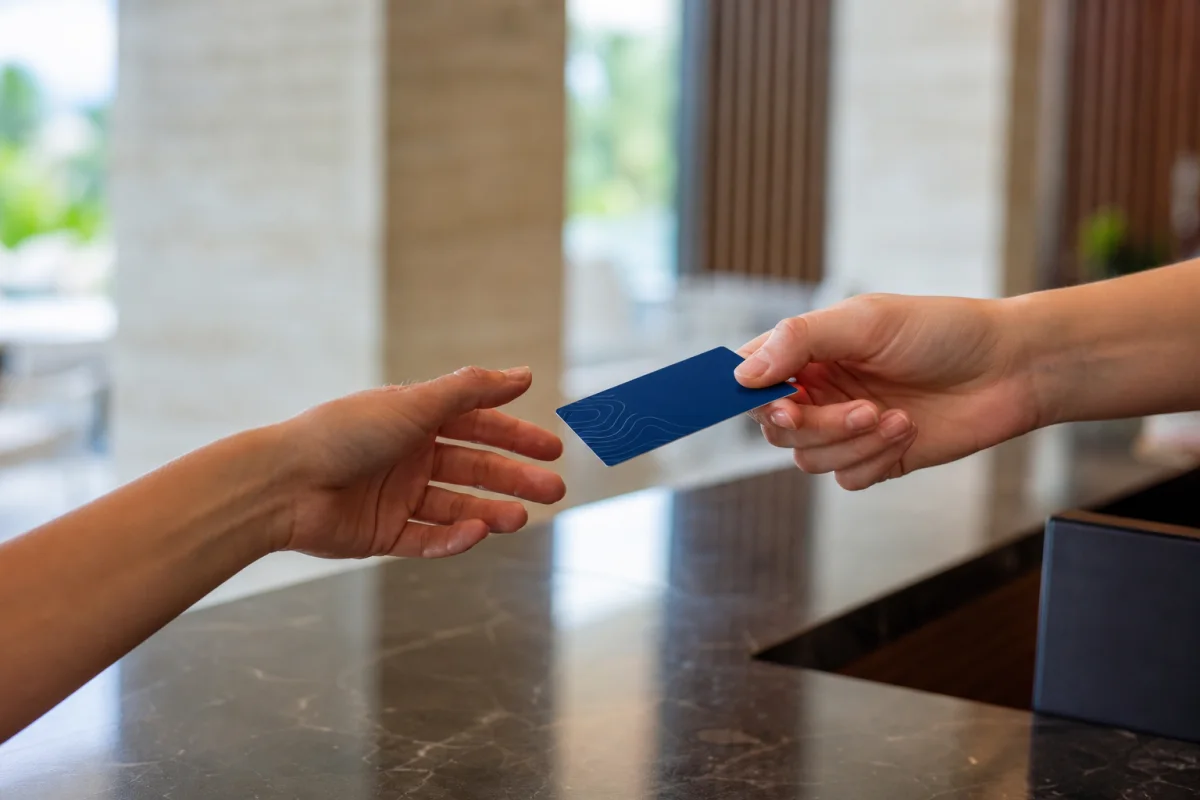
A credential on a wrist is under a glove cuff and a jacket sleeve for most of the day. Presenting it means removing a glove or pushing back two layers in the cold, with a queue behind — which is the sort of friction that makes guests carry the credential somewhere else instead.
That is why alpine properties more often specify a card carried in a sleeve pocket, or a credential in a holder, than a wristband. Where a wearable is wanted, it needs to be over the layers rather than under them.
Under the glove, in a sleeve pocket, in a jacket pocket, or on a lanyard inside a coat. The answer determines the format before any material discussion begins.
Cold changes materials
Silicone stiffens as temperature drops, which makes a closure harder to operate with cold hands and a band less comfortable over layers. Adhesive closures are less reliable in cold and damp. Cards are largely unaffected, which is another point in their favour here.
Where a wearable is specified, it should be sampled in the actual conditions rather than at room temperature — a closure that is easy indoors can be genuinely difficult at the top of a lift.
Two credential worlds in one property
An alpine property often has a hotel side and a mountain side, and they are frequently different systems run by different operators. A hotel room credential and a lift-access credential may have no relationship at all, and merging them is a commercial and technical negotiation rather than a product decision.
What a property can control is that its own credential — the room, the spa, the locker, the ski room — is coherent. Ski-room and boot-room access in particular is worth specifying deliberately, because it is used with cold hands, in ski boots, several times a day.
Wet, then dry, then wet again
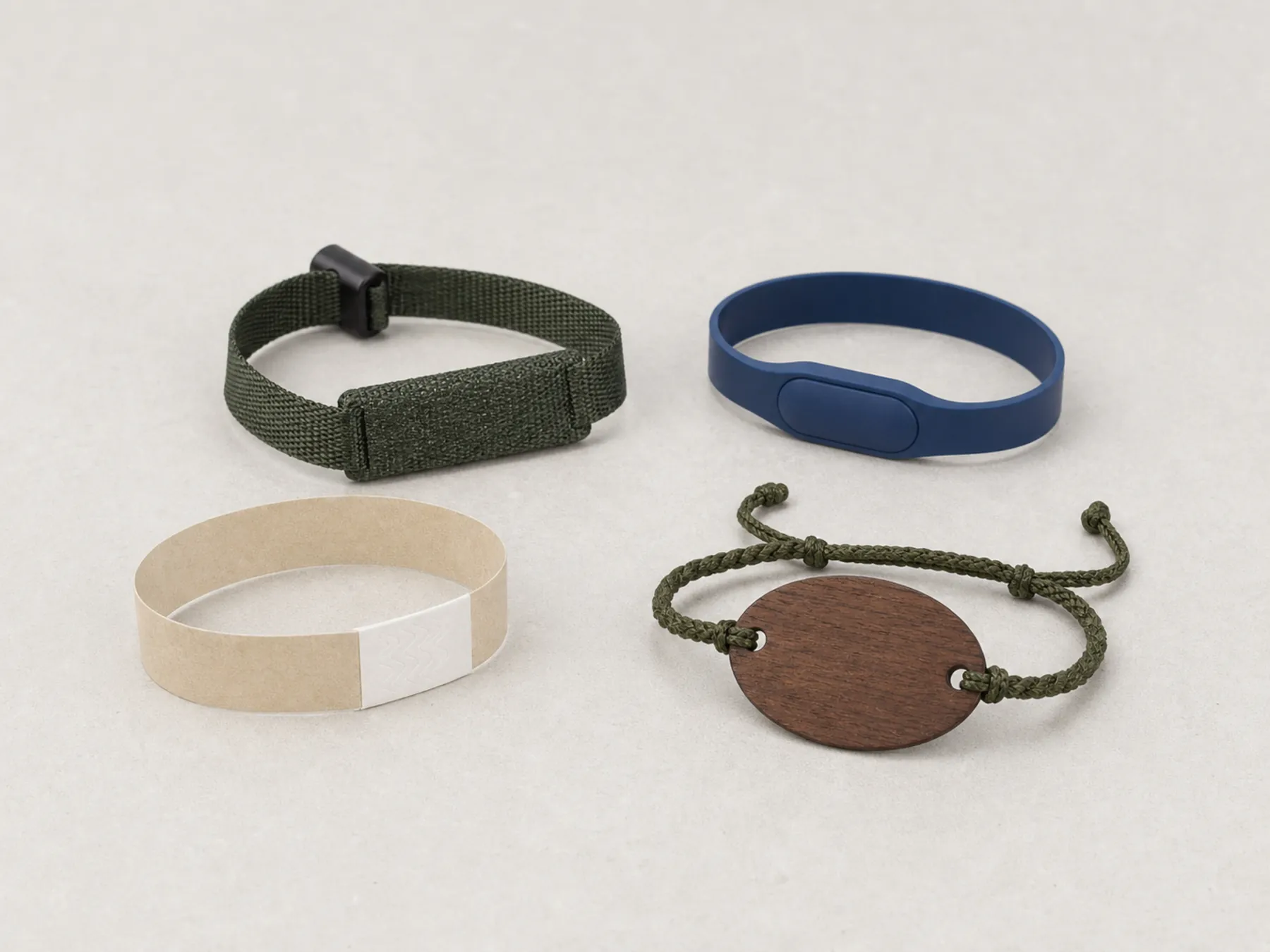
Snow melts on a credential, which then dries in a heated interior, repeatedly. That is the same wet-and-dry cycling that ages natural fibres in the tropics, arriving by a different route — and it means cord and fabric constructions age faster here than a dry climate suggests.
Sealed and moulded constructions handle it. Anything that holds water and then sits against a warm body all evening does not.
A short, intense season with new staff
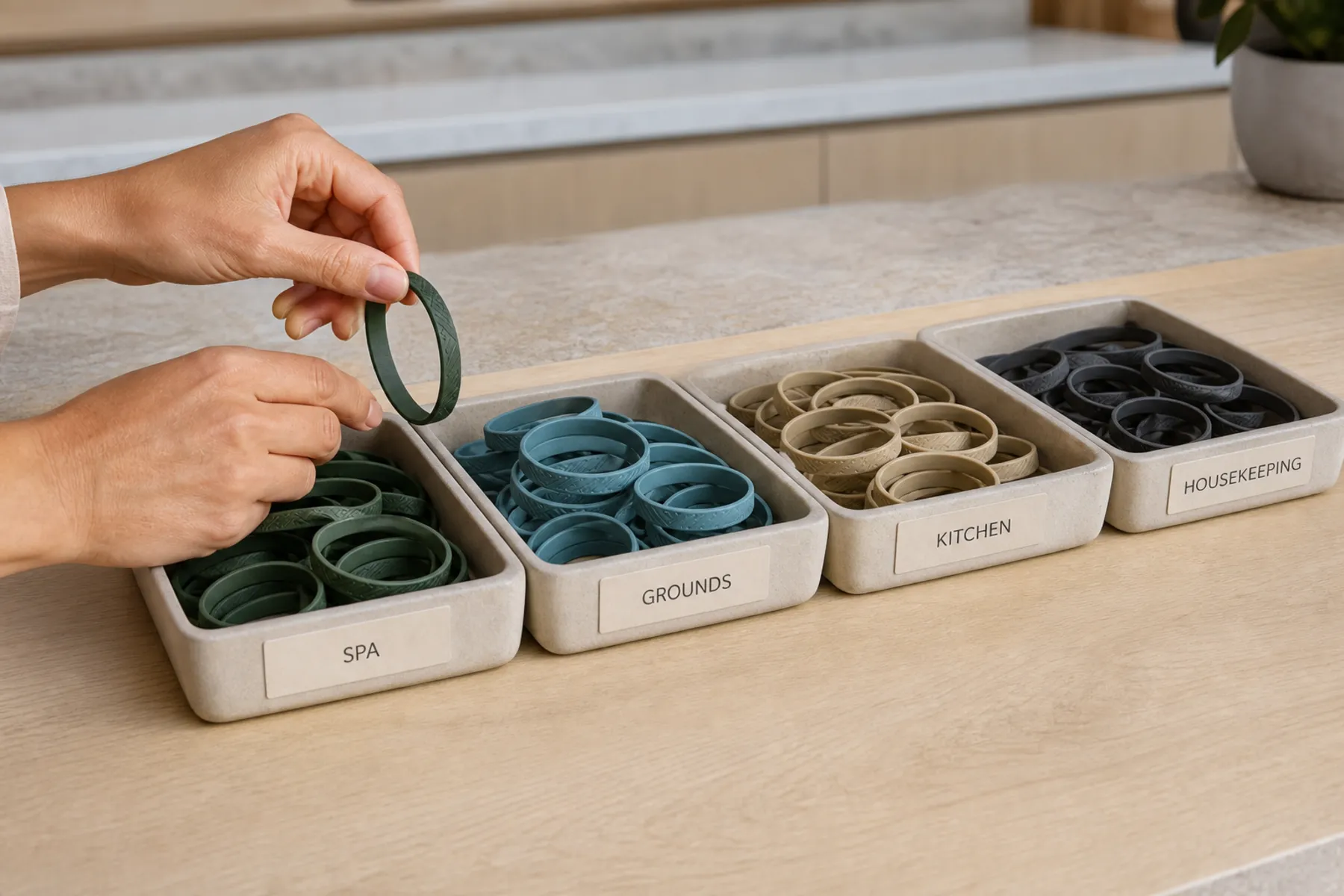
Alpine seasons are short and staffed largely by people who arrived weeks earlier. Anything relying on institutional memory fails, which makes a one-page issue and reissue procedure, a sizing gauge and clear reissue stock more valuable than in a year-round operation.
It also means the season order has to be placed before the season starts, with production at 14–21 days after artwork approval and a margin for a mountain delivery.
Storage between seasons
Stock stored through a long off-season should be sealed and stored flat, and checked before the season rather than assumed. Cold, damp storage does its own conditioning, and a credential that has spent six months in an unheated store room is not necessarily as delivered.
The reorder record — approved sample, artwork revision, colour reference, credential input — needs to survive the closure as well, since the person reordering in November may not be the person who ordered in the previous December.
Compatibility is confirmed against the property’s lock system, credential technology and encoding requirements before production. We do not claim universal compatibility.
Questions this raises
01Should an alpine property use wristbands at all?+
Often not for the mountain-facing credential, because a wrist is under a glove, a cuff and a sleeve all day. A card in a sleeve pocket or a holder is usually the better format. A wearable can work for spa, pool and evening use.
02Does cold affect the materials?+
Silicone stiffens, which makes closures harder with cold hands, and adhesive closures are less reliable in cold and damp. Cards are largely unaffected. Any wearable should be sampled in the actual conditions rather than at room temperature.
03Can one credential cover the hotel and the lifts?+
Usually they are different systems run by different operators, so merging them is a commercial negotiation before it is a technical one. What the property controls is that its own credential — room, spa, locker, ski room — is coherent and works with gloves on.