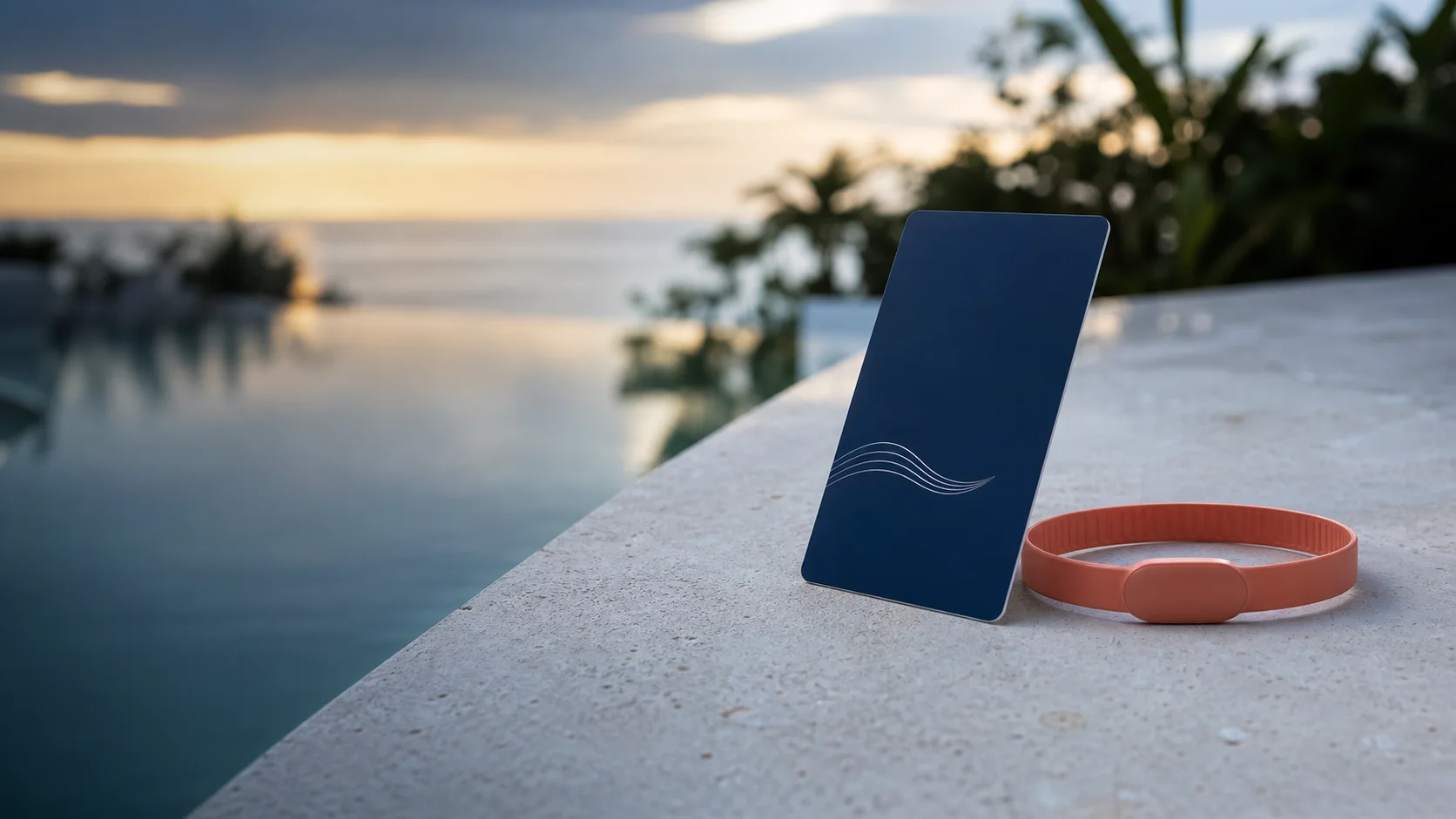
A worked planning scenario, not a customer project. No property is described and none is implied — the reasoning is the part that transfers.
- The conditions
- First move: count, do not assume
- The populations, and what each needs
- The decisions that follow
- What would go wrong if it were rushed
The conditions
480 keys, warm climate, four pools and a beach. Guests stay seven to ten nights. Room access runs on a card estate that works and is not being replaced. Folio-linked spend is live at bars and outlets. Around a fifth of guests are children, and the property sells day passes to non-residents at weekends.
The presenting problem is card reissues: the front desk reissues heavily, almost always after a guest has taken a card to a pool.
First move: count, do not assume
A week of counted reissues, with the location the guest reports. In this scenario it shows the losses concentrated in families and long-stay guests, and almost entirely pool and beach related — which is a segment rather than the whole property.
That single result reframes the project. It is not a format change; it is adding a wearable for the populations that generate the losses, while the card estate continues to carry room access.
The populations, and what each needs
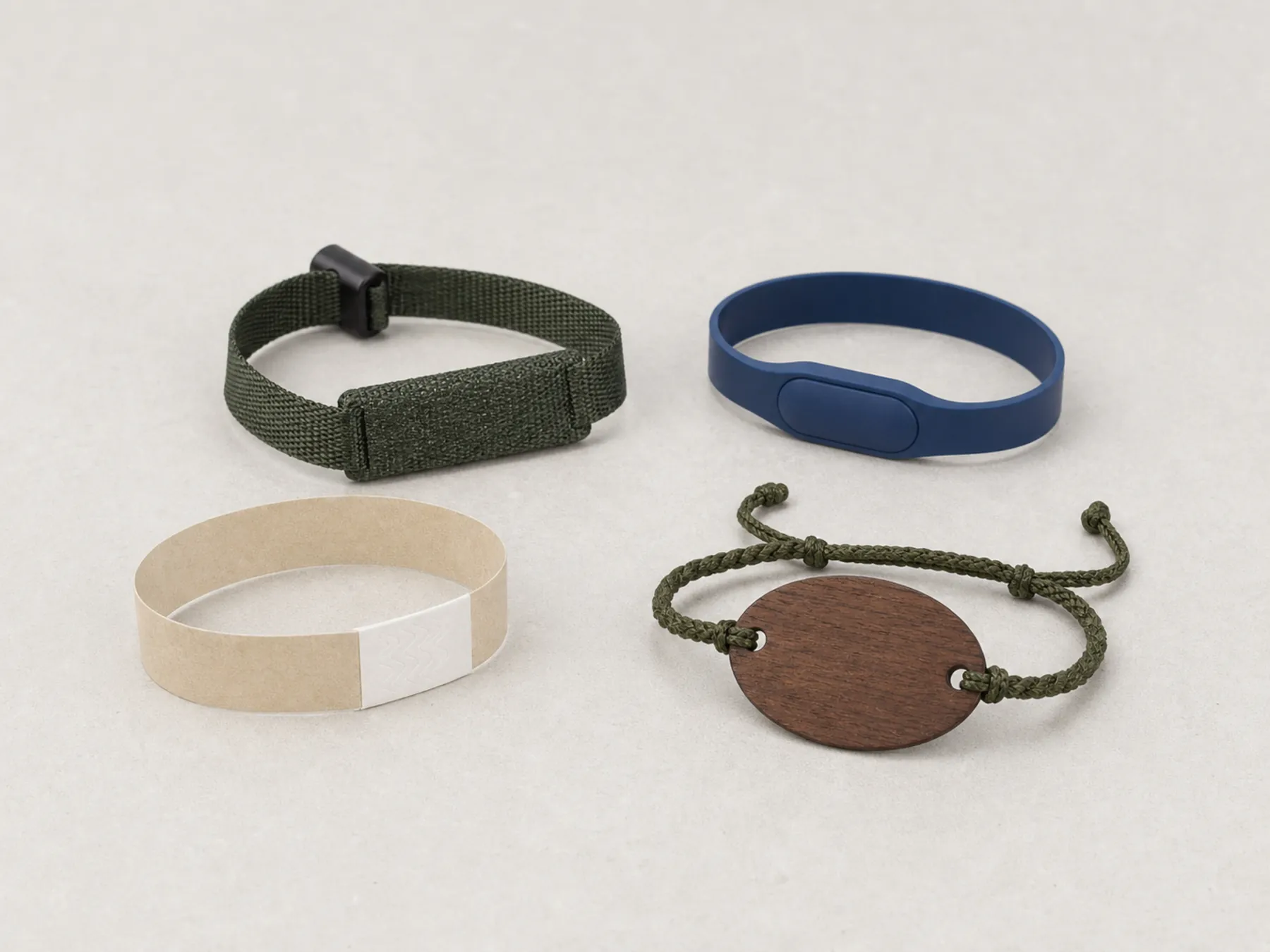
Four appear. Resident adults, who need a comfortable band worn for a week in water. Children, who need a closed loop that cannot be opened and must be visibly unable to charge. Day visitors, who need a visually distinct time-bounded credential with transfer control. And staff, whose credentials turn over faster than their bands do.
One artwork family covers all four; four constructions do not have to.
- Resident adults
- Adjustable moulded band, debossed mark, recovered at checkout
- Children
- Closed loop from the same artwork, distinct colour, no spend
- Day visitors
- One-way closure, colour by day, cheap substrate
- Staff
- Pouch construction so a credential can be withdrawn without the band
The decisions that follow
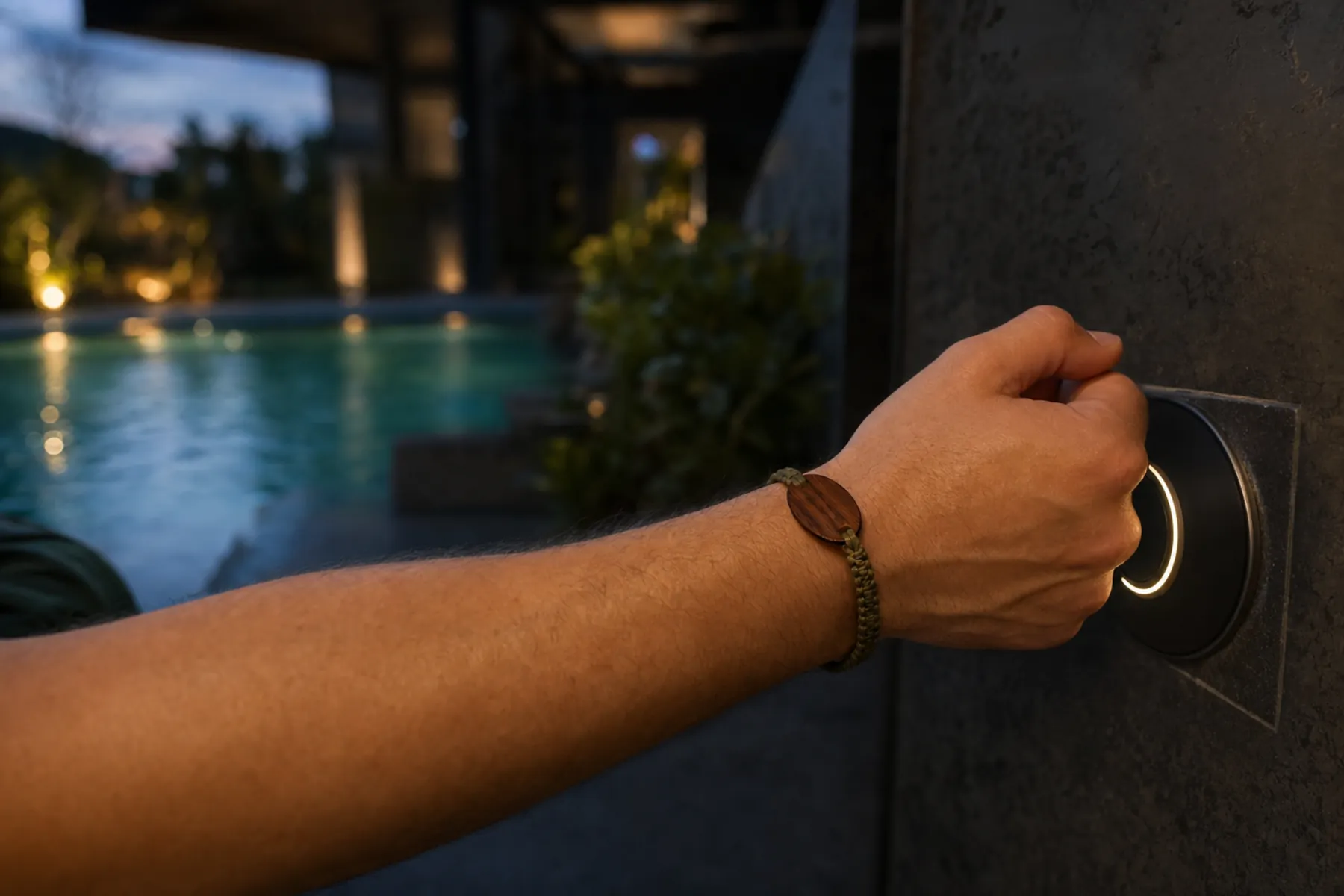
The card carries room access and the band carries resort access and spend, kept as two linked identities so a lost band can be disabled while the guest keeps their room card. Both formats share a mark, with the full version on the card and a simplified deboss on the band.
Colour does the tier work: one resident colour, one child colour, a rotating day-visitor colour. All chosen on hue contrast and checked wet, because the band is judged at a bar in the evening rather than on a desk.
What would go wrong if it were rushed
The 11pm reissue is the failure most likely to be discovered late: a guest back from a beach bar without a band, needing identification, a disabled credential, a new one, restored spend and a room door — with one member of staff. Rehearsing it before the first full order is what surfaces missing stock and missing authority.
The second is housekeeping. Recovered bands with no route accumulate in a drawer, still enabled, which is a box of live keys nobody is tracking.
One artwork, three colourways for guests plus a day-visitor stock and a staff band. Minimum order is 500 pieces per artwork with 14–21 days production after approval, so the colour and artwork map — not the 480 keys — is what sets the quantity.
Compatibility is confirmed against the property’s lock system, credential technology and encoding requirements before production. We do not claim universal compatibility.
No named hotel or customer project is used as proof anywhere on this site. The reasoning behind that is set out on the about page.