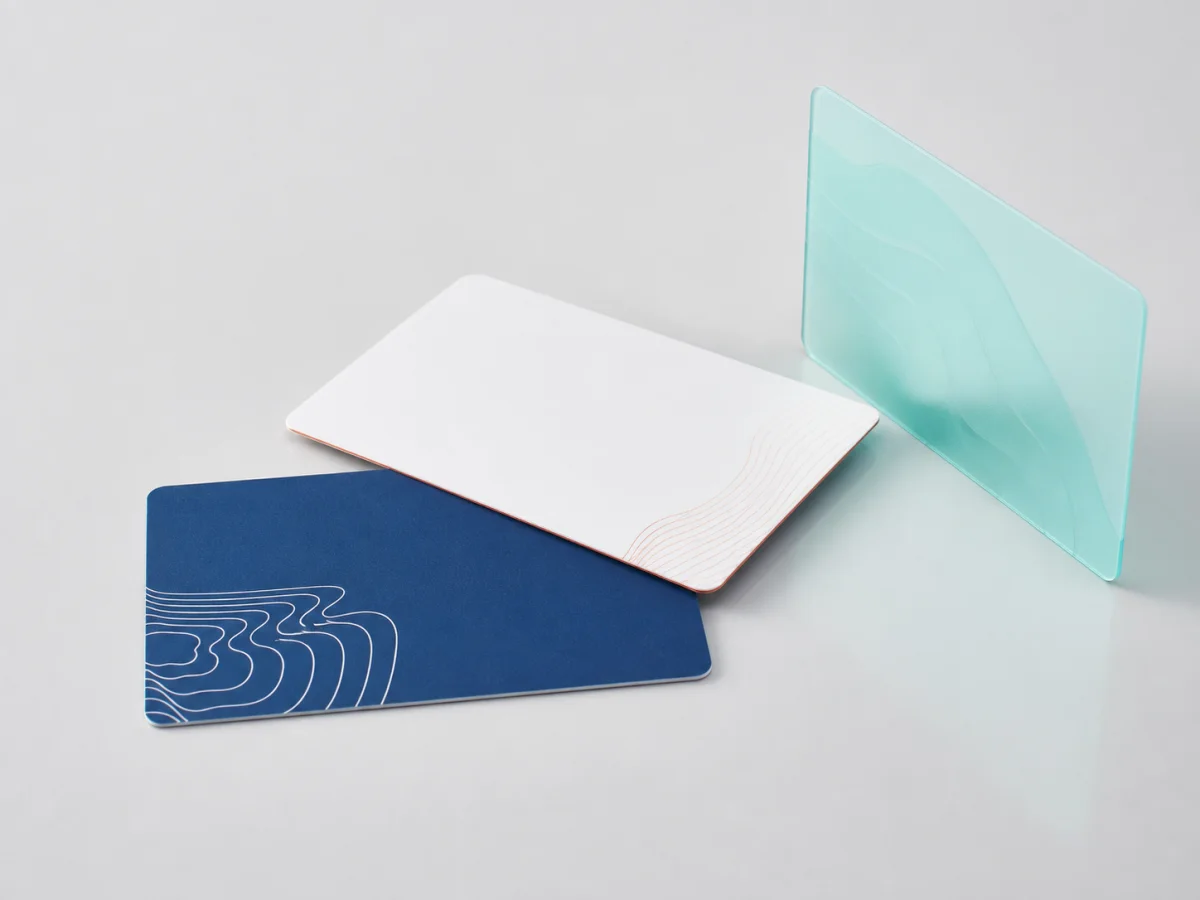
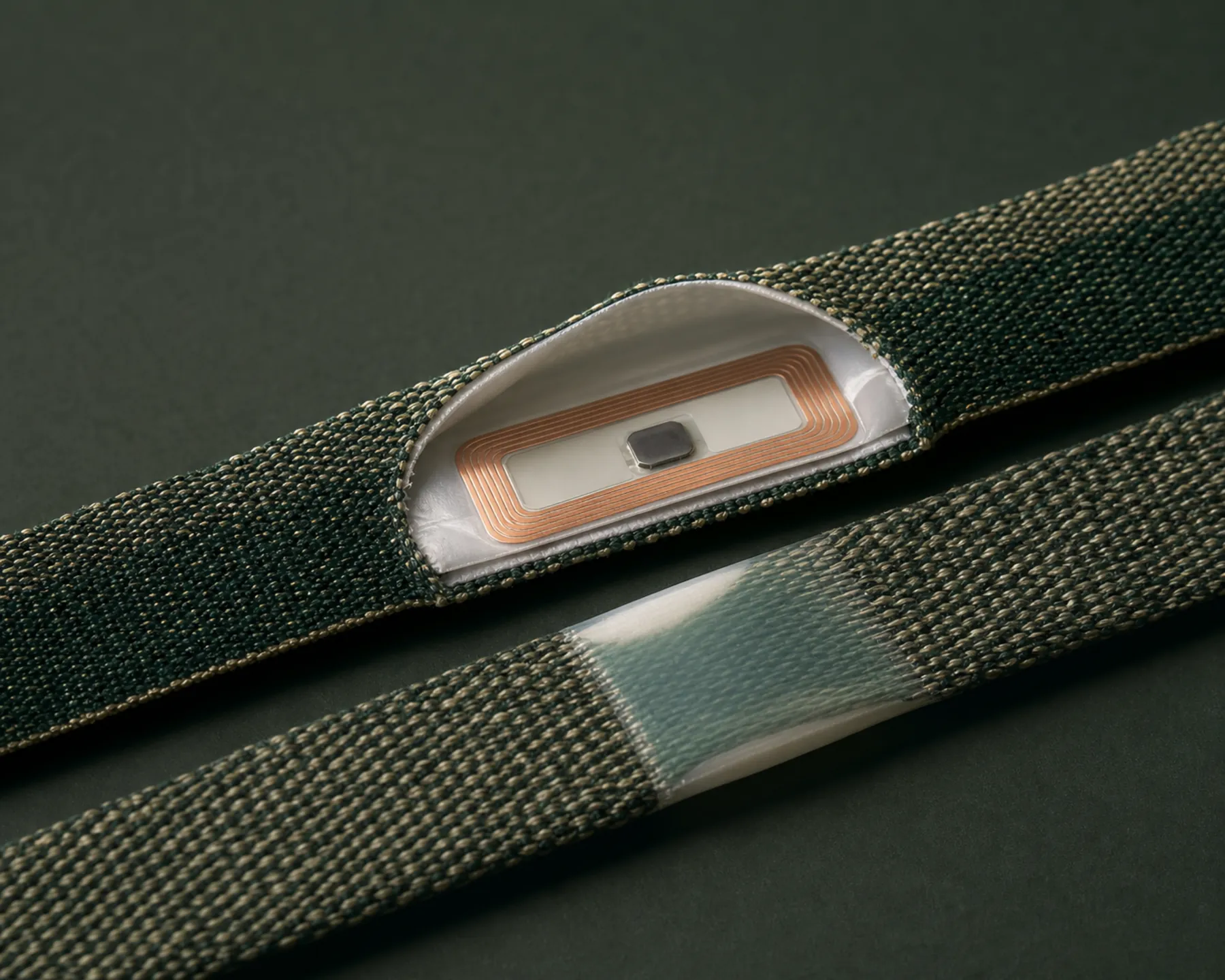
A card looks like printed plastic. It is a laminated sandwich with an electronic assembly inside, and the things that go wrong with cards almost all come from ignoring one of those two facts.
- The layers
- Choosing a body material
- Finish changes how a card ages
- The magnetic stripe question
- What makes a card fail early
The layers
A standard card is built from printed core sheets with an antenna and chip assembly between them, laminated under heat and pressure into a single body, then finished. The format is fixed at CR80, 85.6 × 54 mm, ISO/IEC 7810 ID-1, typically 0.76 mm thick.
Because the assembly is inside, anything that disturbs the lamination — an over-thick ink layer, a heavy foil block, an embossed panel — can produce a visible witness mark or a weak point. That is why artwork is approved against the construction rather than as a flat design.
- Format
- CR80, 85.6 × 54 mm, ISO/IEC 7810 ID-1
- Thickness
- Typically 0.76 mm; other builds by specification
- Body
- PVC, recycled-content or documented paper-based options
- Assembly
- Antenna and chip laminated between printed cores
- Finish
- Gloss, matt, and spot treatments by specification
Choosing a body material
Standard PVC is the reference: it prints predictably, laminates cleanly and holds its shape. Recycled-content bodies behave close to it with print and colour differences worth approving on a physical sample. Paper-based bodies feel entirely different in the hand and have a different service life.
The trade is consistency against statement. A property replacing thousands of cards a year should decide how much run-to-run variation it can tolerate before choosing a natural-content body.
Finish changes how a card ages
A gloss finish looks best new and shows scratches soonest. A matt finish looks quieter and hides handling marks, which matters for a card that lives in a pocket with keys and coins for a fortnight.
Spot treatments — a gloss detail on a matt card, a foil accent — read well and add process steps and constraints, particularly where they fall over the antenna path.
The magnetic stripe question
Some estates still read a stripe, and where that is genuinely the case it is specified. Where it is habit rather than requirement, it is worth confirming: a stripe constrains artwork, adds a process, and gives a guest a surface to damage.
The answer comes from the installed system rather than from preference or from what the property ordered last time.
What makes a card fail early
Delamination at an edge, usually from a card being flexed hard or stored compressed; surface wear on a gloss finish; and a broken antenna connection from repeated bending. All three are handling outcomes rather than manufacturing ones, which is why cards issued in a sleeve last visibly longer than cards issued loose.
For a property that reissues heavily, that is a cheap intervention: a sleeve costs almost nothing and removes the most common cause of early failure.
Compatibility is confirmed against the property’s lock system, credential technology and encoding requirements before production. We do not claim universal compatibility.
Questions this raises
01Why does artwork need to know where the antenna is?+
Because the antenna is inside the laminated body, and heavy foil, large metallic areas or embossing over its path can affect performance or leave a visible witness mark in the surface. Checking it takes minutes and removes a category of expensive surprise.
02Gloss or matt?+
Gloss looks best when new and shows scratches soonest. Matt hides handling marks, which matters for a card carried in a pocket for a fortnight. For a card reissued every stay, gloss is fine; for a card that has to look good all season, matt ages better.
03Do we still need a magnetic stripe?+
Only if your installed estate reads one — and it is worth confirming rather than assuming, because a stripe constrains the artwork, adds a process step and gives guests a surface to damage.