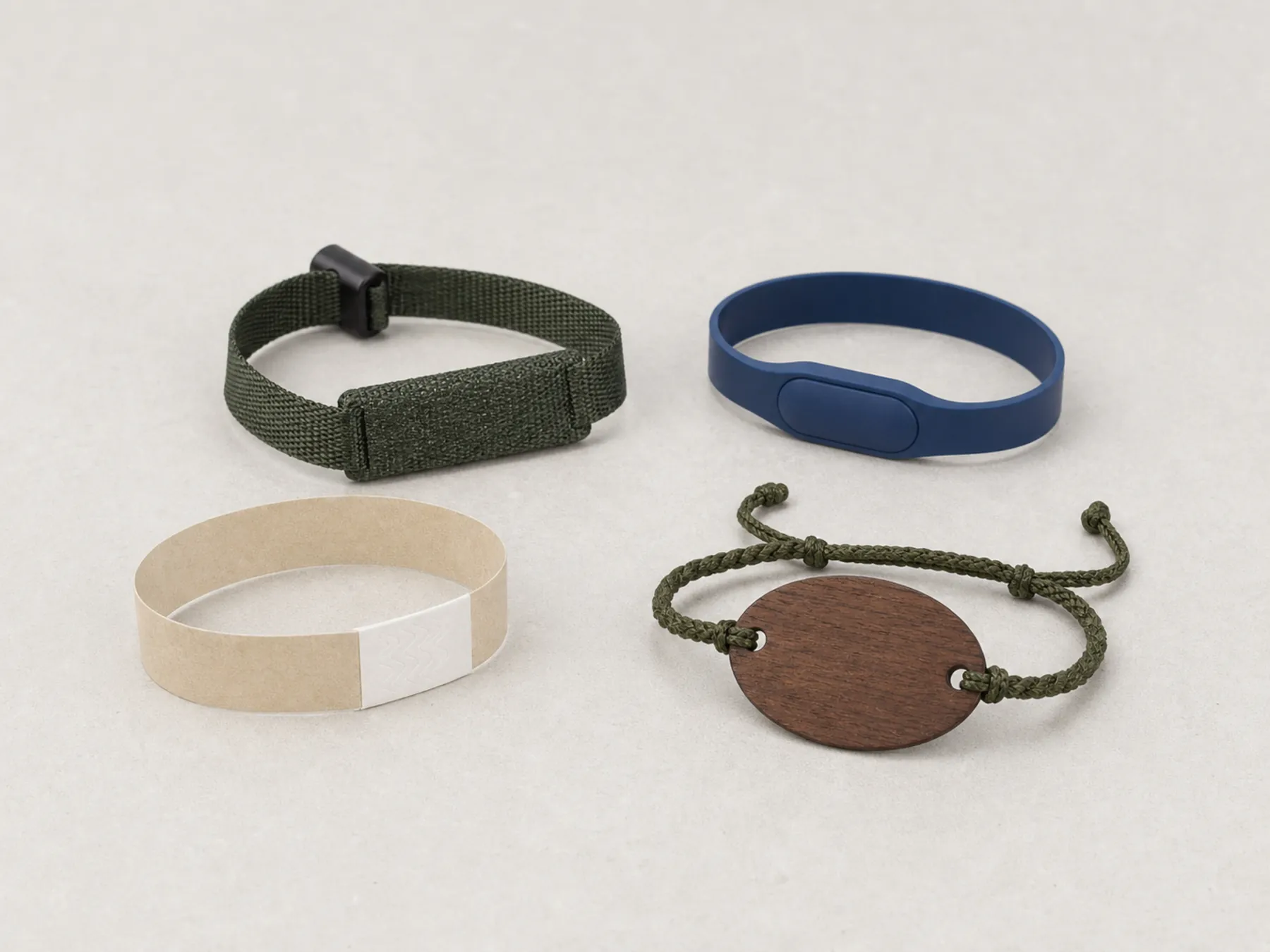
Two frequencies cover almost all hospitality credentials. They differ in security model, in how much data they carry, in how they behave near metal and water, and in how small a wearable they can fit into.
- What the two frequencies are used for
- Security is the real difference
- Physical consequences of the choice
- Mixed estates are common and manageable
- What we need in order to answer
What the two frequencies are used for
Low frequency at 125 kHz is the older family. It is simple, it typically carries an identifier rather than structured data, and it is tolerant of difficult physical environments. High frequency at 13.56 MHz is the modern default: it supports structured memory, it supports secure authentication between credential and reader, and it is what most current hospitality installations are built around.
For a property the choice is rarely open. If the locks are configured for one, that is the answer, and the useful work is confirming which rather than debating merits.
- 125 kHz (LF)
- Usually an identifier only. Tolerant near metal and moisture. Larger antenna, so harder to fit into a slim wearable.
- 13.56 MHz (HF)
- Structured memory and secure authentication available. Smaller antenna, so it suits compact wearables. More sensitive to metal.
Security is the real difference
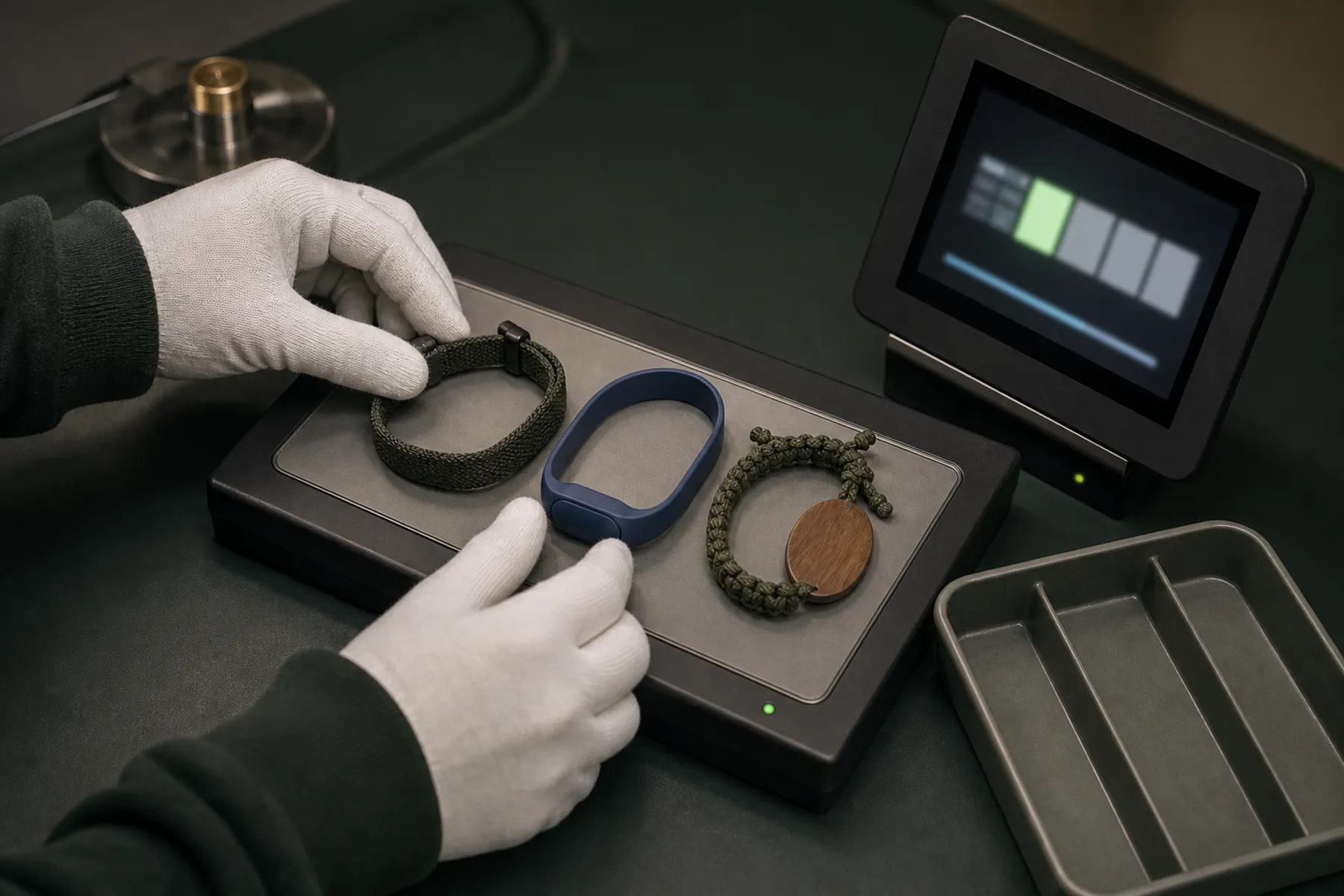
A credential that only presents a number can be read by anyone with a reader, and a system that trusts that number trusts anyone who can reproduce it. High-frequency credentials can require the reader to prove itself and the credential to prove itself in return, which is a different security model rather than a stronger version of the same one.
Whether that matters depends on what the credential opens. For a locker at a beach club, an identifier may be entirely adequate. For guest rooms, most properties and most insurers now expect an authenticated credential.
Physical consequences of the choice
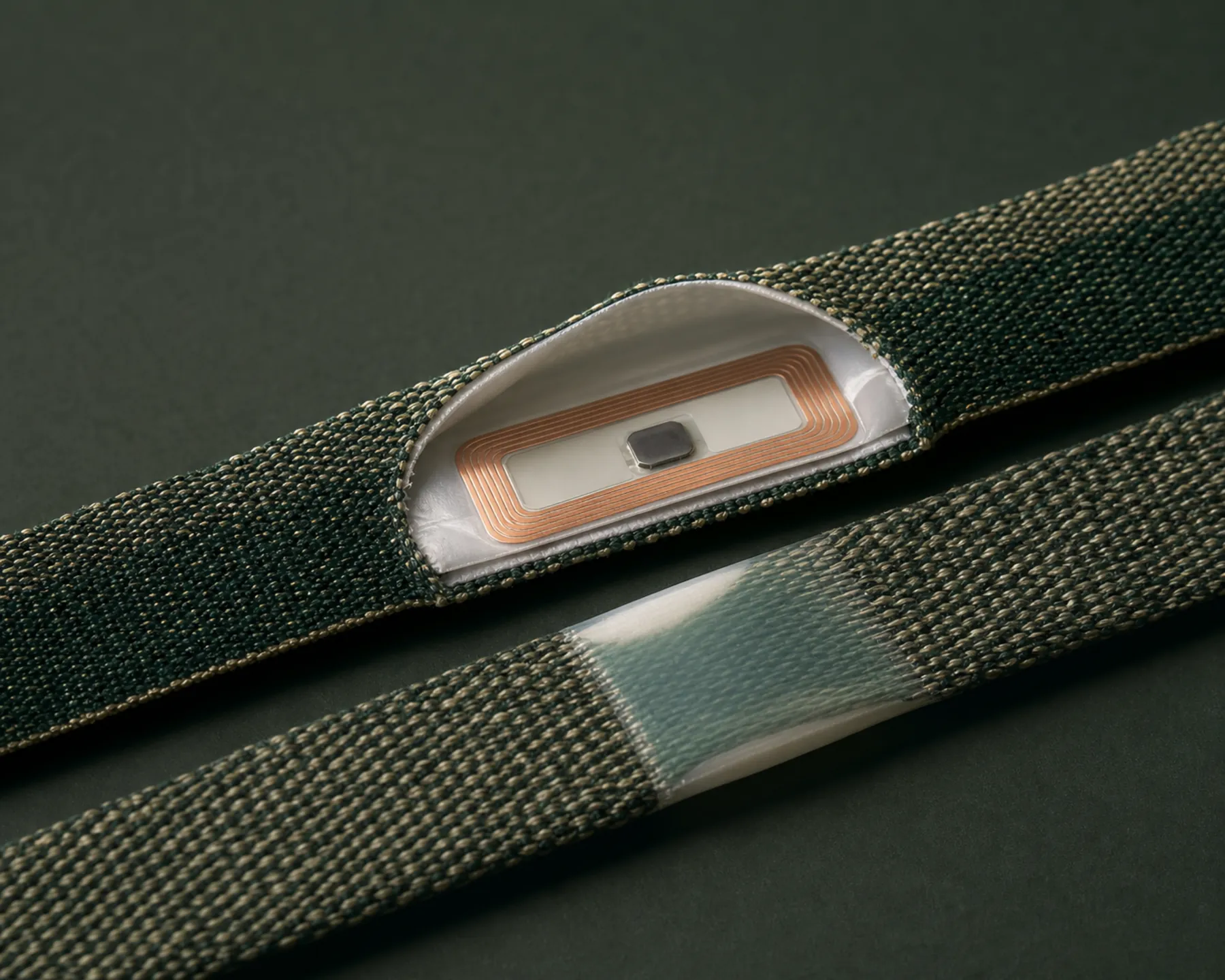
Antenna area drives read distance, and low-frequency antennas want more turns and more space. That is why the most compact wearables in the catalogue are specified as high frequency: at a certain width, a low-frequency antenna simply does not fit without losing performance a property would notice at the door.
Conversely, low frequency is more forgiving around metal and moisture, which is why it survives in some industrial and marine settings where high frequency needs more careful reader placement.
Mixed estates are common and manageable
Properties that have been refurbished in phases often run both: newer wings on high frequency, an older block still on low frequency, plus a locker system that is neither. That is normal, and it does not have to be resolved before credentials can be ordered.
What it does require is a map — which reader population is which — because a single credential cannot serve both frequencies unless it contains both technologies, which is a specification decision with a cost.
What we need in order to answer
The installed system and what it is configured to accept, or a working credential we can identify. Not a frequency stated from memory, because the frequency alone does not determine whether a credential will be accepted.
Once that is settled, the frequency stops being a decision and becomes a constraint, which is a much easier thing to design around.
Compatibility is confirmed against the property’s lock system, credential technology and encoding requirements before production. We do not claim universal compatibility.
Questions this raises
01Is 13.56 MHz always better?+
It is more capable, which is not the same thing. It supports structured data and authenticated exchanges, and it fits into smaller wearables. Low frequency is more tolerant near metal and moisture. What matters far more than either is what your installation is configured to accept.
02Can one credential work at both frequencies?+
Only if it contains both technologies, which is a specification decision with a cost and a size implication. Properties with mixed estates more often map which reader population is which and issue accordingly.
03Does frequency change the wristband I can choose?+
It can. Low-frequency antennas need more area, so the narrowest constructions in the catalogue are specified as high frequency. If your system is low frequency, the compact models may not be available at the read performance you need.