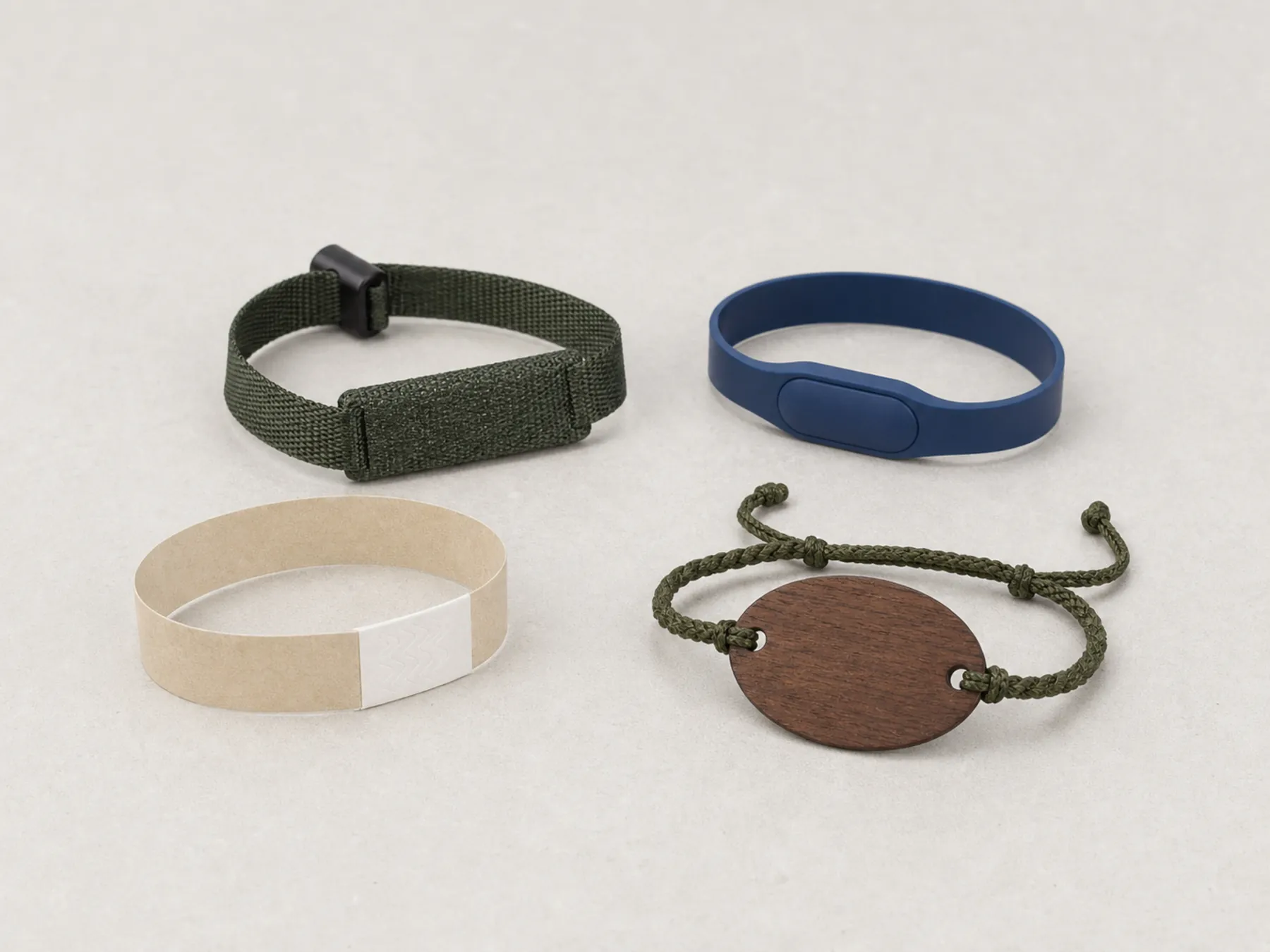
Suppliers quote read range as though it belongs to the credential. It does not. It is produced by the credential, the reader, what the reader is mounted on and what is behind the credential — which is usually a wrist.
- Antenna area is the dominant variable
- What consumes margin in practice
- Where the credential sits on the wrist
- What good enough looks like
- Testing properly, once
Antenna area is the dominant variable
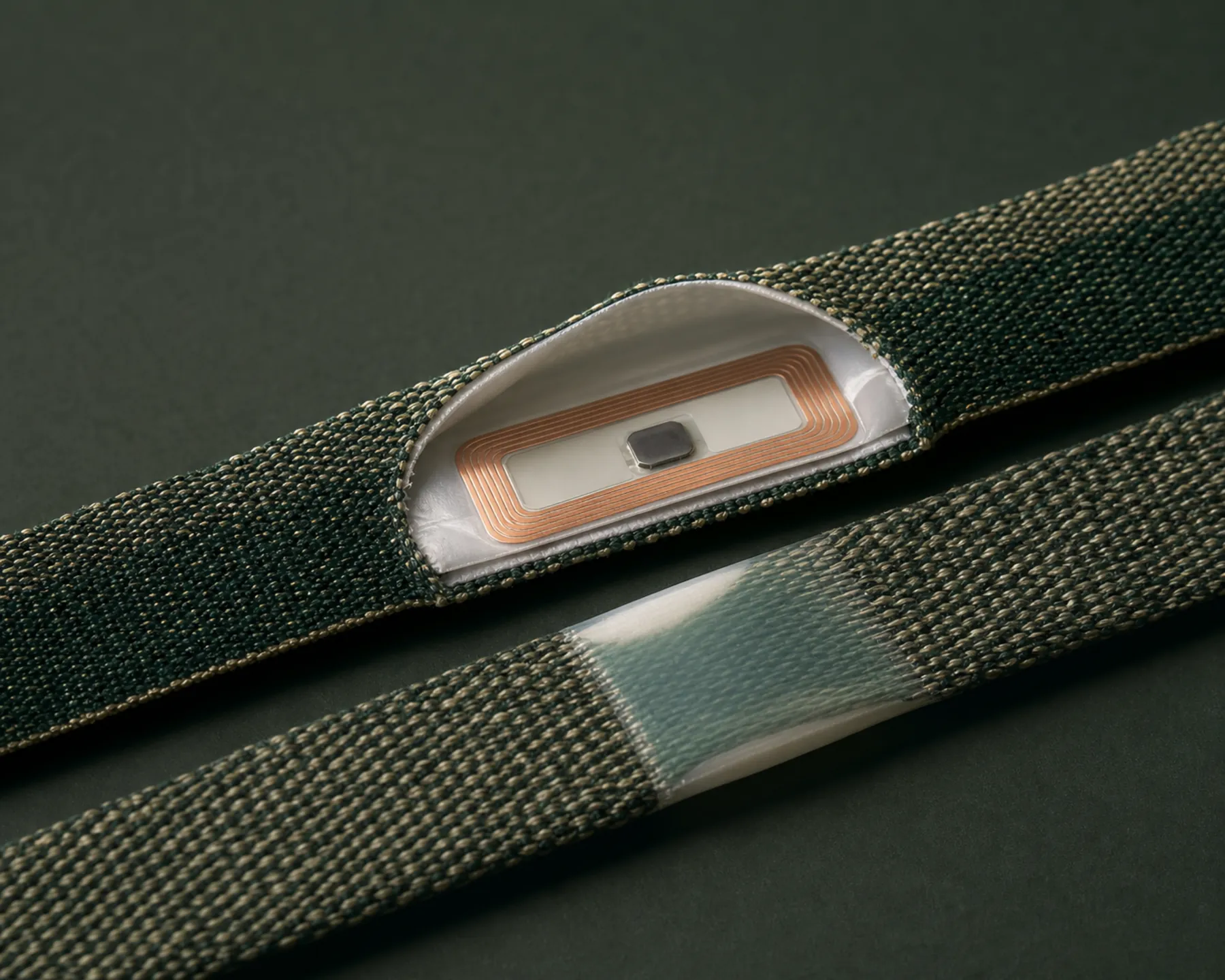
A credential works by coupling with a reader’s field, and the area enclosed by its antenna determines how much of that field it can use. A card has a large area; a compact wristband module has a fraction of it. That single fact explains most of the difference in behaviour between formats.
It is also why the narrowest wearables are specified with care. Narrowing a band past a certain point does not make a slimmer credential, it makes a credential with less margin — and margin is what gets consumed by awkward readers.
What consumes margin in practice
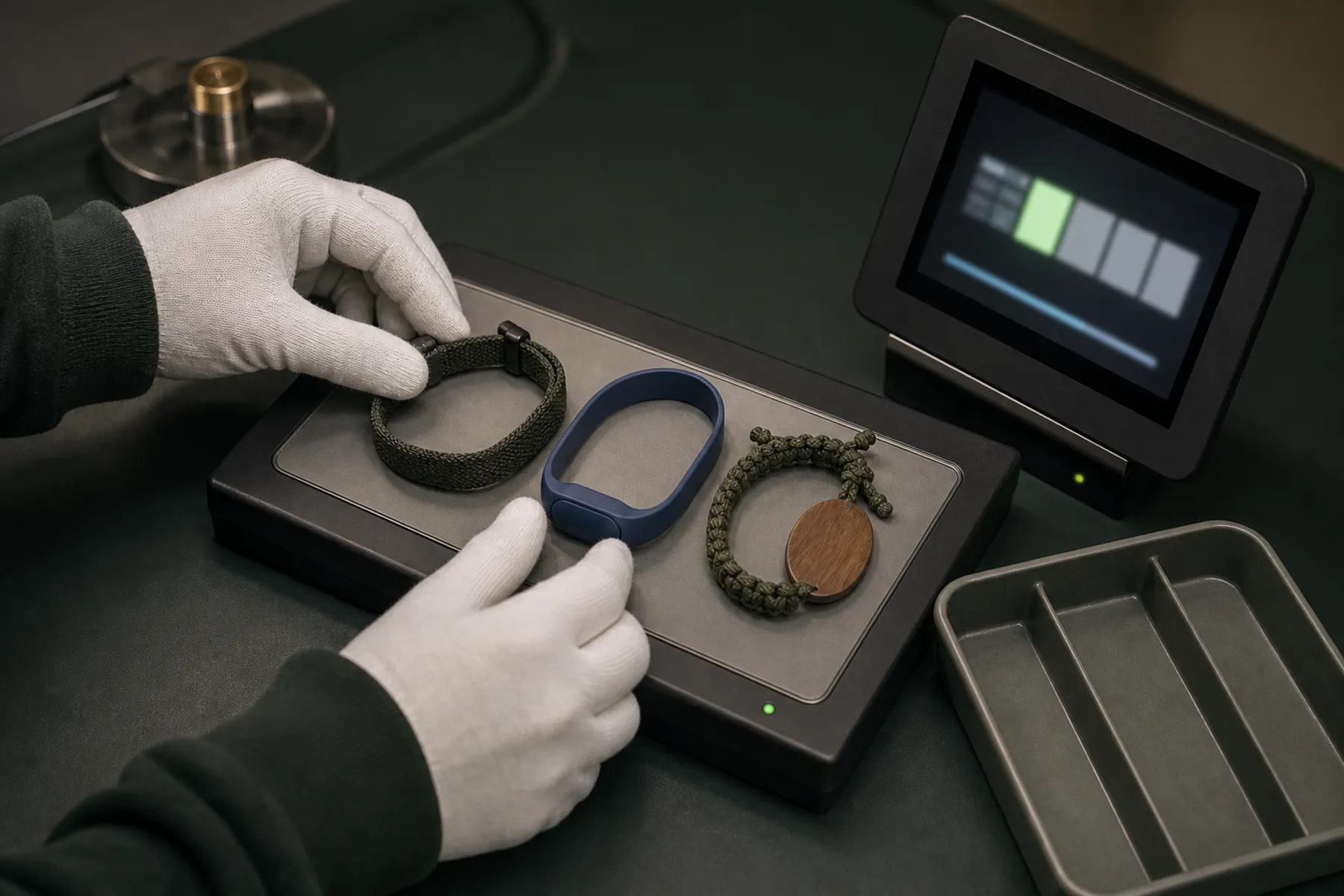
Metal near the reader or behind the credential. Recessed reader housings that hold the credential further from the field. Water in a fabric strap. A wrist directly behind a small module. None of these is dramatic alone; two together are what turn a reliable credential into one that needs a second presentation.
This is why a desk-top test unit proves so little. It is the most forgiving reader in the building, and it is the one everybody tests on.
The readers actually worth testing:
- Recessed door units, where the credential cannot get close to the antenna
- Anything mounted on or near metal — lift panels, gates, ship bulkheads
- Outdoor readers in bright sun, where a guest cannot see an indicator
- Locker banks, presented one-handed by a wet guest
Where the credential sits on the wrist
Guests present the top of the wrist without being told. A module that lives on the top of the wrist gets presented; one that rotates freely ends up underneath and produces a guest who has to think about the credential, which is the thing a good specification avoids.
That is a construction decision rather than an electronic one, and it matters most where the credential is used constantly — lockers, bars, gates — rather than twice a day at a room door.
What good enough looks like
Not maximum range. A credential that reads at a great distance also reads when the guest did not intend it to, which produces its own problems at closely spaced readers. What a property wants is a reliable read on first presentation at every reader in scope, and nothing beyond that.
Setting that as the acceptance criterion before sampling turns a subjective assessment into a test with a result.
Testing properly, once
Take a production-realistic sample to every reader type in scope. Present it as a guest would — quickly, at an angle, wet where that is realistic. Record the result per reader type rather than as an overall impression.
Where one reader type is marginal, that is useful information rather than a failure: it may be resolved by reader placement, by a different construction, or by accepting a second presentation in one location.
Compatibility is confirmed against the property’s lock system, credential technology and encoding requirements before production. We do not claim universal compatibility.
Questions this raises
01Why does the wristband read at a shorter distance than our cards?+
Antenna area. A card encloses a much larger area than a compact wristband module, so it couples with the reader field more effectively. It is a property of the format rather than a defect, and it is why compact wearables should be proven at the property’s own readers.
02Will a wet band still read?+
Generally yes, at a slightly shorter distance — water and the wrist behind the module both detune the antenna a little. That matters only where the margin was already small, which is why we test wet at recessed and metal-adjacent readers rather than assuming.
03Should we ask for the longest read range available?+
No. A credential that reads at a great distance also reads when the guest did not intend it to, which causes problems at closely spaced readers. Reliable first-presentation reads at every reader in scope is the correct target.