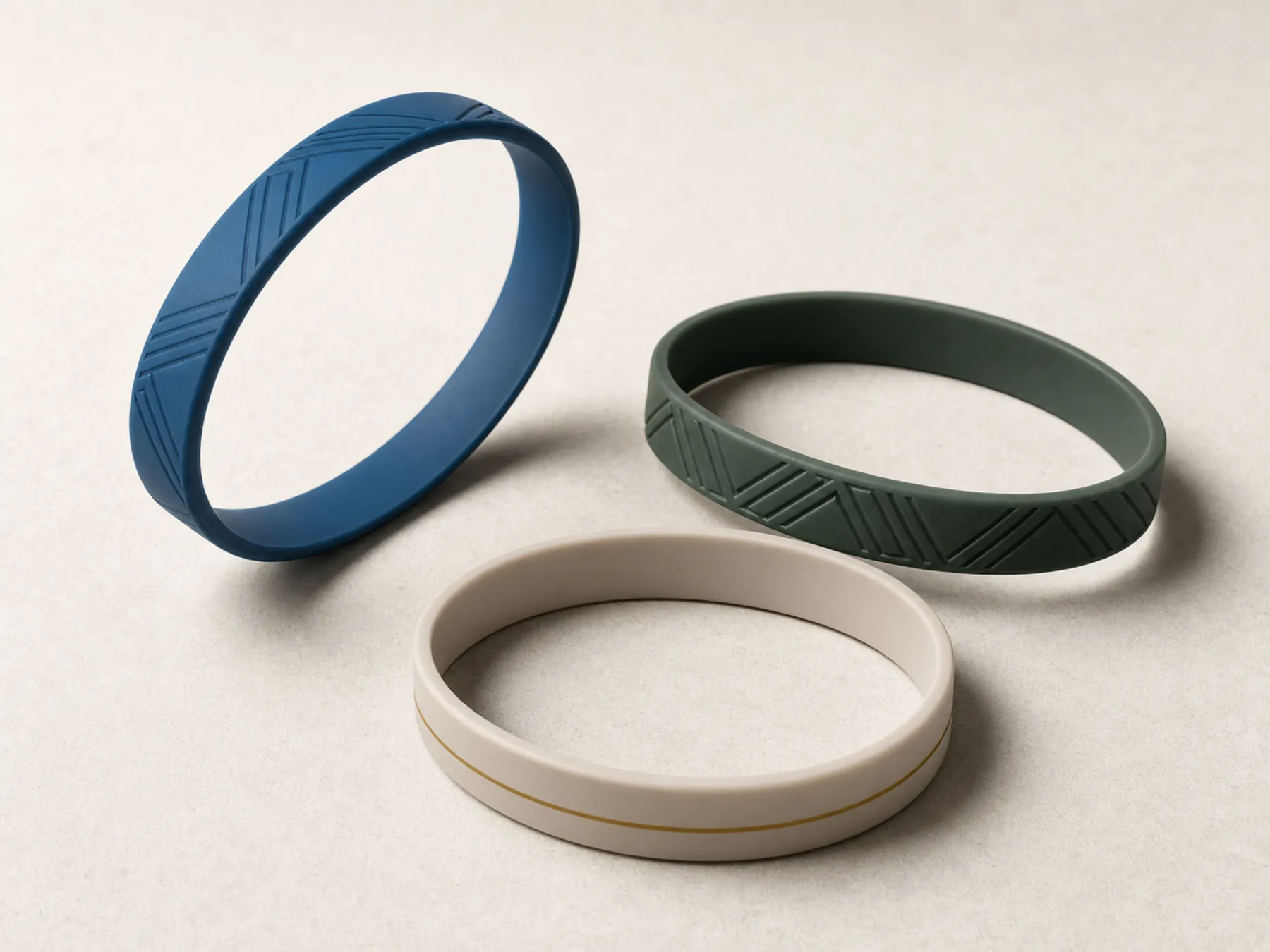
Properties choose wristbands by material and then discover that everything they actually cared about — reuse, transfer, comfort, failure rate — was decided by the closure.
- The four closure families
- Where closures actually fail
- One-way closures and the cost of finality
- Tamper evidence has to be recognisable in two seconds
- Removal is an operating decision
The four closure families
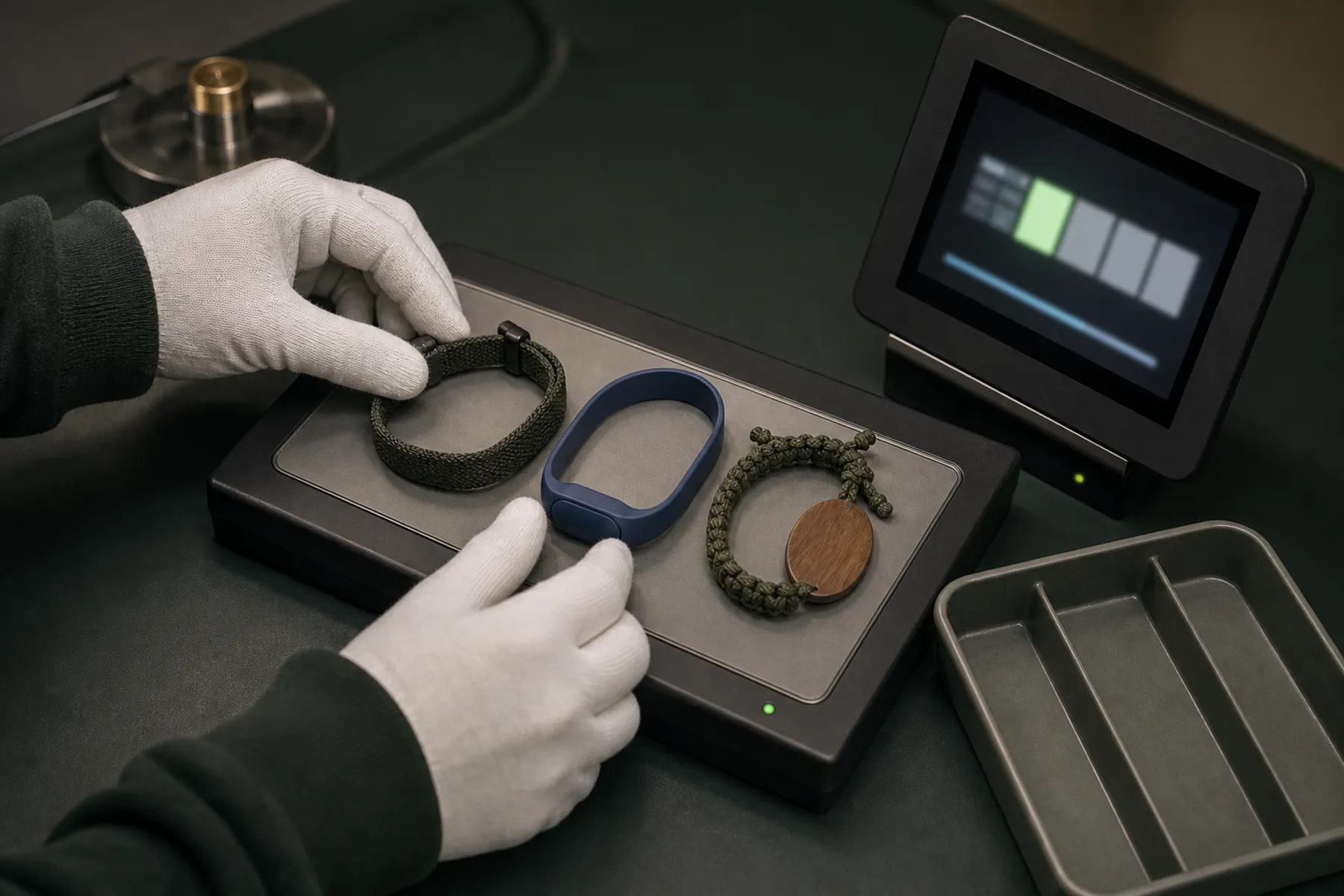
Adjustable closures reopen, which suits residents and any programme that recovers credentials. One-way closures engage once and have to be cut off, which is how transfer is controlled. Closed loops have no closure at all and are sized at issue, which is the standard for young children. Buckles adjust continuously and reopen, which suits long stays.
Those four map almost exactly onto four populations, which is why a property with several populations usually needs more than one construction even if it wants one look.
- Adjustable snap
- Reopenable. Residents, recovered programmes. No transfer control.
- One-way
- Cut to remove. Paid admissions, events. Consumed on issue.
- Closed loop
- No closure. Children. Sized at issue, cut to remove.
- Buckle
- Continuous adjustment, reopenable. Long stays and residences.
Where closures actually fail
At the hole, when a guest forces a post through at an angle. That is the failure, and it accounts for most wristband replacement in service — not material degradation, not water.
Two things reduce it: material concentrated around the closure rather than spread along the strap, and staff demonstrating the closure at issue instead of handing it over. The second is free and works.
One-way closures and the cost of finality
A one-way closure makes fit final. That is the point — a band that cannot be reopened cannot be passed to somebody else — and it means every misfit consumes a credential.
So an order using one-way closures needs an explicit misfit allowance rather than a quantity matched to admissions, and staff should fit the band on the wearer rather than handing it over.
A property that wants both transfer control and recovery is asking two incompatible things of one closure. Control transfer in the system instead — by how credentials are enabled and disabled — and use a reusable closure.
Tamper evidence has to be recognisable in two seconds
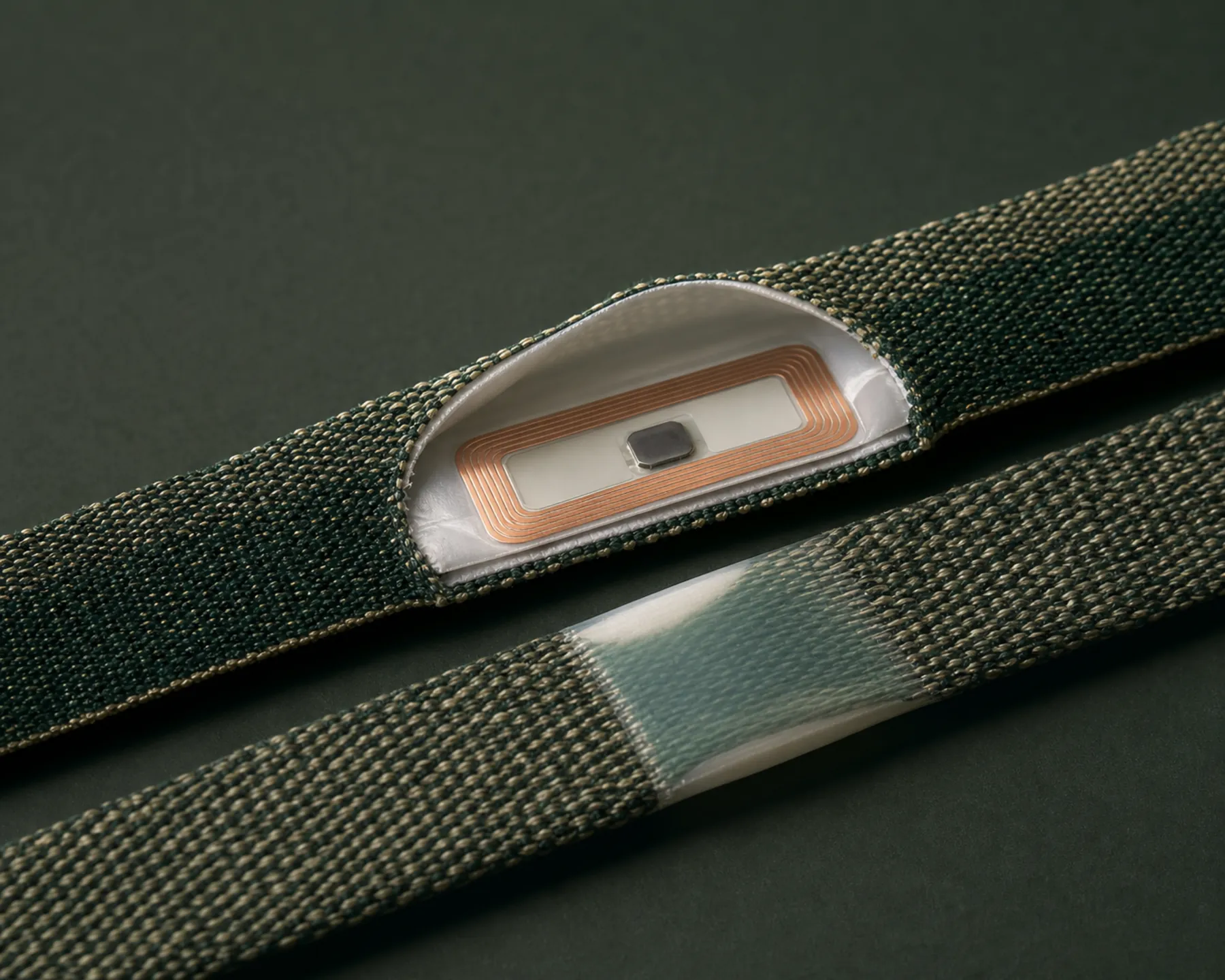
A security feature that requires inspection is not a security feature at a gate. Useful tamper evidence is visible at arm’s length: a destroyed die-cut pattern on an adhesive closure, visible marks around a one-way clip that has been worked at.
The cheapest way to make it effective is a control sample: keep a deliberately tampered band at the gate so staff learn the difference by comparison rather than from a briefing.
Removal is an operating decision
Any closure that has to be cut requires a tool at every point where guests leave permanently, not just at a central desk. Without that, guests remove bands themselves in ways that are messier and occasionally unsafe.
It also creates a deliberate waste stream: every credential issued is a credential destroyed. That is a fair trade for genuine access control and a poor one for a hotel that could recover and reuse a band.
Compatibility is confirmed against the property’s lock system, credential technology and encoding requirements before production. We do not claim universal compatibility.
Questions this raises
01Which closure stops a band being passed on?+
A one-way closure, which has to be cut to remove. Adjustable snaps, buckles and stretch loops all come off easily by design, so where transfer is the risk being controlled they are the wrong specification.
02Why do bands break at the closure?+
Because guests force the post through at an angle when they are in a hurry. Concentrating material around the closure helps, and so does having staff demonstrate it at issue rather than handing the band over — which costs nothing.
03How do we make tamper evidence actually work?+
Keep a deliberately tampered band at the gate as a control sample. Staff learn to recognise the difference in seconds by comparison, where a written briefing produces a feature nobody checks.