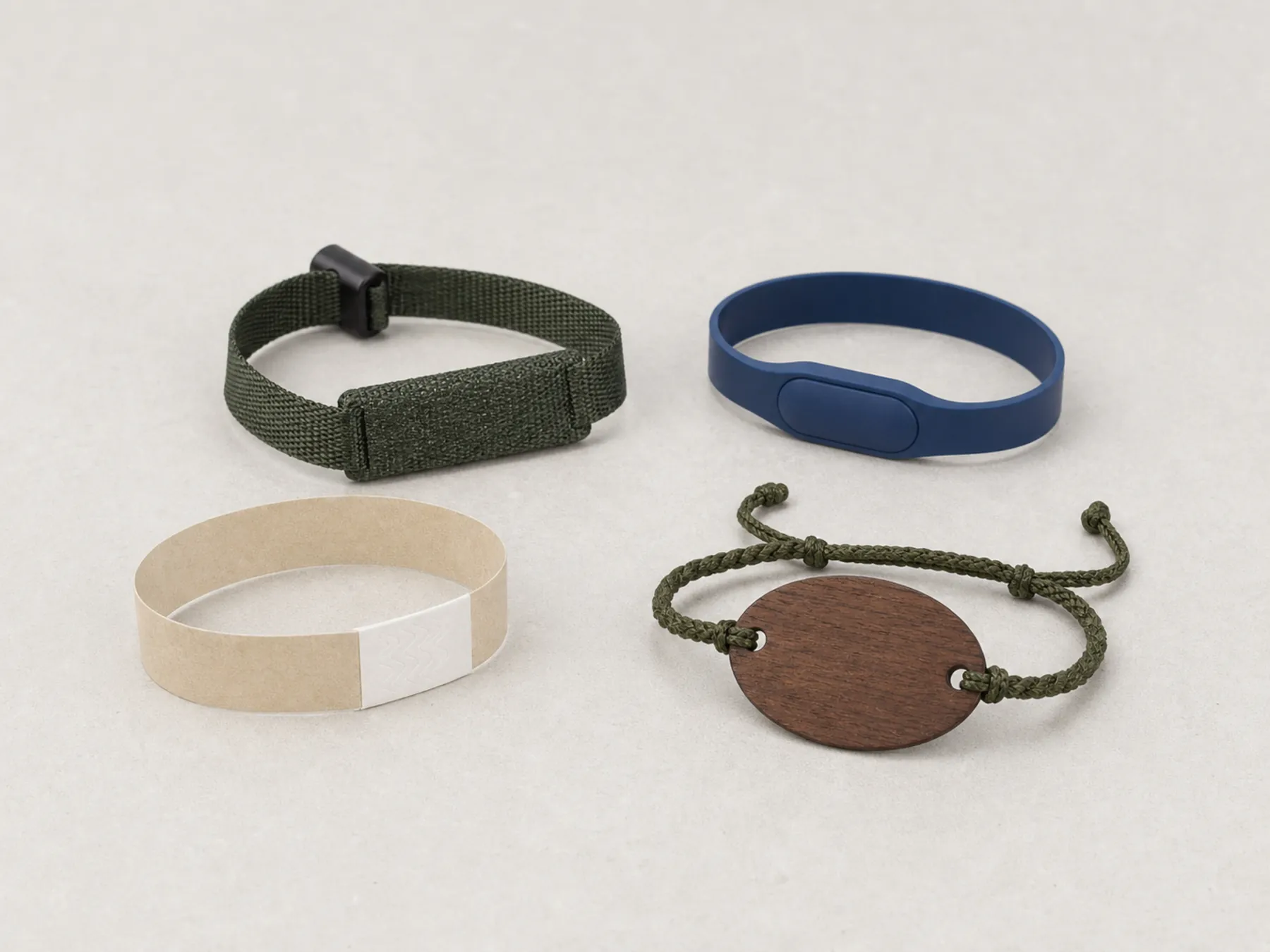
A palette approved on a dry sample in an office is approved under conditions that will never occur again. Wet material reads darker, sun shifts pigment unevenly, and natural materials vary between runs.
- Wet reads darker
- Sun moves some pigments and not others
- Hue contrast, not tone
- Colour drifts between runs
- Every colour is a separate count
Wet reads darker
Wet silicone and wet fabric both read several shades darker than dry. Two colours that are clearly different on a desk can converge on a wet guest at dusk, which is exactly when a member of staff needs to tell a resident from a day visitor.
So a palette that carries meaning is checked wet as well as dry before approval. It takes a jug of water and two minutes.
Sun moves some pigments and not others
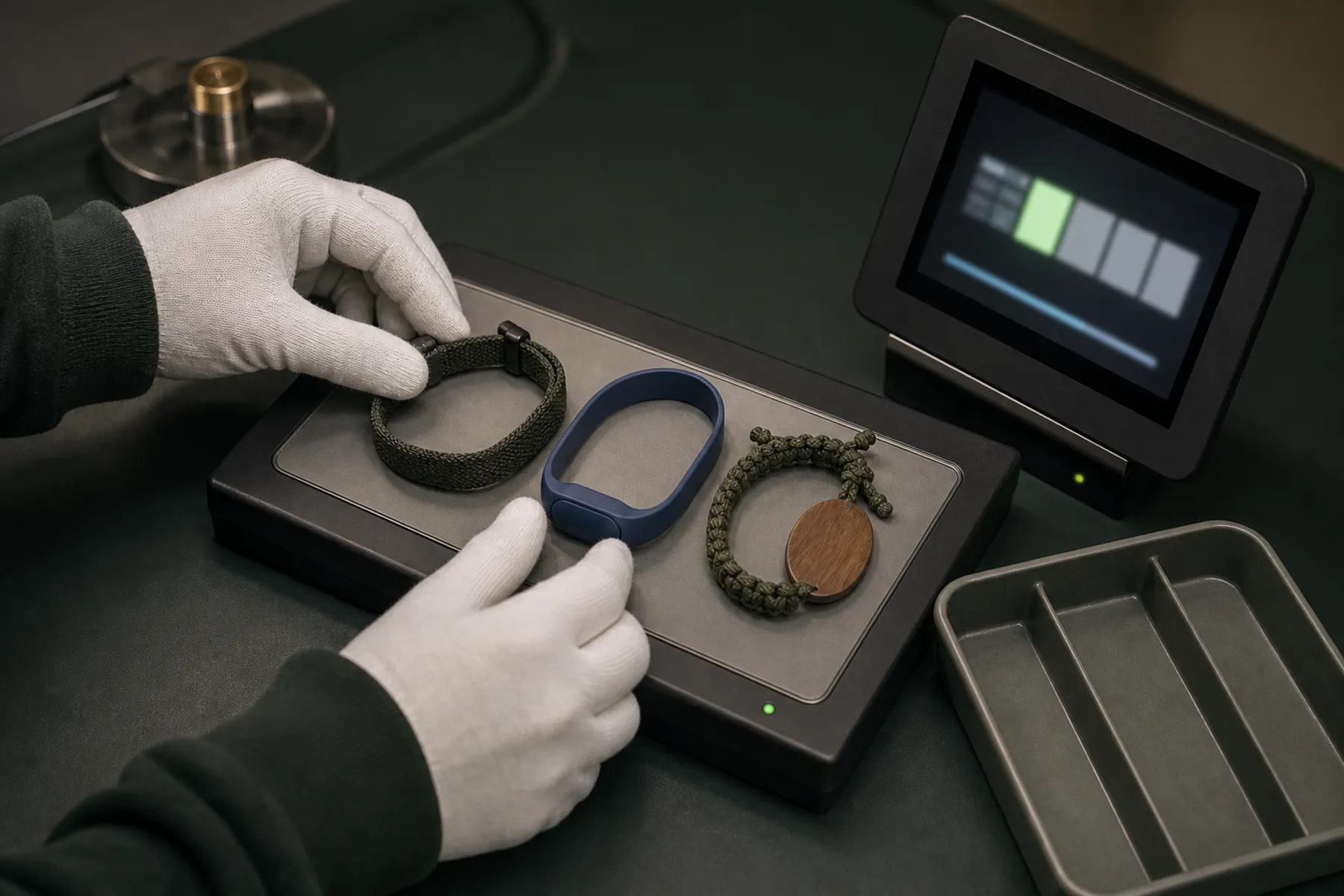
Pale tones and fluorescents shift first under sustained UV. Deep blues, greys and blacks hold. Natural faces lighten, and unevenly, because a band rotates on the wrist through the day.
The consequence for a colour-coded system is that the palette has to be chosen for how it will look at the end of the season, not at the start — which usually means fewer, stronger, more separated hues.
Leave sample bands in direct sun for a period and re-check the separation. A tier system approved only on fresh samples is a system with an expiry date nobody wrote down.
Hue contrast, not tone
A system built on light blue against mid blue fails wet, fails in shade and fails to anyone with colour vision deficiency — which in a large team is a real proportion of staff. A system built on separated hues survives all three.
Where more categories are needed than the palette can carry, add a second signal — a printed word, a different construction — rather than adding a fourth similar colour.
Colour drifts between runs
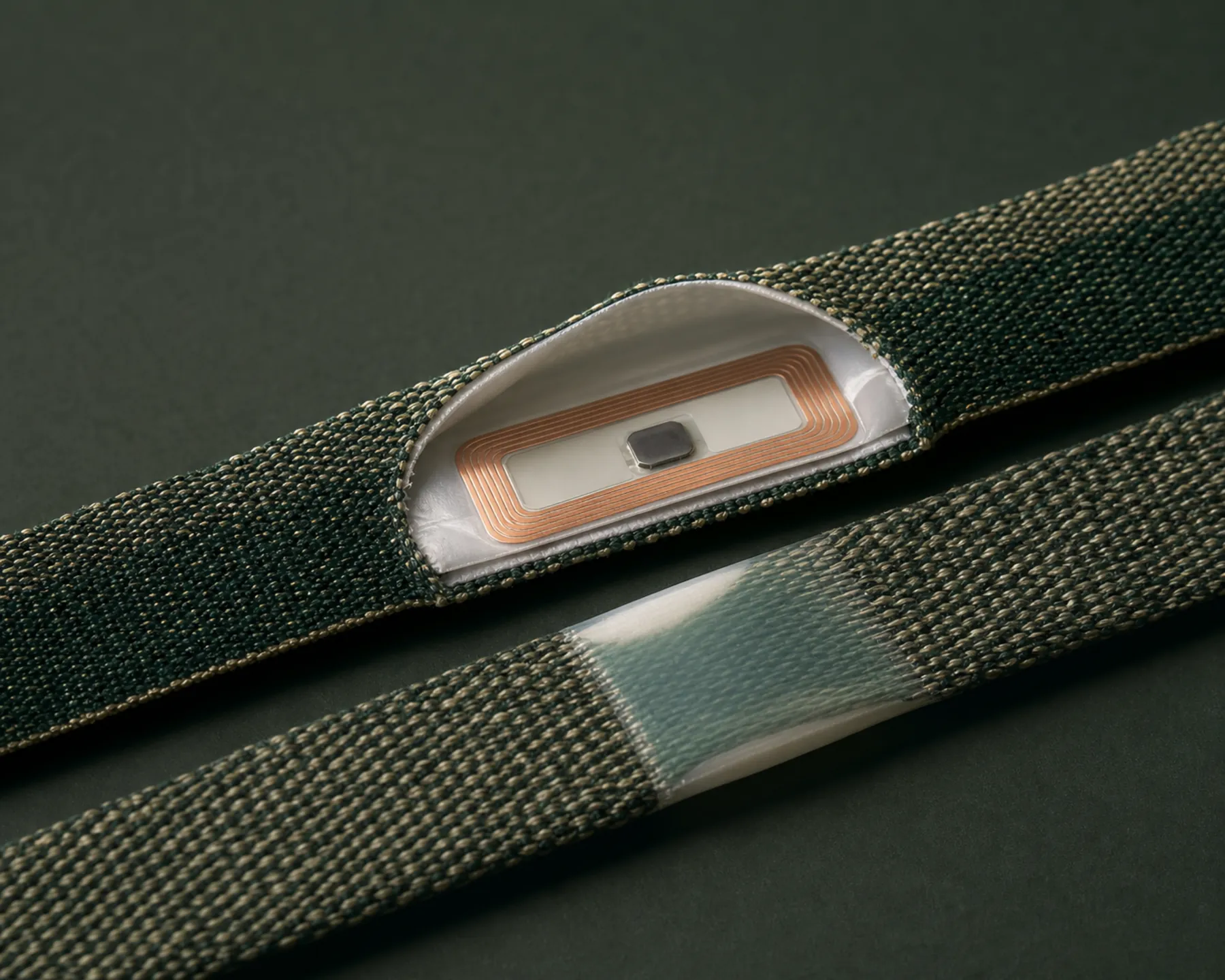
Moulded colour is reproducible against a recorded standard. Natural materials and recycled yarns are not: dye uptake moves between batches, wood and stone vary in themselves.
That is why colour is approved against a physical reference and, for natural materials, against a light and a dark sample defining an acceptable range. A colour name is not a reference and will not settle a disagreement two years later.
Every colour is a separate count
A colour change is generally a separate set-up and therefore a separate minimum. A four-tier system is four counts of 500 rather than 500 divided four ways, which is the most common surprise in a colour-coded specification.
Agree the whole palette at the first order, including tiers not yet running, and keep one flexible tier in a printed or day-credential format for whatever the season invents.
Compatibility is confirmed against the property’s lock system, credential technology and encoding requirements before production. We do not claim universal compatibility.
Questions this raises
01Why check the palette wet?+
Because wet material reads several shades darker, and two colours that are obviously different on a desk can converge on a wet guest at dusk — which is precisely when staff need to tell populations apart.
02Which colours fade first?+
Pale tones and fluorescents. Deep blues, greys and blacks hold well. Natural faces lighten unevenly because the band rotates. Where colour carries meaning, choose for how the palette looks at the end of the season.
03Can we add a tier colour mid-season?+
It is a new production run with its own minimum rather than an amendment. Agree the full palette up front, and keep one flexible tier on a printed or day credential so the season can invent something without a new run.