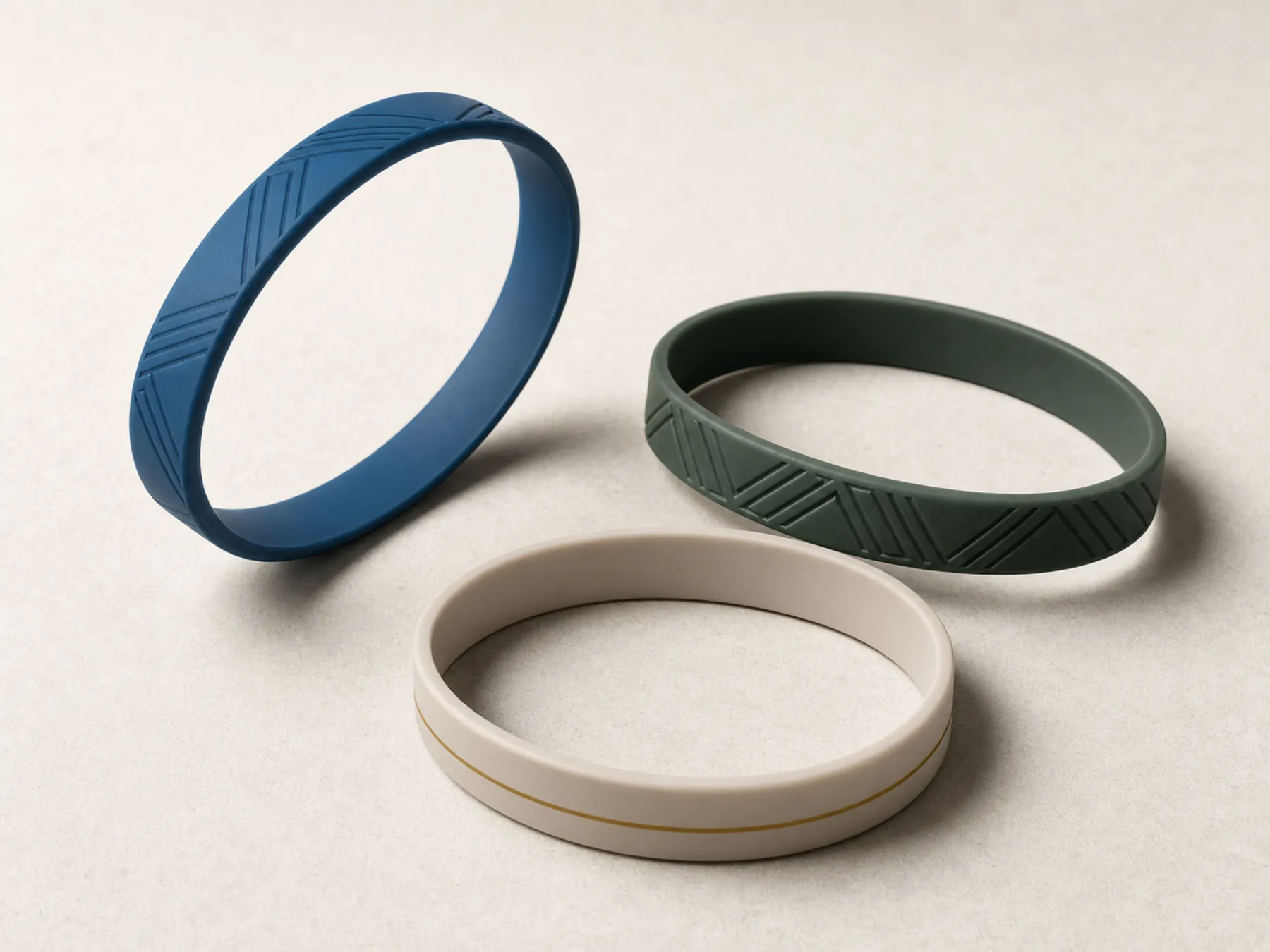
An adjustable band moves the fit decision to the guest. A sized band moves it to the stock room. Both work; choosing without noticing you have chosen is what causes a Saturday with no mediums.
- Two models, two costs
- The middle size always runs out
- A gauge beats judgement
- Fit changes during a long stay
- What to write into the order
Two models, two costs
An adjustable band covers the adult range from one part. The desk holds one item, staff fit it in seconds, and a guest can change it later. The cost is a closure — something to force, tear or reopen — and no transfer control.
A sized band has no closure to fail and no adjustment to misuse. The cost is that the desk holds three or four parts, a wrong choice consumes a band, and running out of one size is running out of stock for a whole population.
- Adjustable
- One stock item, fitted at the desk, guest can change it. Closure can fail.
- Sized
- No closure to fail. Three or four stock items, wrong choice costs a band.
- Closed loop
- Sized, and removed by cutting. The standard for young children.
The middle size always runs out
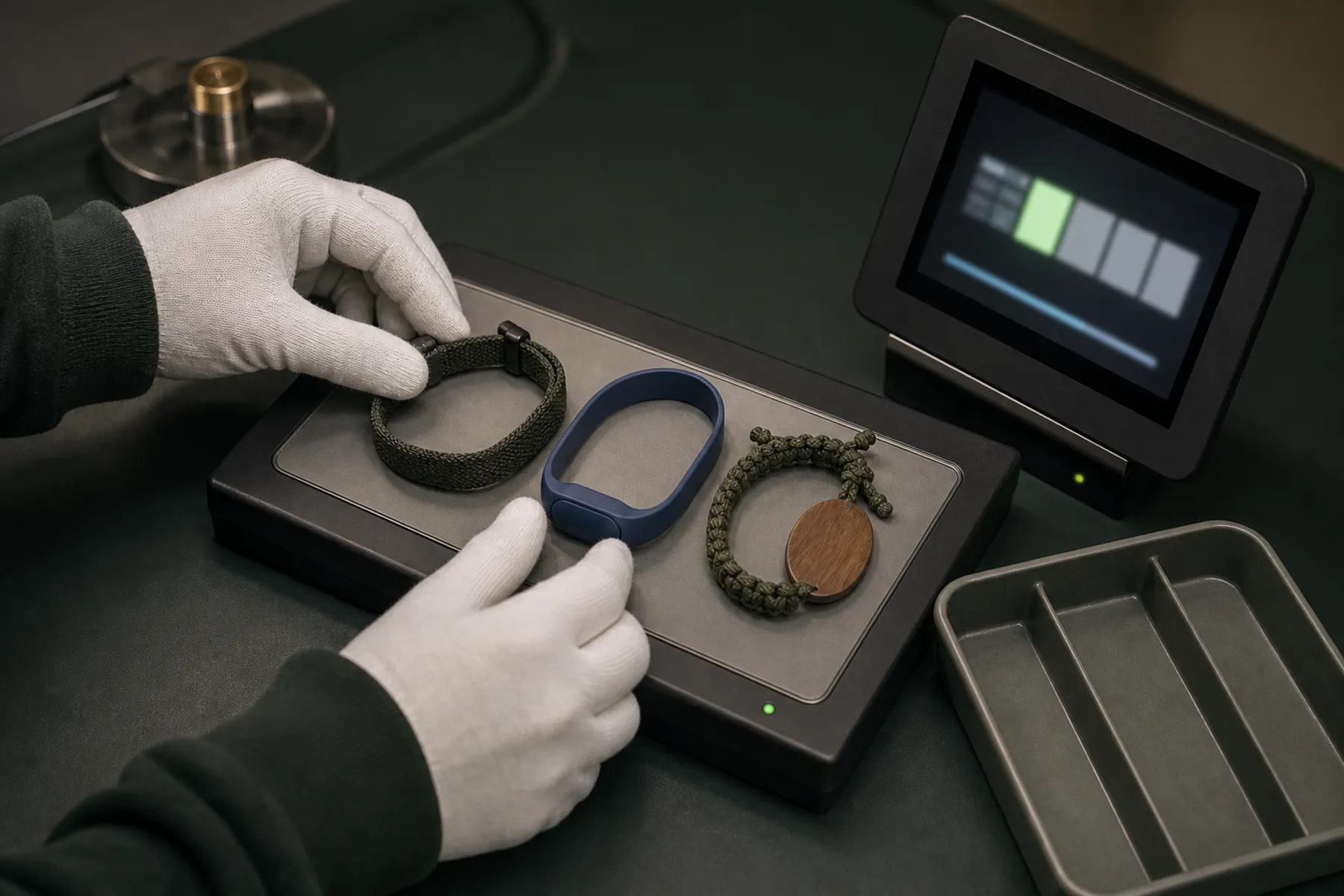
Adult wrist sizes cluster. An even split across small, medium and large therefore produces a surplus of the extremes and a shortage in the middle, reliably, every season.
Weight the order towards the middle size rather than dividing evenly, and hold a small quantity of an adjustable model as the exception band for guests outside the range. That combination costs far less than adding a fourth size.
Sizes come from one artwork, but each is a separate moulded or strung part. The split cannot be rebalanced after the run is placed, which makes it a decision rather than a detail.
A gauge beats judgement
Where fit is decided at issue, staff estimating by eye is where bands are wasted. A simple sizing gauge at the desk takes seconds, removes most of the error, and gives new seasonal staff something objective to use on their first shift.
It matters most for children, where a loop has to clear the hand without leaving slack that can catch, and where a wrong choice is both a wasted band and an awkward conversation with a parent.
Fit changes during a long stay
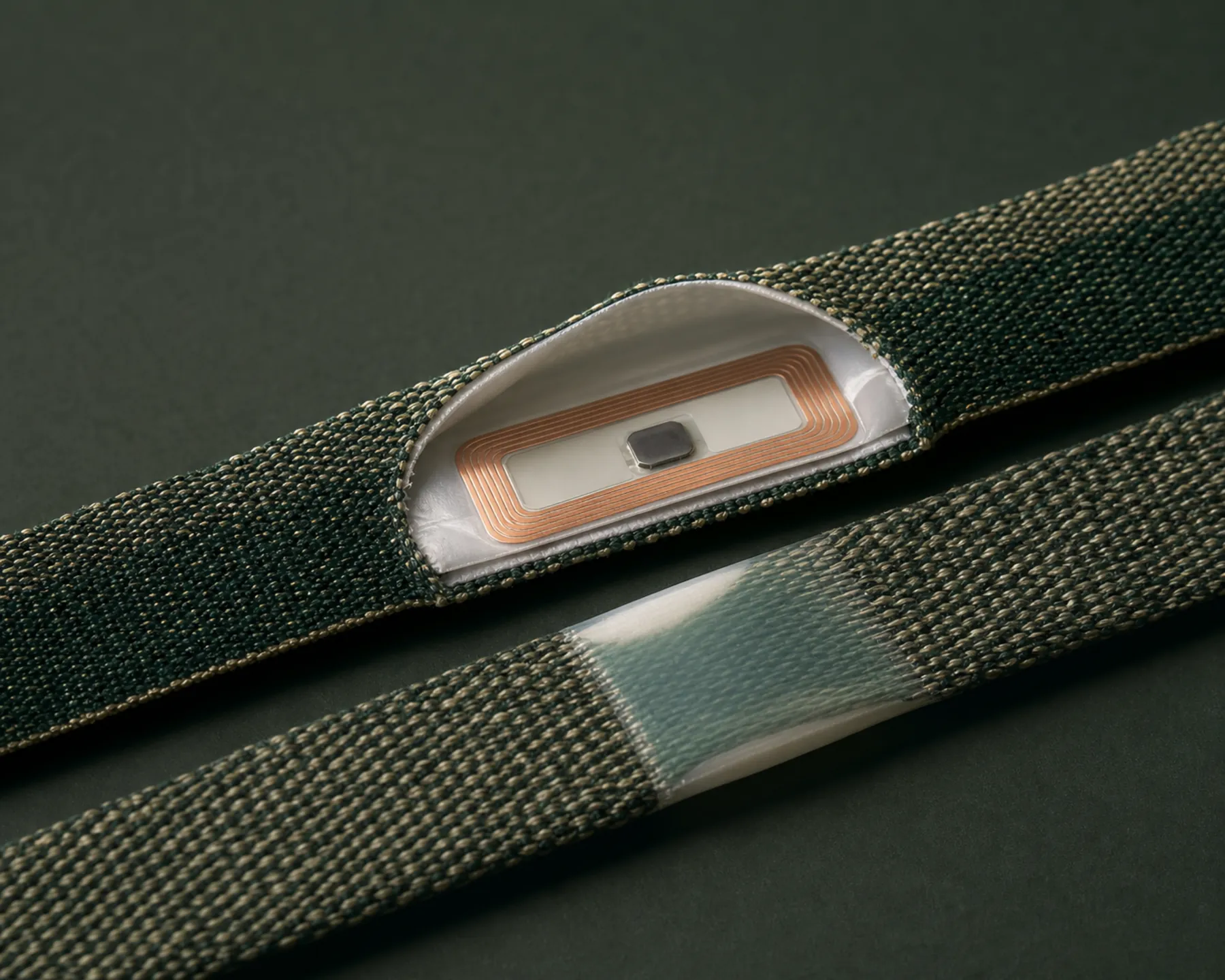
Over a fortnight, wrists change with heat and activity, and elastic relaxes. A band that was snug on arrival can be loose by the second week — comfortable on an adjustable construction, a problem on a sized one that cannot be tightened.
For long-stay and residence programmes that is a genuine argument for a buckle: continuous adjustment, reopenable, and familiar enough that nobody needs showing.
What to write into the order
The split across sizes, weighted rather than even. A misfit allowance wherever a closure is final at issue. An exception quantity of an adjustable model. And, for children, enough of the smallest loop that a family arrival does not exhaust it.
Those four lines are the difference between a stock plan and a total.
Compatibility is confirmed against the property’s lock system, credential technology and encoding requirements before production. We do not claim universal compatibility.
Questions this raises
01Adjustable or sized?+
Adjustable if you want one stock item and can accept a closure that guests can open. Sized if you need no closure to fail or no transfer, and can hold three or four parts at the desk. The decision is really about where you want the fit problem to live.
02How should we split the size quantities?+
Weighted towards the middle, not evenly. Adult wrists cluster, so an even split reliably leaves a surplus of extremes and a shortage in the middle. Hold a small quantity of an adjustable model for guests outside the range.
03Do we need a sizing gauge?+
Wherever fit is final at issue, yes. It takes seconds, removes most of the estimation error, and gives seasonal staff something objective on their first shift — which matters most for children’s loops.