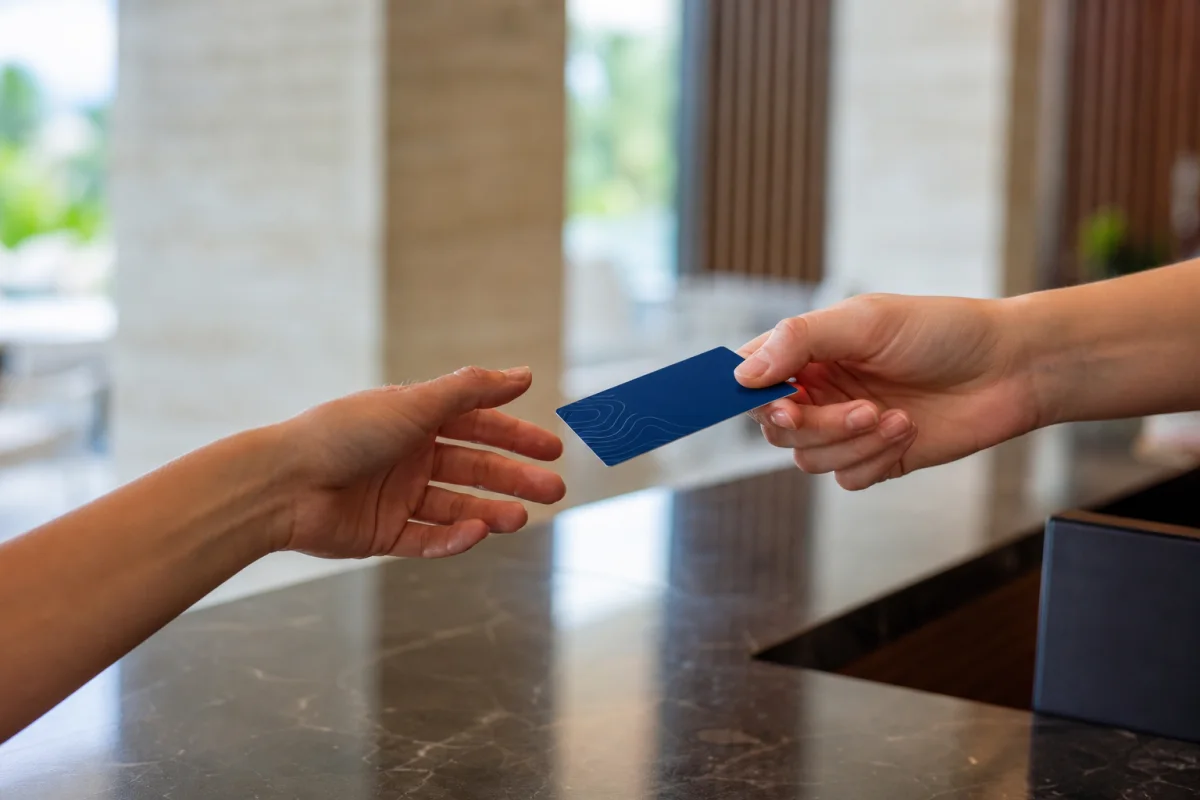
Most credential specifications assume a guest who can fasten a small closure with two hands, distinguish four similar colours and tolerate something on their wrist for a week. Each of those assumptions excludes real guests.
- One-handed operation
- Colour is not a universal signal
- Sensory and comfort considerations
- Presentation height and reach
- What to include in the specification
One-handed operation
A guest with limited use of one hand cannot fasten most adjustable closures alone. Nor can a parent holding a child, which is a much larger population and reveals the same design gap.
The mitigations are simple: staff fit the credential rather than handing it over, closure-free constructions are available for guests who need them, and a card alternative exists for anyone for whom a wrist-worn credential is impractical.
Colour is not a universal signal
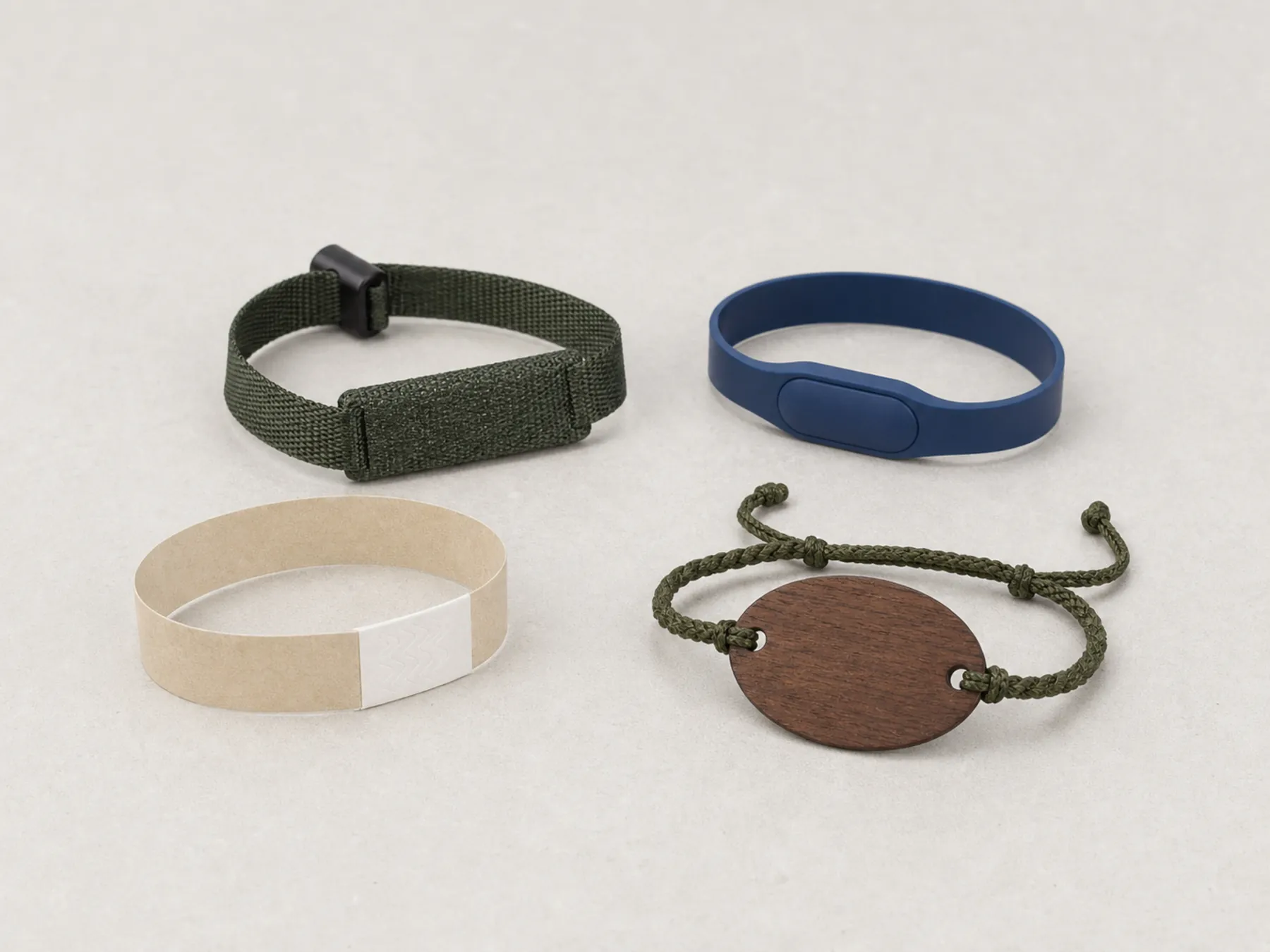
Colour vision deficiency affects a meaningful share of guests and staff. A tier system separated by tone rather than hue is unreadable to some of the people it is meant to inform, and unreadable to everyone once it is wet or the light goes.
Where colour carries meaning, a second signal — a printed word, a distinct form, a different construction — makes the system work for everybody rather than for most people.
If a tier, a session or a safety category matters, give it a second cue. It costs nothing at design stage and it removes a category of failure that is invisible to the person specifying.
Sensory and comfort considerations
Some guests cannot tolerate something on a wrist for a week — a texture, a seam, a fastening. That is not a preference to be talked out of, and a property whose only credential is a wristband has no answer for those guests.
A card alternative, held under the same identity, resolves it entirely. It is worth ordering a small quantity for that purpose even at a property that has decided on wearables.
Presentation height and reach
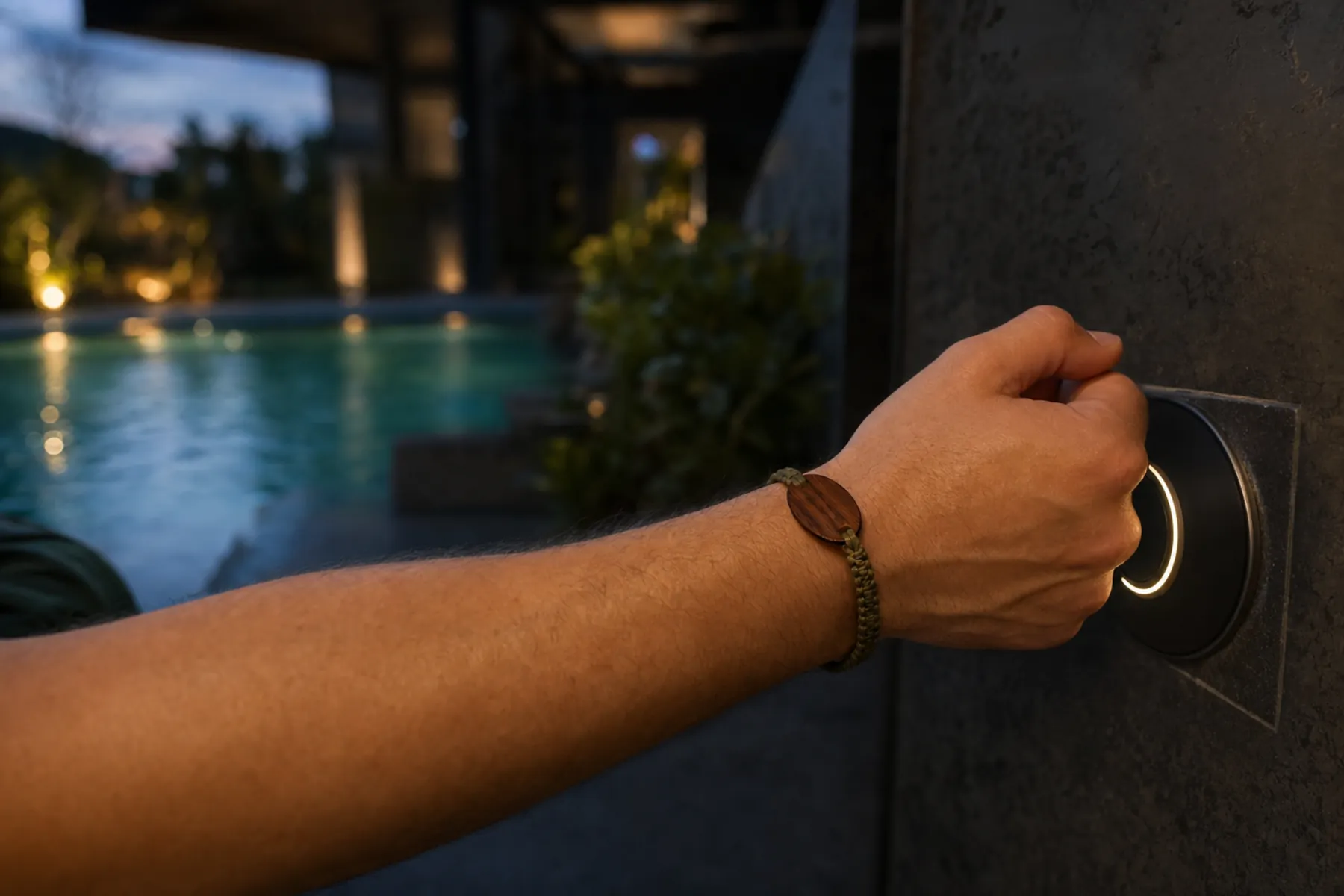
Readers mounted for a standing adult can be out of comfortable reach for a guest using a wheelchair, and a credential that has to be presented at an awkward angle compounds it.
That is a reader placement question rather than a credential one, but it belongs in the same conversation — and it is worth raising during a reader test rather than after a complaint.
What to include in the specification
A closure-free or card alternative held in stock. A second signal wherever colour carries meaning. Staff fitting the credential rather than handing it over. And a reader test that includes seated presentation as well as standing.
None of those adds meaningful cost, and together they cover most of the ways a credential programme quietly excludes people.
Compatibility is confirmed against the property’s lock system, credential technology and encoding requirements before production. We do not claim universal compatibility.
Questions this raises
01What alternative should we hold?+
A card under the same identity, and a closure-free band. Between them they cover guests who cannot fasten a closure one-handed and guests who cannot tolerate a wristband, and a small quantity is enough.
02Is colour coding a problem?+
Only as the sole signal. Colour vision deficiency affects a meaningful share of guests and staff, and any palette also fails wet and in low light. A second cue — a word, a form, a construction — makes the system work for everyone.
03Does any of this add cost?+
Very little. A small stock of alternatives, a second signal in the artwork, staff fitting rather than handing over, and a seated presentation in the reader test. The expensive version is discovering the gap through a complaint.