
A guest credential is issued and recovered as one object. A staff credential outlives the person wearing it, and specifying it like a guest band means discarding working hardware every time somebody leaves.
- Separate the band from the credential
- The procedures that make it work
- Wearability across a shift
- Role visibility, and its limits
- Leavers are the security case
Separate the band from the credential
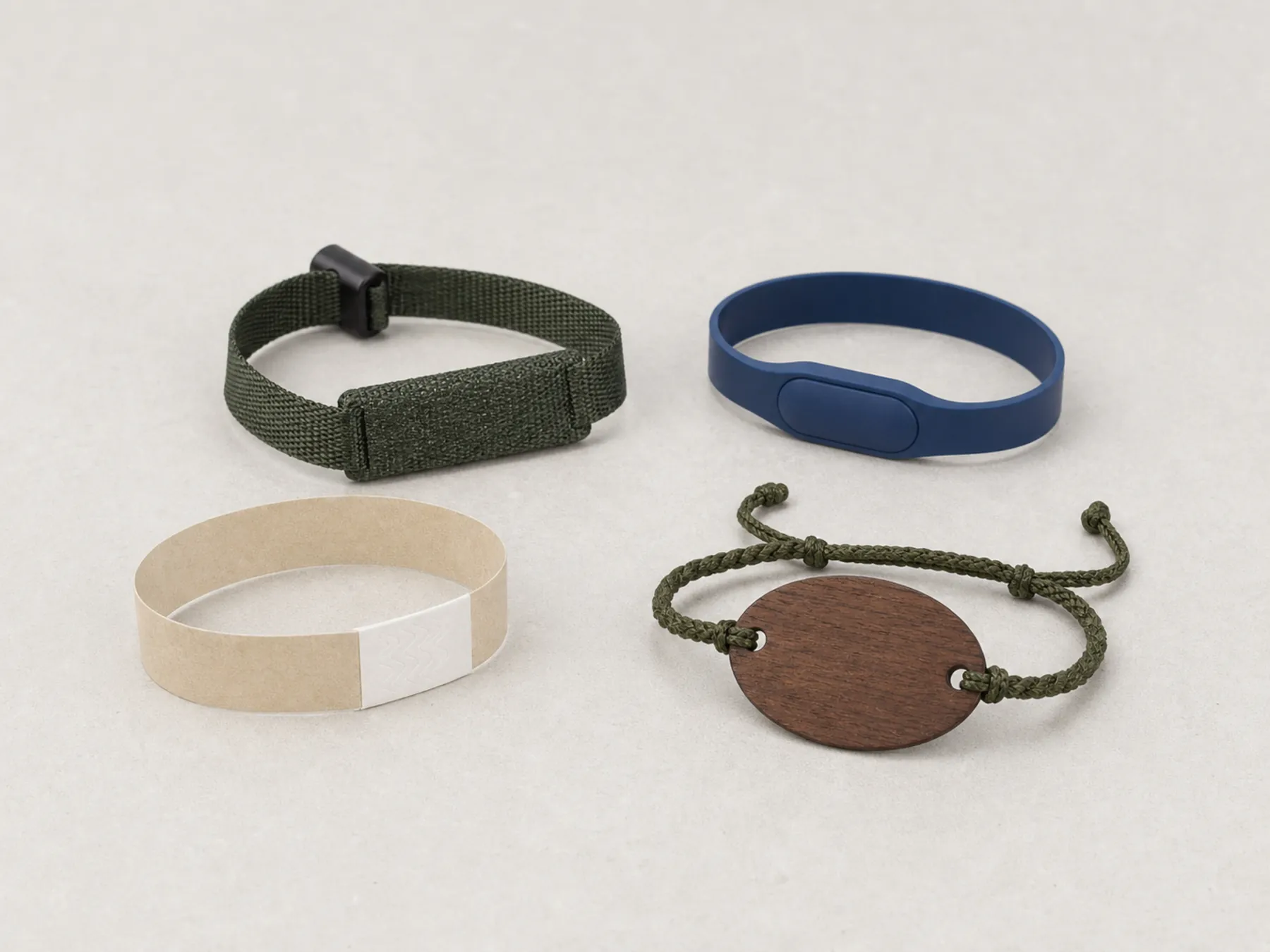
For a population that re-credentials faster than it re-bands — seasonal teams, contractors on site for a month, roles that change — a pouch or module construction lets the credential be withdrawn and the band cleaned and reissued.
The property then buys bands once and manages credentials continuously, which is materially cheaper and considerably easier to control than replacing sealed bands with every departure.

The procedures that make it work
Who may open a pouch or move a module. What happens to a band when its wearer leaves, and who records it. How the record distinguishes a lost credential from a lost band. Whether contractors use the same stock or a visibly different one.
Those four answers are the programme. Without them, a replaceable credential is a credential that can be removed by anyone, which is worse than a sealed one.
Define before ordering:
- Who is authorised to change a credential in a band
- How quickly a reported-lost credential is disabled, and by whom
- How the records separate a lost credential from a discarded band
- Whether contractors and seasonal staff have visibly distinct stock
Wearability across a shift
Staff wear a credential every shift for months, in kitchens, on pool decks, in laundries and in vehicles. That is a harder wear profile than any guest band sees, and it argues for durable, cleanable constructions rather than for anything premium.
It also argues for checking that a wrist-worn credential is appropriate at all. Where staff operate machinery or drive, a pocket-carried format may simply be safer, and the property should ask rather than assume.
Role visibility, and its limits
Colour or a printed strap can carry a department, which helps guests and helps supervisors. What it should not do is publish anything a stranger can use — a role that implies access, a name that identifies an individual to a guest who may misuse it.
The credential carries the permissions; the visible design carries only as much as the property genuinely wants readable across a lobby.
Order bands against the size of the wearing population plus attrition, and credentials against the rate of turnover. Treating them as one number leaves a property with plenty of bands and no credentials.
Leavers are the security case
The moment that matters is a departure, planned or not. A credential that is not disabled promptly is a live key held by somebody who no longer works there, and the physical band is irrelevant to that.
So the specification question is not really the band — it is whether the property can disable a credential the same day, and who does it when the person responsible is off. Getting that right matters more than any construction decision here.
Compatibility is confirmed against the property’s lock system, credential technology and encoding requirements before production. We do not claim universal compatibility.
Questions this raises
01Why not just issue staff the same band as guests?+
Because a sealed guest band means discarding working hardware every time somebody leaves. Staff turn over faster than bands wear out, so a construction with a replaceable credential is cheaper and easier to control.
02Is a replaceable credential less secure?+
It is easier to separate from its owner, which is why the disable-on-loss and disable-on-leaving procedures matter more here than the construction does. A credential that can be withdrawn quickly is safer than a sealed one that stays enabled for a week.
03Should staff credentials show names or roles?+
Only as much as the property genuinely wants readable across a lobby. Department colour helps supervisors and guests; a name or an access-implying role published to strangers is a risk with little operational benefit.