
A closed system with no resupply
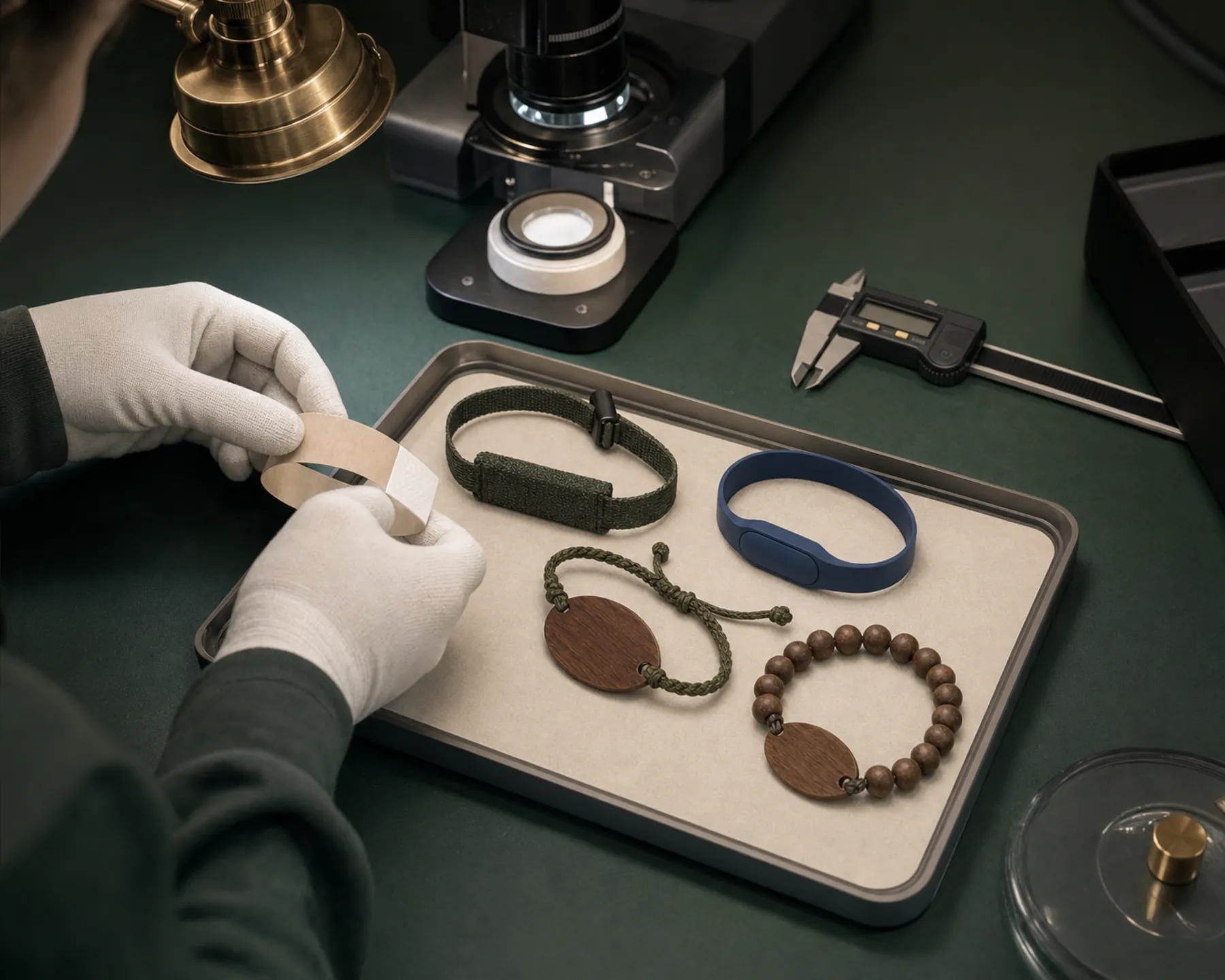
The defining constraint is that nothing arrives mid-voyage. A land property that runs short of credentials has a bad week; a ship that runs short has no options at all. Spare stock is therefore not a contingency, it is part of the specification, and the allowance should be calculated on a worst-case reissue rate rather than an average one.
The same applies to anything the credential depends on — printer stock, encoding equipment, cutting tools for one-way bands. If it is needed to issue a credential, it is needed in duplicate.
Calculate onboard spare stock on the worst reissue week you have recorded, not the average one, and carry duplicates of anything required to issue a credential.
Metal changes the read
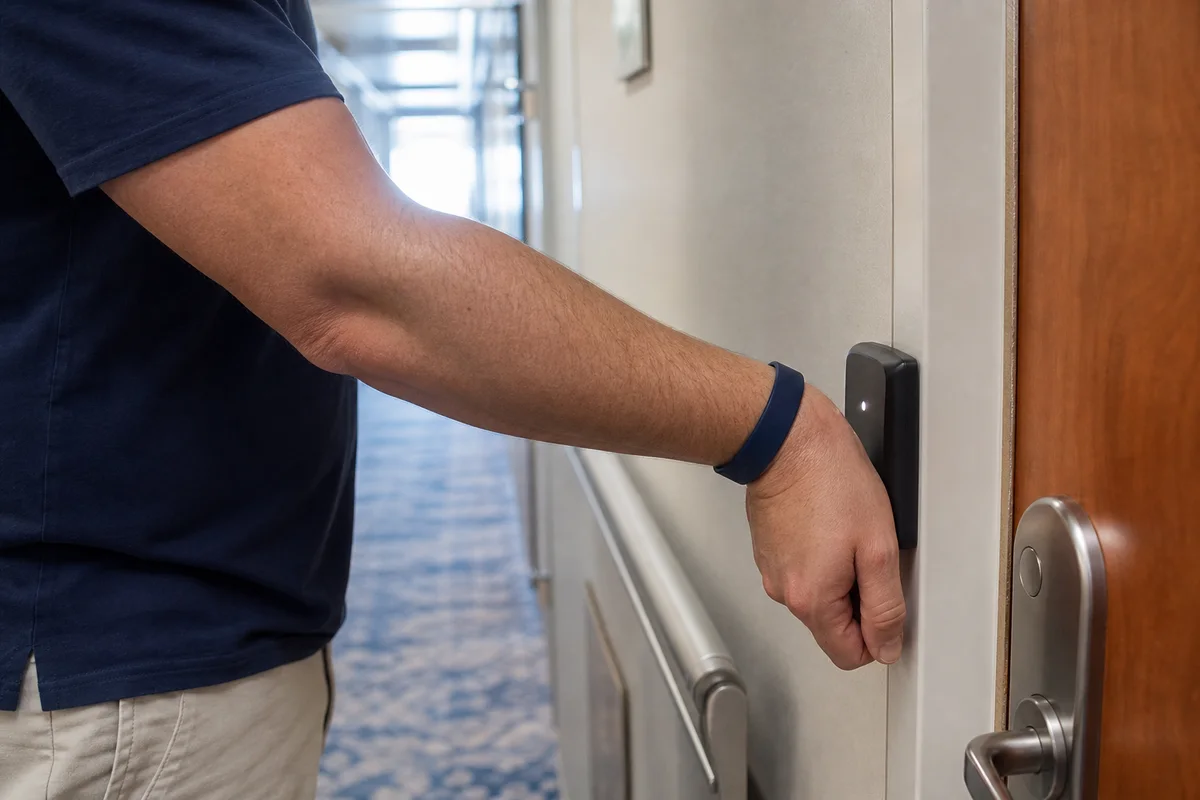
Ships are steel. Readers are mounted on and near metal, in corridors that are themselves metal, and that environment affects credential behaviour in ways a shoreside test does not reveal. A credential that performs perfectly at an office desk can be marginal at a cabin door on deck seven.
This is the setting where we insist on testing production-realistic samples at the actual readers, on several decks, including the ones known to be awkward. It is also a reason to be cautious with the most compact constructions: a smaller antenna has less margin, and margin is exactly what a metal environment consumes.
Salt air is a slower, wider problem than salt water
Salt water affects credentials that are swum in. Salt air affects every credential on board, all the time, including the ones in a drawer. Metal fittings corrode, printed surfaces dull, and cords stiffen faster than the same items ashore.
The specification response is to eliminate metal from the credential entirely, prefer moulded and welded constructions over fabric-and-fitting ones, and store spare stock sealed rather than open. None of that is expensive; all of it extends service life materially.
Embarkation and return are the two judgements
Guests form their opinion of a credential twice: when they receive it in a queue of two thousand people, and every time they come back aboard from a port. Both are high-volume, both are timed, and both are where a slow read becomes visible to everyone in the line.
That argues for a construction that presents consistently — a credential that stays on the top of the wrist, or a card carried in a holder — rather than one that rotates freely. It also argues for testing the gangway readers specifically, since they are outdoors, in bright light, often on metal, and used by guests carrying bags.
Cabins, children and the family group
Family groups need credentials that link — a child who may open a cabin but may not charge, a parent who may do both. That is a system configuration rather than a product one, but it has a product consequence: the child’s credential should be visibly different, and it should be a construction a child cannot remove and swap.
A closed-loop band for children and an adjustable or card credential for adults, produced from one artwork family, is the pattern that satisfies both the system and the parents.
Shore excursions and the boundary of the system
Ashore, the credential usually stops being an access device and becomes an identity document for returning to the ship. Guests take it into markets, onto beaches and into water, which is a harsher life than the onboard use it was specified for.
That is worth designing for explicitly: assume the credential goes swimming even if it is not meant to, and specify a construction that tolerates it. The alternative — a credential that fails ashore — creates exactly the problem the system exists to prevent.
What we confirm before production
The installed system, the credential technology and the encoding requirement, as with any property. Beyond that, for a ship: reader positions by deck, the gangway reader type, the embarkation throughput expectation and the spare-stock allowance.
Minimum order is 500 pieces per artwork, with 14–21 days production after artwork approval, and the delivery has to land against a sailing schedule rather than a working week — which usually means ordering earlier than a land property would.