
What a credential system is, and what it is not
This is not an access-control platform and does not replace one. The property’s own system decides what a credential may open and what it may charge. What we specify is everything physical that sits in front of that: which formats exist, who gets which one, what they look like, how they are numbered, how they are reordered and what happens when one is lost.
Properties usually arrive with a product question and discover the real question is a mapping one. That mapping is the deliverable.
The credential matrix
One grid resolves most of it. Populations down the side — resident adults, children, day visitors, members, staff, contractors. Questions across the top: how long is it worn, what may it open, what may it charge, how is it recovered, what happens when it is lost.
Filling that in usually shows a property it has four or five populations where it assumed two, and that two of them can share a construction while the others cannot. It also produces the quantity plan, because each distinct artwork and colour is its own count.
- Resident adults
- Full stay, room plus spend, comfort-led construction, fast reissue
- Children
- Closed loop, no spend, sized at issue, safety before convenience
- Day visitors
- Time-bounded, visually distinct, one-way closure
- Members
- Long service life, replacement must match the original a year later
- Staff and contractors
- Credential turns over faster than the band — pouch or module construction
One identity, several substrates
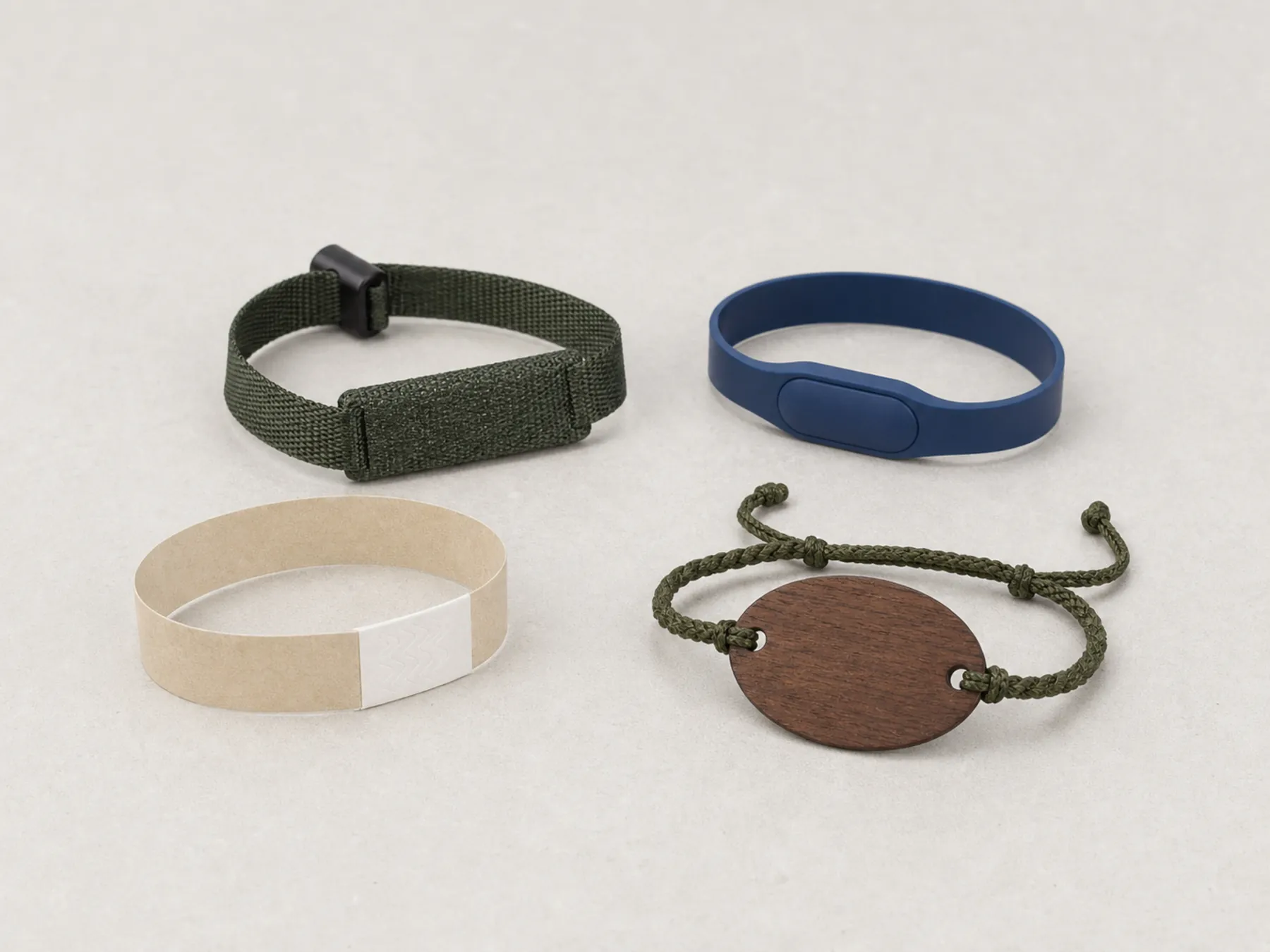
A card, a moulded band, a woven band and an engraved face resolve detail differently. Forcing an identical treatment onto all four makes the weakest one look like a mistake.
The pattern that works is a full mark where the surface supports it and a simplified device where it does not. The result reads as a system rather than as an inconsistency, and it keeps the artwork count down.
Numbering and the reorder record
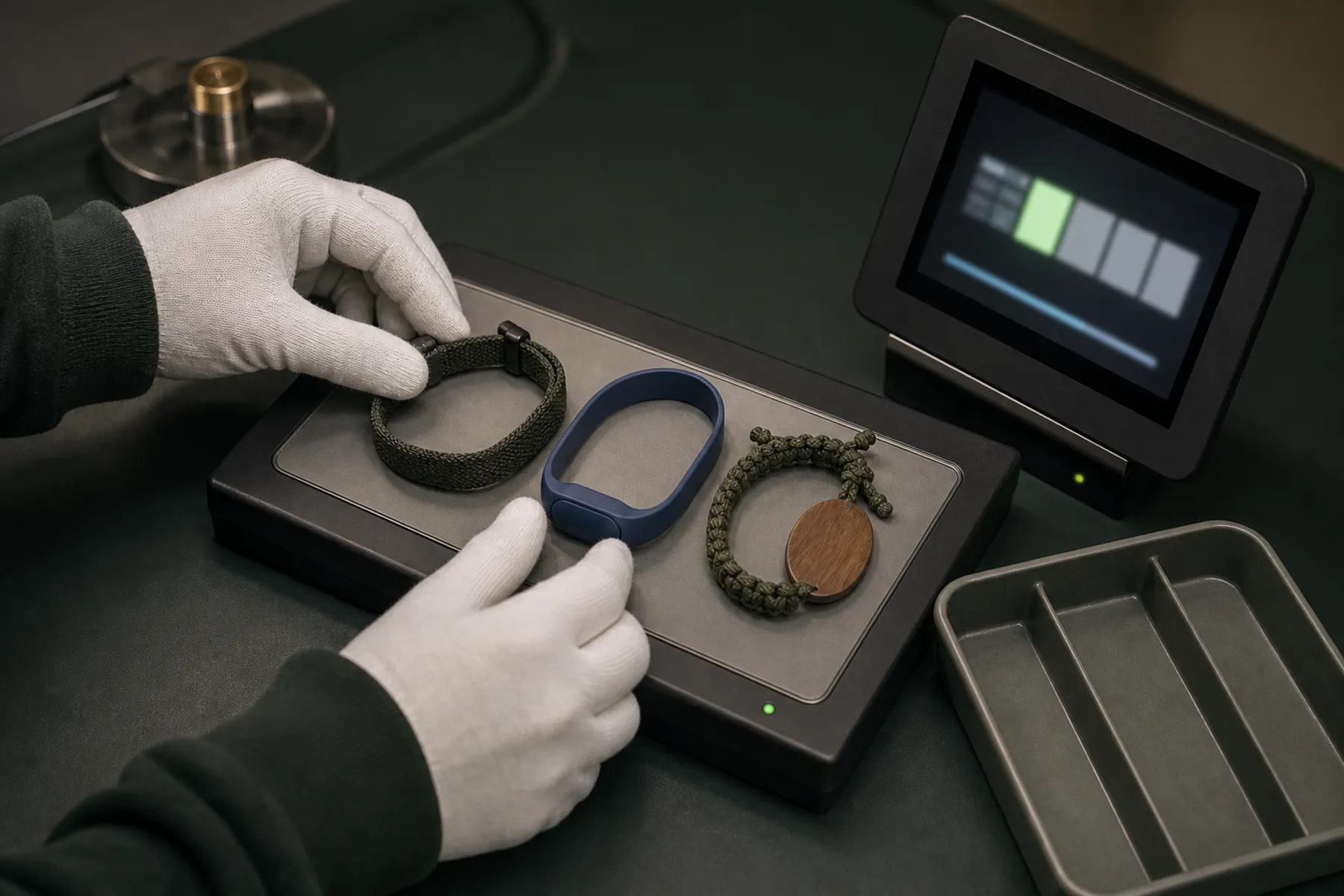
Numbering is how a credential estate is audited: which range went where, which block was issued when, what is unaccounted for. Counted, range-labelled supply makes that possible at goods-in without opening everything, and it is decided at order time rather than retrofitted.
For each format, the approved sample, artwork revision, colour reference, credential input and packing instruction are held together as one reorder reference. Any changed field triggers a fresh check rather than a repeat.
What we need to start
The installed system and how credentials are currently issued and encoded. The zones in scope. The populations and their rough numbers. The wear environment for each. Whether credentials are recovered. And the artwork direction.
From that we can specify formats, constructions, colour logic, quantities and a reorder discipline. Compatibility and encoding are confirmed against the installed system before anything is produced.
Not from room count. From artworks × colourways × sizes, plus reissue rate and whether credentials come back. Minimum order is 500 pieces per artwork with 14–21 days production after approval, so the matrix decides the order long before the occupancy does.