Where the season is actually lost
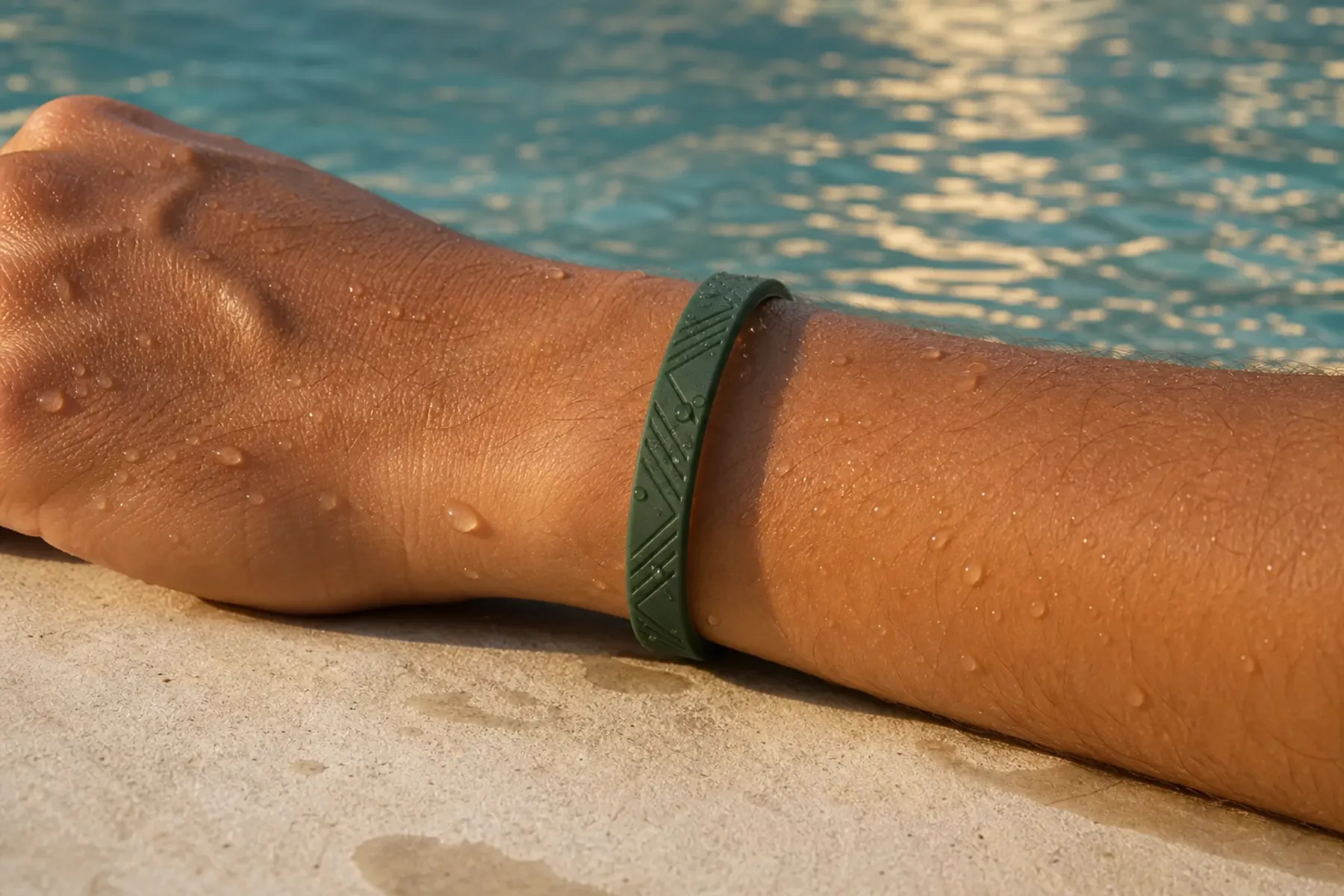
Not in the water. Bands fail at the post hole, forced by a guest in a hurry, and at the shoulder where the face meets the strap, levered by a hard pull. Chlorine at operating concentrations does very little to a moulded band by comparison.
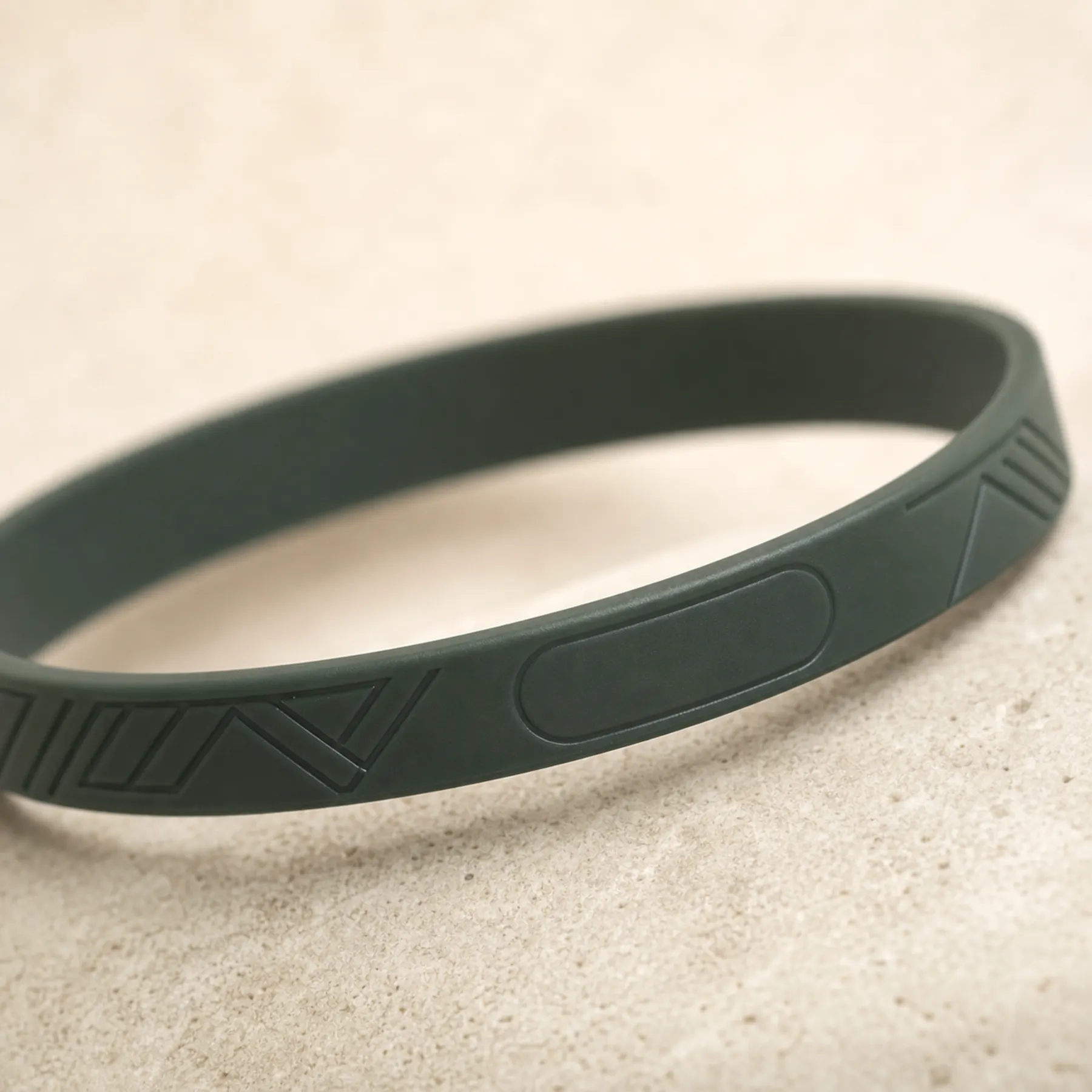
That is why the specification here is a mechanical one: a heavier section around the closure, reinforced post holes and a face profile that glances rather than catches. Material chemistry is largely a solved problem; geometry is not.
Issue at volume, with children
A water park issues to families continuously through a morning peak. Adults can be fitted with an adjustable band in seconds; the youngest children should be on a closed loop with nothing to open, which means the desk holds sizes and staff choose them.
The stock discipline that works is a middle-weighted split across youth sizes and a small reserve of adjustable bands for the guests who fall outside any loop. Even splits across three sizes run out of the middle one by mid-morning.
The daily cycle: recover, clean, inspect, retire
Bands here are recovered and reissued, which makes the daily cycle part of the product specification. Cleaning is straightforward on a moulded band; inspection is the step properties skip and the one that matters.
Staff need two things to look for and the authority to act on them: a post hole that has begun to elongate, and a lifted edge where the face meets the strap. A band showing either leaves circulation immediately, and the attrition that creates is a quantity decision taken before the season.
Elongating post hole or lifted face edge — the band leaves circulation. Give staff the two signs and the authority, and the mid-season failure rate takes care of itself.
Lockers and cashless are the credential’s real job
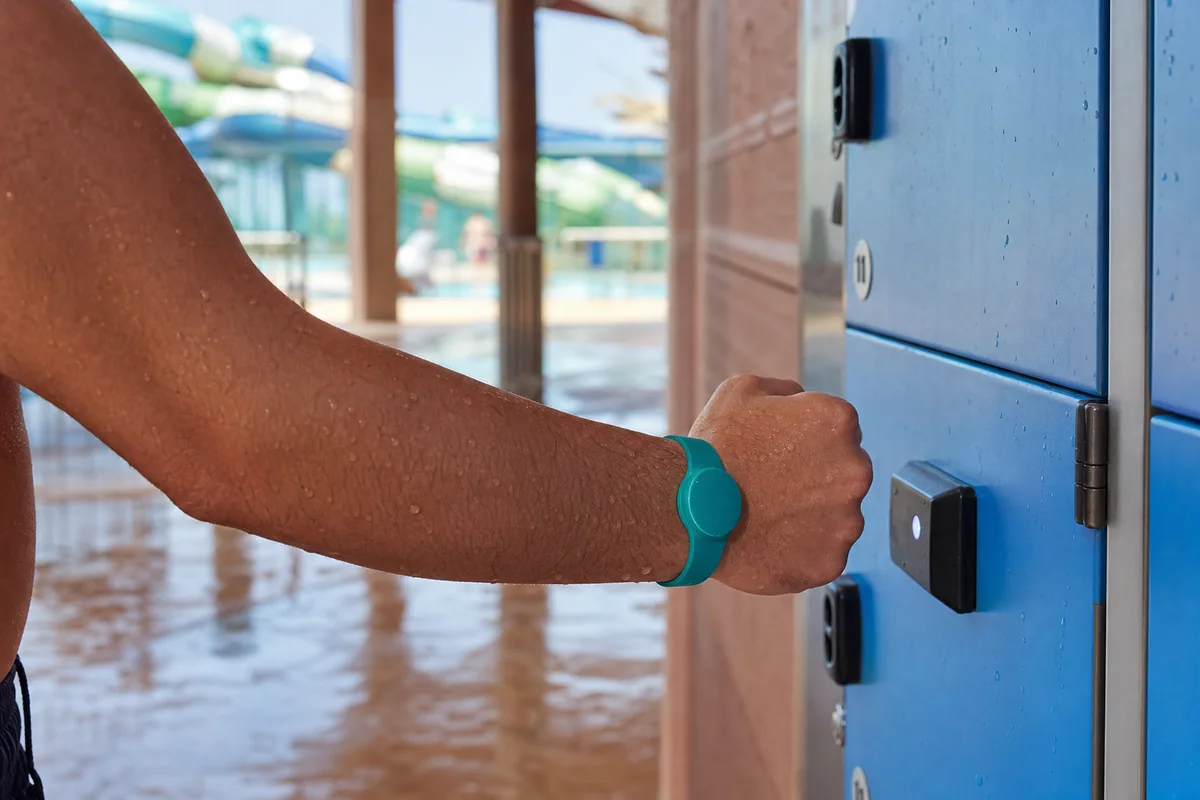
Door access barely exists here. What the credential actually does is open a locker and pay for food, both performed by a wet guest in motion with one free hand, often with a child attached to the other.
Testing has to reproduce that: a wet band, presented quickly, at the actual locker bank and point-of-sale readers. A credential that reads instantly at an office desk and hesitates when wet will be judged at the locker bank on a Saturday.
Sun on colour, and why it matters operationally
Where colour carries meaning — height categories, session times, wristband-only zones — sustained sun is a control problem rather than a cosmetic one. Pale and fluorescent tones shift first, and two categories that were clearly different in May can be hard to separate in August.
Choosing categories on strong hue contrast, and checking them wet as well as dry, is what keeps the visual system working to the end of the season. Debossed marks rather than printed ones do the same for any text the band carries.
Height, age and safety categories
Many parks encode ride eligibility in the band — a colour for height categories, so a ride attendant can check without measuring. That makes the band a safety artefact, and it raises the bar on colour reliability, tamper resistance and the ability to reissue correctly.
It also means a lost or swapped band has a safety consequence rather than a commercial one, which is the strongest argument in the whole catalogue for a closure a child cannot open.
Planning the season
Quantities follow from admissions, reissue rate, attrition from inspection and the number of categories in the visual system — and categories multiply counts, because each is its own artwork or colour run.
Minimum order is 500 pieces per artwork with 14–21 days production after artwork approval, so the category map has to be settled before the season opens. A park that adds a category in July is adding a production run, not a print setting.