Hemp and jute give a wristband a character no synthetic can imitate. They also behave like the agricultural fibres they are, which is why the interesting question is not whether they look right but how long they stay that way on a particular property.
What the fibres actually are
Both are bast fibres — taken from the stem of the plant rather than from a seed head — which is why they are strong along their length, coarse in the hand and visibly irregular. That irregularity is the appeal: no two bands look identical, and the texture reads as made rather than manufactured.
The same structure explains the limitations. Coarse fibres abrade skin more than a fine yarn does, they take up water readily, and they stiffen as they dry. None of that is a defect; all of it decides where the band works.
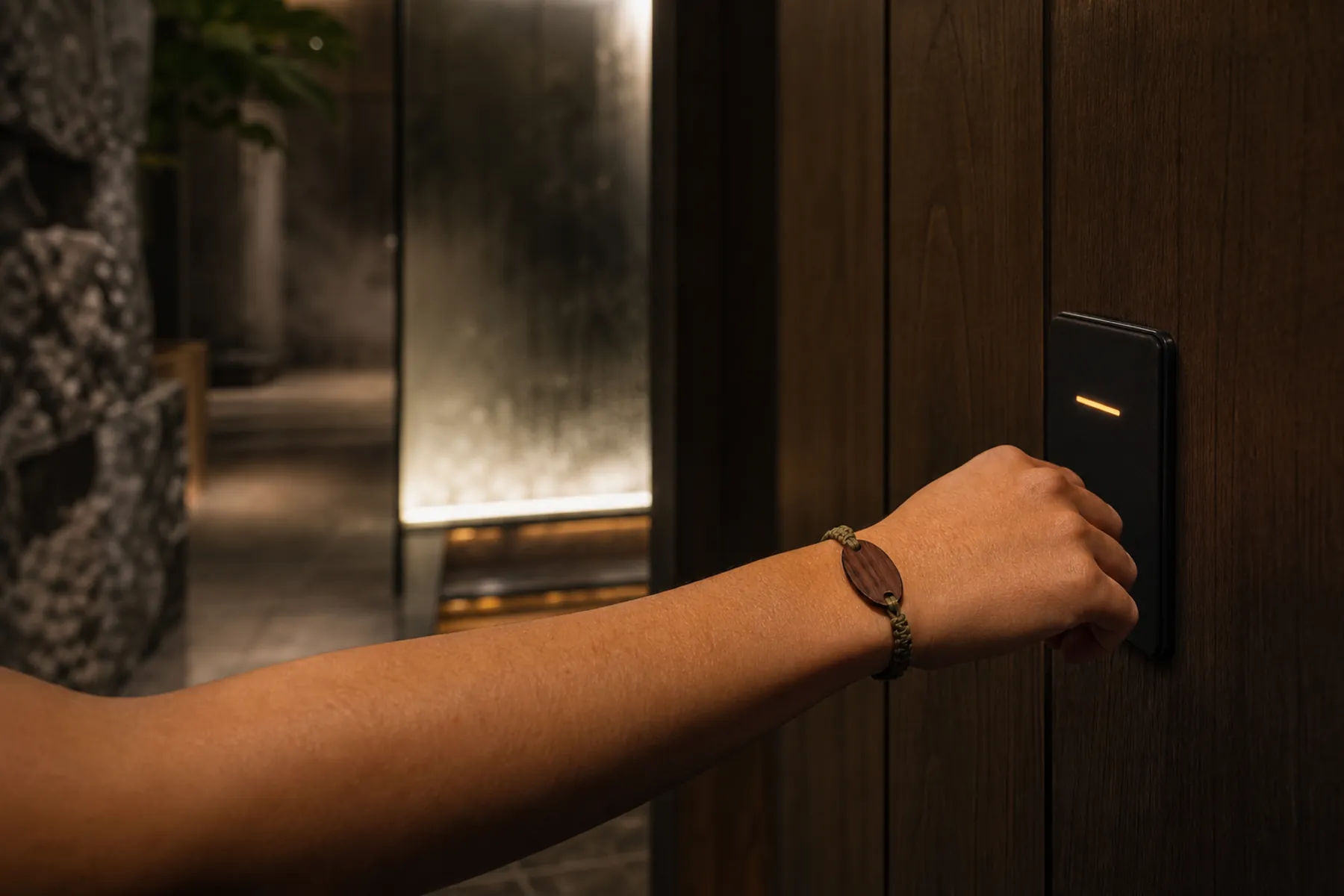
Comfort over a multi-day stay
A coarse band is pleasant for an evening and less pleasant on night four, particularly against a wrist that has been in sun and salt. Where the credential is worn continuously for a week, a blended or softened construction is worth specifying even at some cost to the raw character.
The test is unglamorous and reliable: have a member of staff wear the sample continuously for the length of a normal stay, and record when — if at all — they want to take it off. That number is the specification.
Moisture behaviour is the deciding factor
These fibres absorb water and release it slowly, and they stiffen as they dry. A band that gets wet daily — dew at a camp, a swim, an afternoon of rain — cycles through that repeatedly, and after a couple of weeks it is a different object from the one that was approved.
For dry-zone and short-stay use that never arrives. For a water-led property it arrives fast, which is why we steer those properties towards a sealed face on a rope or moulded strap instead of a fibre band that will disappoint.
It is repeated wet-and-dry that changes a natural-fibre band, not a single immersion. Specify against the property’s daily pattern rather than against its worst day.
Protecting the credential inside
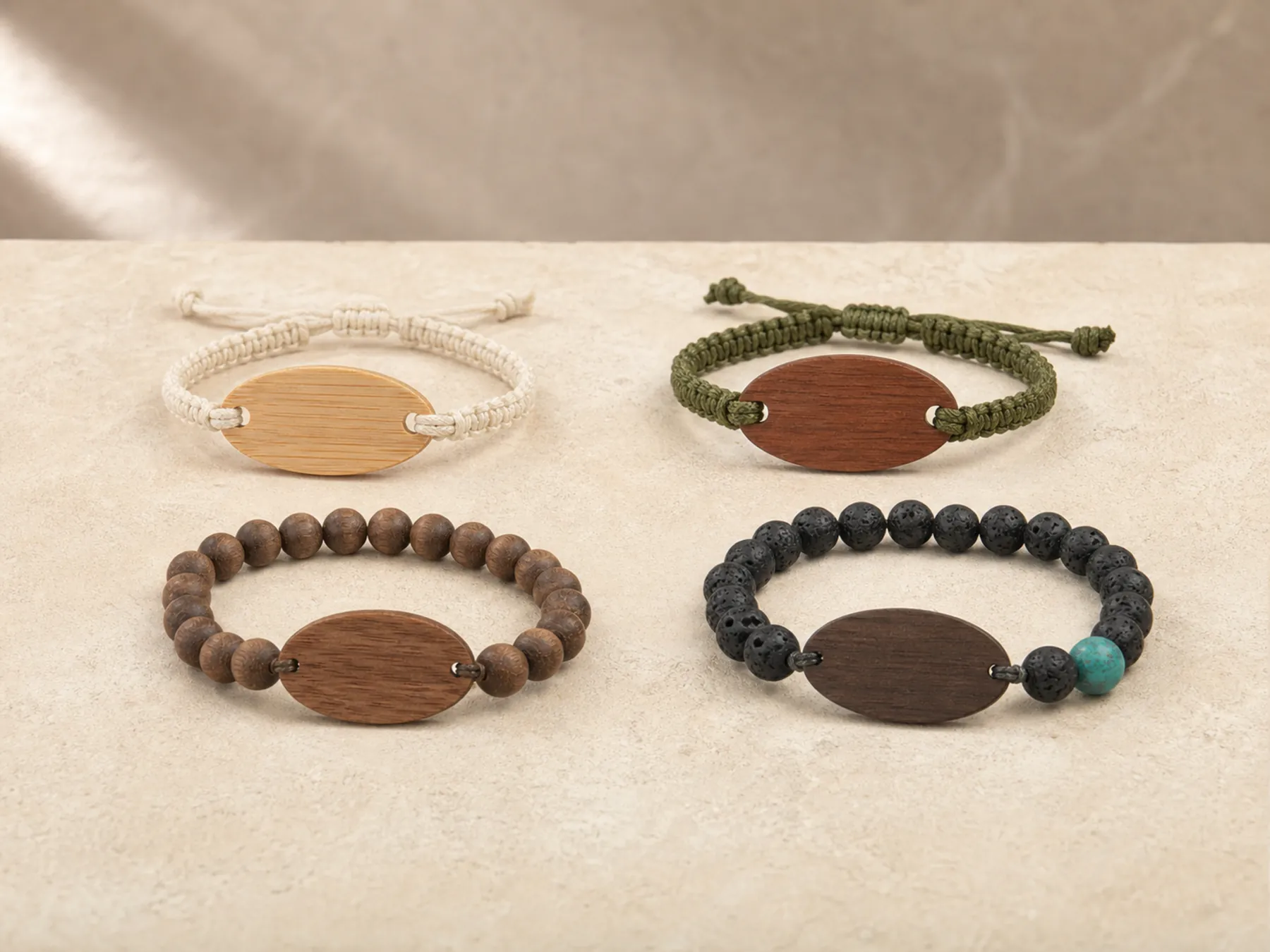
The module has to be sealed independently of the strap, because the strap is a wicking material by nature. A sealed module component with a closed pocket is the construction; a credential relying on the fibre to keep water away from it is not.
That also means the failure mode is benign: the strap ages visibly while the credential keeps working, which gives a property a warning rather than a surprise.
Closure by population
A slider closure suits residents — adjustable, no hardware, easy to fit. A one-way closure suits day visitors, where transfer is the risk. A fibre band is a poor choice for children in either case, because the coarse texture and the adjustable closure are both wrong for that population.
Where a property wants one visual family across all three, keep the fibre band for adult residents and use a different construction, from the same artwork family, for the rest.
Compatibility is confirmed against the property’s lock system, credential technology and encoding requirements before production. We do not claim universal compatibility.
What to send with an enquiry
Include the installed system model, an existing credential sample where possible, quantity, expected wear period, guest types, controlled zones and artwork direction. For material-led options, state the evidence or production documentation your procurement team expects.
FSC-certified material options available with supporting production documentation.
No named hotel or customer project is used as proof. The reasoning behind that stance is set out on the about page.