When a cotton wristband is described as organic, the word attaches to how the fibre was grown — not to the dye, not to the finishing, not to the closure, and certainly not to the electronic module inside it. Knowing which part is covered is the whole job.
What the word attaches to
Organic describes a cultivation method for the fibre. It says nothing about what happened to that fibre afterwards: how it was spun, what it was dyed with, how the fabric was finished, or what it was assembled with.
A band can therefore contain genuinely organic cotton and be finished in ways a guest would not expect. That is not a scandal, it is a scope question, and the property that understands the scope writes a statement that holds up.
The four separate questions inside “organic cotton band”:
- The fibre — how it was grown, and what documents that
- The dye and finishing — a separate process with separate evidence
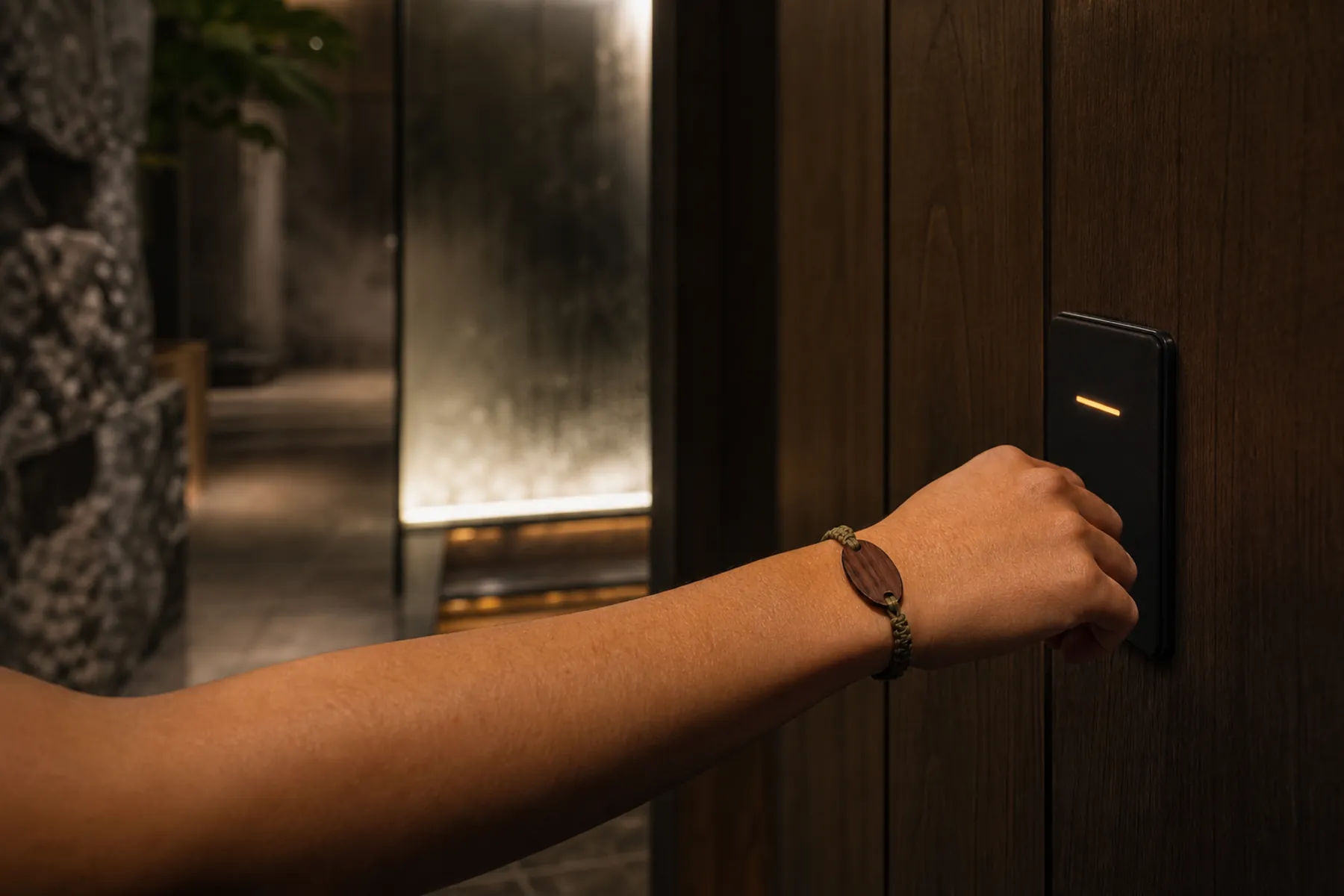
- The construction — closure, stitching, module pocket
- The module — an electronic component covered by none of the above
Yarn, fabric and finished product are different objects
Evidence usually exists at the yarn or fabric stage. It rarely exists for a finished wristband, because the finished product is an assembly of several things from several sources.
So a claim written at the level of the finished band is almost always broader than the evidence behind it, while a claim written at the level of the strap material is usually exactly supported. Writing at the correct level is the difference between a statement you can defend and one you will have to walk back.
Dye is where comfort and documentation meet
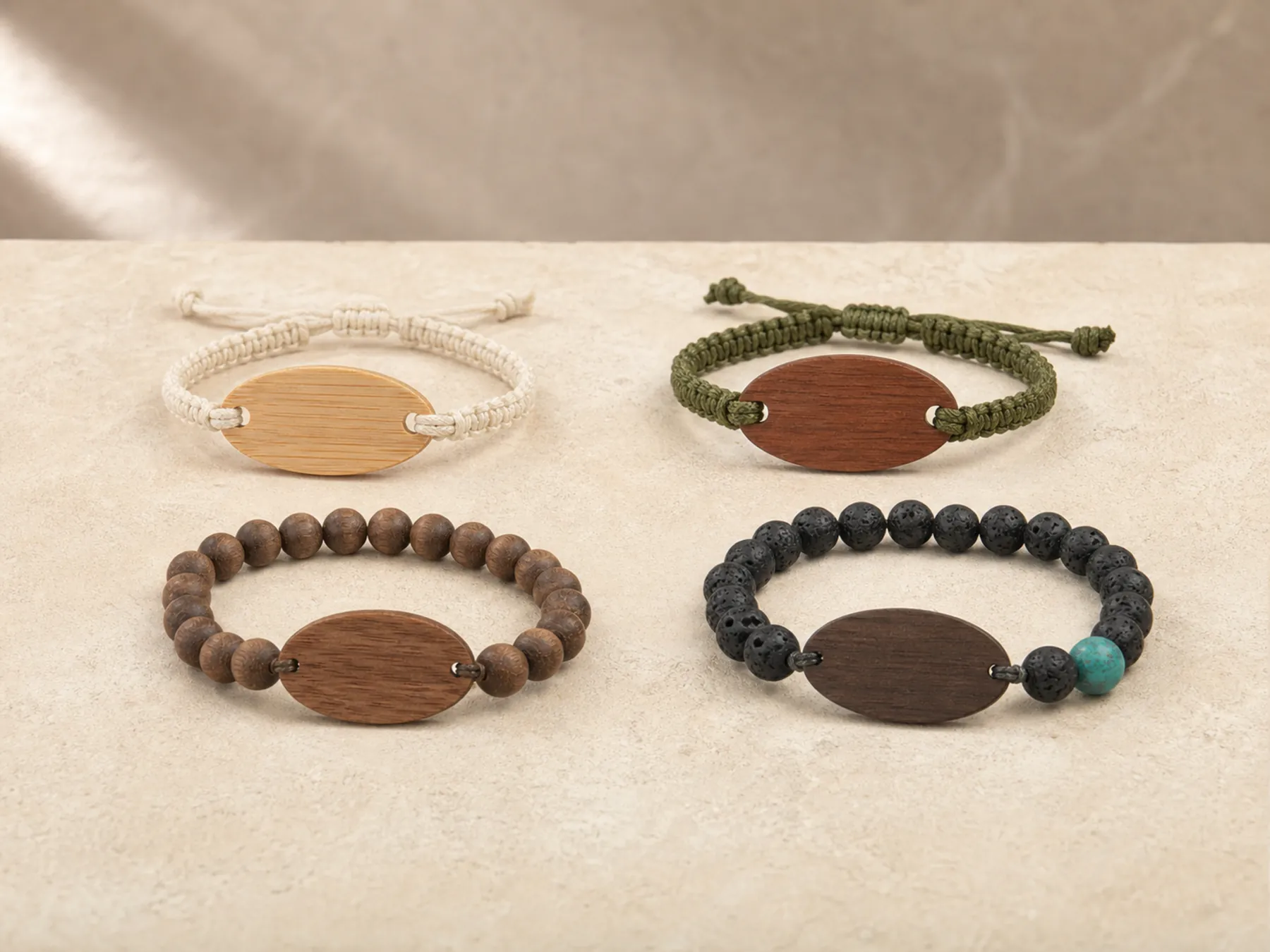
Dye affects more than colour. It affects how the band feels against skin, how it behaves when wet, and how it ages against sun and treatment oils. A pale cotton band in a spa environment discolours from oils long before it wears out, which is a comfort and appearance issue rather than a documentation one.
For that reason we tend to specify mid or dark tones for cotton in spa and pool-adjacent programmes, and reserve pale cotton for dry-zone or short-stay use.
Keep the record at run level
A material declaration issued against your production run is evidence about your goods. A supplier statement about a product line is not, and the difference only becomes visible when somebody asks a second question.
We hold the approved sample, artwork revision, colour reference, credential input and material declaration together as one reorder record, so a repeat order can be checked against what was actually approved rather than against a memory of it.
A statement that survives being questioned
Name the strap fibre and its documentation. State separately that the module is an electronic component not covered by that documentation. Describe the disposal route only if one exists with a person assigned to it. Say nothing about the finished band as a whole.
It is a longer paragraph than most properties expect to write, and it is the version that reads as competence rather than as marketing to the guests who care enough to read it.
Evidence usually exists for the yarn or the fabric. Write the claim at that level and the statement is exactly supported; write it at the level of the band and it never is.
Compatibility is confirmed against the property’s lock system, credential technology and encoding requirements before production. We do not claim universal compatibility.
What to send with an enquiry
Include the installed system model, an existing credential sample where possible, quantity, expected wear period, guest types, controlled zones and artwork direction. For material-led options, state the evidence or production documentation your procurement team expects.
FSC-certified material options available with supporting production documentation.
No named hotel or customer project is used as proof. The reasoning behind that stance is set out on the about page.