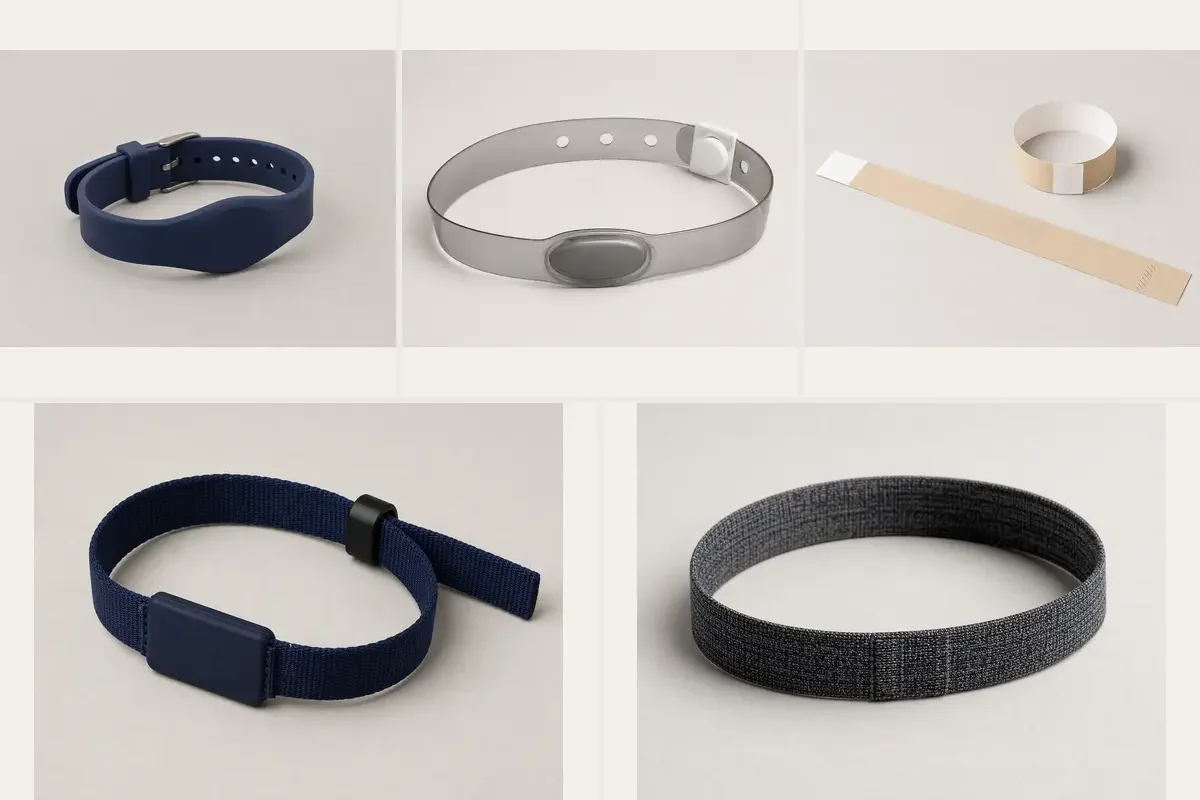
A closure is not a decorative detail. It determines fitting time, transfer resistance, comfort, recovery and whether the band can be issued again. Compare closure systems against the guest journey rather than choosing the one that looks most familiar.
Start with the action the closure must control
Ask whether the wearer should remove the band, whether another person should be able to wear it, and whether staff expect to recover it. Those three answers eliminate most unsuitable formats. A reusable buckle can be comfortable and easy to recover, but it is a poor control where a day pass must not be transferred. A one-way closure does the opposite job.
Closure choice also changes the issue desk. A buckle is familiar but needs the wearer to find a comfortable hole. A snap is fast when staff can see both parts. An adhesive tab needs a dry, clean overlap. A locking slider must be advanced without pinching the wearer. A stretch loop avoids fitting hardware but needs a size range that matches the population.
- Buckle
- Reusable and adjustable; appropriate when removal is allowed and recovery is planned.
- Snap
- Quick multi-position fitting; specify whether it is releasable or intended for one-time closure.
- Adhesive
- Fast day-use issue; the overlap, tamper cuts and application surface must be tested.
- One-way slider
- Adjusts once and resists transfer; removal normally changes or damages the carrier.
- Stretch loop
- No fitting hardware; comfort depends on offering the right circumference range.
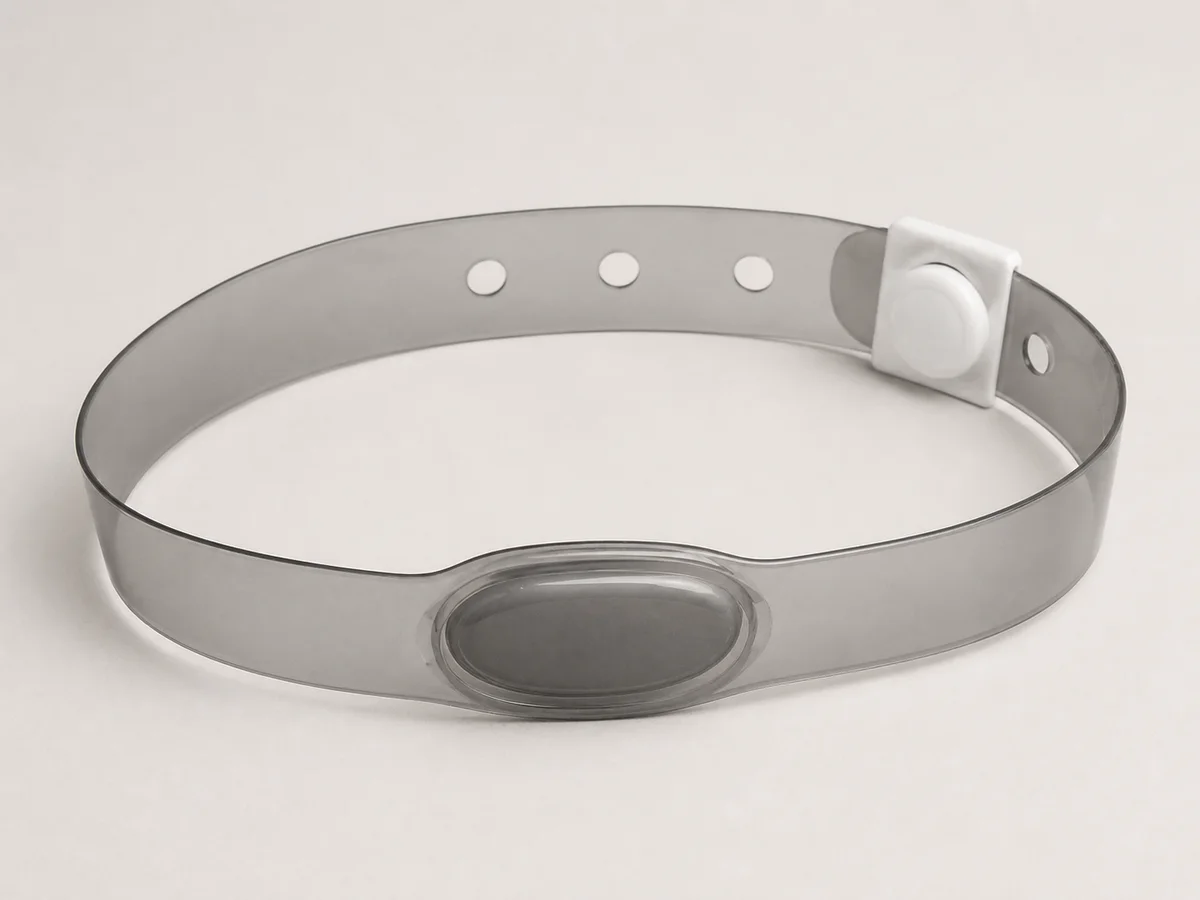
Buckle and releasable snap closures prioritise reuse
A true buckle has a frame, a tongue that enters a sizing hole and a keeper for the loose tail. Approve all three parts on the physical sample. A watch-like appearance is not proof that the tail will stay controlled or that the buckle will remain comfortable when wet. Check the smallest and largest fitted positions rather than photographing only the middle one.
A releasable snap should be evaluated as a two-part system. Confirm how the post and cap align, how much force staff need, and whether repeated opening changes the hole or the snap. Flexible vinyl and some silicone formats use related hardware, but the surrounding carrier changes how that hardware behaves. Compare finished constructions, not isolated fasteners.
Adhesive and one-way closures prioritise control
A coated-paper band relies on a defined overlap. The adhesive area must remain clean until issue, and the tamper feature should show interference without making normal fitting awkward. Test the exact printed and coated band after the exposure expected on site; a generic paper strip does not prove the supplied construction.
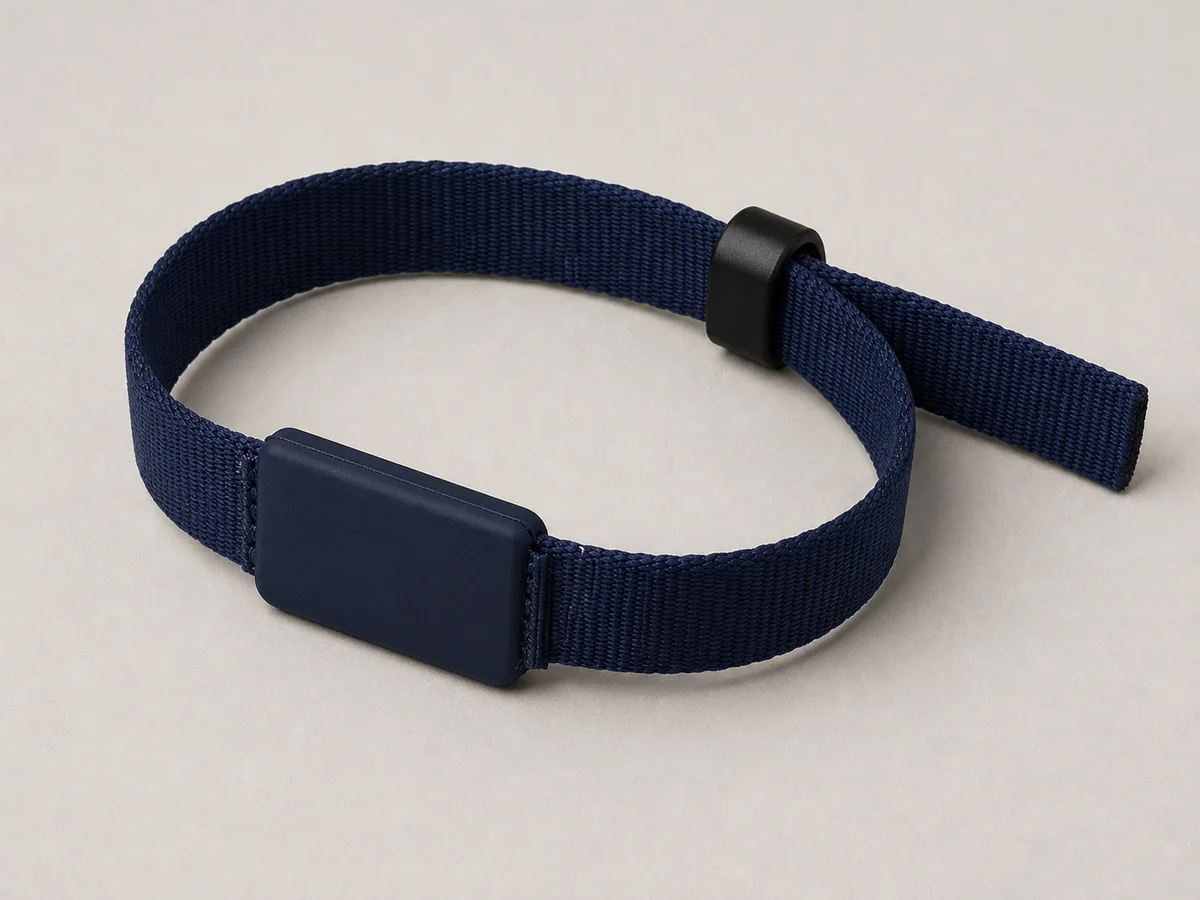
A one-way fabric slider narrows as it moves toward the wrist and should not travel back without intervention. The carrier, slider bore and finished edge work together. If the slider is too loose, the band transfers; if it is too aggressive, fitting becomes uncomfortable. Use the exact woven thickness and exact production slider in approval samples.
Questions for one-time-use closures:
- What visible evidence remains if the band is opened or transferred?
- Can staff fit it consistently without tools or excessive pressure?
- How is the band removed at the end of use?
- Does moisture, sunscreen or repeated movement change the closure behaviour?
Stretch loops trade adjustment for speed
A seamless stretch band can be issued quickly because there is no loose tail or closure lesson. That simplicity only holds when the circumference is right. One nominal size rarely gives the same comfort to a child, a small adult and a large adult, so the stock plan may need multiple sizes or a deliberately narrow wearer group.
Inspect the join or knitted continuity, the transition around the sealed module and the recovery method. If the programme expects the band to be returned, staff need a hygienic collection and cleaning workflow. If it is not returned, a reusable-looking construction may still behave operationally as single use.
Approve a closure by opening, fitting, wearing and removing the finished band. Two products described with the same closure word can differ at the part that actually carries the load.
Build a mixed closure plan only when roles are unmistakable
A resort can use a reusable resident band, a one-time visitor band and a stretch staff band in one programme. Colour alone should not carry that distinction. The physical construction, issue tray and printed or molded visual cue should reinforce the role so a hurried member of staff cannot select the wrong stock line.
Use the exact model catalogue to shortlist constructions, then test the chosen closure against the operating environment. Record the approved closed state, not just the band laid flat, because that is the shape the guest and the reader will actually encounter.
Compatibility is confirmed against the property’s lock system, credential technology and encoding requirements before production. We do not claim universal compatibility.
What to send with an enquiry
Include the installed system model, an existing credential sample where possible, quantity, expected wear period, guest types, controlled zones and artwork direction. For material-led options, state the evidence or production documentation your procurement team expects.
FSC-certified material options available with supporting production documentation.
No named hotel or customer project is used as proof. The reasoning behind that stance is set out on the about page.