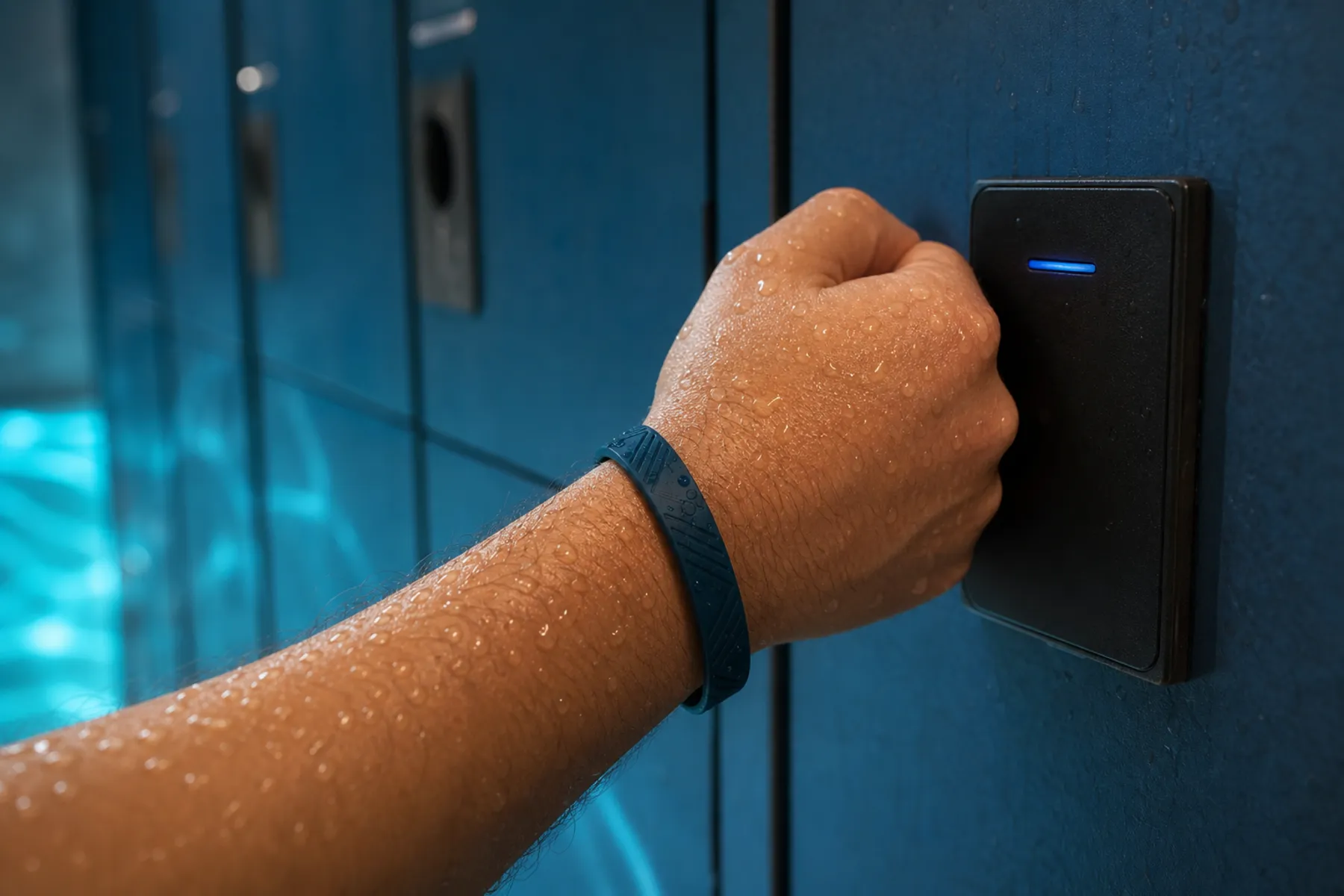
A room door is opened twice a day. A locker is opened six times in a visit, wet, one-handed. Properties test the door and are then surprised by the locker.
- Where the volume actually is
- Locker banks have their own failure
- Towel issue and consumable control
- Back-of-house is a different population
- What to write into the specification
Where the volume actually is
Count presentations rather than access points. In most resort operations the credential is presented far more often at lockers, towel issue, pool bars and activity desks than at any door — and each of those is a harder condition than a corridor.
That reorders the testing priority. If a credential satisfies a locker bank used by a wet guest holding a towel, the room door will not be a problem.
Locker banks have their own failure
Closely spaced readers can produce a read at the wrong unit when a credential is presented between them, which is the one situation where more read range is actively unhelpful.
Test a bank rather than a locker: present at both ends and in the middle, quickly, as a guest would. A single locker tested in isolation tells you nothing about the bank behind it.
Both ends and the middle, presented quickly with a wet band. Reader spacing problems are invisible when one unit is tested carefully.
Towel issue and consumable control
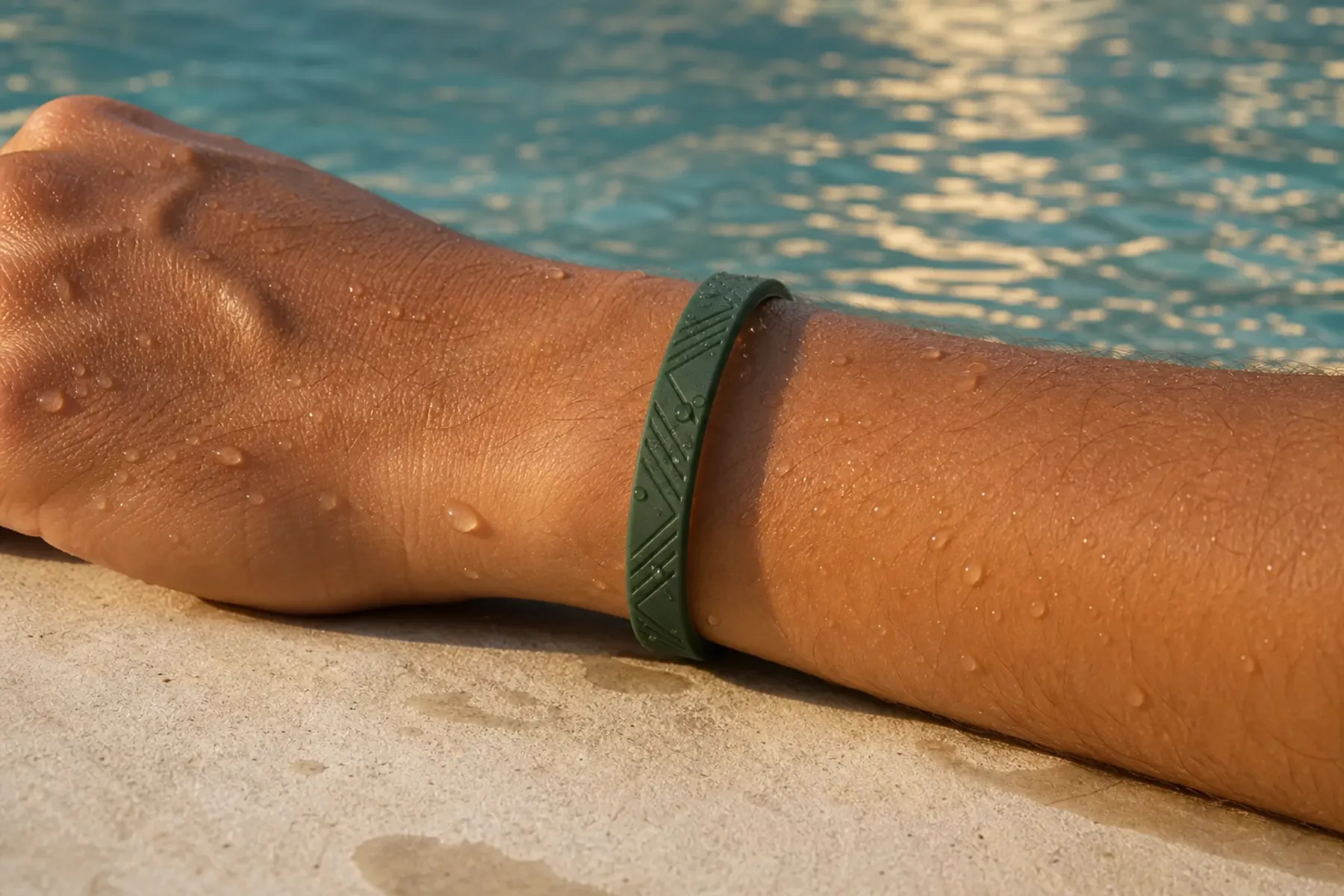
Towel issue is a credential use most properties add later and specify never. It is high-frequency, it is usually outdoors, and it often has no reader at all — staff read a number or a colour instead.
Where that is the case, the credential has to be humanly readable at arm’s length, wet, which is a visual design requirement rather than a technical one and is worth stating before artwork is approved.
Back-of-house is a different population
Service doors, stores, plant and offices are usually a staff credential problem rather than a guest one, and they are where a departed employee’s live credential does the most damage.
That makes the disable-on-leaving procedure the control that matters, and it makes a replaceable-credential construction more useful than a sealed band, because a credential is withdrawn while the band is cleaned and reissued.
What to write into the specification
Every point where a credential is presented, not every door. For each: how often, in what condition, by whom, and whether there is a reader or a human.
That list is usually twice as long as the access-control drawing, and it is the list that determines whether the specification will survive a busy Saturday.
Compatibility is confirmed against the property’s lock system, credential technology and encoding requirements before production. We do not claim universal compatibility.
Questions this raises
01What should we test first?+
The locker bank, with a wet band presented quickly and one-handed. It is the highest-frequency and least forgiving use in most properties, and a credential that satisfies it will satisfy the room doors.
02Can a guest open the wrong locker?+
At closely spaced readers it is possible when the credential is presented between units. Test both ends and the middle of a bank rather than one locker in isolation — this is the one case where a longer read range is a disadvantage.
03Do towel and consumable points need readers?+
Often not — staff read a number or a colour instead. Where that is the case, the credential has to be humanly legible at arm’s length when wet, which is an artwork requirement that needs stating before approval.