
The credential is a social object first
Attendees read each other’s credentials constantly — for names, for organisations, for whether someone is a speaker. That is a design requirement, not a nicety: a name that cannot be read at conversational distance makes the credential useless for its most frequent purpose.
Practically that means large type for the name, the organisation smaller, and the role indicated by colour rather than by text. Everything else — session codes, catering entitlement, barcode — belongs lower down or on the reverse.
Variable data means printing at issue
Every attendee credential is different, so it is printed at registration rather than produced in a run. That makes the printer and the stock a single specification, and it makes registration throughput a physical question: how many print stations, how fast, and what happens when one jams during the 08:30 rush.
It also means a re-print policy. Names are misspelled, people arrive unregistered, and organisations change on the day. A registration desk without a re-print route becomes a queue very quickly.
Conference registration is not a steady flow — most of a day’s attendees arrive within about forty minutes. Print stations, stock and staffing should be sized against that peak, not against the total.
Tiers that a volunteer can enforce
Access tiers at an event are enforced by people who were briefed this morning. A tier system that requires reading a code fails; a tier system that is a colour block works. Speaker, delegate, press, exhibitor, organiser — five colours, learnable in a minute.
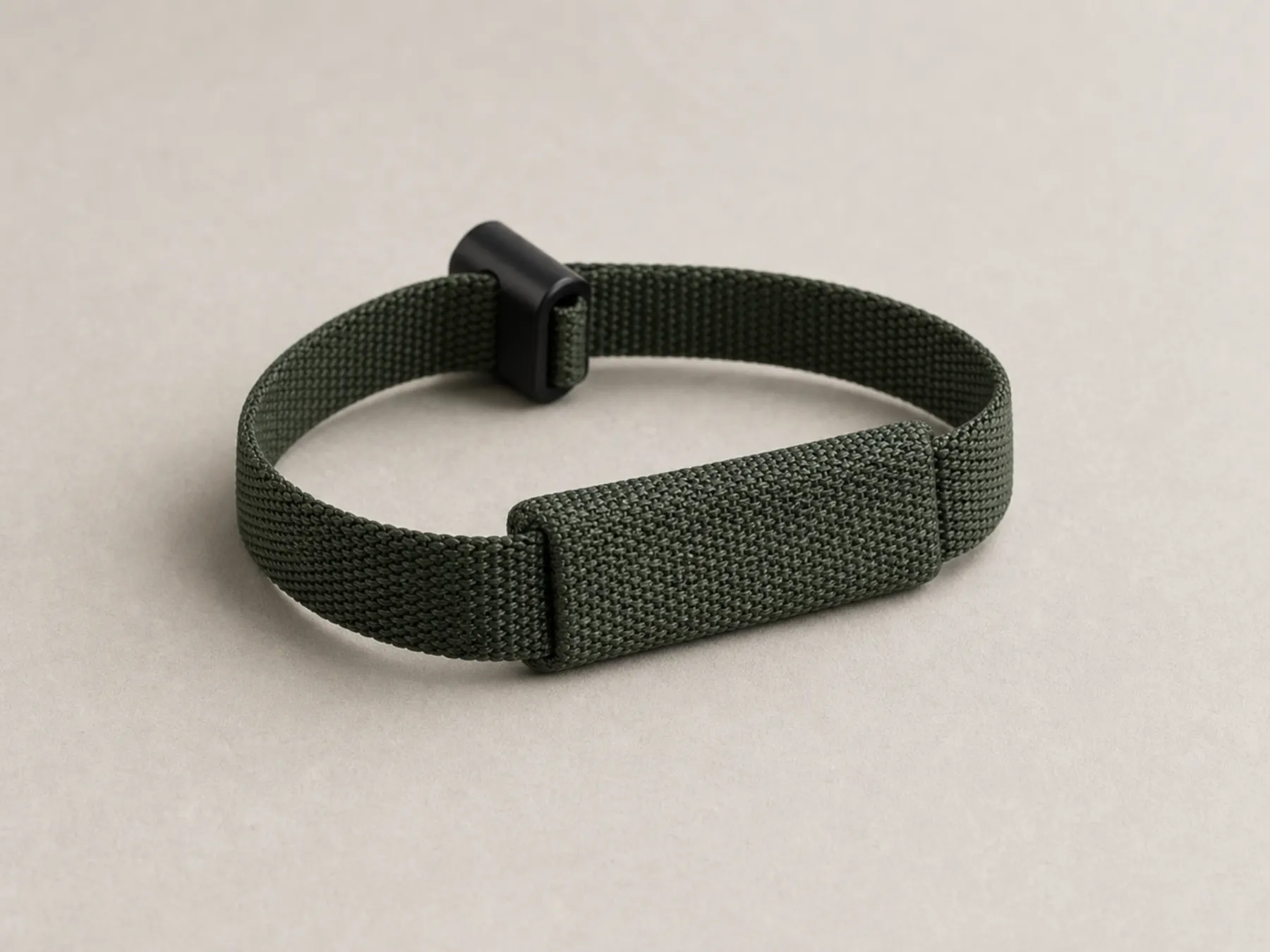
The same logic applies to catering and evening events. A separate visible marker — a coloured band alongside the credential, or a printed panel — lets a server check entitlement without a device, which is what a busy lunch service actually needs.
Where RFID earns its place, and where it does not
For most conferences, the credential does not need to be machine-readable at all. Where it genuinely helps is session attendance counting, controlled-capacity rooms, and lead capture at exhibition stands — three specific jobs, each of which should be confirmed as a real requirement before the technology is specified.
When it is specified, the technology and encoding are confirmed against whatever system will read it, and the read is tested at the actual door positions. A credential worn on a lanyard at chest height behaves differently at a floor-standing reader than a wristband does.
Room access and event access are different problems
At a resort hosting a congress, an attendee may have a hotel room credential and an event credential. Merging them is attractive and rarely simple: the hotel system and the event system are usually different systems with different lifecycles, and the event ends three days before the guest checks out.
Two credentials is the honest default. Where a property does want one, the integration question has to be settled before anything is ordered, because it determines the technology rather than the format.
Reconciling numbers without a system
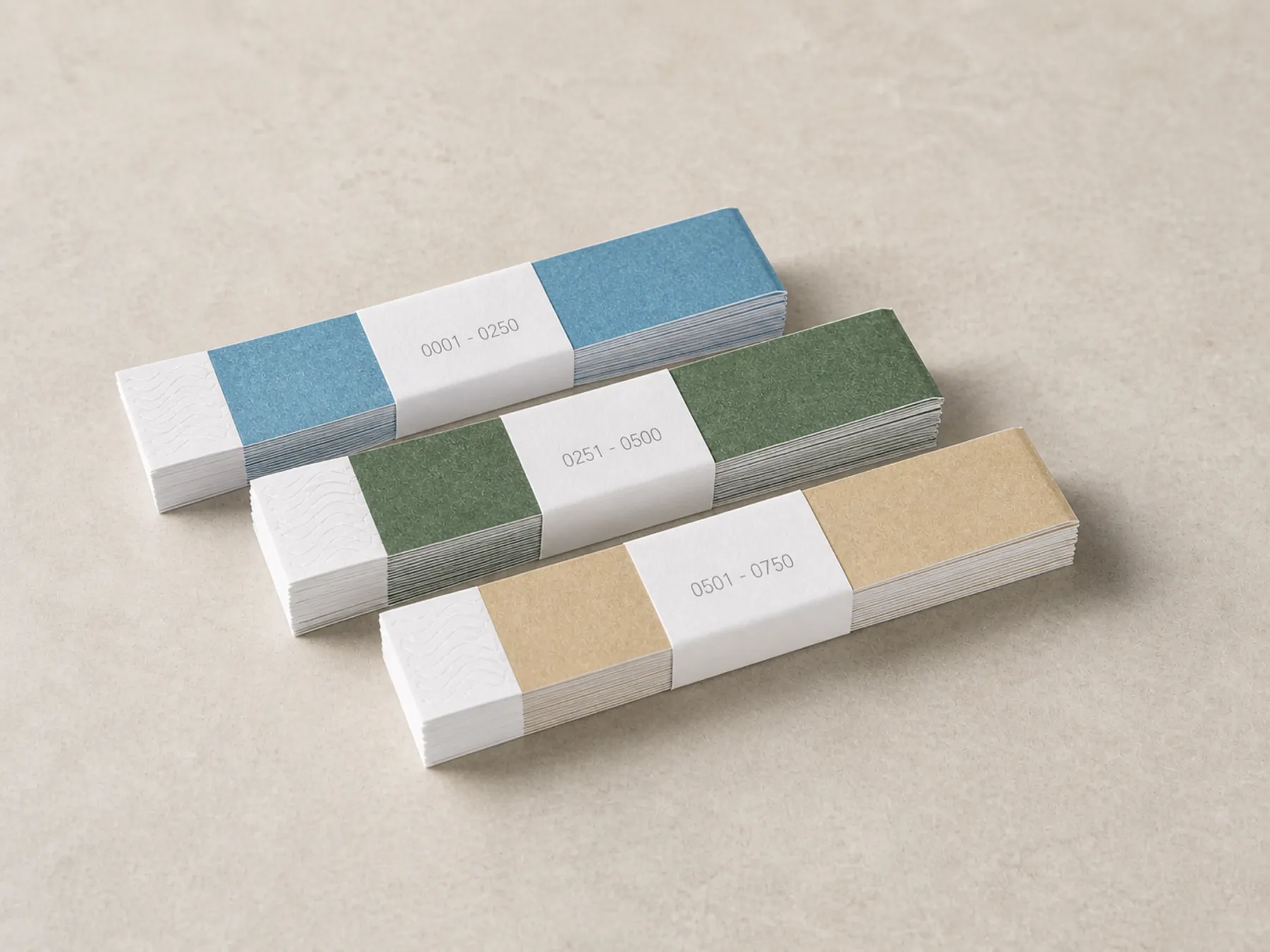
Organisers count. They count against registrations, against catering, against room capacity, and they do it in the middle of an event with no time for a report. Supplying credentials in counted, range-labelled blocks lets a desk track issue by block rather than by scanning, which is faster and works when the network does not.
That is a supply decision made at order time, and it is worth asking for explicitly because it costs nothing and cannot be retrofitted.
After the event
Event credentials are single-use and are discarded on the last afternoon, usually in bulk. Where the credential carries an inlay, that is a mixed-material waste stream and should be described as such rather than dressed up.
Properties running frequent events sometimes move to a reusable holder with a printed insert, which reduces the waste meaningfully and adds a recovery step at the exit. That trade is worth modelling for a venue running twenty events a year and is not worth it for one running two.