The date is immovable, so the schedule runs backwards
Production is 14–21 days after artwork approval, and artwork approval is the step that slips. Sponsors change, line-ups change, and every change restarts the approval rather than adjusting it. An event that treats approval as a formality discovers the schedule was never really 21 days.
The practical response is to fix the artwork earlier than feels comfortable and to keep the variable elements — names, sessions, sponsor tiers — on desk-printed credentials rather than in the moulded or woven run.
Put everything that might change on a desk-printed credential and freeze the run artwork early. An event that keeps its sponsor logos in the woven band is an event that will re-approve twice.
Peak hour, not attendance
Ten thousand attendees do not arrive over a day; most arrive in about ninety minutes. Issue capacity has to be sized against that window — number of issue points, seconds per credential, and what a member of staff does when a band is misfitted.
Construction follows from that arithmetic. A one-way woven band with a plastic closure is a few seconds; a strung or fitted band is far longer. At a resort event with modest numbers that difference is invisible; at a festival gate it is the queue.
Transfer control is the point of an event band
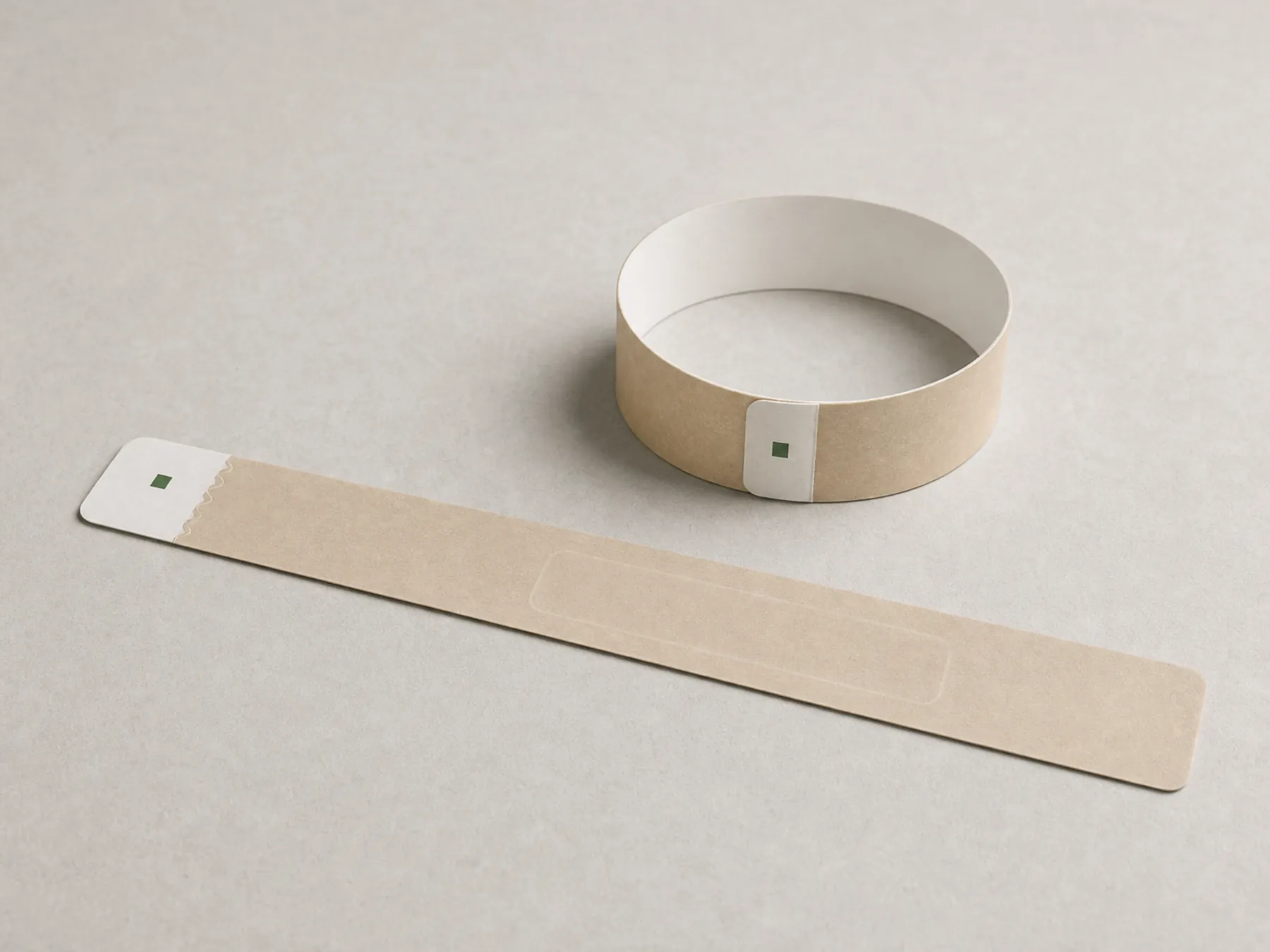
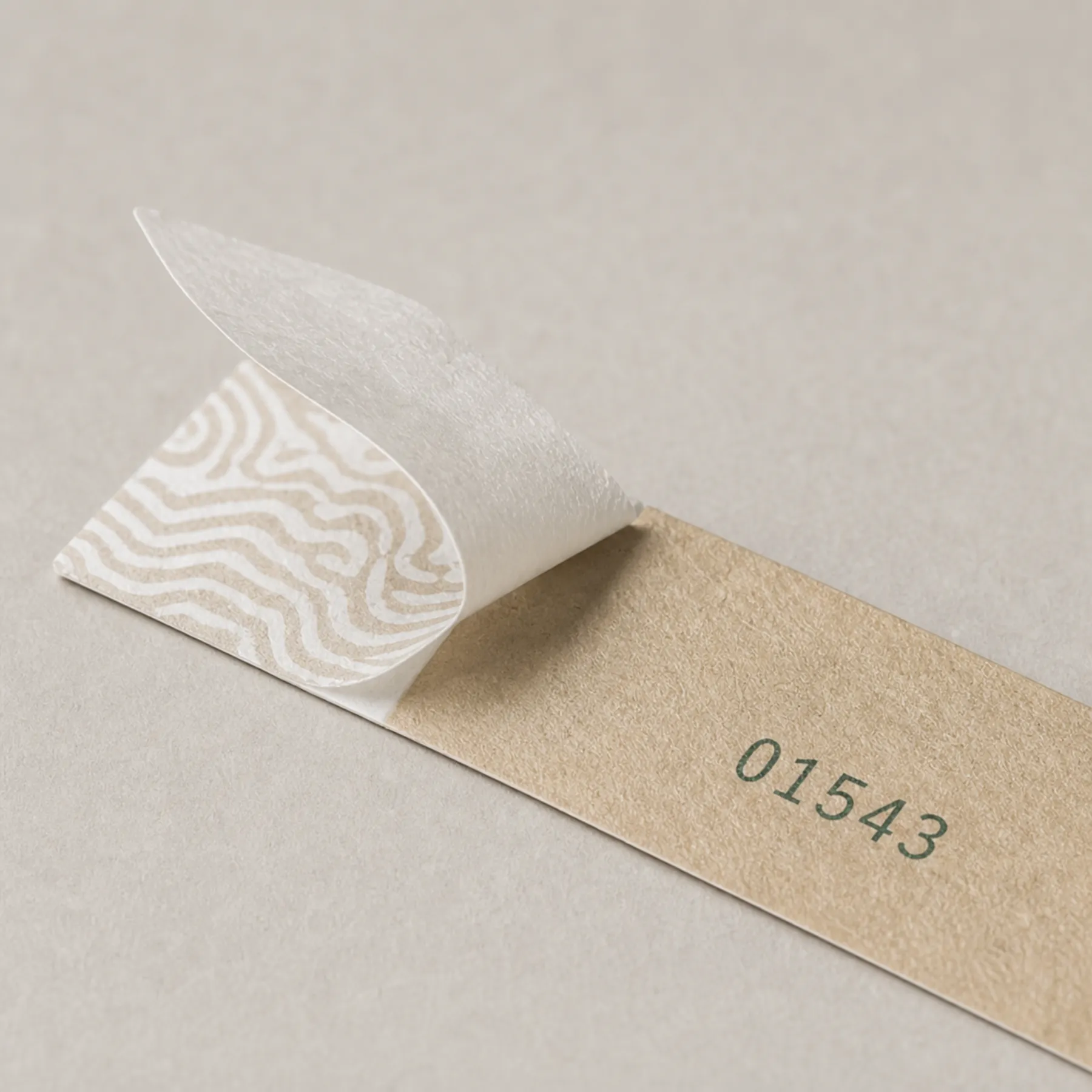
Almost every event credential exists to stop one admission being used by two people. That makes the one-way closure standard rather than optional, and it makes fit final at issue, which in turn makes a misfit allowance part of the order rather than an afterthought.
It also means the band must resist being removed intact. A woven strap with a one-way clip is the usual answer; anything with an adjustable slider or a reusable snap is not doing the job an event needs.
Tiers read at distance, day and night
Security and bar staff read tiers across a crowd, often in low light with stage lighting distorting colour. A tier system built on subtle differences fails under those conditions even though it works perfectly on a desk.
Strong hue separation, a limited number of tiers and a distinct treatment for the highest-privilege tier is the pattern that survives. Where lighting is genuinely coloured, a printed tier word alongside the colour gives staff a second signal.
Weather, sleep and multi-day wear
A multi-day event credential is worn in rain, in a sleeping bag and in a shower queue. Woven bands handle that well; paper does not survive rain; moulded bands are comfortable but read as leisure rather than as event credentials.
Where the event is at a resort with pools, the calculation changes again — a band worn in a pool every afternoon should be moulded, and the tier control moves to colour rather than to weave.
Where RFID changes the operation and where it does not
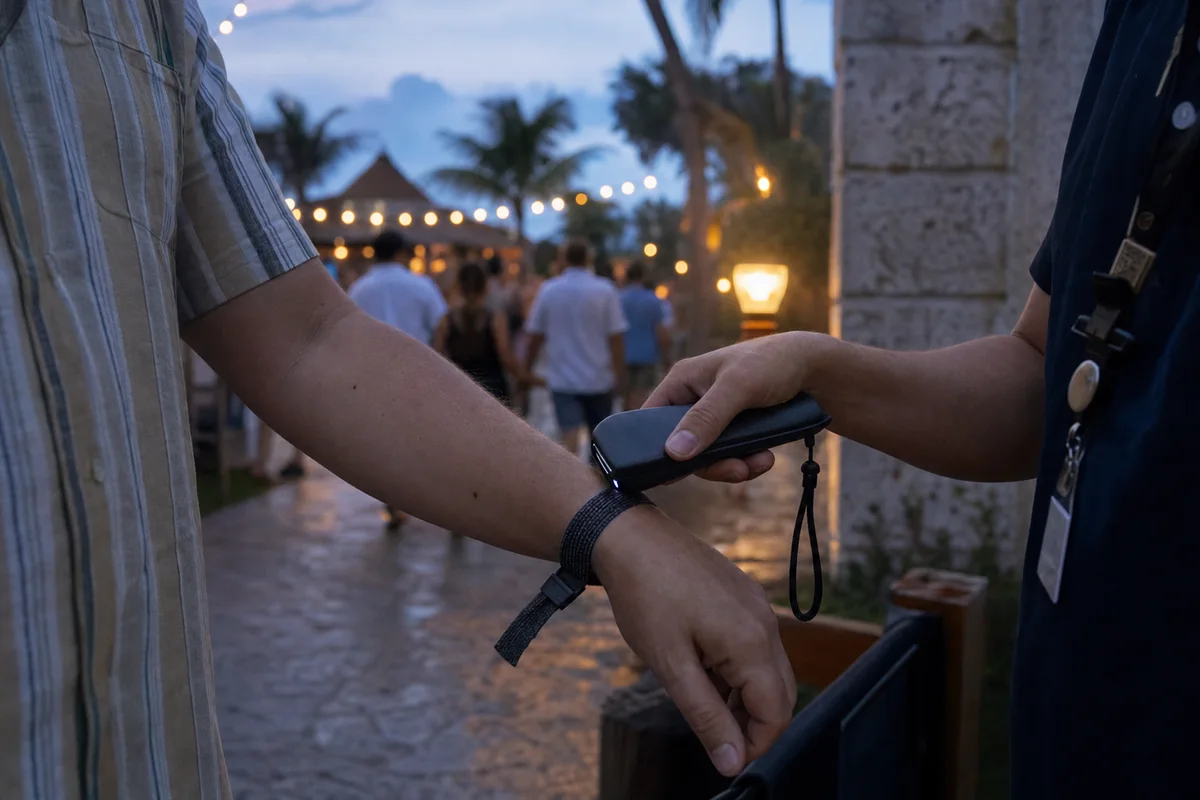
RFID earns its place at an event for three things: cashless spend, access counting at capacity-limited areas, and re-entry control. If none of those is in scope, a printed woven band with good tamper evidence does the job and adds no failure points.
When it is in scope, the read has to be proven under event conditions — wet, in motion, with a queue behind, at readers that may be battery-powered and mounted on scaffolding. That is a materially different test from a hotel door.
After the last night
Event credentials are cut off, kept as souvenirs, or left on site. All three are predictable, and the third is the one to plan for: bins and cutting points at exits keep a site clean and stop used bands being recovered and re-presented on a later day.
Where an event runs annually, a generic band without a year on it can be held over as stock. Where the band is part of the memorabilia, expect near-zero recovery and order accordingly.