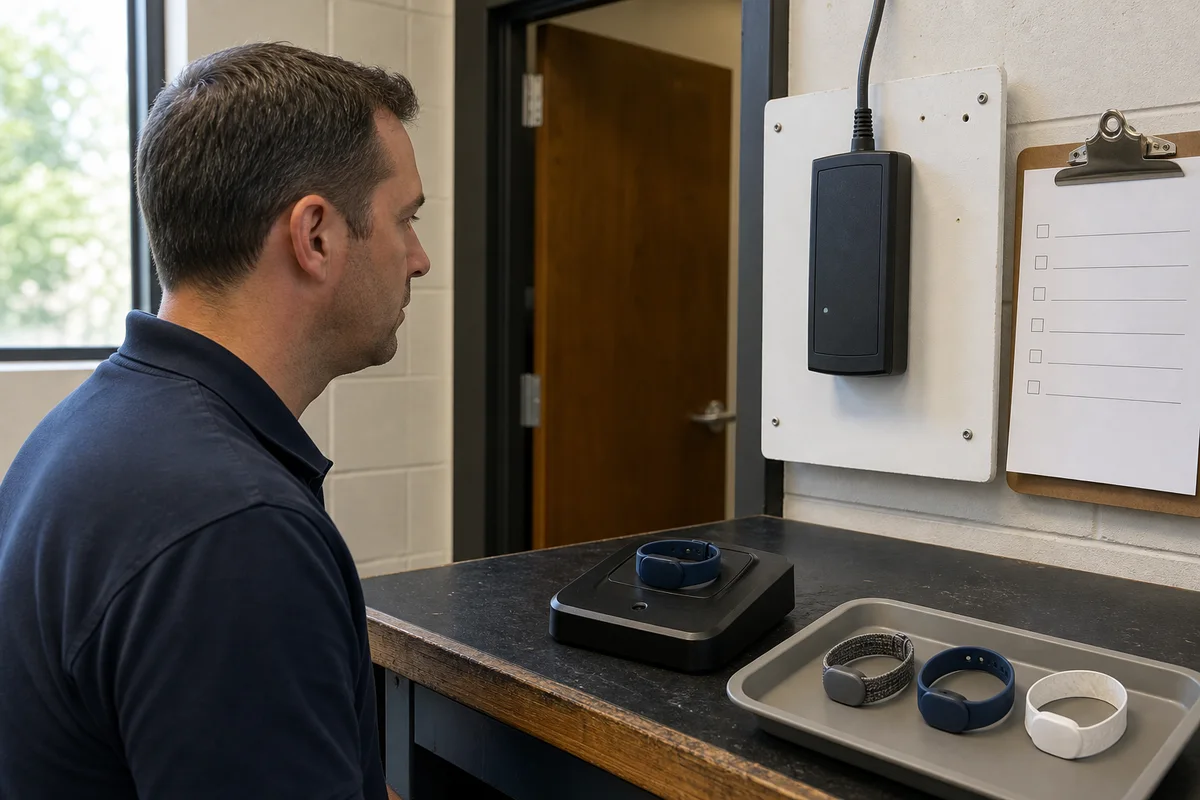
A useful pilot is small enough to control and broad enough to expose exceptions. It tests the finished credential, the installed readers, the guest workflow and the staff recovery path under one written acceptance plan.
Write the decision the pilot must support
Avoid a vague objective such as “see if wristbands work.” State which construction is being considered, for which guests, at which readers and for which functions. Then define the evidence needed to approve, revise or reject it. A pilot without a decision rule becomes a demonstration: successful taps are remembered and exceptions are explained away.
Keep the first scope narrow. One guest group, one or two candidate constructions and the essential reader locations usually reveal more than a mixed trial of every available model. Include the people who issue, fit, support and reorder the credential, because the operational burden will not be visible to a technology team working alone.
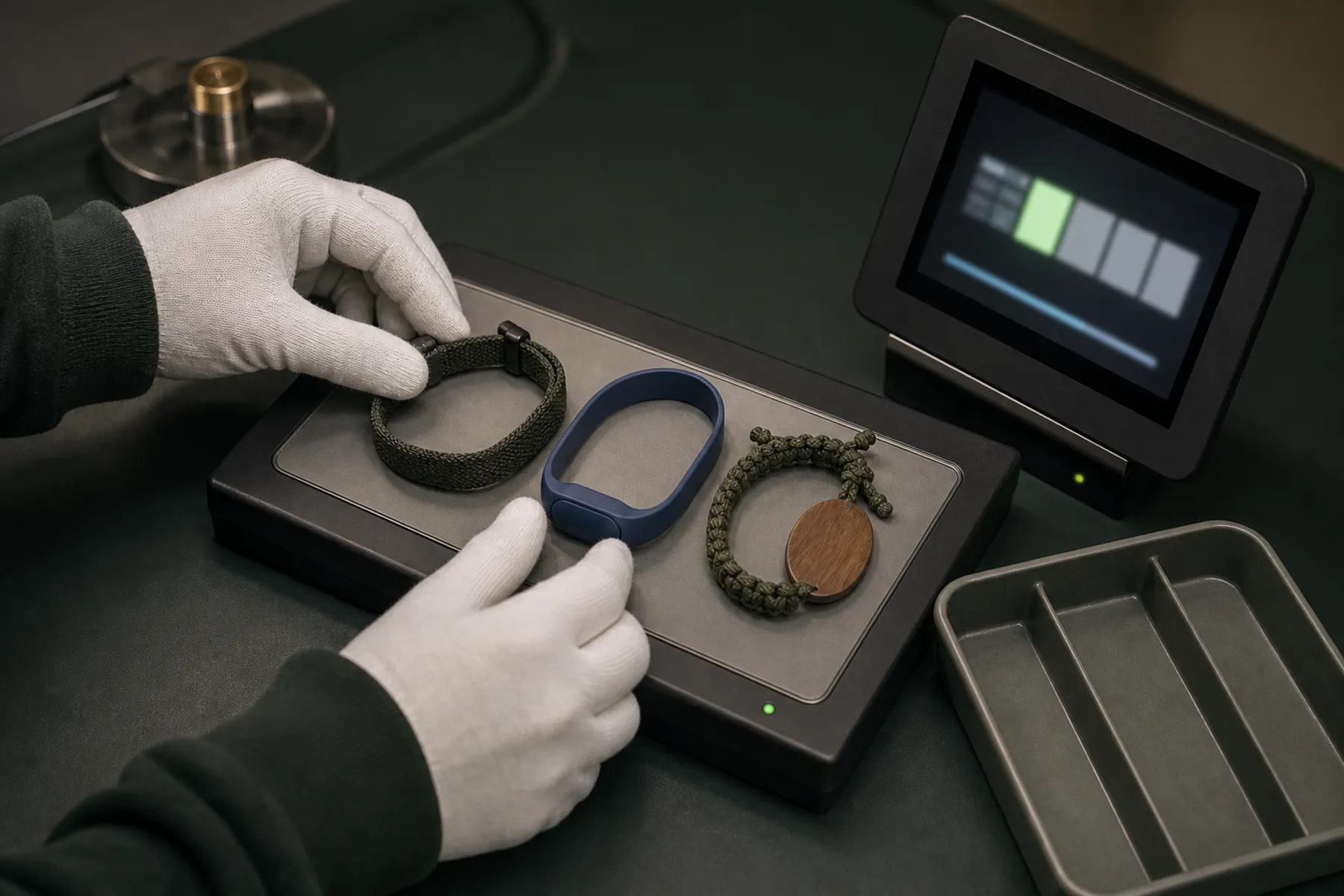
Freeze the sample before testing begins
Record the model, material, closure, module, artwork revision and credential input for every pilot sample. Photograph the sample open and closed, retain one unused control, and number the test units in a way that does not expose guest data. If the construction changes mid-pilot, treat it as a new sample rather than blending the results.
The test article should be production-realistic. A loose inlay, an unsealed demonstration module or a card held beside a strap cannot prove a finished wristband. Use the sample approval walkthrough to keep the physical approval tied to the final specification.
Minimum pilot record:
- Exact credential and carrier reference, including closure and size
- Configured identifier or encoding input and who enrolled it
- Reader locations in scope, including metal-adjacent or recessed units
- Wear period and expected water, chemical or activity exposure
- Named acceptance criteria and owner for each result
Test readers in the order guests actually meet them
Start at issue, then follow the real sequence: room, lift or gate, pool, locker, point of service and re-entry. Present the band on the wrist at natural angles rather than holding it flat like a card. Record failed first attempts, repeated motion and staff intervention, not only the final successful outcome.
Include edge conditions that reduce read margin: a wet band, a small wrist, a reader beside metal and a guest carrying towels or luggage. Those conditions should remain safe and realistic; the goal is to observe ordinary use, not to destroy the sample. Any destructive or chemical testing belongs in a separate controlled protocol.
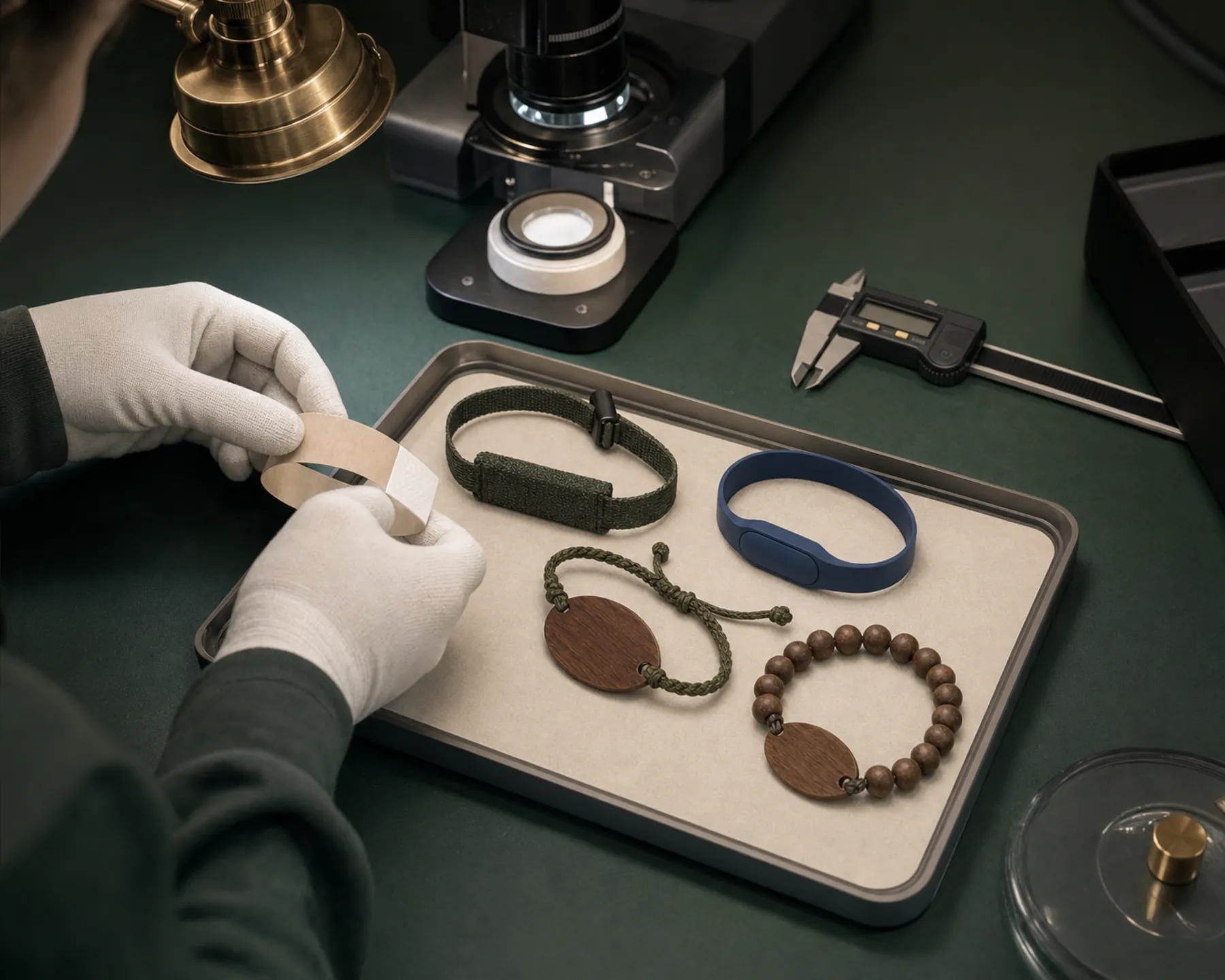
Force the exceptions while the pilot is still controlled
Mark one band lost, move one guest to another room, revoke one permission, close one folio link and issue one replacement. Ask the normal staff roles to resolve each case using the proposed process. Record which system and which desk complete the change, and whether the previous credential remains active anywhere it should not.
Also observe the social failure points: a guest refuses to wear the band, a child size is unavailable, a closure is fitted too tightly or a visual colour is misunderstood. These are specification results, not training annoyances. They may change the carrier, stock split or issue script before full rollout.
Finding a weak reissue path with a small controlled group is exactly what the pilot is for. Record the correction and repeat the case before approval.
Close with an approval record and rollout boundary
Summarise the tested sample, locations, exceptions, changes and final acceptance decision. State which properties or reader configurations the result covers. A successful pilot at one installation does not establish compatibility elsewhere; each installed system and final wearable format still needs confirmation.
If approved, convert the pilot reference into the order and reorder record: artwork, colour, size split, credential input, packing, retained sample and staff procedure. If not approved, preserve the result so the next candidate addresses the actual failure rather than restarting the conversation.
Compatibility is confirmed against the property’s lock system, credential technology and encoding requirements before production. We do not claim universal compatibility.
What to send with an enquiry
Include the installed system model, an existing credential sample where possible, quantity, expected wear period, guest types, controlled zones and artwork direction. For material-led options, state the evidence or production documentation your procurement team expects.
FSC-certified material options available with supporting production documentation.
No named hotel or customer project is used as proof. The reasoning behind that stance is set out on the about page.