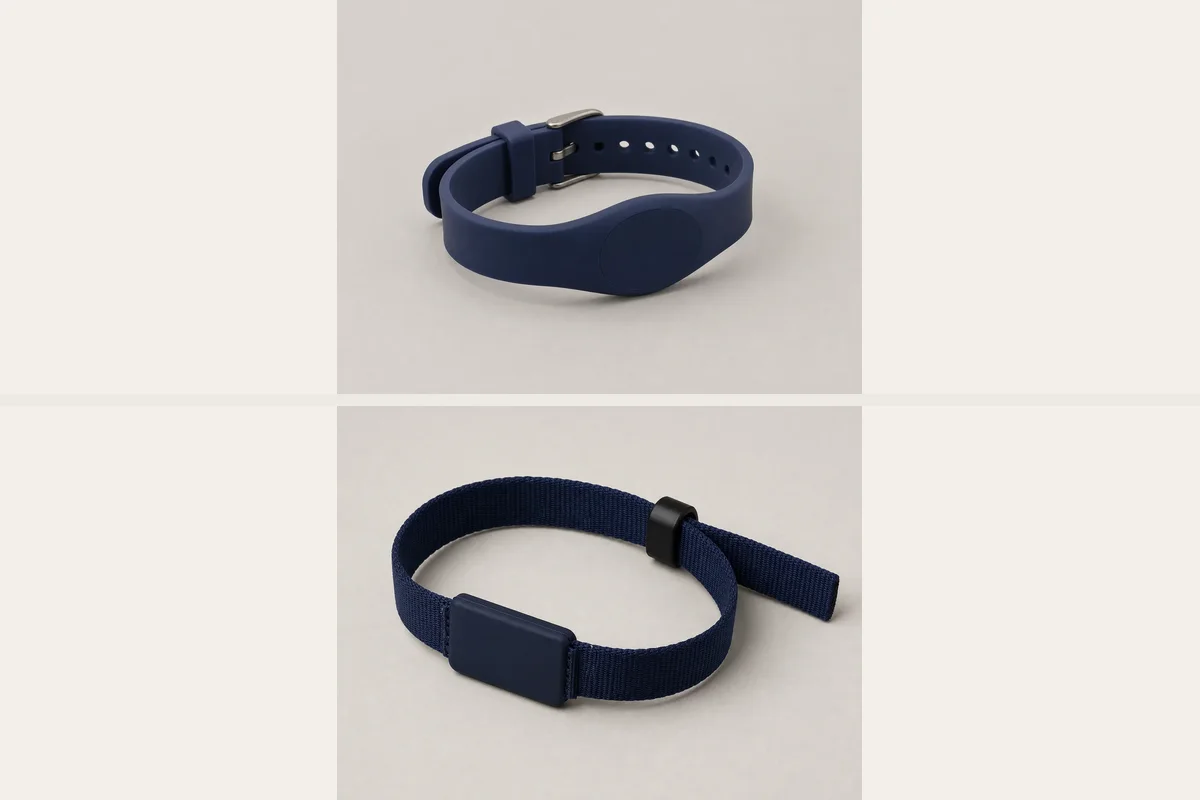
One wearable is simpler for the guest. Two credentials can be safer for the operation. The decision depends on which systems can share an identifier, which risks must remain separate and how staff recover when one workflow fails.
Draw the guest journey before choosing the credential count
Start at arrival and follow the guest through the room, pool gate, locker, restaurant and any paid activity. For each stop, record what is presented, which platform makes the decision and what the member of staff sees when access is refused. A line on that map is more useful than a feature list because it exposes where one credential crosses from convenience into operational dependency.
A single wristband only works as one experience when the connected systems can accept the same credential input and the property has agreed which platform controls each permission. The physical band does not merge room access, locker access and folio charging by itself. Review the installed readers and encoding workflow first; our integrator planning guide sets out the evidence to collect.
- Room
- Who issues and revokes the credential, and whether a replacement invalidates the previous one.
- Pool or beach
- Whether entry is visual, reader-controlled or both, and where exception stock is held.
- Locker
- Whether the band claims a free locker, opens an assigned locker or simply identifies the user.
- Payment
- Whether the platform links the identifier to a folio and what staff do when charging is unavailable.
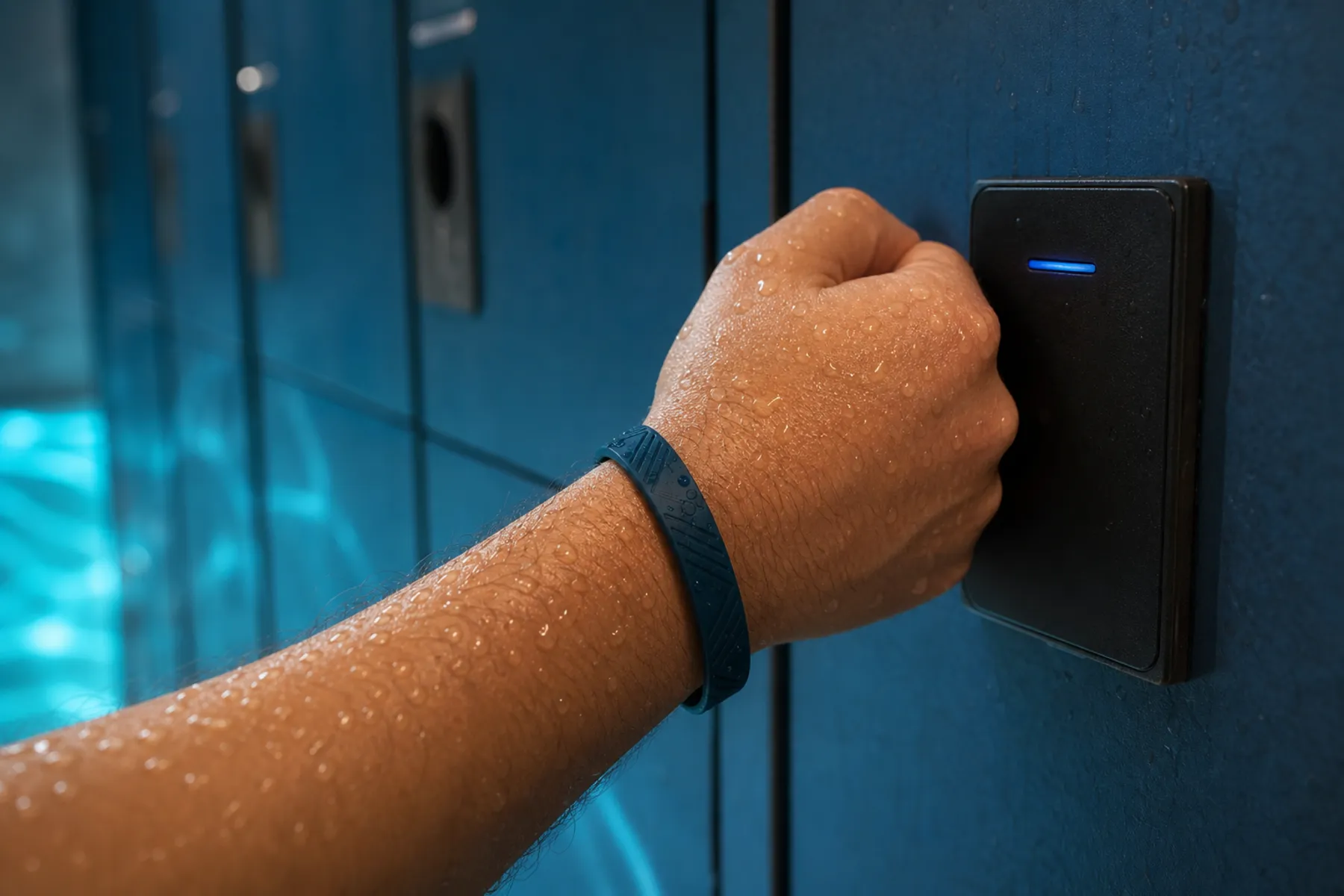
Use one wristband when the failure boundary is acceptable
One wearable is strongest when the guest population is stable, the same identifier can be enrolled across the required systems and a replacement can be issued from one controlled record. The guest learns one presentation motion and carries one object through wet and dry zones. Stock, fitting and colour logic also stay easier to explain.
The operational cost is concentration: a lost or damaged band can interrupt every linked service at once. That is not automatically a reason to split the credential, but it means the reissue desk needs authority to restore every permission included in scope. A property should not discover during a live incident that room access can be restored at reception while a locker or payment link requires another team.
Use two credentials when permissions should not travel together
A separate room credential and resort wristband can make sense when the lock platform is operationally isolated, when day visitors need pool access without room privileges, or when a payment workflow has a different verification standard. In those cases the extra object is deliberate separation rather than duplication.
Define which credential is authoritative at every checkpoint. If the room card expires at departure but the wristband remains valid for a late pool session, staff need an explicit rule. If both can open the same locker, a reissue must not silently leave two active paths. The best two-credential plan has fewer ambiguous states, not merely more products.
Signals that two credentials deserve serious consideration:
- Day visitors and resident guests share facilities but not room privileges
- The room-access platform and resort platform have separate owners or issue desks
- A failed payment link must not prevent room entry
- A late-departure policy extends resort access beyond the room credential
Test exception paths, not only successful taps
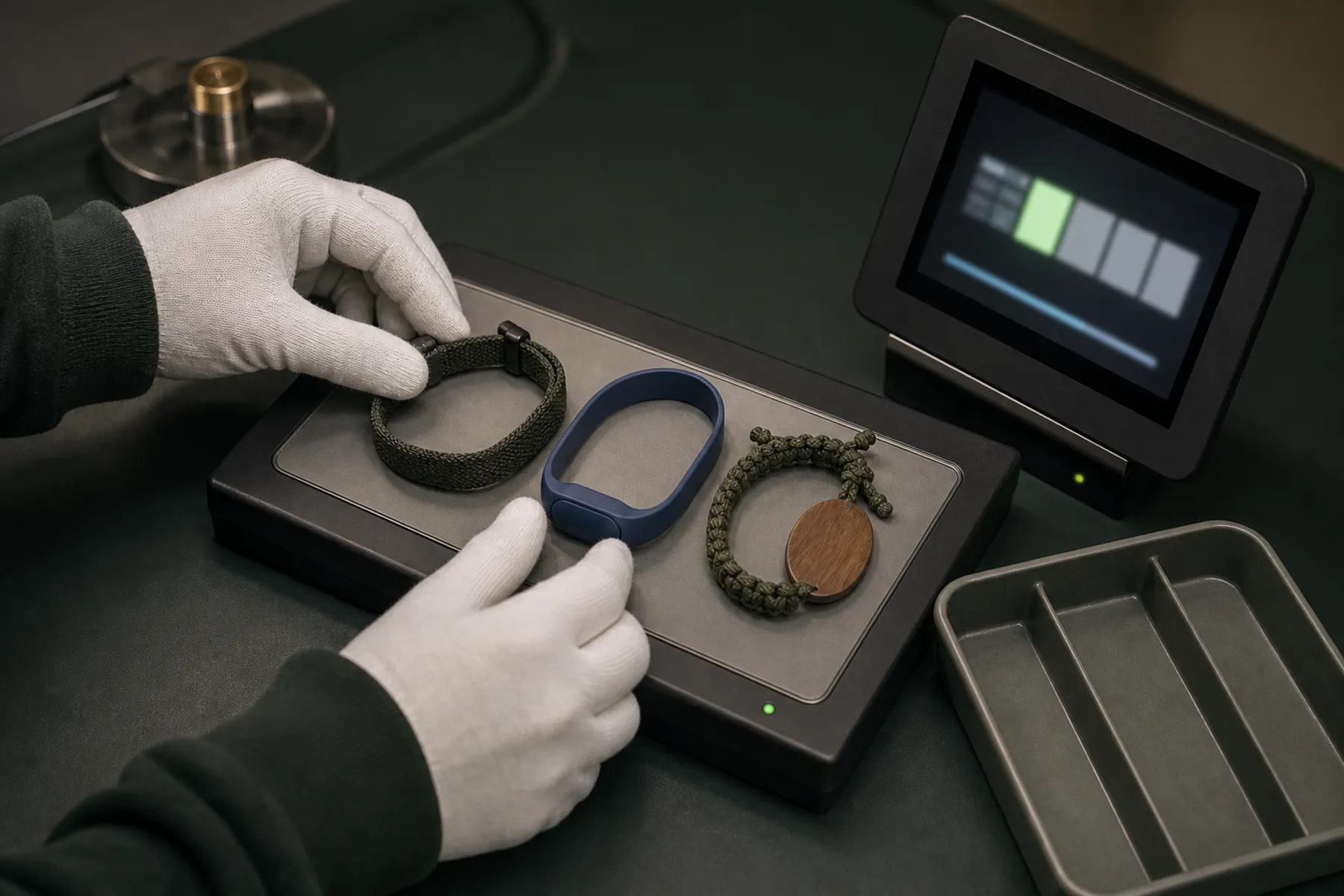
During a pilot, run the ordinary journey and then force the states that create queues: a band issued to the wrong guest type, a closed folio, a locker already assigned, a room move, a lost band and a late departure. Record which system rejects the request and which role can correct it. Success at the reader is only half the test; recovery time is the other half.
Also test presentation with the actual wearable format. A compact wristband has a different antenna shape and guest motion from a card. Use production-realistic samples at the property’s readers and confirm each required use before manufacture. The sample approval walkthrough provides a practical record for that decision.
“One band carries these named permissions, these teams can restore them, and this is the fallback when one connected platform is unavailable.” If the property cannot complete that sentence, the one-band plan is not ready.
Specify the physical format after the workflow is stable
Once the credential count is settled, choose the carrier by wear period, water exposure, guest mix and reissue method. A multi-day resident band may favour an adjustable or closed-loop silicone construction; a day visitor may need a one-time closure; a premium spa programme may choose a woven or natural-material carrier. The wristband catalogue shows these constructions as separate models.
Keep the approved sample, credential input, artwork revision and packing split attached to the workflow map. That prevents a later reorder from preserving the appearance while changing the closure or module that made the operating plan work.
Compatibility is confirmed against the property’s lock system, credential technology and encoding requirements before production. We do not claim universal compatibility.
What to send with an enquiry
Include the installed system model, an existing credential sample where possible, quantity, expected wear period, guest types, controlled zones and artwork direction. For material-led options, state the evidence or production documentation your procurement team expects.
FSC-certified material options available with supporting production documentation.
No named hotel or customer project is used as proof. The reasoning behind that stance is set out on the about page.