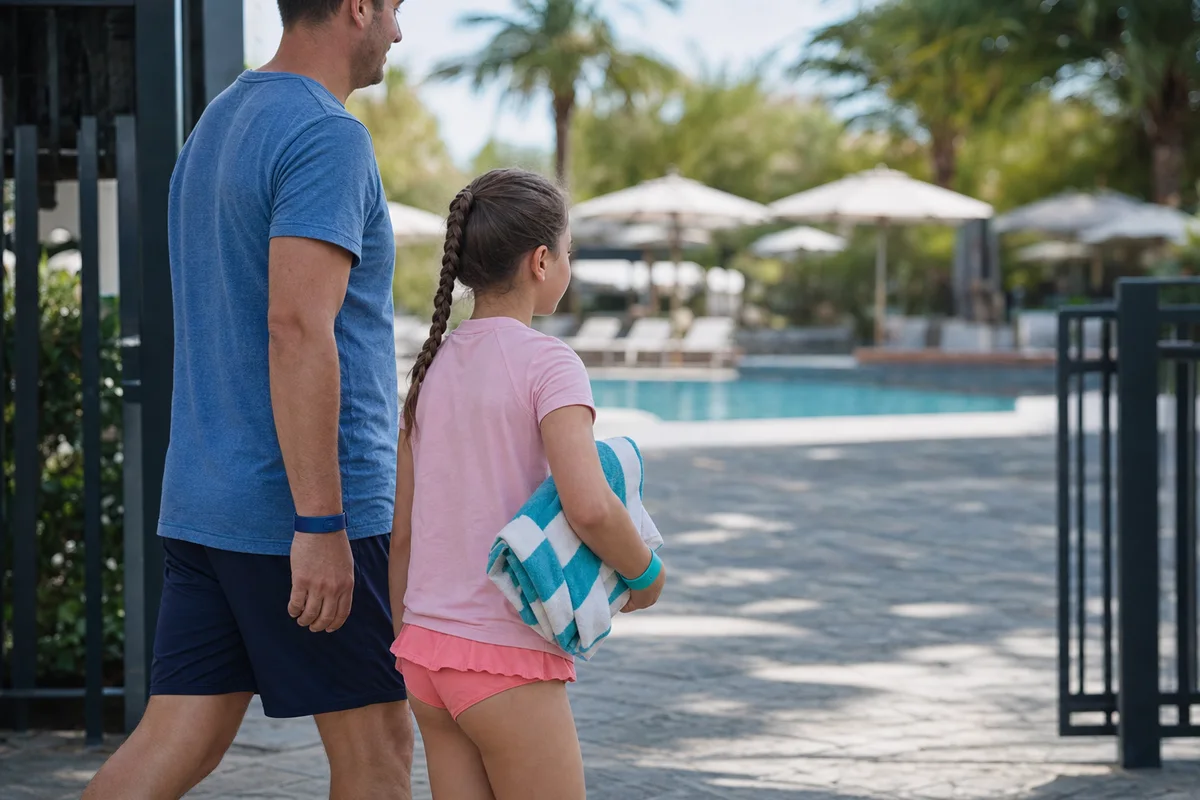
A family wristband programme needs more than a bright child colour. Size range, adult supervision, permission logic and reissue verification should be designed together so the smaller band does not become a smaller version of an adult workflow.
Define the family roles before choosing colours
List the resident adult, supervised child, independent older child and day visitor as separate operating roles if the property treats them differently. Then state which zones and services belong to each role. A colour can help staff recognise the role, but the system record remains the control; visual appearance should never be the only permission check.
The family link should live in the property’s guest record or access workflow, not as readable personal data on the band. Avoid printing a child’s full name, room number or other identifying detail on the outer surface. If staff need a visual cue, use a controlled colour or symbol whose meaning is understood internally and disclosed appropriately to the family.

Specify a real child size, not an adult strap tightened further
A child-sized adjustable band needs a shorter usable circumference, proportionate tail length and a module that does not dominate the wrist. Ask for the smallest and largest closed circumference of the finished construction, then test it on the intended age range under the property’s own safeguarding process.
Fit should prevent the band sliding over the hand while leaving normal circulation and movement. Staff need a simple fitting instruction and a clear escalation when the smallest approved position is still loose. Do not create a tighter unapproved hole or improvise with knots; issue another size or another approved construction.
What the fitting check should cover:
- The band sits above the wrist bone and cannot pass over the hand during ordinary movement
- The module does not press into the wrist when the hand bends
- The loose tail is retained and does not catch on activity equipment
- The child and supervising adult know where to request adjustment or replacement
Keep child permissions narrower than the visual design suggests
A child band may open a room, identify a meal plan or support activity check-in, but those permissions should be explicitly chosen. A shared family colour does not mean shared spend authority, and a room-access decision does not automatically grant pool, club or locker permissions. Map each function separately just as you would for adult credentials.
Where a payment or charge function is considered, the property’s platform and guest policy determine whether it is available and what controls apply. Set the limit and approval path in that system. The wristband is the identifier presented to it, not the source of the account rule.
Design reissue around the supervising adult
A lost child band should be reported through a known location and verified against the family record before replacement. The previous identifier should be deactivated in every system where that is supported, then the new one enrolled with the intended permissions. The member of staff should not rebuild permissions from memory or from the band colour alone.
Plan the awkward cases in advance: the supervising adult is not present, the family changed rooms, a day visitor is leaving, or the original band is later found. The correct response depends on property policy, but the response should be written and rehearsed. Our credential planning guide shows how to assign ownership for exceptions.
Use child and family colours to help staff select and recognise stock. Keep actual access, charging and activity permissions in the controlled system record.
Pilot the family journey at the places where attention is divided
Test fitting at a busy arrival desk, entry at the pool with towels and bags, presentation at a room reader and replacement away from reception. Families rarely approach a reader with one empty hand and no distraction. The physical test should reflect that reality without asking a child to repeat unnecessary personal information in public.
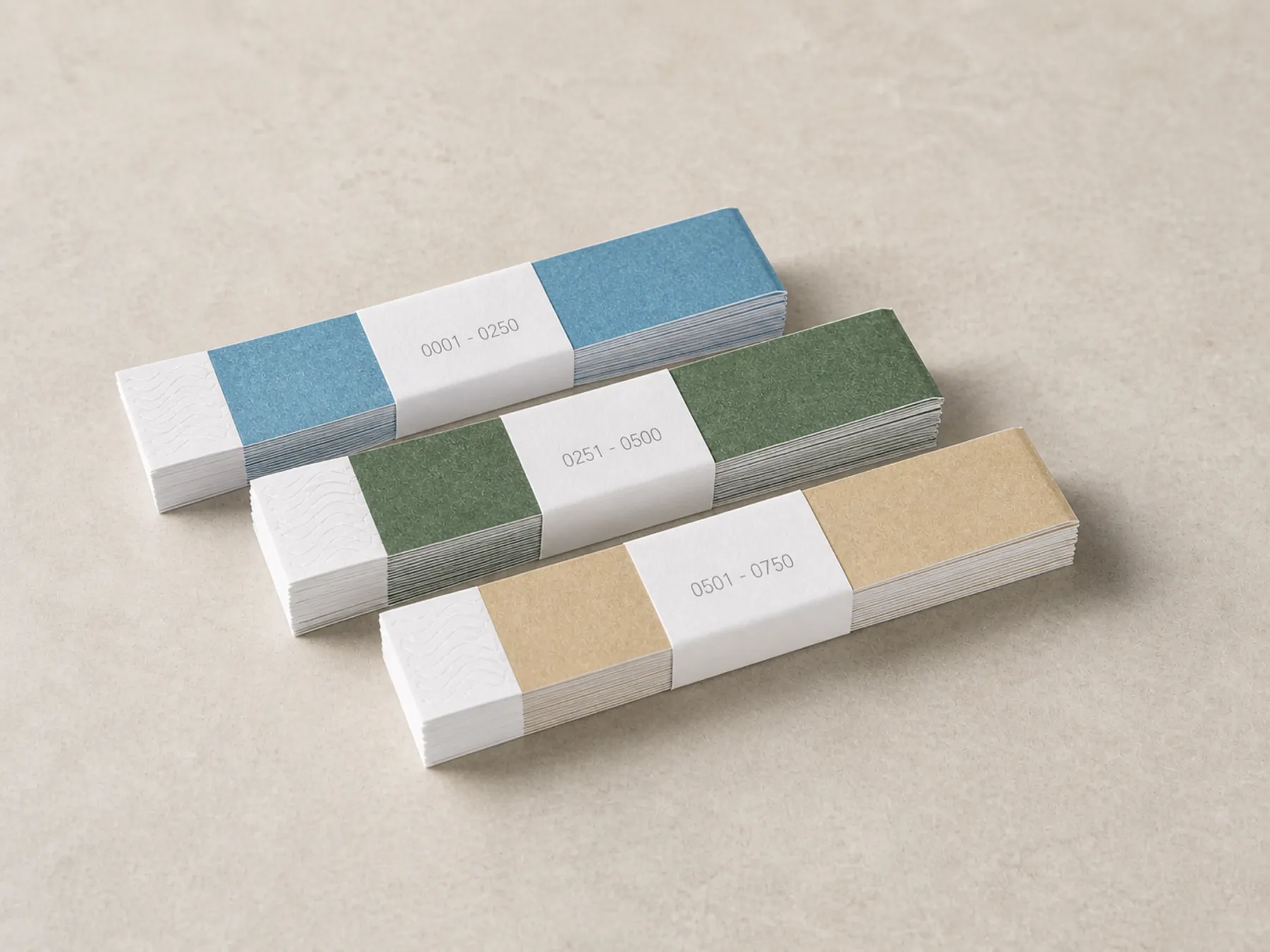
A realistic family pilot also checks stock presentation. Separate sizes and roles physically, label trays for staff and keep a retained approved sample of each construction. The all-inclusive resort use case connects these controls to pool, activity and guest-service operations.
Compatibility is confirmed against the property’s lock system, credential technology and encoding requirements before production. We do not claim universal compatibility.
What to send with an enquiry
Include the installed system model, an existing credential sample where possible, quantity, expected wear period, guest types, controlled zones and artwork direction. For material-led options, state the evidence or production documentation your procurement team expects.
FSC-certified material options available with supporting production documentation.
No named hotel or customer project is used as proof. The reasoning behind that stance is set out on the about page.