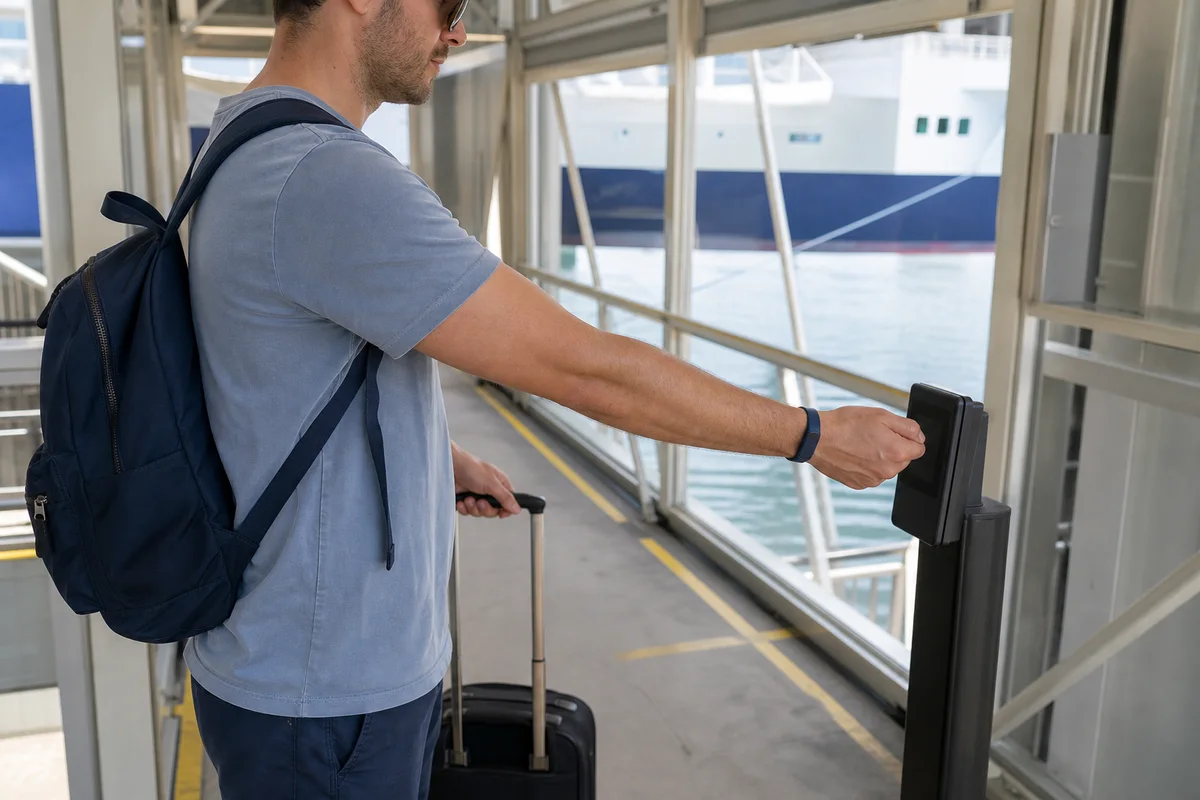
Cruise wristband planning is won or lost on turnaround day. Embarkation, cabin readiness, gangway presentation, onboard services and reissue must share a clear credential state even when different teams and systems own each step.
Map the credential state across turnaround day
A passenger can arrive before a cabin is ready, leave the vessel during a port call and return after several onboard permissions have changed. Write the states in sequence: booked, checked in, boarded, cabin enabled, ashore, reboarded and voyage closed. For each state, identify which system decides and which credential action staff perform.
The wristband can present one identifier throughout that journey only if the connected platforms are configured to recognise it for their specific functions. Cabin entry, gangway processing and onboard charging remain separate decisions. The wearable does not combine them automatically, and a successful cabin read does not prove the gangway workflow.
- Terminal issue
- Identity has been checked under the operator’s process; correct voyage and passenger record selected.
- Gangway
- Boarding status is evaluated by the authorised platform; staff can resolve a rejected presentation.
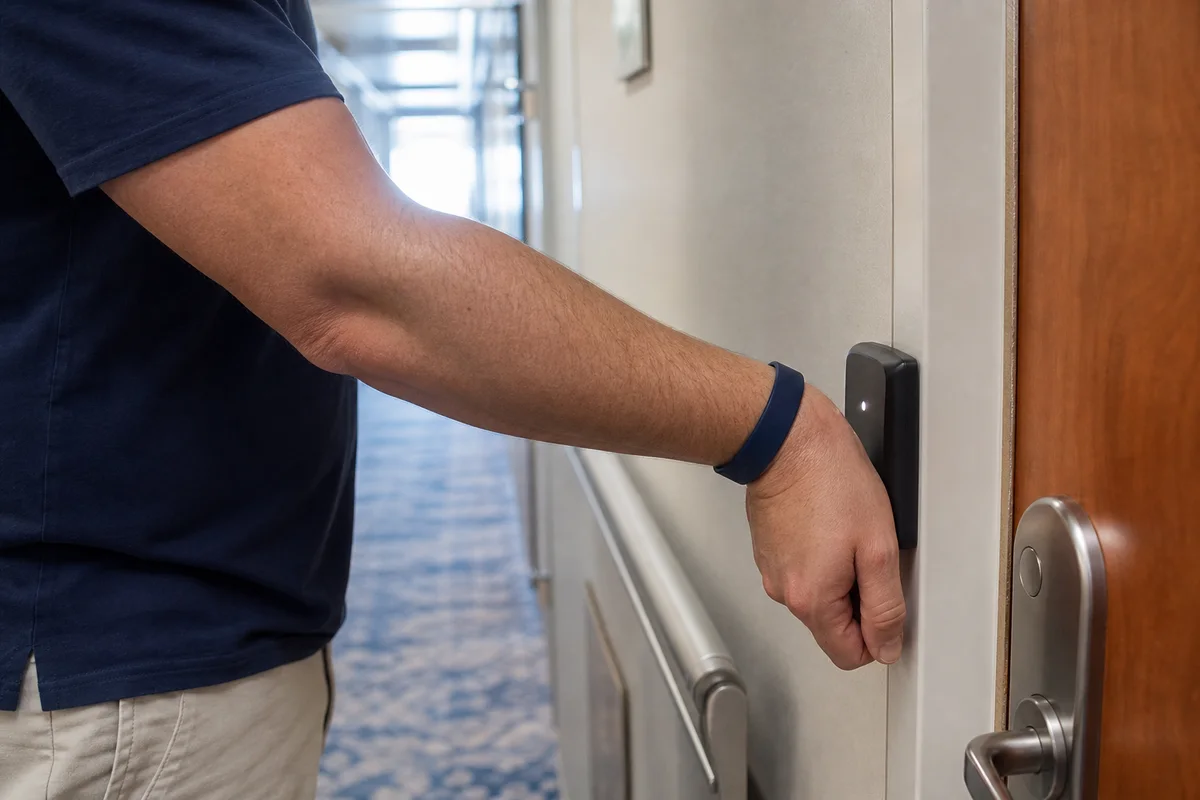
- Cabin
- Credential is enrolled for the assigned cabin only when the cabin-access workflow permits.
- Onboard services
- Each service uses the identifier under its own permissions and exception rules.
- Voyage close
- Credential permissions expire or are revoked through the defined systems.
Design terminal issue for speed without losing control
Pre-packed bands can shorten handling only when the pack remains tied to the correct record and voyage. On-demand issue can reduce pre-assignment risk but adds enrollment and fitting at the desk. Compare both with the actual terminal layout, network dependency, stock control and exception queue rather than a perfect demonstration lane.
Use visible size and role cues that staff can select quickly, while keeping personal and cabin information out of public artwork. Hold replacement stock in a controlled terminal location and define who can move it aboard. Turnaround pressure is exactly when untracked loose stock creates later reconciliation problems.
Keep cabin and gangway failure boundaries explicit
A band that fails at a cabin door creates a hospitality and access problem. A band rejected at a gangway invokes a different safety and identity process. The frontline response must not treat them as the same error merely because the physical object is the same. Each location needs its own escalation owner and fallback.
Test the finished band at representative cabin readers and at the gangway equipment used in the intended operating flow. Marine construction, metal surroundings and presentation angle can affect margin. Confirm the exact credential type and installation before production; never infer cross-vessel compatibility from a generic technology description.
Plan reissue for a moving operation
A damaged band may be reported at the terminal, guest services, the pool deck or during a port call. Decide which locations can verify the passenger, deactivate the previous identifier where supported and enroll a replacement. A desk that can hand over stock but cannot update all required systems is not a complete reissue point.
Record whether the old band was recovered, which permissions were restored and whether any service needs a separate update. If connectivity is limited, define the approved offline or delayed-synchronisation response with the system owner; do not invent an informal bypass at the reader.
Turnaround and reissue controls to rehearse:
- Passenger linked to the correct voyage, cabin and guest type before issue
- Replacement stock transferred from terminal to vessel under a count
- Previous credential state checked across cabin, gangway and onboard services
- Late cabin assignment and cabin move handled without creating parallel active credentials
- End-of-voyage permissions closed under a documented schedule
Choose a carrier for the whole voyage, not the terminal photo
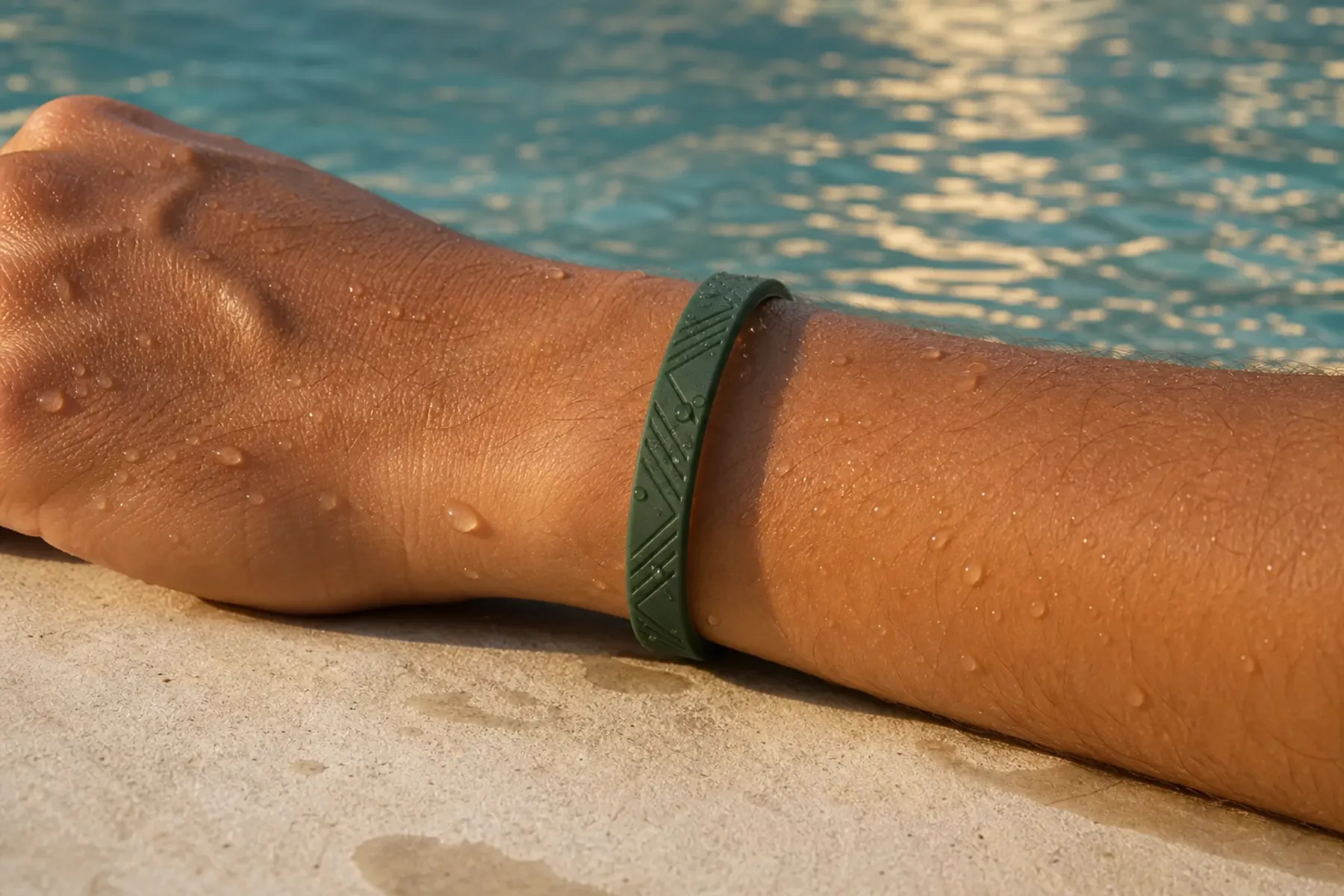
The final construction may face salt water, sunscreen, repeated showering, warm outdoor decks and continuous multi-day wear. Test comfort, closure, module seal and reader presentation after that cycling. A soft first impression at embarkation does not prove the band remains acceptable through the voyage.
The cruise operator use case and water-exposure test plan cover the physical environment. Combine them with the turnaround state map before approving the run.
Treat cabin, gangway and service permissions as separate controlled decisions even when the passenger presents the same wearable at all three.
Compatibility is confirmed against the property’s lock system, credential technology and encoding requirements before production. We do not claim universal compatibility.
What to send with an enquiry
Include the installed system model, an existing credential sample where possible, quantity, expected wear period, guest types, controlled zones and artwork direction. For material-led options, state the evidence or production documentation your procurement team expects.
FSC-certified material options available with supporting production documentation.
No named hotel or customer project is used as proof. The reasoning behind that stance is set out on the about page.