Bamboo is not timber, and it matters
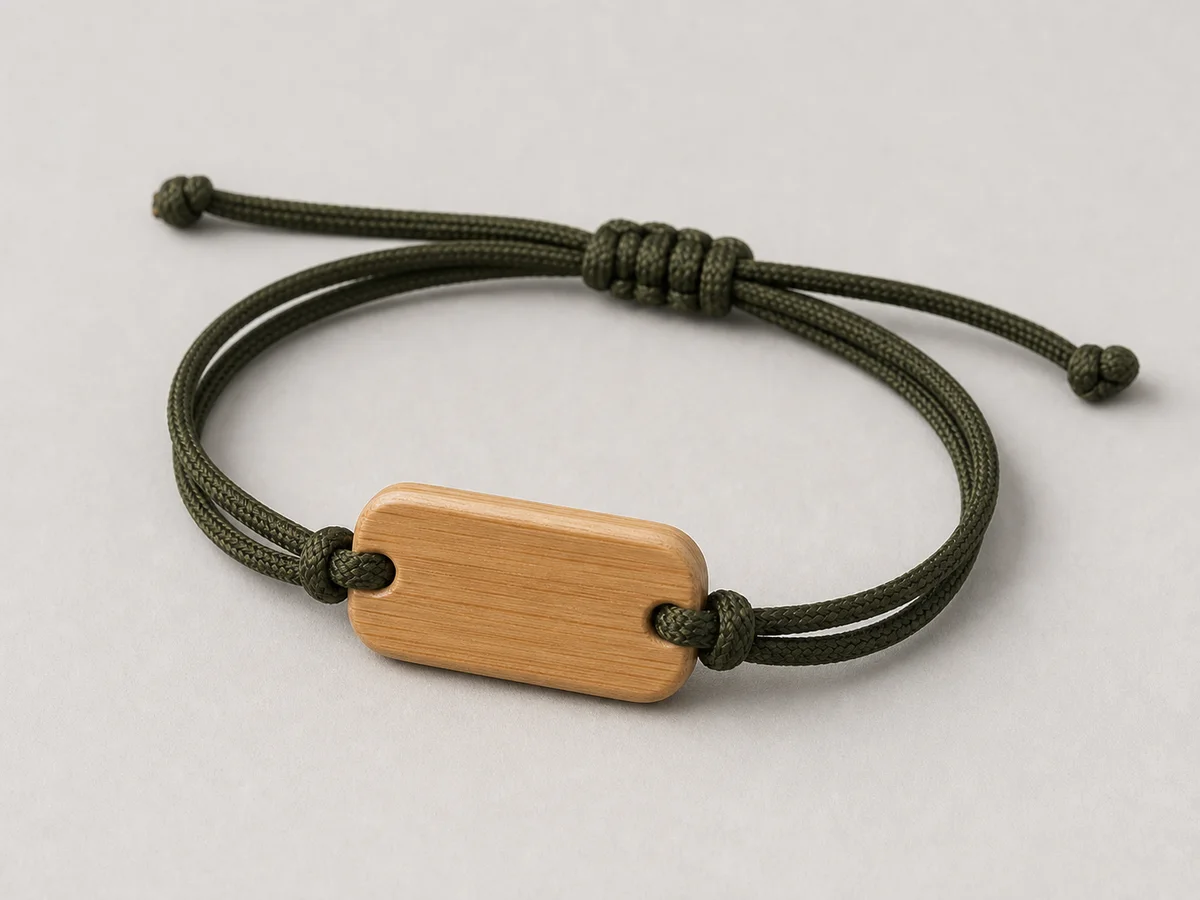
Bamboo is a grass. It grows fast, it is dense and hard for its weight, and its structure runs in long straight fibres with no cross-grain. That gives a face that engraves crisply and resists denting better than a soft timber of the same thickness — and it also means it splits along its length if it is stressed across the fibre, which is why the face is dimensioned with a margin around the module rather than trimmed to the smallest possible outline.
The colour is not a stain. Bamboo darkens through heat treatment, so a darker face is a more heat-treated one, which is slightly harder and slightly more brittle. We choose the tone with that trade in mind rather than treating it as a purely visual decision.
Sealing is the whole moisture story
A sealed bamboo face tolerates rain, splashes and damp hands. An unsealed edge takes up water, swells, and dries back with a raised grain that no longer feels finished. Every failure of a wood-faced band we have seen starts at an edge, not at a surface.
So the specification is about edges: how the face is sealed, whether the engraved recesses are sealed after engraving, and whether the aperture around the module is closed. Those are the questions to put on a sample before approval, and the answers matter far more than the species does.
This construction is specified for dry and splash conditions. Where guests are in a pool for hours a day, a moulded band is the correct product and a wood face will disappoint regardless of finish.
Engraving versus printing
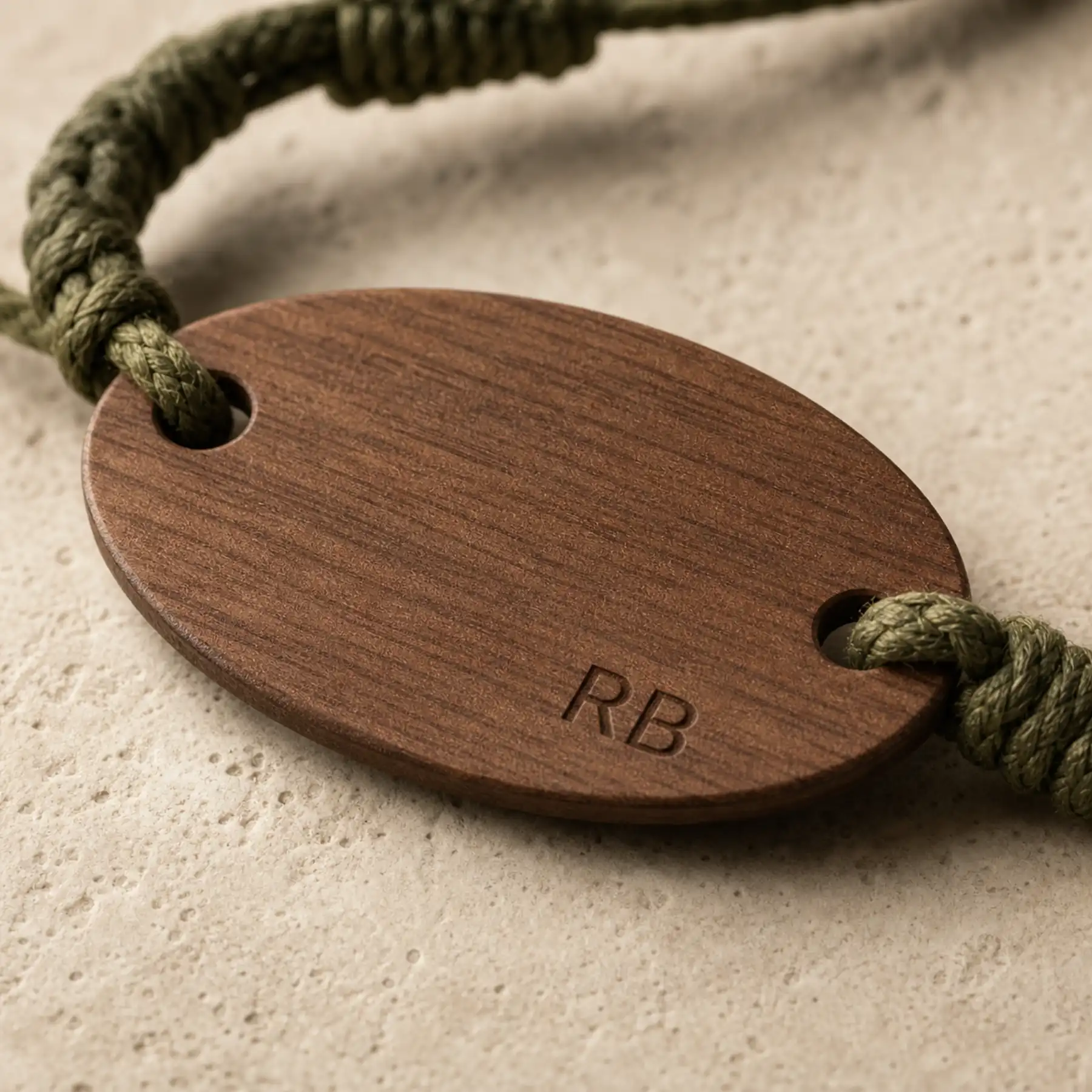
Laser engraving removes material and reveals a darker layer, so the mark is the face rather than a coating on it. It cannot rub off, it survives cleaning, and on bamboo it holds fine detail well because the fibre is even.
Printing onto bamboo is possible and we mostly advise against it. A printed layer on a natural surface sits on top of a texture, wears unevenly and undermines the reason the property chose a natural face in the first place. Where a brand colour is essential, a colour-filled engraving is the better route.
The cord, the slider and how it is worn
A woven cord with a slider adjusts continuously, has no clip to break and can be tightened by the guest. It also frays if it is cut without sealing, so cord ends are finished as part of the construction rather than trimmed at packing.
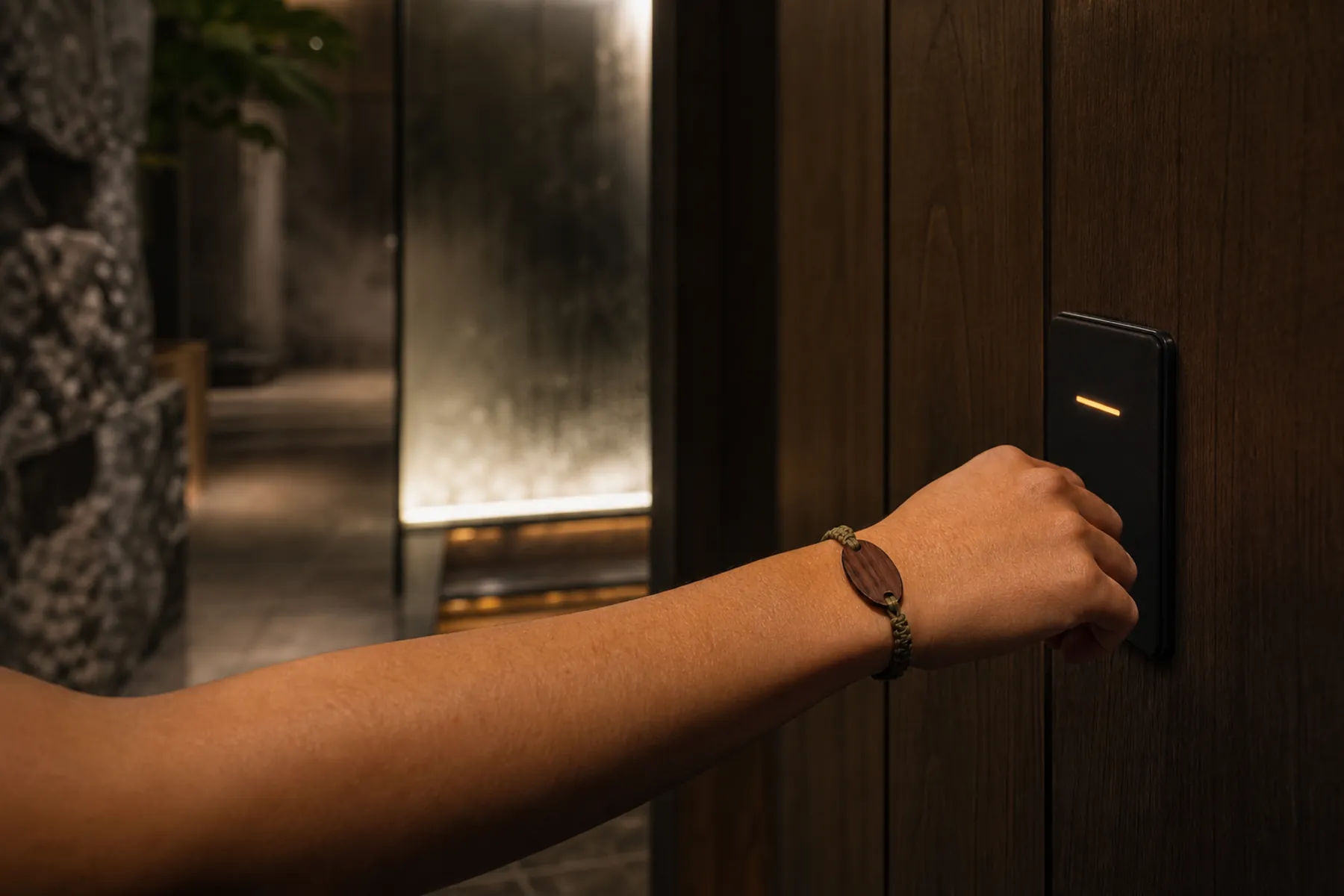
Cord bands hang differently from moulded ones: the face sits where gravity puts it, which means it can rotate to the underside of the wrist. For a decorative object that is fine. For a credential that a guest presents to a reader ten times a day, it is worth telling guests once at check-in which side the face should be on.
Read behaviour behind a wood face
Wood is not a barrier to a high-frequency credential in the thicknesses used here, so the face costs little in performance. What can cost performance is the module being recessed further than necessary in pursuit of a flush look — depth is the variable, not the material.
We confirm the technology and encoding against the installed system, then present a production-realistic sample at the property’s own readers. On a wood-faced band it is worth including any reader mounted on metal, since that combination is where a marginal working distance shows up first.
When this is the wrong model
It is wrong for water parks, children’s programmes and anything issued at high volume — the cord takes longer to fit, the face is not built for abuse, and the price of the construction is wasted on a day admission.
It is also wrong where a property needs a large legible mark at a distance. An engraved bamboo face is quiet by nature, which is the point of it and a limitation if staff need to read a tier across a terrace.