A hard, closed surface — and what that buys in a spa
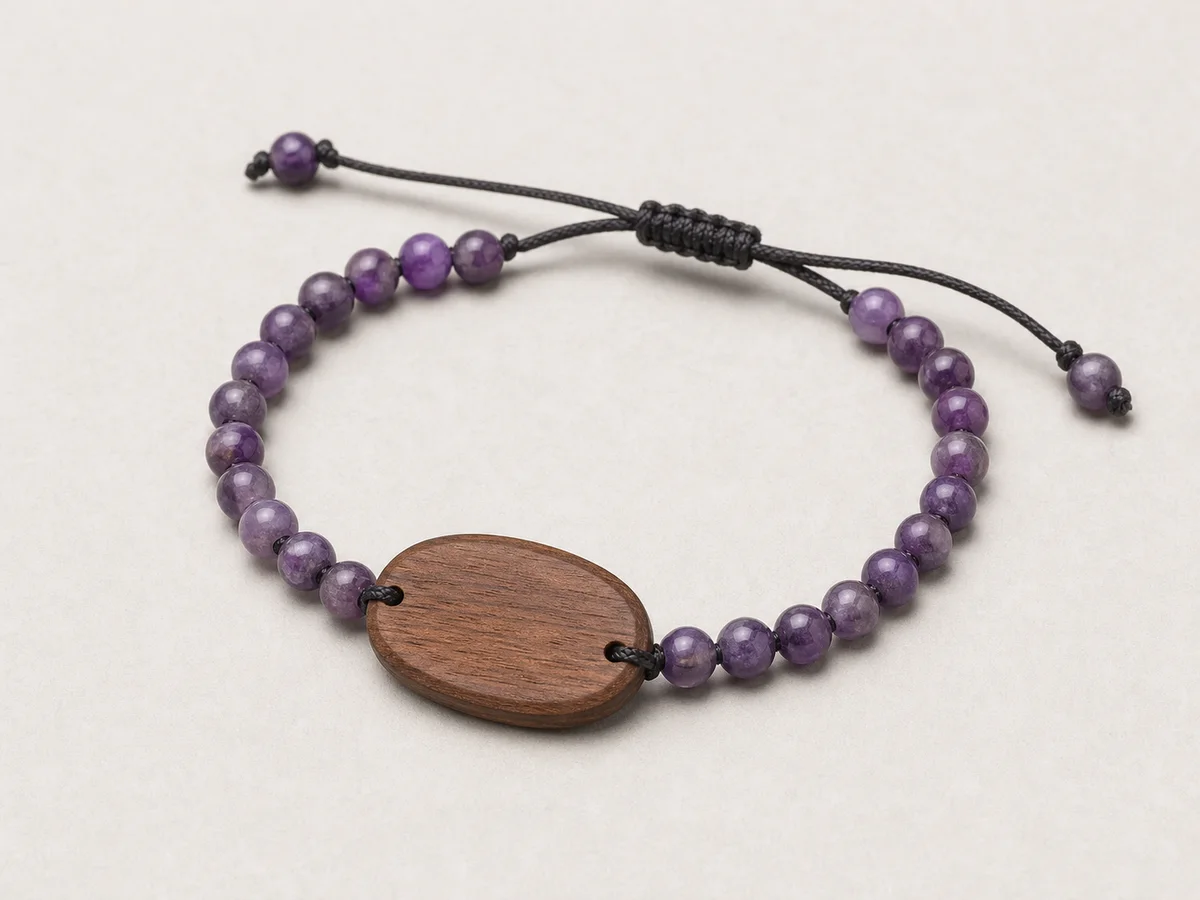
Amethyst is quartz, which means a hard, closed, non-porous surface. Massage oils, balms, chlorine and cleaning products sit on it rather than entering it, and they wipe off completely. In a treatment environment that is the single most useful property a stone can have.
It also means the beads are effectively unaffected by the wear a credential receives. Knocks that would chip a softer stone leave a hard quartz bead unmarked, so a band that fails does so at the cord, which is inspectable and replaceable in a way a chipped stone is not.
The light sensitivity nobody mentions until it happens
Amethyst’s colour is not stable in strong light. Sustained direct sun pales it, gradually and irreversibly, and the effect is uneven because a band rotates. A property issuing amethyst bands to guests spending days on a beach will see a visibly different band at the end of a season from the one it approved.
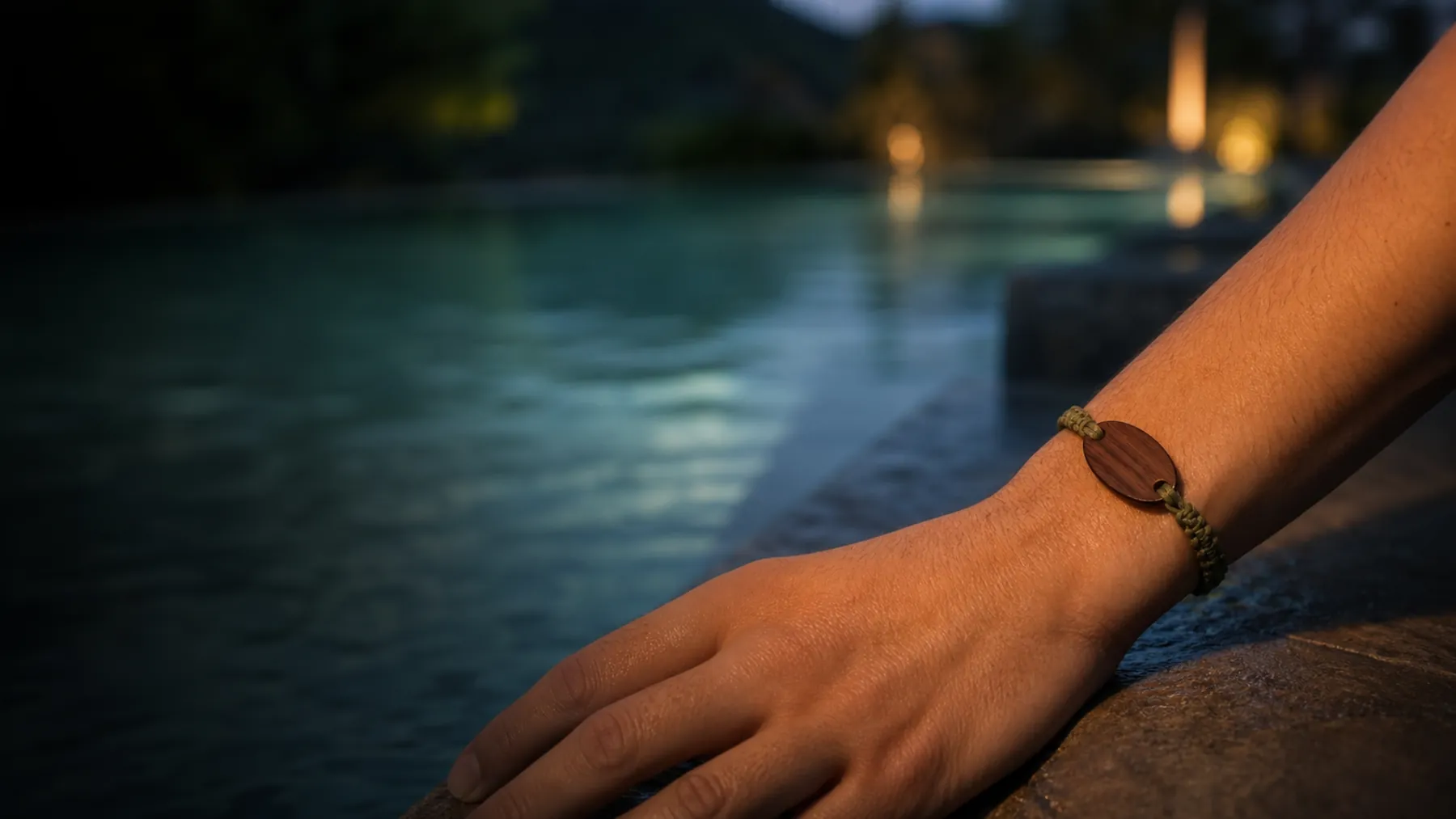
That is not a fault to design around; it is a placement decision. Issue amethyst where the band lives indoors — spa, member floor, evening programmes — and choose a different stone for a pool or beach population. We would rather set that boundary at specification than explain it later.
Amethyst is specified for indoor and treatment environments because of light sensitivity, not durability. For sun-exposed programmes, tiger-eye holds its colour far better and shares the same hardness.
Natural variation, and approving a range
Stone varies. Tone runs from pale to deep within any batch, and a bead string will contain that variation whether or not it was planned. Properties expecting 500 matched bands should specify a narrow tone band and accept a higher rejection rate, or accept the variation and specify a range.
We approve a light and a deep sample as the acceptable band and hold both as the reorder reference. Judging a delivery against a single sample is what produces disputes; judging it against an approved range does not.
Sizing a strung band
There is no adjustment. Fit comes from the strung length, so the desk holds sizes and staff choose one — and a wrong choice is a band that either will not go on or slides off. A simple gauge removes most of that.
Bead diameter interacts with fit: larger beads mean fewer beads per length and therefore coarser steps between sizes. A mid-diameter bead across three lengths covers most adult wrists, which is where most properties settle after handling samples.
Cleaning between guests
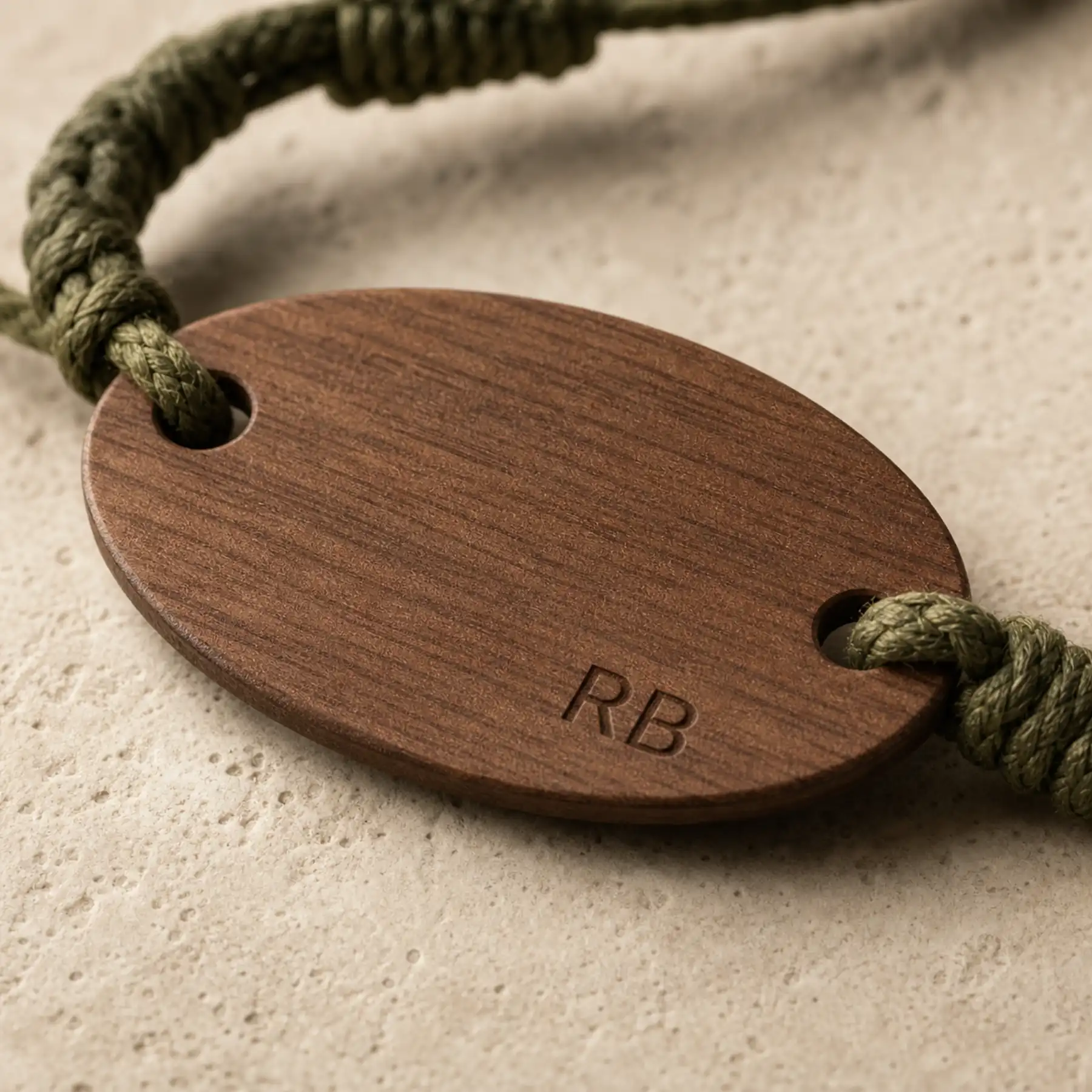
Because the stone is closed and the faceplate is sealed, a recovered band cleans properly rather than superficially, which is what makes stone viable for a reissued credential where cork or cotton would not be.
The cord is the part that limits reuse. It relaxes, and it takes up the oils the stone does not, so a reuse cycle needs a cord inspection step and a defined retirement point. A band with a slack cord goes out of circulation regardless of how good the beads look.
When this is the wrong model
It is wrong for sun-exposed programmes, which is the material’s one clear limit. It is wrong for children and for high-volume day admissions, where a strung band is slow to size and expensive to lose.
It is also wrong where the credential is presented at readers constantly, since a strung band rotates and the faceplate will not stay on the top of the wrist.