The cord is the product’s life
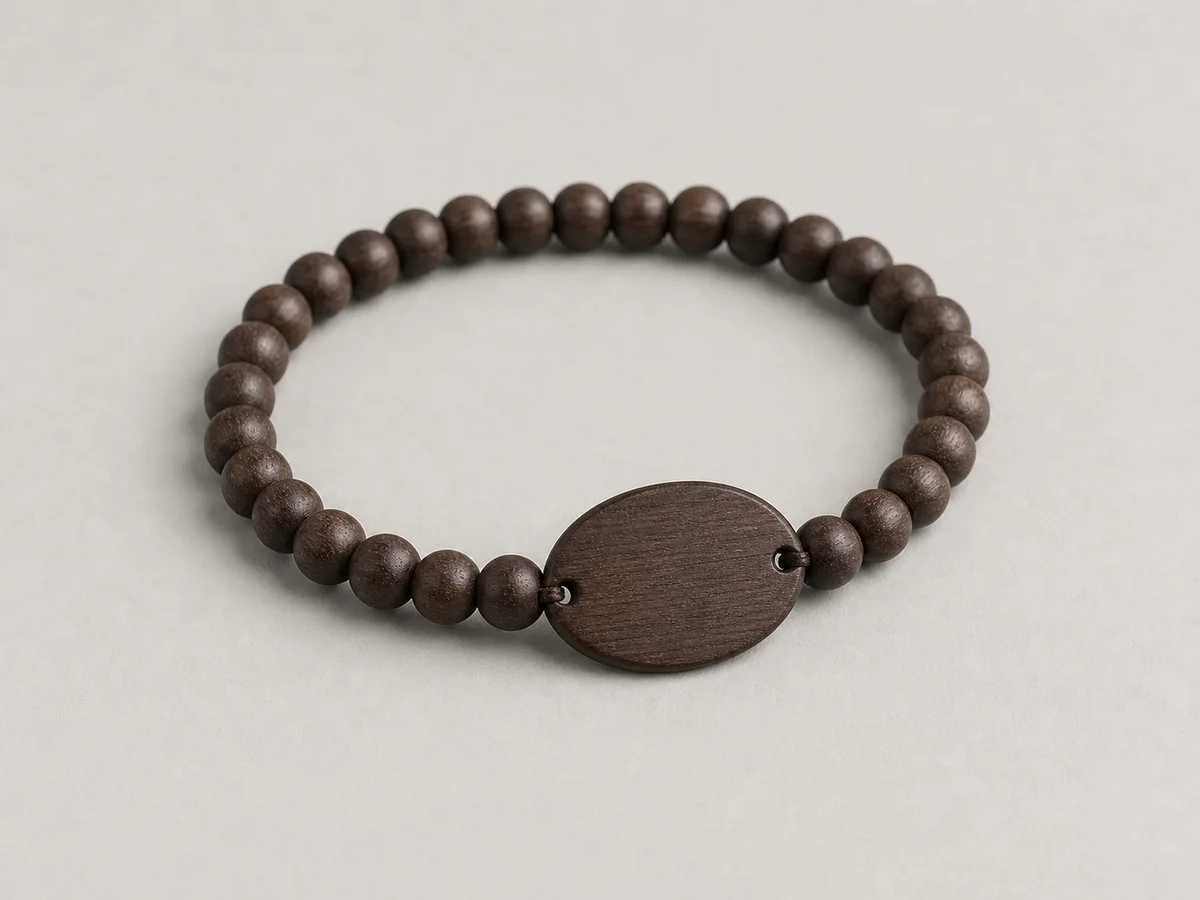
Wood beads are effectively permanent — they knock, they mark, they keep working. The elastic cord they are strung on is not. It relaxes with wear, it degrades with oils and sunscreen, and when it eventually goes it goes at once, scattering beads.
So the specification is a cord specification. We use a heavier elastic than the bead bore strictly requires, and we knot and seat the knot inside a bead rather than leaving it exposed, because an exposed knot is both visible and the first thing to abrade.
Bead size is a fit decision
Large beads look substantial and reduce the number of beads in a length, which makes the fit coarser — each bead is a bigger step, so a strung length lands further from an individual wrist. Smaller beads fit more precisely and read as more delicate.
Because the band is sized rather than adjusted, that granularity is an operating question. Three strung lengths with a medium bead is the combination that covers most adult wrists without holding a wide stock, and it is where most properties land after seeing samples.
Where the faceplate sits and how it presents
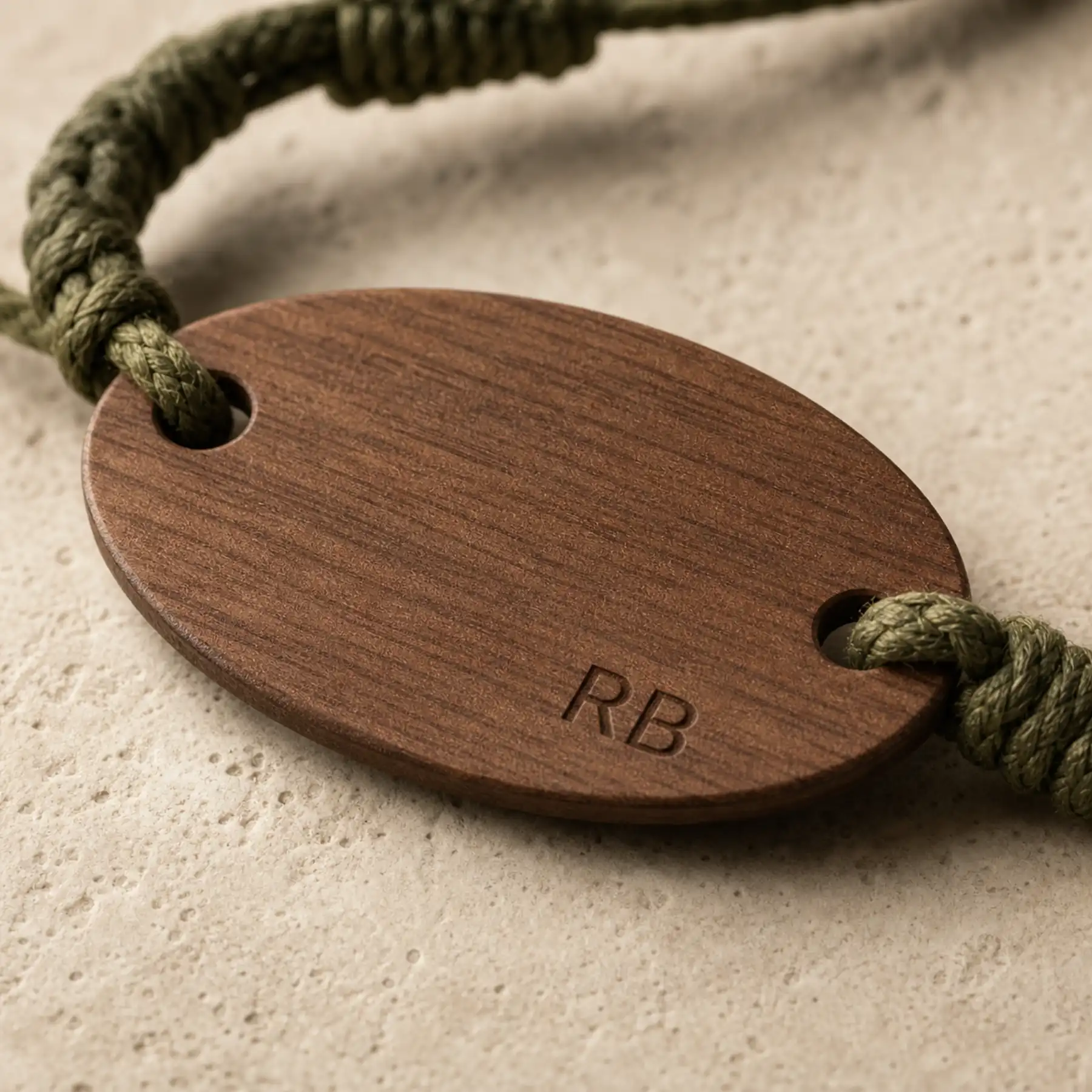
The faceplate is part of the string rather than an addition to it, so the band still reads as a bracelet. It also means the face rotates freely, and a guest presenting the band to a reader may be presenting beads instead.
The practical mitigation is a faceplate large enough to be found by touch, and a word at check-in. Where a property expects heavy daily reader use, a construction where the module stays on the top of the wrist is the better answer — this model suits a credential presented a few times an evening, not thirty times a day.
A free-rotating bead band suits access presented occasionally — a lounge door, a member floor, a restaurant. For a credential used constantly at doors, lifts and lockers, specify a construction that holds its position on the wrist.
Dry zone, and why
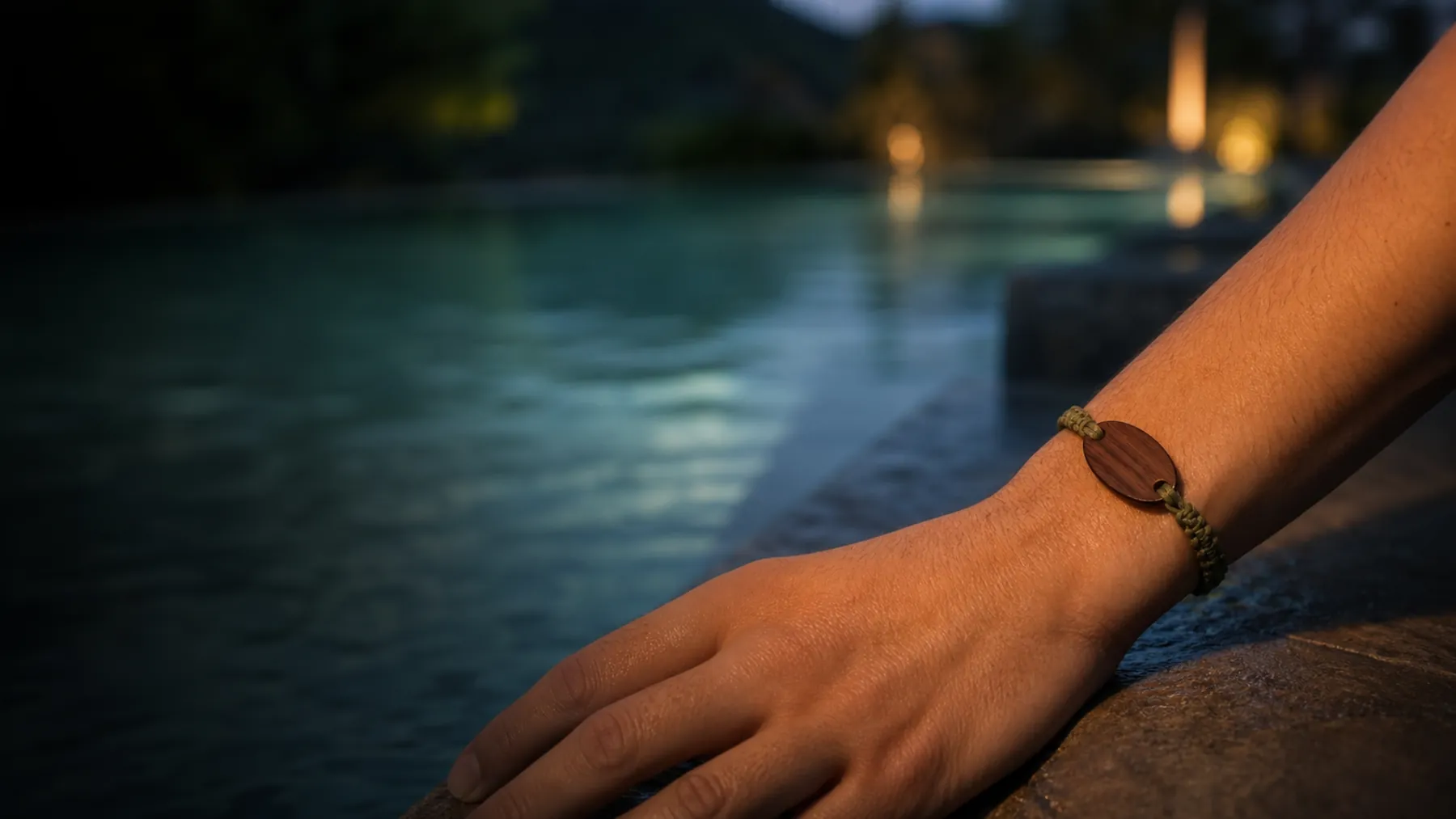
The beads tolerate humidity and the faceplate is sealed, but the cord and the string channel do not tolerate repeated soaking — water sits in the bores, dries slowly, and works on the elastic from inside where nothing can be inspected.
This is a construction for evening and indoor use. Properties wanting a bead aesthetic near water should look at stone beads on a heavier cord, which tolerates wet-dry cycling better, while accepting that a stone band is a heavier object.
The souvenir effect, and what to do about it
Guests keep these. That is a compliment and a stock consequence: a property issuing bead bands should plan on lower recovery than for any moulded band, and either accept the attrition or make surrender at checkout an explicit step.
Some properties choose to lean into it and let guests keep the band deliberately, which turns a credential into a parting gift — provided the credential inside it is disabled on departure, which is a system step rather than a product one and needs to be defined before the first order.
When this is the wrong model
It is wrong for pools, beaches and any wet programme; wrong for children; and wrong at a high-volume issue point, where sizing a strung band slows the line.
It is also wrong wherever the credential is used constantly at readers, because a free-rotating face makes that tiring for the guest.