
Separating the band from the credential
Every other model in this catalogue seals the credential in permanently, which is right for a guest band that is issued and recovered as one object. It is wrong for a population where the credential changes more often than the band does — a seasonal team, an excursion programme, a set of contractors on site for a month.
Separating them turns the band into stock and the credential into an issue item. The property buys bands once and manages credentials continuously, which is a materially cheaper operating model for anyone re-crediting the same people repeatedly.
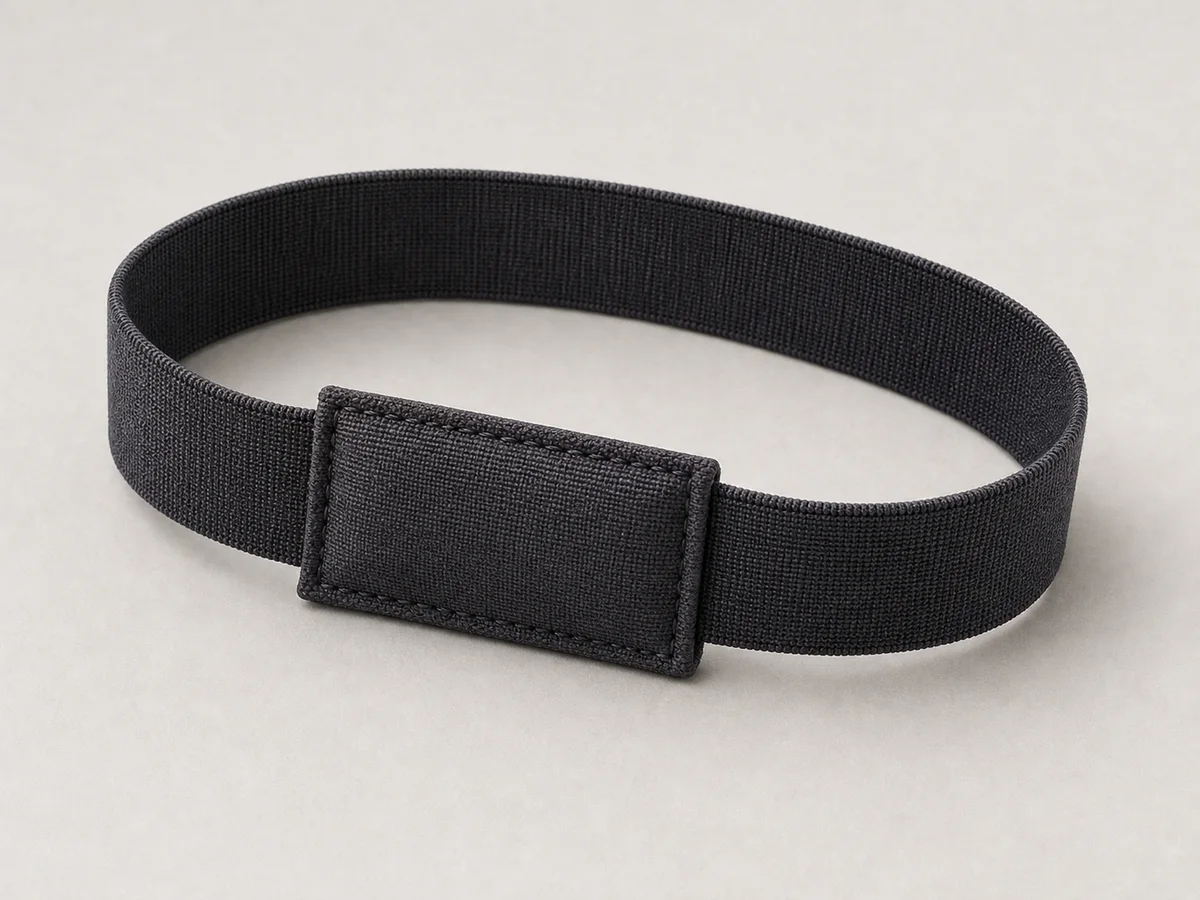
How the pouch holds the credential
The pouch is closed captive rather than being an open sleeve: the credential goes in through an opening that closes behind it, so normal movement, swimming and sleeves cannot work it out. It is designed to be opened deliberately by a member of staff, not by a wearer in a hurry.
That is also the honest limitation. A credential that can be removed by staff can be removed by anyone who understands the closure, so this model does not control transfer. Where transfer matters, the control has to sit in the system — disabling and enabling credentials — rather than in the band.
Why staff programmes suit it
Staff wear a credential every shift for months, which destroys printed lanyards and loses cards. A band that stays on the wrist through a shift in a kitchen, a housekeeping round or a pool deck solves the loss problem, and a replaceable credential solves the turnover problem: when someone leaves, the credential is withdrawn and the band is cleaned and reissued.
It also lets a property run one visual identity across roles while the access differs underneath. Colour or a printed strap can carry the department; the credential carries the actual permissions.
What a staff programme should define before ordering:
- Who is authorised to open a pouch and change a credential
- What happens to a band when the wearer leaves, and who records it
- How a lost credential is distinguished from a lost band in the records
- Whether contractors and seasonal staff use the same band stock or a distinct colour
Excursions, activities and short-cycle use
Activity programmes have the same shape as staff use on a shorter cycle: the same fifty bands go out with a different fifty people every morning. A replaceable credential means the property can re-credential a batch between sessions without touching the physical stock, and can retire a damaged band without retiring a working credential.
For water-based activities, the pouch is the part to test. It is sealed, but it is a seam, and a seam that spends hours submerged behaves differently from one that gets splashed. That belongs in the sample test rather than in an assumption.
Cleaning and reissue between wearers
A band that moves between people needs a cleaning step with a stated method, because this is a fabric-and-elastic construction rather than a wipe-clean moulded one. Properties that run this model well have a defined turnaround: credential out, band cleaned, band inspected, band back into stock.
Inspection is looking for two things — elastic that has lost its recovery, and a pouch closure that no longer holds firmly. Either takes the band out of circulation, and both are visible in seconds once staff know to look.
Order quantities should be planned separately: bands against the size of the wearing population plus attrition, credentials against the rate of turnover. Treating them as one number is the mistake that leaves a property with plenty of bands and no credentials.
When this is the wrong model
It is wrong as a guest room credential. Guests do not need a replaceable credential, and a pouch that can be opened is a weakness rather than a feature when the band is carrying room access for a stranger.
It is also wrong wherever the property wants the credential to be invisible. The pouch is a visible piece of function, and a premium guest programme is better served by a hidden-module fabric band.