Why a closure-free band changes the front desk
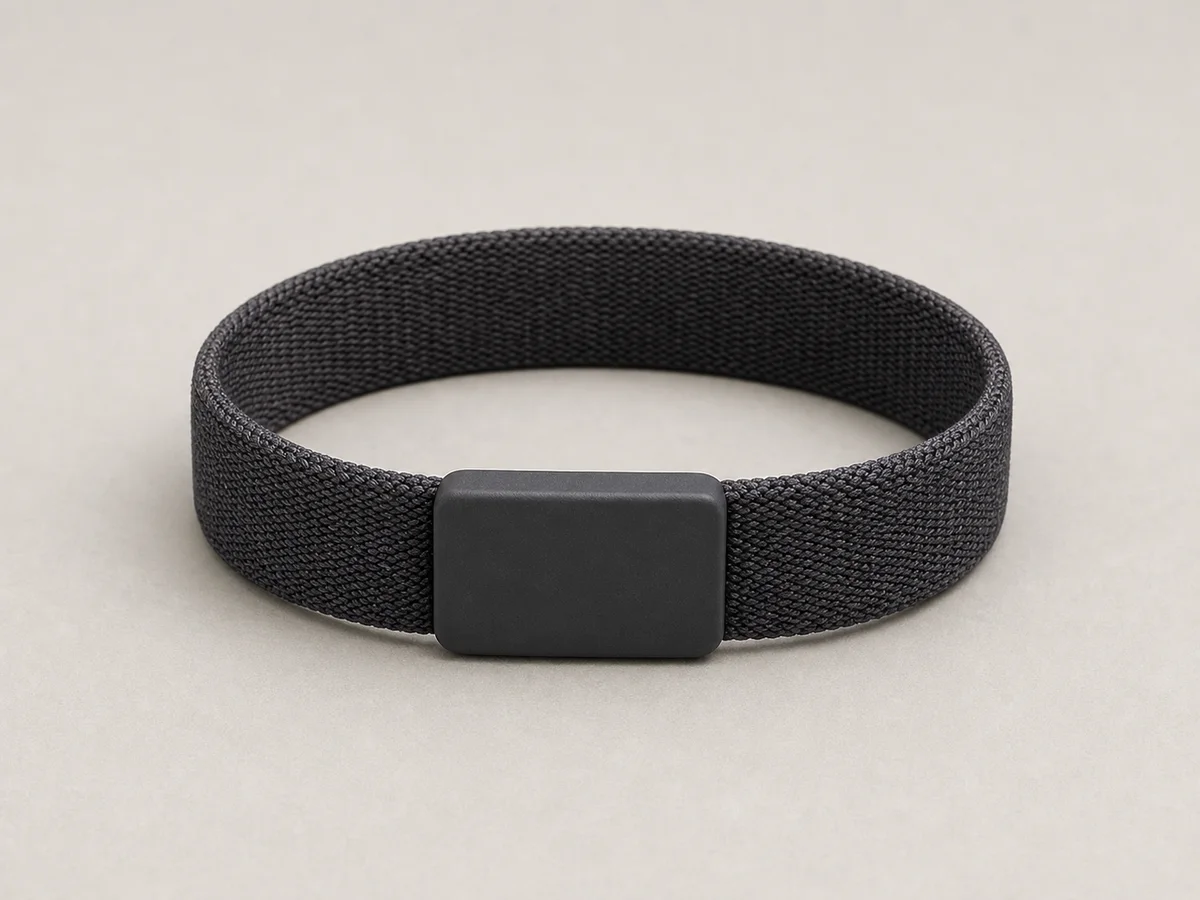
Fastening a band is a two-handed operation performed across a desk on someone else’s wrist. It takes seconds, it occasionally goes wrong, and at a property checking in three coachloads on a Saturday those seconds are the queue. A stretch loop removes the operation entirely: the guest takes it and puts it on, which also removes the small awkwardness of a member of staff handling a guest’s wrist.
The trade is that fit is decided before the guest arrives, in the stock mix, rather than at the moment of issue. That makes the size split a planning question — and getting it wrong is visible, because a guest handed a band that will not go over their hand has to be handed a different one in front of the queue.
The module is flat for a reason
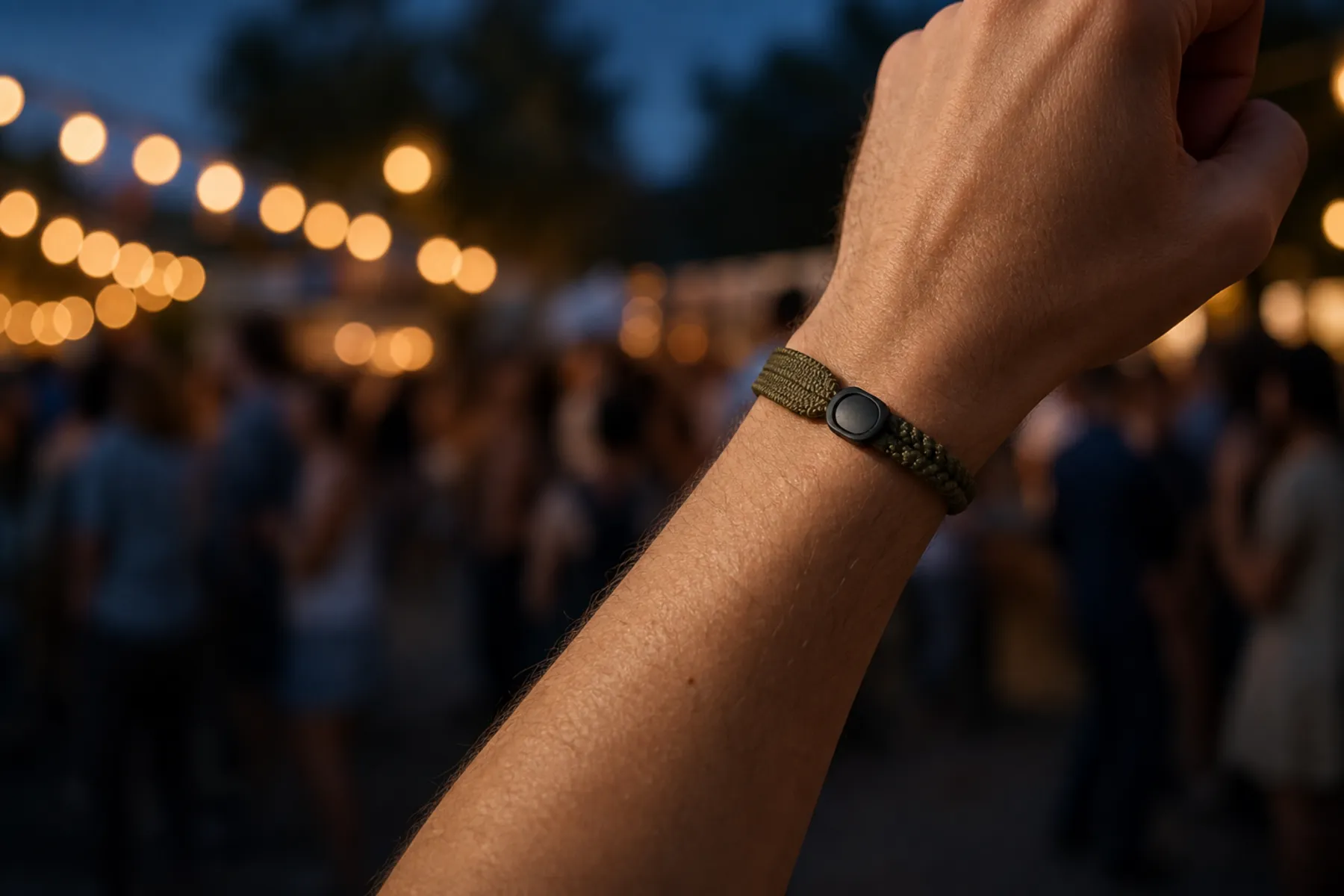
A card-format module lies along the wrist rather than standing proud of it. That is what lets the band be worn under a watch or a sleeve, and it is why guests keep it on at dinner when they would remove a moulded band with a raised face.
A flat module also gives a usefully large antenna area for its thickness, so read behaviour is generally more forgiving than an ultra-slim moulded band despite the lower profile. The module is sealed as a unit before it is assembled into the loop, so the electronics are not relying on the knit for protection.
How knitted elastic behaves over a week
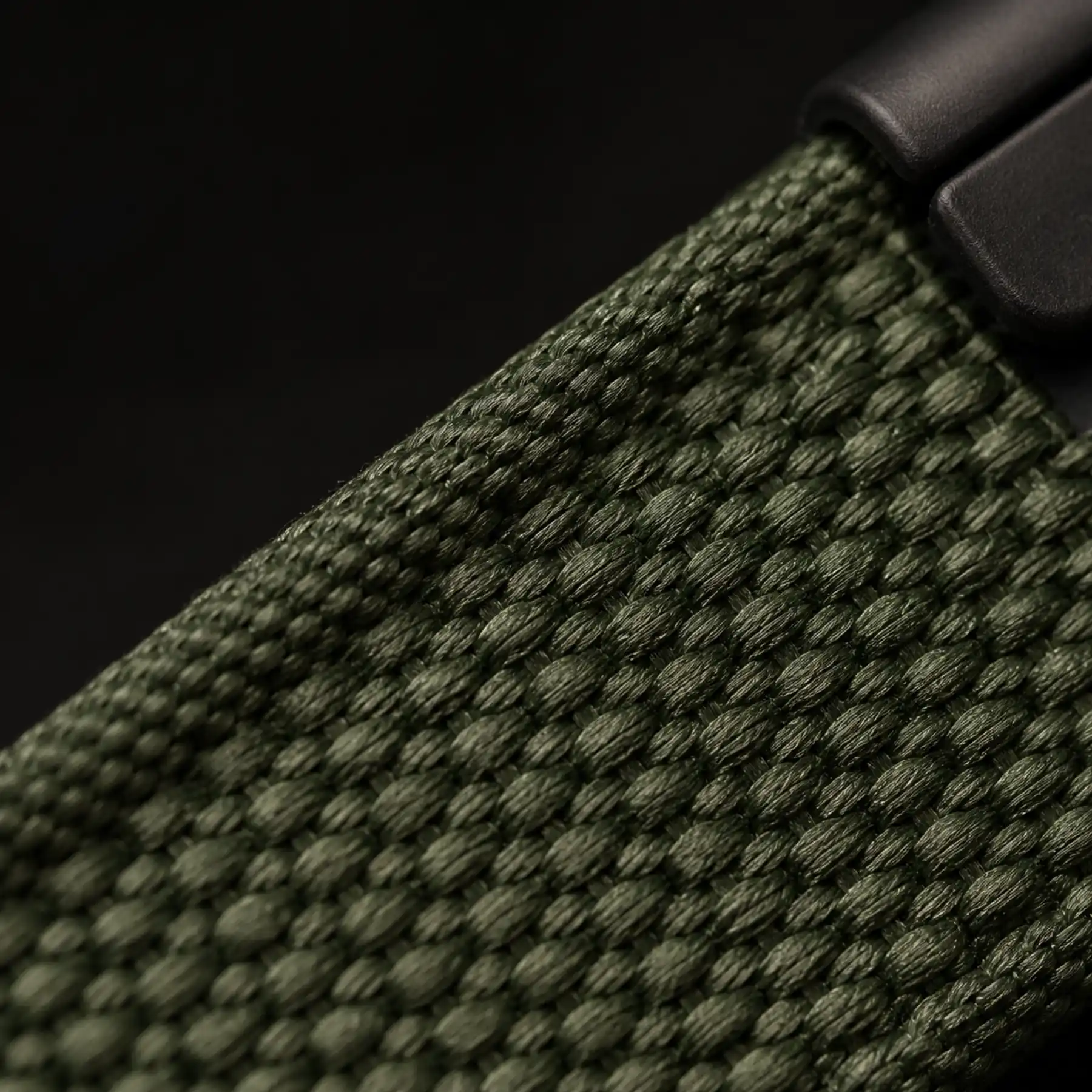
Elastic relaxes. A band that is snug on Monday is comfortable by Wednesday and loose by the following weekend, which is fine for a seven-night stay and is a real limitation for anything longer. Repeated wetting and drying accelerates it, so a property with heavy pool use should expect the relaxation to arrive sooner than a dry-climate one.
The knit also holds water, which is a comfort issue rather than a technical one — a wet band against skin for an afternoon is unpleasant in a way silicone is not. Where guests spend the day in and out of a pool, a moulded band is usually the better answer and this model is better suited to properties where swimming is one activity among several.
Sizing as a stock problem
Three sizes sounds simple and behaves like three separate products: three counts, three boxes, three ways to run out. The failure mode is running out of medium on a Friday and issuing larges that slip, which looks like a product problem and is a planning one.
We recommend weighting the order towards the middle size rather than splitting evenly, and holding a small quantity of an adjustable model as the exception band for guests who fall outside the range. That combination costs less than a fourth size and covers the outliers a size run cannot.
Minimum order is 500 pieces per artwork, with 14–21 days production after artwork approval. Sizes are produced from one artwork, but the split across small, medium and large is fixed when the run is scheduled and cannot be rebalanced afterwards.
Decoration around a moving loop
Because there is no closure, the artwork runs the whole circumference and there is no “front”. That suits a repeated mark or a woven pattern far better than a single logo, which will spend most of its life rotated to the underside of the wrist.
Jacquard weaving puts the mark in the fabric structure, so it cannot rub off; dye printing gives finer detail but sits on the surface and softens with wear. For a week-long stay either is fine. For anything worn longer, the woven route is the one that still looks deliberate at the end.
When this is the wrong model
It is wrong where the credential must not be transferable, because a band that slips over a hand slips onto a different hand just as easily. Paid-admission zones need a one-way closure instead.
It is wrong for very long stays, where elastic relaxation catches up with it, and it is wrong for water-park-style continuous immersion, where a knit that holds water is simply less pleasant than a moulded band.