Inverting the usual relationship
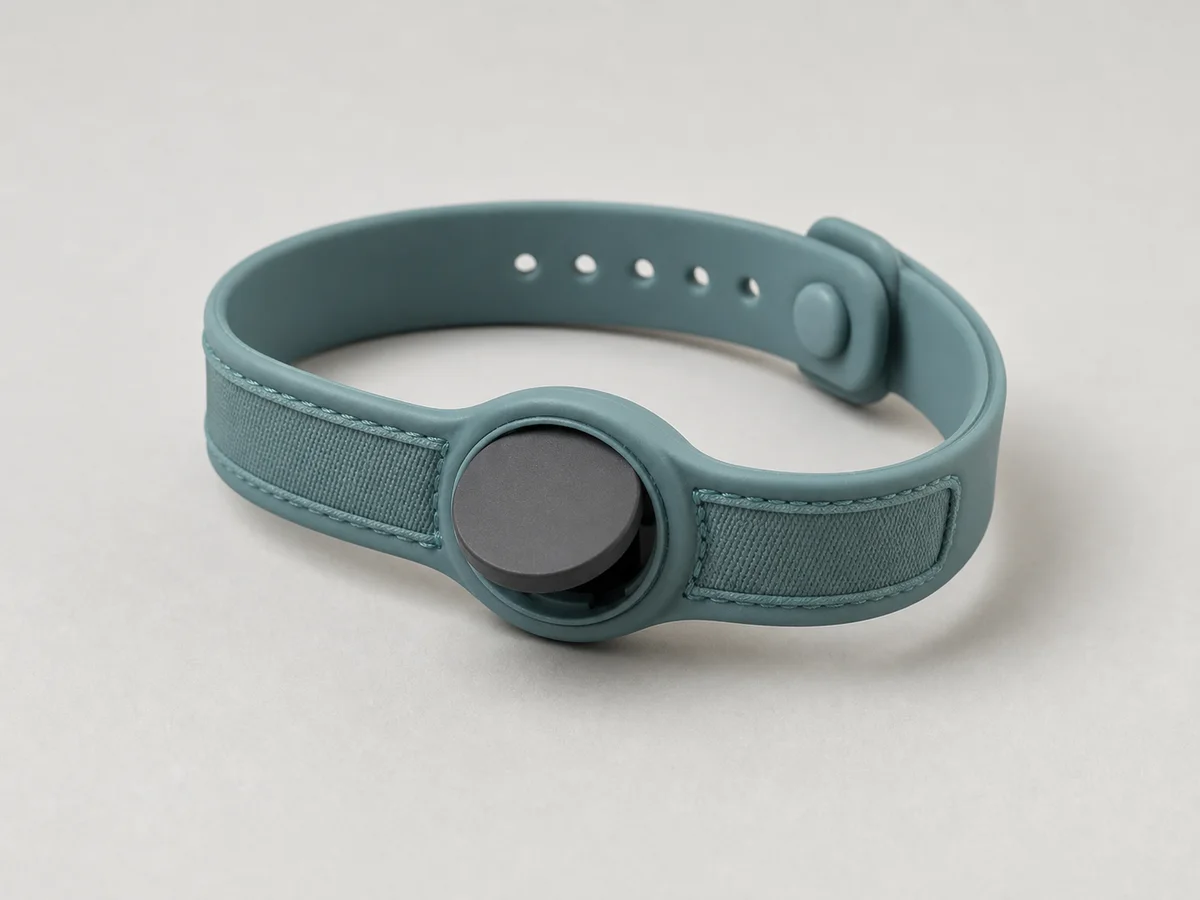
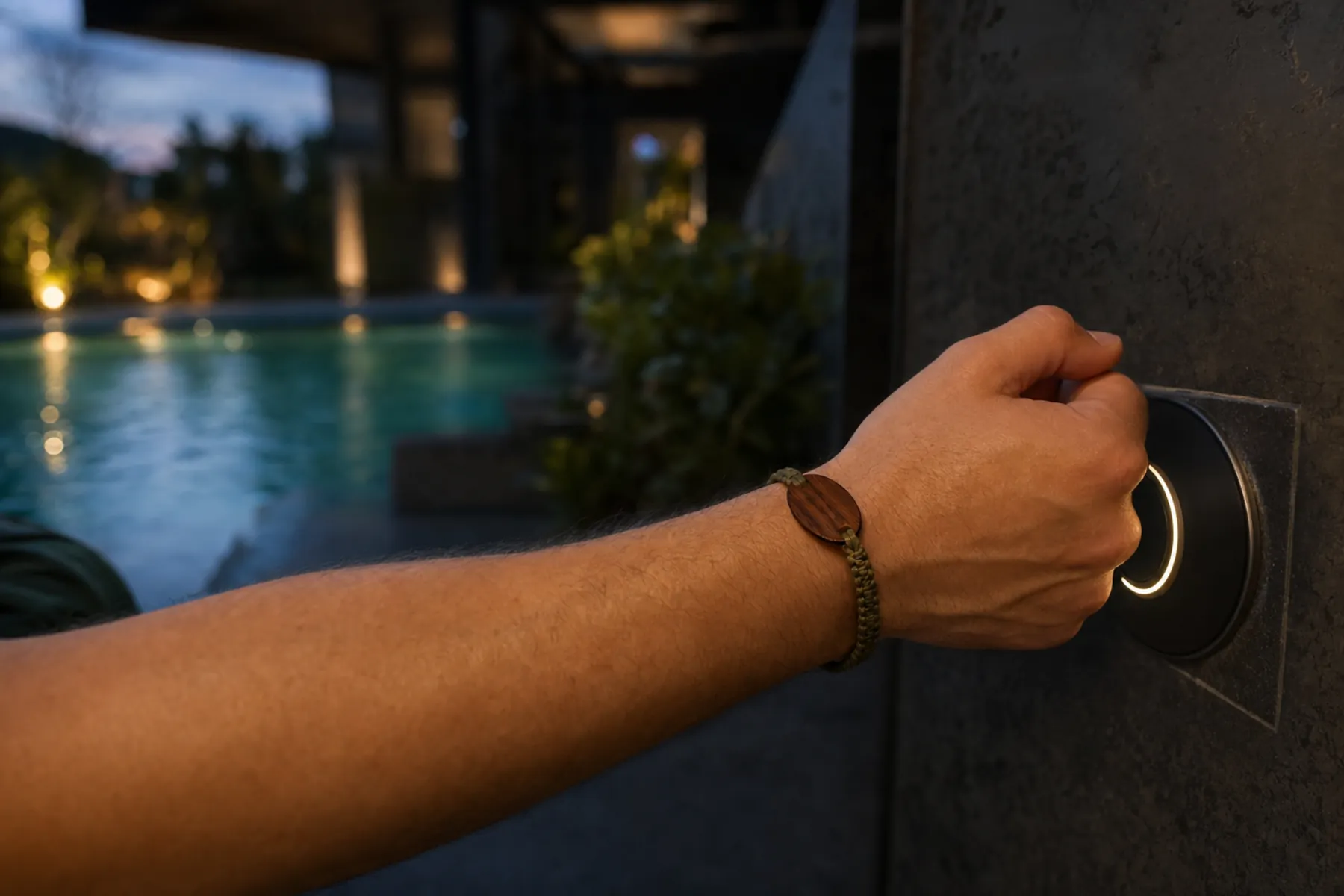
In every other model here, the credential is buried in a band and the band is the thing that exists. Here the module is the thing that exists and the band is one of several ways to carry it. That inversion matters for any population that needs the same access in different circumstances — a guest who wants a wristband at the pool and something in a pocket at dinner.
It also changes the reissue economics. A damaged carrier is replaced without touching the credential, which means no re-encoding, no re-issue record and no interruption to the guest’s access.
How the module is retained
The module seats into the carrier with a positive click rather than friction, so it does not work loose during normal wear and it does not need a tool to change. Anything looser than that fails in the direction of lost credentials, which is worse than the inconvenience it saves.
The retention feature is the part to test on a sample, and the test is repetition: seat and unseat it many times rather than once. A retention that is crisp on a new sample and vague after fifty cycles is a retention that will lose modules by mid-season.
The inventory question this creates
Two stocks now exist: modules and carriers. They deplete at different rates — carriers wear out, modules mostly do not — and they mean different things when they go missing. A lost carrier is a small cost; a lost module is a live credential outside the property.
That makes the loss procedure the important part of the specification rather than the product. Who is told, how quickly a module is disabled, and how the record distinguishes a lost module from a lost carrier are questions to answer before the first order.
What a pop-out programme needs defined up front:
- Who may move a module between carriers — the guest, or only staff
- How quickly a reported-lost module is disabled, and by whom
- How the record distinguishes a lost module from a discarded carrier
- Whether returning guests keep modules between visits, and who re-enables them
Where it earns its place
Loyalty and repeat-guest programmes are the clearest case: a returning guest already has the module, so arrival is a carrier hand-over rather than a credential issue. That is a noticeably better arrival experience and a real reduction in desk work.
Staff populations are the other. A member of staff can wear a wristband on a pool shift and a card holder in an office role, with one credential and one record behind both.
Decorating a module and its carriers
The module face is small and takes a mark or a number rather than artwork. The carriers take the property identity, which means a single module can appear in a branded wristband one week and a plain card holder the next without any inconsistency.
For programmes where modules are numbered, that number should be on the module rather than on the carrier — the carrier is the disposable part, and a number on a disposable part stops meaning anything after the first swap.
When this is the wrong model
It is wrong for one-off day admissions and single stays, where a guest will never change carriers and the whole mechanism is unused complexity.
It is wrong where the property cannot run a disable-on-loss procedure, because a removable credential outside the property is a worse exposure than a lost band. And it is wrong where the credential must be non-transferable, since a module that pops out pops into somebody else’s carrier just as easily.