What concealment is worth
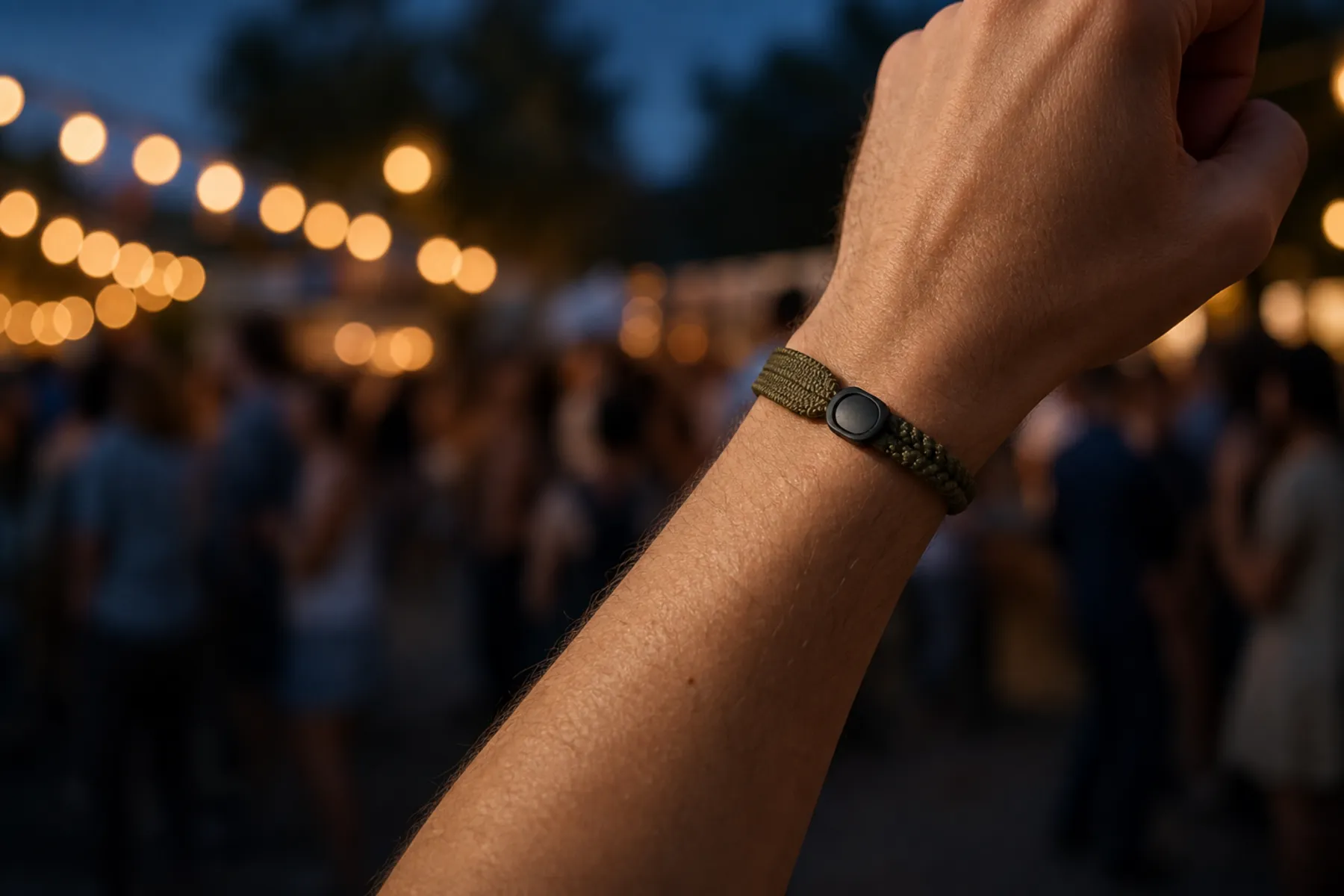
A visible module tells everyone in a restaurant that the guest is wearing a hotel wristband. For most properties that is unimportant; for a small number it is the difference between a credential that is worn and one that is left in the room, and those properties are the reason this construction exists.
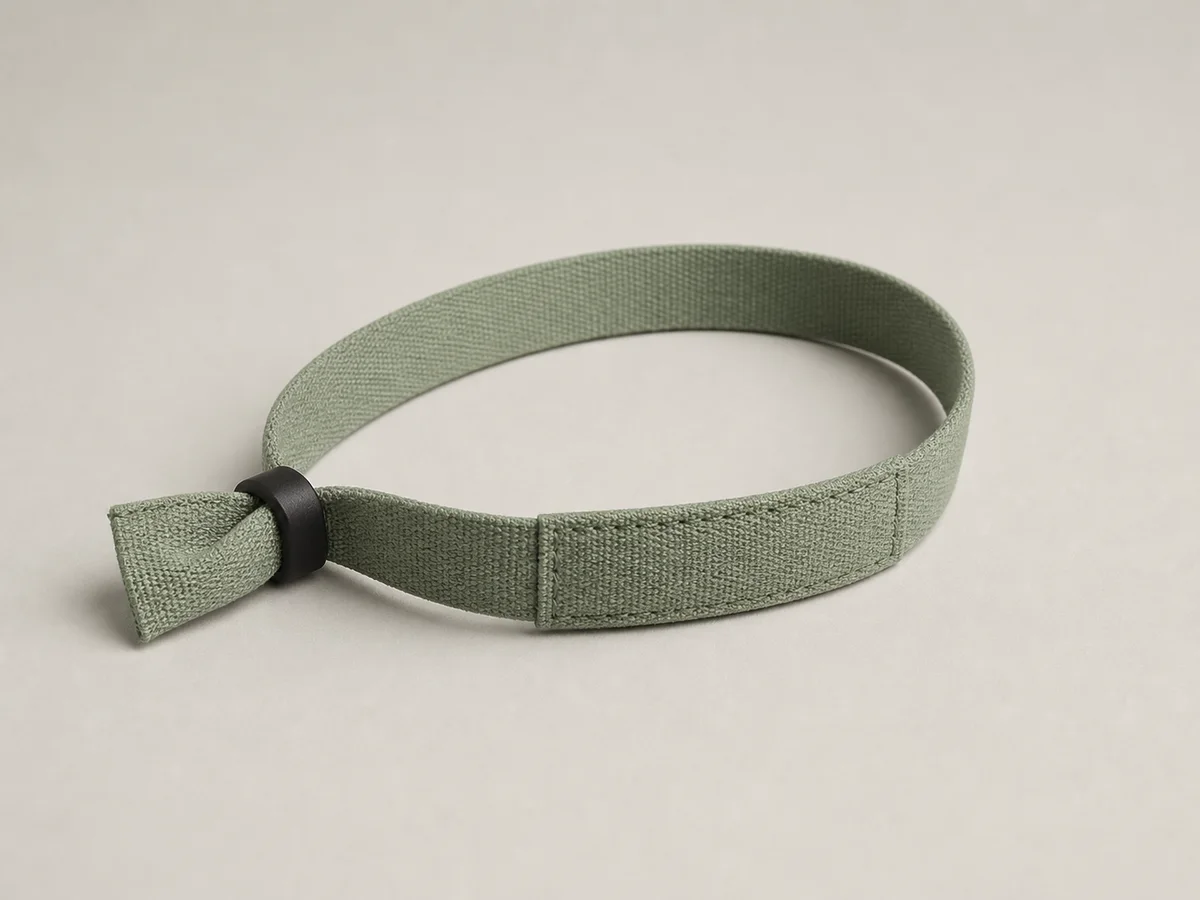
Concealment is not the same as secrecy. The band is not pretending to be something else, and staff can identify it perfectly well by its weave and colour. It simply stops looking like equipment.
How the module is held
The pocket is formed during the weaving and closing of the strap rather than being an added pouch. The module is placed and the strap is closed around it, so there is no lid, no seam that can be opened and no hardware on either surface.
That makes the band unserviceable by design: a failed module means a replaced band. It is the right trade for a premium credential and the wrong one for a staff or activity programme, where a pouch construction lets the credential be changed without discarding the band.
Read behaviour through fabric
Textiles do not block high-frequency credentials, so the concealment costs nothing in principle. What does change behaviour is water in the fabric and the guest’s own wrist behind the module, both of which slightly detune the antenna — the practical effect is a shorter working distance when the band is soaked than when it is dry.
The consequence is a testing requirement rather than a design problem. We present a wet sample as well as a dry one at the property’s own readers, particularly at recessed door units, and record the result per reader type before approving a run.
On a concealed-module fabric band, a dry read test is only half the evidence. Confirm behaviour with a saturated band at the actual door readers before the specification is approved.
Identity without a logo panel
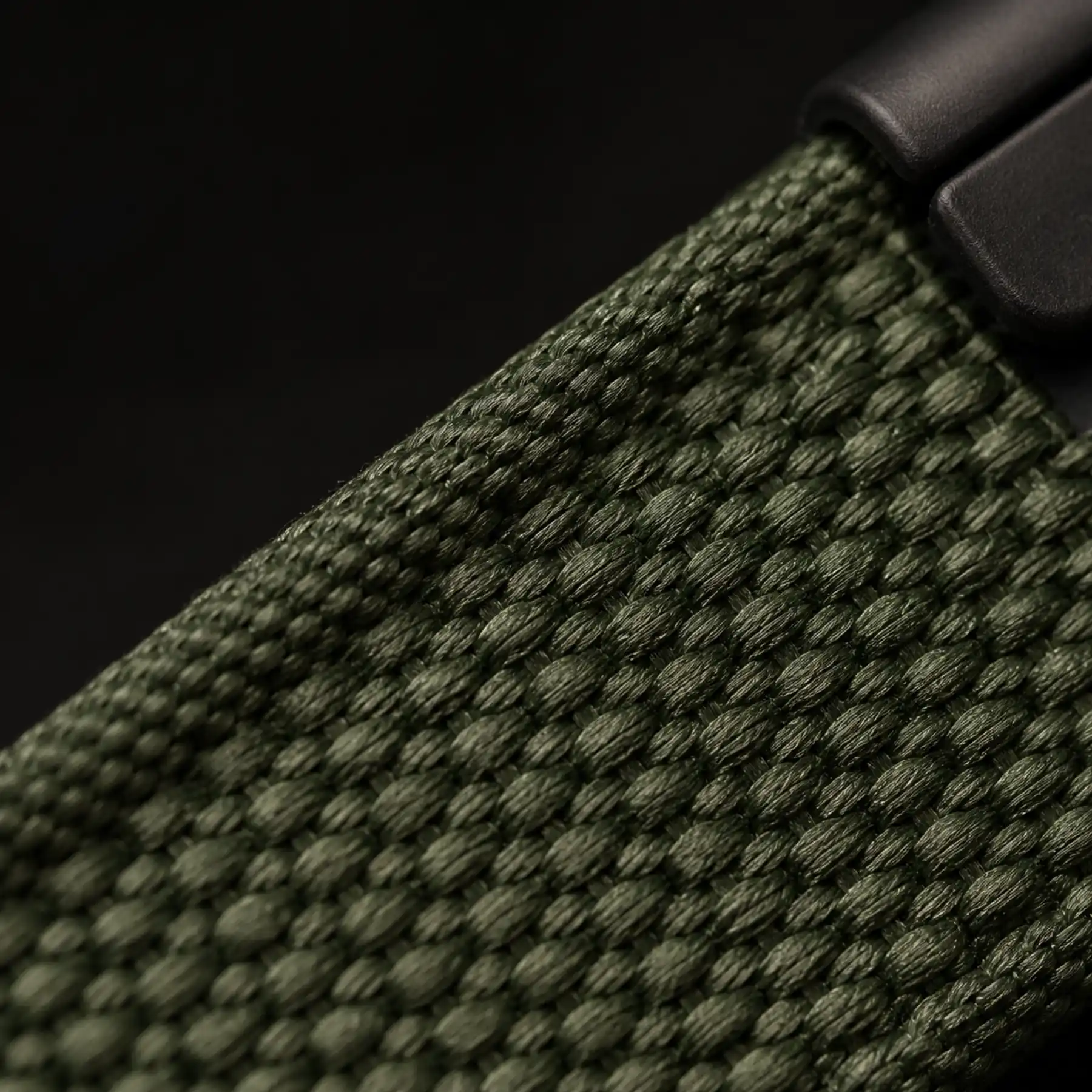
With no face, the property identity has to live in the weave, the colour and the edge. A jacquard pattern, a woven end label or a contrast stitch all carry identity at a level of restraint that suits the properties choosing this construction.
Where a mark is genuinely required, a small woven label reads better than an attempt to print onto the strap. Printing onto a band that is otherwise entirely woven looks like an afterthought at close range, which is the range at which this band is judged.
Wear, cleaning and how it ages
Woven bands soften with wear, which is part of why guests accept them, and they pick up marks in a way silicone does not. For a stay of a few nights that is a non-issue; for a band worn for weeks it means the property should decide whether the band is recovered and cleaned or issued fresh each time.
The closure is the wear point, as on any adjustable fabric band. Because it is deliberately low-profile here, it should be checked on the sample by repeated fastening rather than by a single inspection.
When this is the wrong model
It is wrong wherever staff need to read a tier or a zone from across a space. A band designed to be unobtrusive cannot double as a visual access marker.
It is wrong for water parks and continuous immersion, and it is wrong for any programme where the credential needs to be replaced independently of the band — a sealed, unserviceable construction is exactly what those uses do not want.