Where wristbands actually break
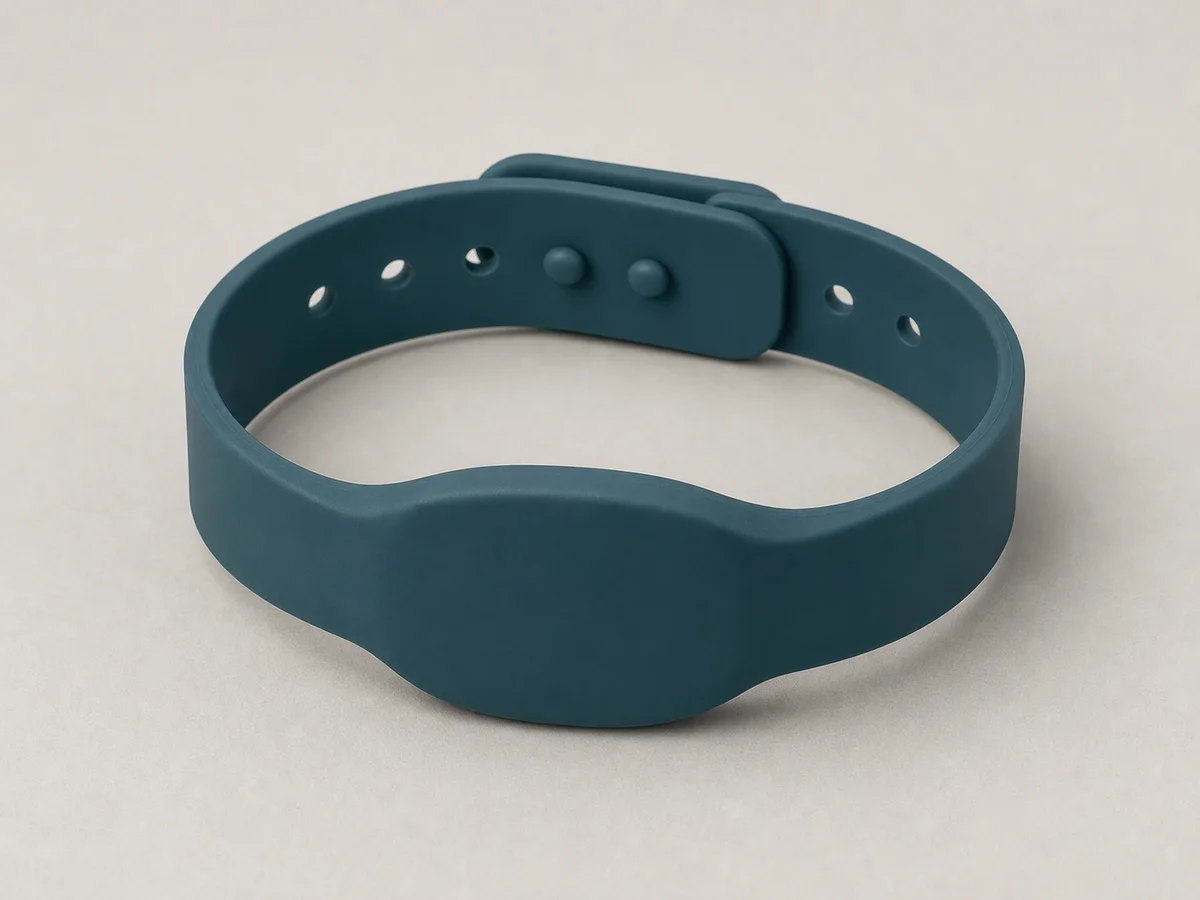
Bands rarely fail in the middle of the strap. They fail at the post hole, where a guest has forced a closure at an angle, and at the shoulder where the face meets the strap, where a hard pull levers one against the other. Adding material everywhere is wasteful; adding it at those two points is what this model does.
That is also why the thickness is not uniform. The section is heaviest around the closure and at the face shoulder, and eases through the middle of the strap so the band still bends comfortably rather than standing off the wrist.
Designed around a slide, not a lobby
A water park puts loads on a credential that a hotel never does: rapid deceleration on a slide, contact with textured surfaces, guests gripping the band while queuing. The oblate face helps here because its long axis lies along the wrist, so a sideways impact glances rather than catching.
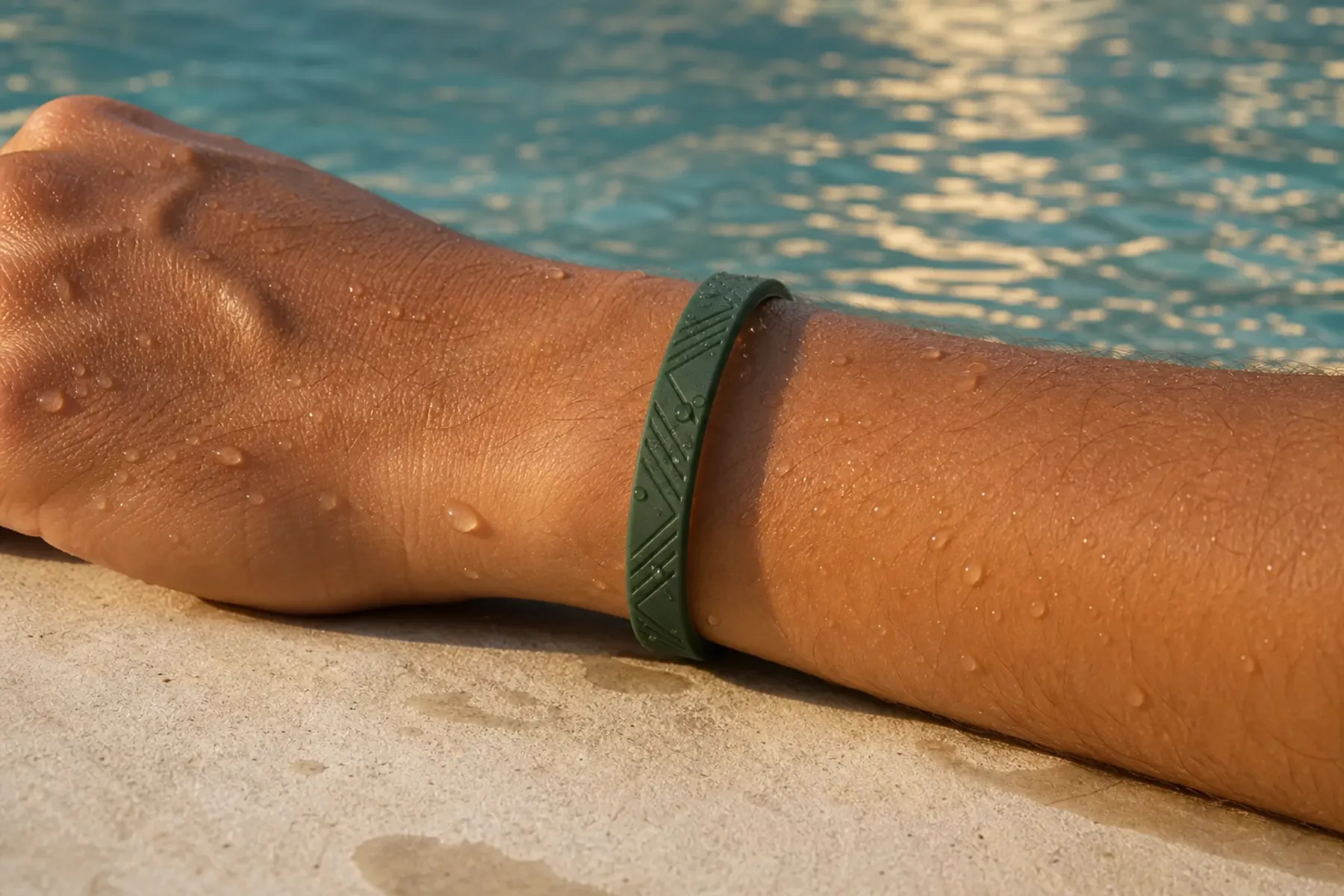
Chlorinated water at operating concentrations is not a problem for the material. The residue and the mechanical abrasion are — the surface dulls where it drags on slide walls long before the compound is affected, which is a cosmetic outcome rather than a functional one but worth expecting on a seasonal band.
Issue volume and the sizing question
Volume operations issue quickly and cannot fit each band carefully. A multi-position closure with reinforced holes tolerates being fastened in a hurry, which is the honest requirement — a closure that needs care will be forced, and forcing is what tears bands.
Both adult and youth ranges matter here more than at a hotel, because a water park issues to children as a routine rather than an exception. Where children are a large share of admissions, we usually pair this model for adults with a closed-loop round band for the youngest guests.
Reuse across a season
These bands are usually recovered and reissued rather than given away, which makes cleaning and inspection an operating step rather than an afterthought. Inspection is quick if staff know the two failure points: a hole that has started to elongate, and a lifted edge at the face shoulder. A band showing either goes out of circulation.
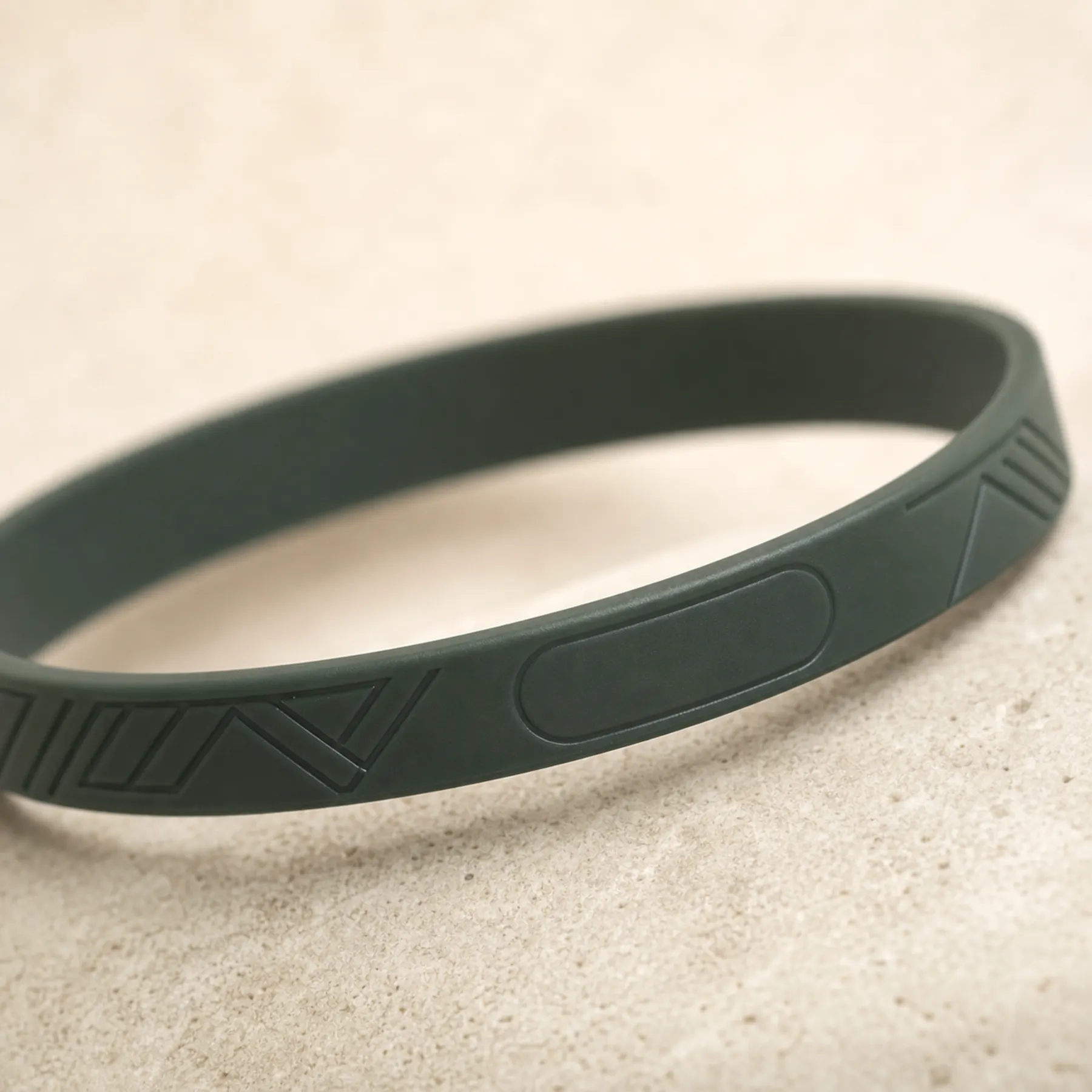
Reissue also means the surface accumulates the season. A debossed mark still reads after months of that; a printed one is legible for weeks and then patchy, which looks worse than no mark at all on a paid admission credential.
Minimum order is 500 pieces per artwork, with 14–21 days production after artwork approval. A reissued seasonal band needs a spare allowance for attrition and a defined point where a worn band leaves circulation — both are quantity decisions made before the season, not during it.
Cashless and locker use
Where the band carries locker access or cashless spend, the read has to work with wet hands, in motion, presented by someone holding a float in the other arm. That is a different test from a room door, and it belongs in the sample test: present the band at the locker bank and at the point-of-sale reader as a wet guest would, not as an engineer would.
What the band can do beyond identification is set by the property’s own platform rather than by the credential. The wearable carries the identity; the system decides what that identity is allowed to do.
When this is the wrong model
It is the wrong choice for a hotel that wants guests to wear the band to dinner. It is unambiguously a leisure band, and no finish makes it read otherwise.
It is also more band than a spa or villa programme needs. Where the abuse is not there, the extra section is just bulk, and a slim or thin-strap oblate construction gives a better guest result.