Why the buckle changes guest behaviour
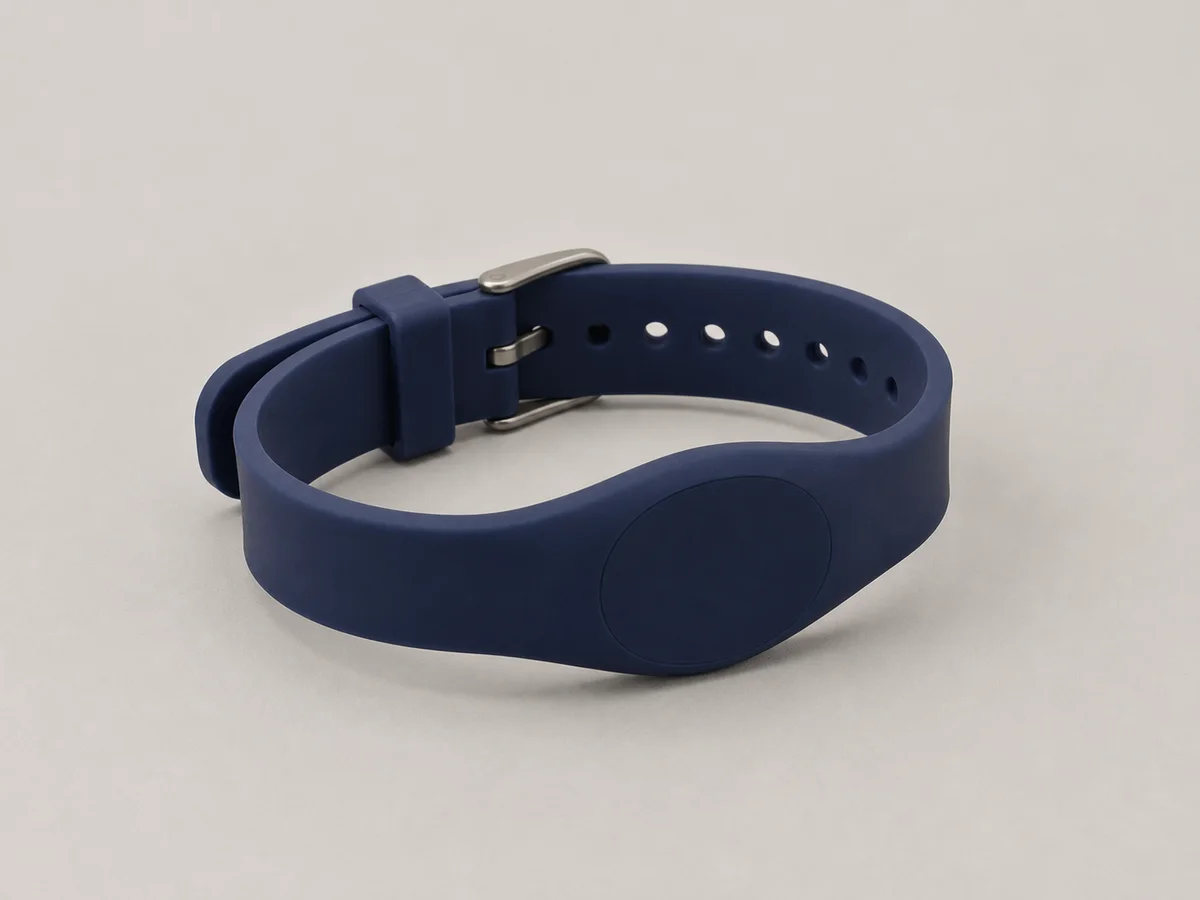
A snap closure has fixed positions, so a band is either slightly loose or slightly tight. A buckle is continuous, and a guest can change it themselves at any point in the day. Over a two-week stay that difference decides whether the band stays on the wrist or ends up in a drawer.
The familiarity matters too. Nobody needs to be shown how a buckle works, which removes a small friction from check-in and removes the main cause of torn closures — a guest forcing a mechanism they have not understood.
Where the wear happens on this model
On a buckle strap the wear point moves from the post hole to the holes the guest actually uses, and to the keeper that holds the tail. Guests settle on one or two holes and use them daily, so those elongate first. We reinforce the hole band rather than the whole strap, which keeps the profile slim while putting material where it is consumed.
The keeper is a small part that is easy to under-specify and annoying when it fails, because a loose tail catches on everything. It is worth checking on the sample by fastening and unfastening the band repeatedly rather than by inspecting it once.
The module sits where a watch head would
Putting the module in the watch-head position keeps it away from the closure entirely, which is structurally the best place for it, and puts it on the top of the wrist where guests naturally present. It also allows a slightly larger antenna than a slim band can carry, so read behaviour tends to be more forgiving at awkward readers.
The trade is height. A watch-head profile stands proud, which is fine at a pool and noticeable under a shirt cuff. We keep the face as low as the module allows, and we sample it on a real wrist before approval rather than judging it on a render.
Long stays, residences and returning guests
For a residence or a long-stay property the credential is closer to a key than to a ticket. That changes the reorder logic: replacements are issued individually over time rather than in seasonal batches, so the property needs a stock that stays consistent for years, not months.
It also raises the question of whether a returning guest keeps their band between visits. If they do, the credential’s lifecycle is now longer than a typical access review cycle, and the property should decide deliberately how a returning band is re-enabled — that is a system decision the physical product should be planned around rather than one discovered later.
What a long-stay programme should settle before the first order:
- Does a guest keep the band between stays, or surrender it at checkout?
- Who re-enables a returning credential, and against what check?
- How is a replacement issued mid-stay without changing the guest’s access?
- How long must a replacement match the original in colour and finish?
Cleaning, ageing and looking presentable in month six
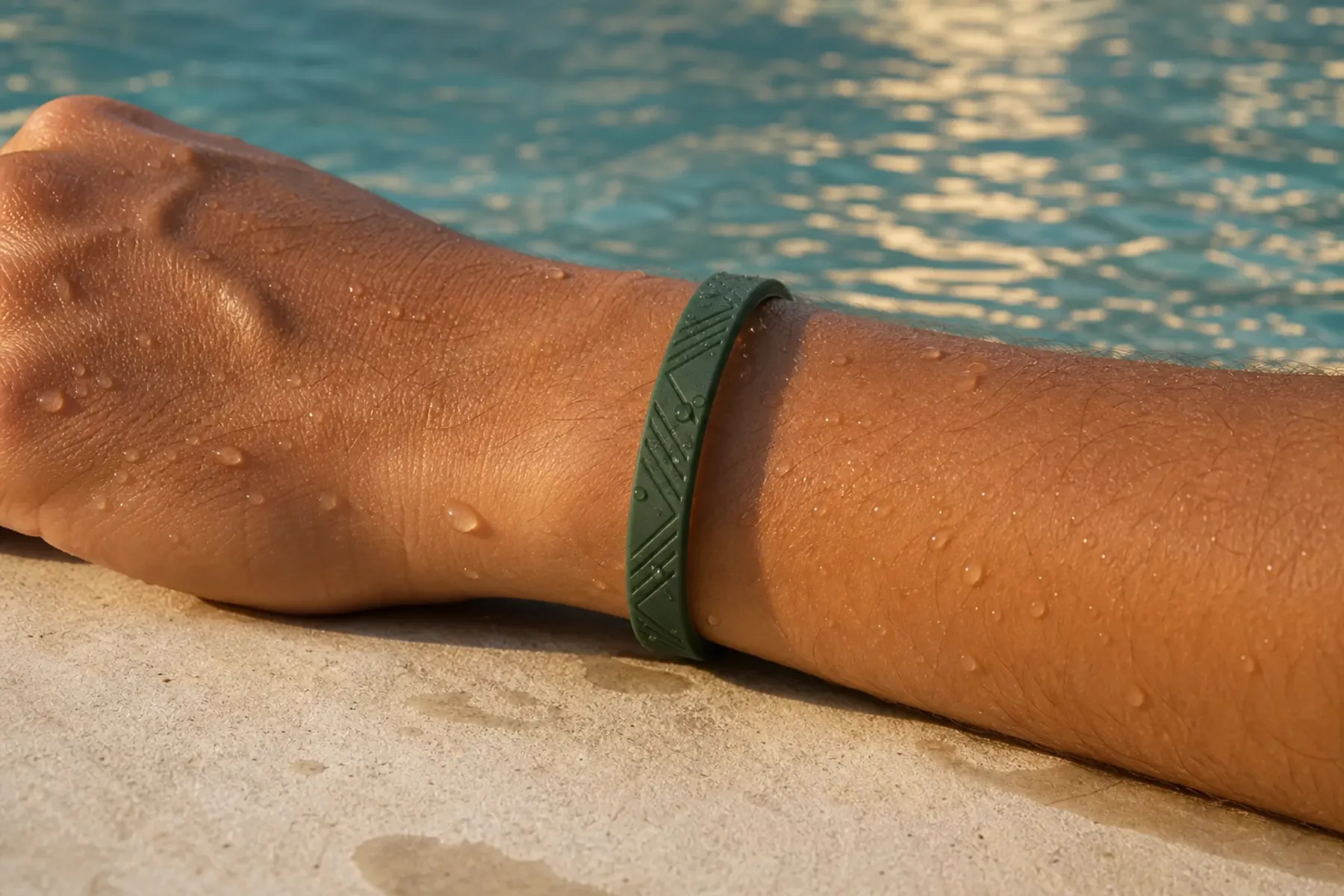
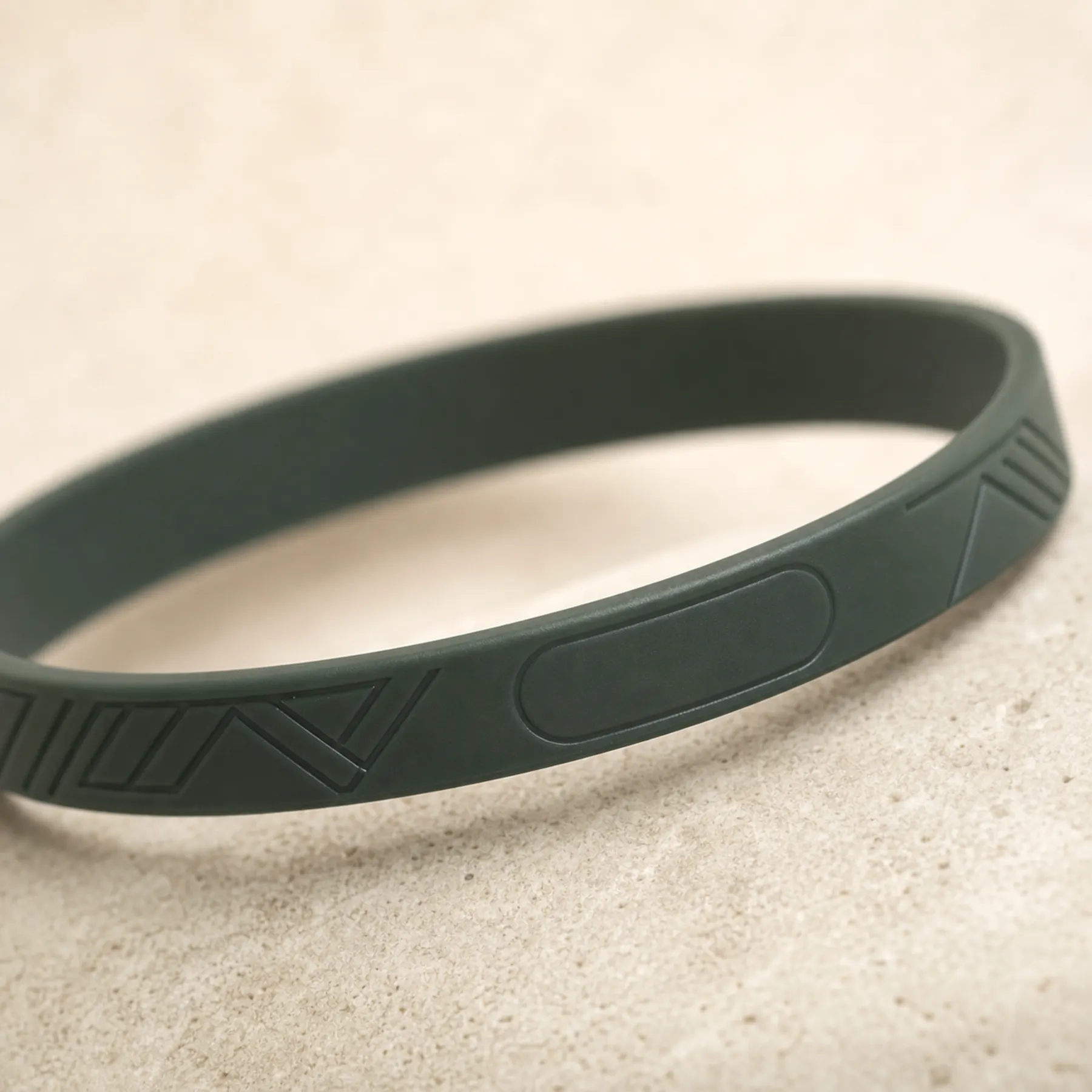
A band worn for months collects the things a wrist collects. Silicone cleans easily, and a debossed mark tolerates repeated cleaning where a printed one does not — which is why we specify deboss almost exclusively on this model.
Colour ages differently in continuous wear than in seasonal use: the underside stays fresh while the top face dulls, so a two-tone or high-contrast finish can end up looking mismatched after long wear. A single considered colour tends to age more gracefully than a pairing.
When this is the wrong model
It is wrong for high-volume day admissions, where fitting a buckle for every guest is slower than a snap and the credential is not worn long enough to justify it.
It is wrong where transfer between guests is the risk being controlled, because a buckle is designed to be opened. And it is wrong for children, who can undo it as easily as an adult can.