How the band is built
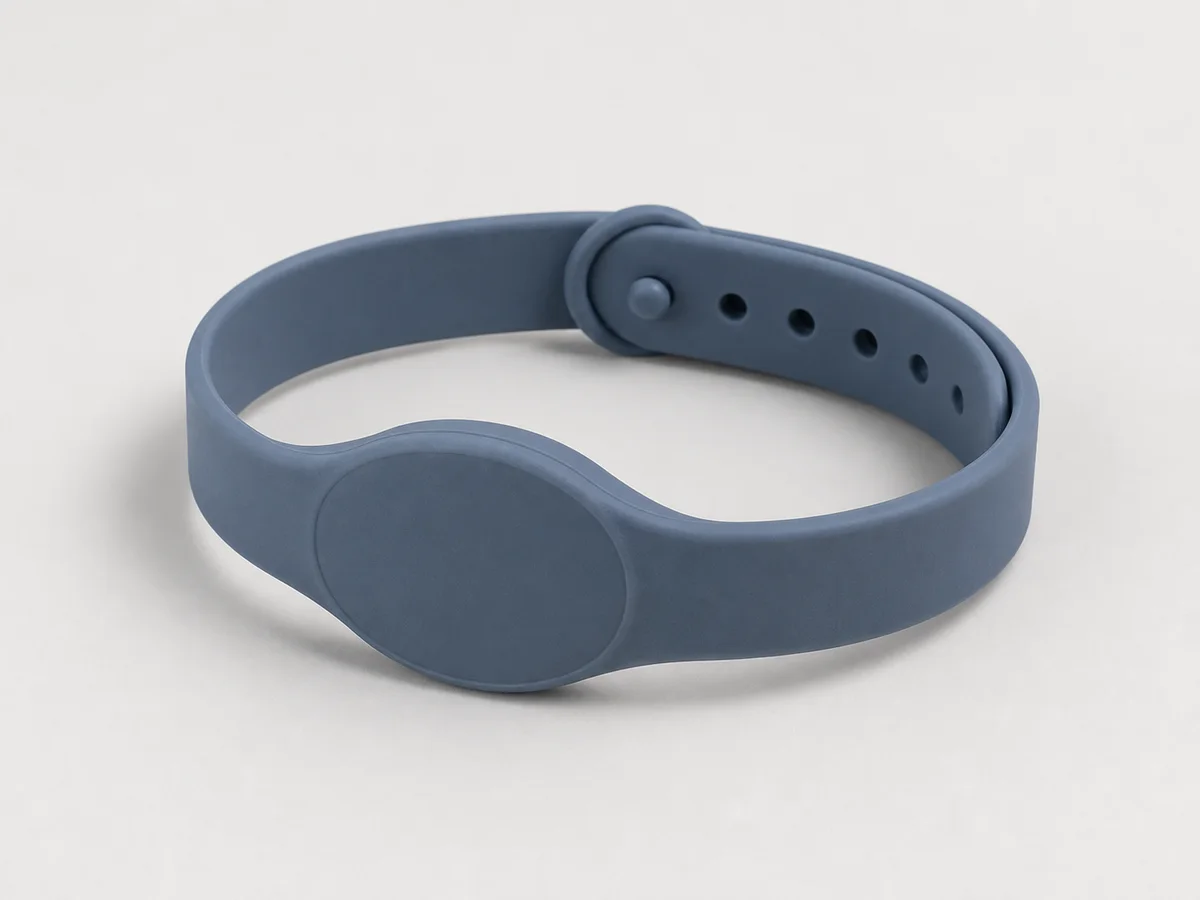
The strap and the module housing are moulded as one part. There is no bonded seam between a carrier and a face, which matters because a bonded seam is the first thing to open after repeated stretching over a wet hand. The credential sits in a cavity that is closed during moulding, so the electronics are enclosed by the same material as the strap rather than sealed behind a lid.
Durometer is a specification decision rather than a fixed property. A softer compound feels better on a bare wrist and forgives a loose fit; a harder one holds the closure geometry longer under repeated opening. We set it at sampling against the wear period the property actually expects, and record it with the approved sample so a reorder reproduces the same feel.
Where the credential sits and why it matters
The antenna is centred under the oval face, which puts it at the top of the wrist in normal wear. Guests present the top of the wrist to a reader without being told to; they present the underside only when instructed. That is the practical argument for the oval face over a module carried on the strap: it lands where the guest already points.
Read behaviour still has to be proven on site rather than assumed. Reader position, mounting surface and the surrounding metalwork all change the working distance, and a band that reads instantly at a desk-mounted test unit can be slower at a recessed door reader. Confirm the technology and the encoding requirement against the installed system before production.
Behaviour in the pool, in the sun and after sunscreen
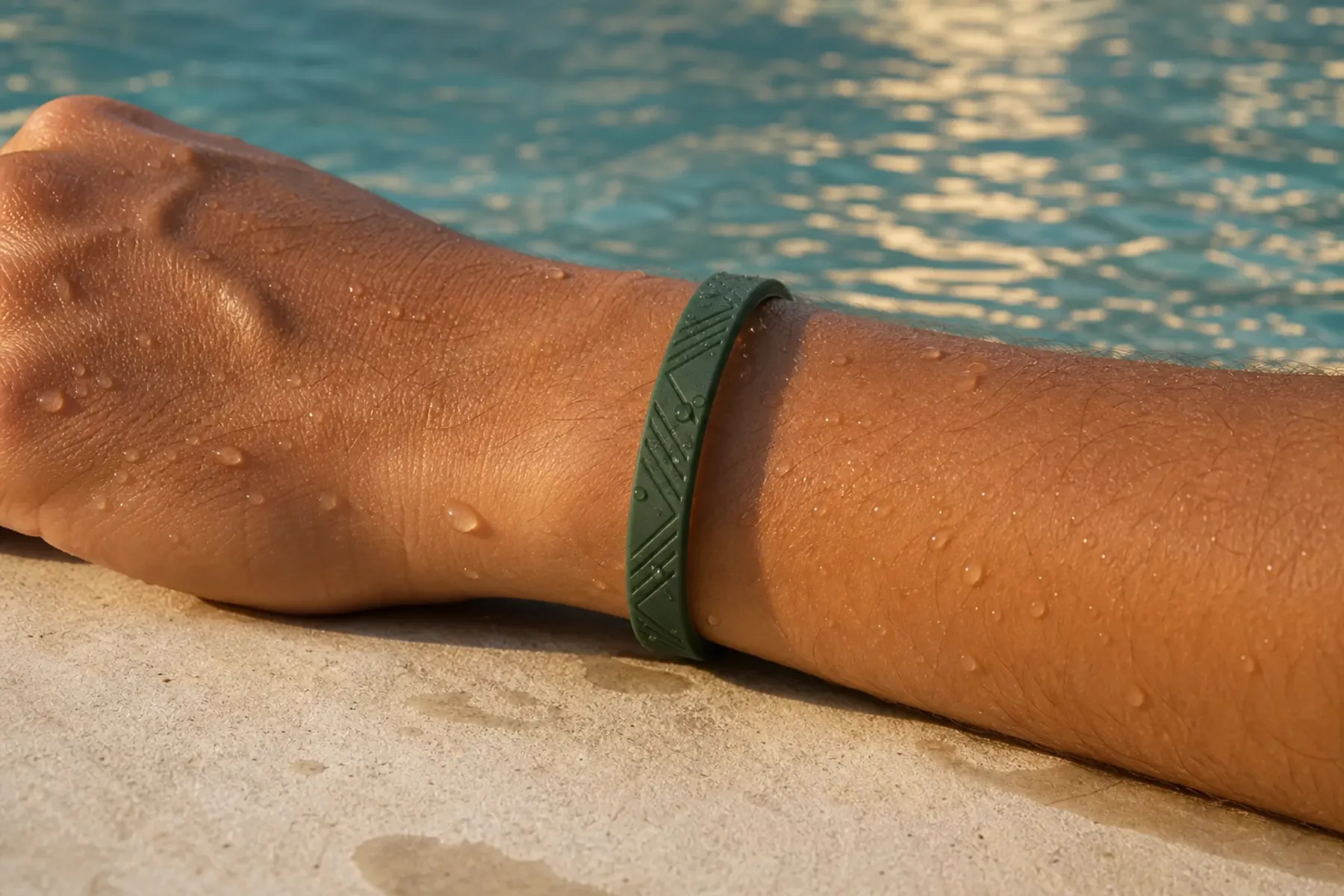
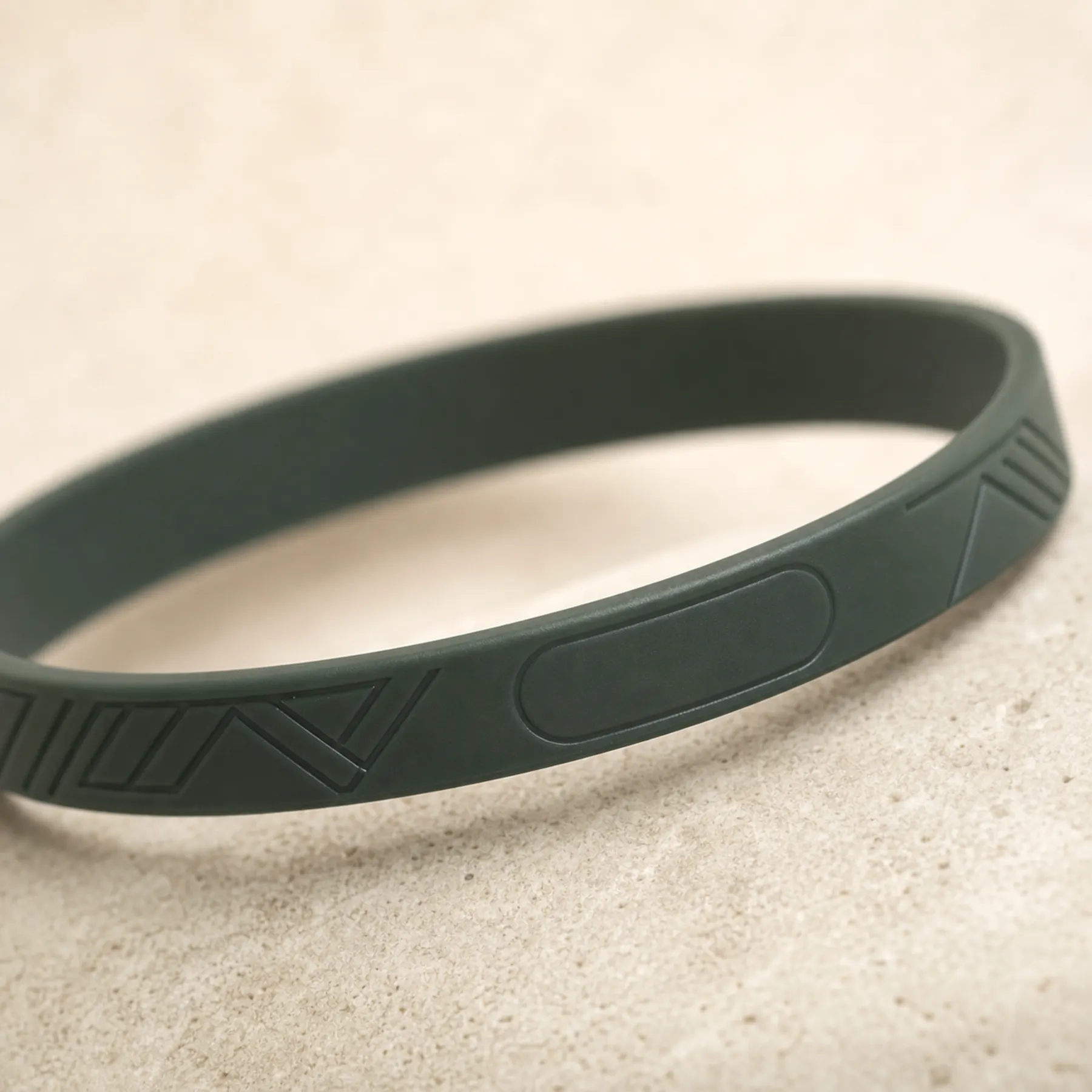
Silicone is unbothered by chlorinated and salt water at the exposures a guest generates. The failure mode is not the material but what collects on it: sunscreen and oils leave a film that dulls a printed surface faster than the strap itself degrades. A debossed mark, or a deboss filled with a contrasting compound, keeps its legibility through that because the geometry carries the artwork rather than a printed layer.
Prolonged direct sun affects pigments before it affects the carrier. Saturated reds and fluorescent tones shift first; deep blues, greys and blacks hold. If the band is doing colour-coded zone control, choose from the colours that stay distinguishable at the end of a season rather than the ones that look best on the approval sample.
Issue, adjustment and reissue at the desk
The multi-position closure is what makes this model workable for a front desk with no sizing table. Staff fit it once, and the guest can loosen it after a hot afternoon without asking for a replacement. Each unused position is a small tear risk if the guest forces the post through a hole it was not meant for, so the closure is worth demonstrating at issue rather than leaving to the guest.
Reissue is straightforward because the band is reusable in principle, but the operating decision is whether it should be. A property that recovers bands at checkout needs a cleaning and inspection step and somewhere to hold them; a property that treats them as consumable needs a stock plan instead. Decide that before the first order, because it sets the quantity far more than headcount does.
Artwork on a curved, moving surface
The oval gives a usable artwork panel, but it curves in two directions and it moves. Fine hairlines, small reversed type and tight registration between two colours are the things that look fine on a flat proof and disappoint on the finished band. Type set a little heavier than the brand guideline suggests reads better here, and a mark that survives being viewed at an angle survives the pool deck.
Artwork is approved on the production shape, not on a flat visual. That is the step that catches a logo sitting a millimetre proud of the face radius or a zone letter that falls into the closure shadow. The approved sample, the artwork revision and the colour reference are held together as the reorder record.
Minimum order is 500 pieces per artwork, with 14–21 days production after artwork approval. Four colourways of the same design are four counts of 500, not one shared count, so the artwork map decides the order size more than the guest count does.
When this is the wrong model
It is the wrong choice where the band must not come off. The multi-position closure is designed to be opened by the wearer, so a controlled zone that depends on the credential staying on one guest needs a one-way closure instead. It is also the wrong choice for small children, where an unadjustable closed loop is the safer specification.
For a property whose whole reason for moving to wearables is a premium look at dinner, the oval face reads as functional rather than considered. A wood or fabric construction carries that better, at the cost of the water tolerance this model has.